
Top Calorie Tracking Apps for Easier Weight Loss
Discover the best calorie tracking apps that make logging meals simple. Compare features, pricing, and find the easiest solution for your goals.
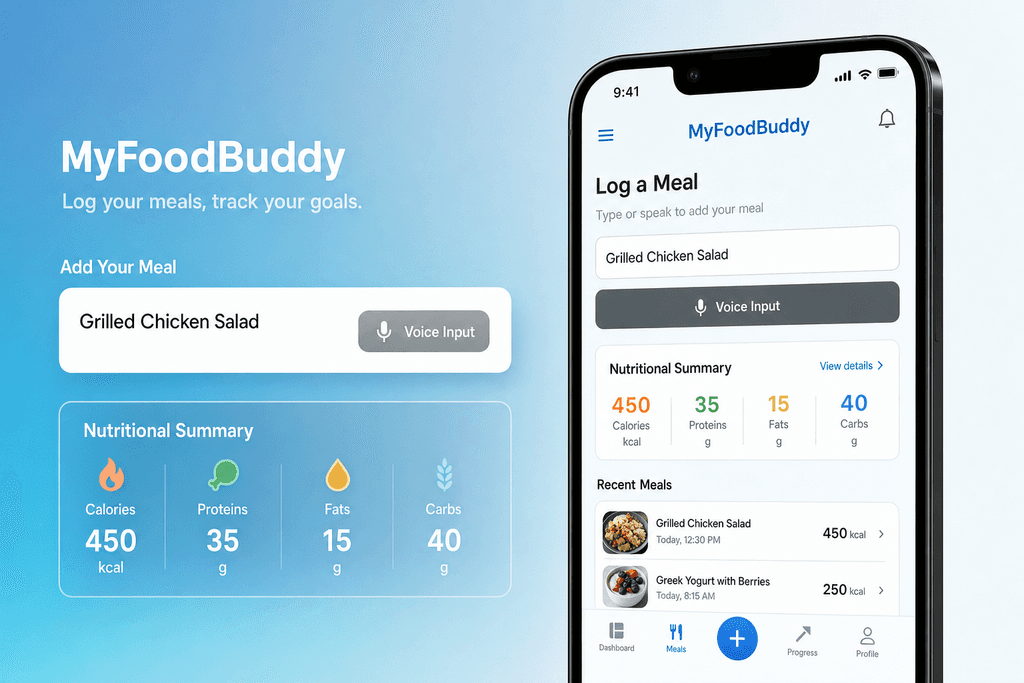
You've probably downloaded a calorie tracking app with the best intentions, logged meals religiously for a few days, then quietly abandoned it when searching through endless food databases started eating up 10 minutes of every meal. The truth is, most people quit tracking within their first month because traditional calorie tracking software turns eating into a tedious data entry job. Modern AI-powered solutions like MyFoodBuddy are flipping this script by letting you simply speak what you ate and handling all the nutrition math in seconds, which means you might actually stick with it long enough to see real results.
Table of Contents
What Makes Calorie Tracking So Frustrating
Most people quit calorie tracking apps within the first two weeks, and it's not because they lack willpower. The problem is that traditional calorie tracking software turns a simple task into a time-consuming chore that feels more like a part-time job than a health habit. You open the app excited to start your weight loss journey, but then you spend 10 minutes just trying to find the right entry for your breakfast. Was it a medium egg or a large egg? Should you log the cooking oil? How much did that chicken breast actually weigh?
The Database Nightmare
Searching through massive food databases is where most people lose their patience. You type in "chicken salad" and get 847 different results, each with wildly different calorie counts. Which one matches what you actually ate? The homemade version? The restaurant version? The one with ranch or the one with vinaigrette?
Here's what happens when you try to log a simple meal:
- Scroll through dozens of similar-sounding foods that don't match yours
- Wonder if you should create a custom entry or pick something close enough
- Spend more time logging the meal than you did eating it
- Give up and just guess, which defeats the whole purpose
The Measuring Madness
Weighing and measuring every single ingredient makes you feel like you're running a science experiment instead of eating lunch. Traditional calorie tracking apps expect you to know exactly how many grams of pasta you cooked or how many ounces of sauce you used. This level of precision isn't realistic for most people, especially when you're eating out or grabbing food on the go.
The obsessive measuring creates these problems:
- You need to carry a food scale everywhere
- Eating at friends' houses becomes awkward
- Restaurant meals turn into guessing games
- The whole process feels unsustainable long-term
The Forgetting Problem
You eat lunch at noon but don't log it until 8 PM because you were busy. Now you're trying to remember if you had one tablespoon of peanut butter or two. Did that smoothie have protein powder? Forgetting to log meals in real-time means you lose accuracy, and inaccurate tracking means you can't trust your data.
Apps like MyFitnessPal and Cronometer require you to remember every detail hours later. This creates a cycle where you either spend your entire day thinking about food or you give up tracking altogether. Modern calorie tracking apps are trying to solve this, and tools like MyFoodBuddy let you just say what you ate and move on with your day, but most apps still make you do all the heavy lifting.
| Common Frustration | Time Wasted Daily | Why People Quit |
|---|---|---|
| Database searching | 15-20 minutes | Too many confusing options |
| Measuring portions | 10-15 minutes | Feels obsessive and awkward |
| Remembering details | 5-10 minutes | Inaccurate guessing ruins data |
| Manual calculations | 5-8 minutes | Math homework for every meal |
Why the Time Investment Kills Results
The average person spends 30-45 minutes per day using traditional calorie tracking apps. That's over 3 hours per week just to log what you ate. Most people give up before they see any real results because the time commitment doesn't feel worth it. You start with good intentions on Monday, struggle through Wednesday, and by Friday you've stopped logging altogether.
The real tragedy is that calorie tracking actually works when you stick with it. Studies show people who consistently track their food lose twice as much weight as those who don't. But consistency is impossible when the app makes you want to throw your phone across the room every time you try to log a meal.
AI-Powered Apps That Do the Work for You
Most people quit tracking calories within the first week because it takes too long. You're supposed to search through massive food databases, measure portions with a scale, and manually calculate everything. That's why the newest calorie tracking apps use artificial intelligence to do all that work for you. Instead of spending five minutes logging a simple meal, you can now just say what you ate and get instant results.
Voice and text input apps let you type or speak something like "grilled chicken breast with brown rice and broccoli" and the AI figures out the calories automatically. MyFoodBuddy uses this approach to understand natural language and pull nutrition data from USDA databases in seconds. You don't need to weigh anything or search through endless food lists.
- No more searching databases for the right food item
- No more measuring portions with a kitchen scale
- No more manual calculations or guesswork
- AI learns your eating patterns over time
- Barcode scanning handles packaged foods instantly
The technology gets smarter the more you use it. If you always eat the same brand of Greek yogurt, the AI remembers and suggests it next time. Barcode scanning adds another layer of convenience for packaged foods, letting you scan and log in under three seconds.
| Feature | AI-Powered Apps | Traditional Apps |
|---|---|---|
| Logging Time | 5-10 seconds | 2-5 minutes |
| Database Search | Automatic | Manual |
| Portion Calculation | AI estimates | Manual entry |
| Learning Curve | Minimal | Steep |
The difference between spending 30 seconds versus 5 minutes per meal adds up fast. Over a week, that's the difference between 3 minutes of tracking and over an hour of tedious data entry. When tracking feels easy, you actually stick with it.
Apps with Smart Features That Keep You Consistent
The best calorie tracking software isn't just about logging meals. It's about building a habit you can maintain for months, not days. Most people eat similar meals throughout the week, so saved meals and favorites become incredibly valuable. If you have the same breakfast five days a week, you should be able to log it with one tap instead of entering it from scratch every single time.
MyFoodBuddy includes one-tap re-logging for frequently consumed meals, which saves massive amounts of time. But the features that really keep people consistent go beyond just speed. Streak tracking and achievements turn the boring task of calorie counting into something you actually want to do. When you've logged meals for 15 days straight, you don't want to break that streak.
- One-tap logging for regular meals
- Streak tracking that motivates daily logging
- Achievement badges for hitting milestones
- Apple Health integration for complete data
- Custom macro goals beyond just calories
The AI nutrition coach feature in apps like MyFoodBuddy provides personalized insights without making you feel judged. Fiona, the AI coach, analyzes your food logs alongside sleep and activity data to give you feedback that actually makes sense for your lifestyle. It's like having a nutritionist who knows your patterns and can spot when something's off.
Integration with Apple Health and fitness trackers shows the complete picture of your health. Your calorie burn from workouts automatically syncs, so you know exactly how much you can eat while still hitting your goals. Custom macro goals help you track protein, carbs, and fats separately, which matters a lot if you're trying to build muscle while losing fat.
If you want to dive deeper into what makes these features work, check out our guide on essential features of user-friendly calorie apps that explains how each element contributes to long-term success.
Budget-Friendly Options That Actually Work
Free calorie tracking apps sound great until you realize they're missing the exact features that make tracking easy. Most free versions limit how many meals you can save, don't include voice input, and show ads between every action. When an app frustrates you every time you use it, you stop using it. That's not saving money, that's wasting your time and sabotaging your weight loss goals.
MyFoodBuddy costs $39 per year, which breaks down to less than $4 per month for unlimited AI logging, voice input, and personalized coaching. Compare that to the cost of one meal out or a fancy coffee, and suddenly it seems pretty reasonable for something you'll use multiple times every single day.
| App Type | Annual Cost | AI Features | Voice Input |
|---|---|---|---|
| Free Apps | $0 | Limited | No |
| MyFoodBuddy | $39 | Unlimited | Yes |
| Premium Competitors | $60-120 | Varies | Some |
The 7-day free trial lets you test everything before spending a dollar. You can see if the voice input actually works for your eating style and whether the AI coach provides useful insights. Premium features like AI coaching and voice input are worth the investment because they're what keep you consistent, and consistency is what actually leads to weight loss.
When you compare annual versus monthly pricing across different calorie tracking apps, the yearly option almost always saves you money. Some apps charge $10-15 per month, which adds up to $120-180 per year. Paying upfront for a year usually gets you a 30-50% discount and removes the monthly decision of whether to keep paying. If you're weighing cost against convenience, our comparison of the best food tracker apps breaks down which options make daily logging easiest without overpaying for features you won't use.
For more insights on how modern tracking technology makes the whole process easier, our article on why calorie tracking technology feels effortless now breaks down exactly what's changed in recent years.
The real question isn't whether premium calorie tracking software is worth it. The question is whether you're serious about losing weight. If you are, spending less than the cost of a gym membership on a tool you'll actually use every day makes perfect sense. You can learn more about fast ways to log meals that save you time while keeping you on track with your goals.
Why Speed Matters More Than Perfect Accuracy
Most people who fail at calorie tracking don't quit because the app was inaccurate. They quit because logging meals felt like homework. The difference between success and failure often comes down to how much friction stands between you and recording what you ate. When an app requires you to search through databases, weigh portions, and manually enter every ingredient, you might do it for a few days or even a couple weeks. But eventually, life gets busy and that five-minute logging process becomes the first thing you skip.
The math here is pretty straightforward. Being roughly accurate every single day beats being perfectly accurate for two weeks then giving up entirely. If you track 80% of your calories consistently for three months, you'll have way more useful data than someone who tracked 100% accurately for ten days before abandoning their app.
The Friction Problem with Traditional Apps
Traditional calorie tracking software asks too much from users. You need to remember brand names, estimate portion sizes, and navigate through endless food databases. Some apps require you to create custom recipes or scan barcodes for every single item.
- Searching databases wastes 2-3 minutes per meal
- Weighing food adds another minute or two
- Creating custom meals requires even more time
- Multiple daily entries mean 15-20 minutes of logging per day
That's when people start "forgetting" to log snacks. Then they skip lunch entries. Before long, the app sits unused on their phone.
How Speed Changes Behavior
Apps that let you log meals in under 30 seconds change the entire game. Voice input especially removes almost all friction from the process. MyFoodBuddy lets you simply say what you ate, and AI handles the rest. No searching, no weighing, no database hunting.
| Method | Time Per Meal | Daily Usage Rate |
|---|---|---|
| Traditional manual entry | 3-5 minutes | Drops after 2 weeks |
| Voice/AI logging | 15-30 seconds | Stays consistent |
The best calorie tracking apps aren't the ones with the biggest food databases or most precise measurements. They're the ones you'll actually still be using three months from now. Speed creates consistency, and consistency is what drives real weight loss results.
Pros and Cons of Speed Versus Accuracy
Choosing between speed and accuracy isn't always obvious. Both approaches have trade-offs worth considering.
- Speed-focused apps get used daily but may miss 10-20% accuracy
- Accuracy-focused apps provide precise data but often get abandoned
- Quick logging builds habits that last months or years
- Detailed logging provides short-term precision but long-term gaps
- AI-powered tools balance both by being fast and reasonably accurate
The reality is that your body doesn't need perfect calorie counts to lose weight. It needs consistent awareness of what you're eating. When logging takes seconds instead of minutes, you actually do it. And doing it imperfectly every day beats doing it perfectly for a week then quitting.
Finding Your Perfect Tracking Match
The best calorie tracking apps share one thing in common: they make logging your meals feel natural instead of like homework. You've probably tried apps before where you spent five minutes searching for the right food entry or gave up because it was just too much work. The truth is, if tracking feels like a burden, you won't stick with it long enough to see results. That's why features that save you time matter more than having a database with ten million foods.
Most calorie tracking software offers a free trial, which gives you a chance to see if it fits into your actual life. Try logging a few typical days and notice how you feel about it. Does pulling out your phone to track lunch feel quick or annoying? Can you do it while your coffee is brewing or are you still typing five minutes later?
Voice input has changed the game for people who are always on the go. Instead of typing everything out, you can just say what you ate and move on with your day. MyFoodBuddy uses AI to understand what you're saying and pulls the nutrition info automatically, which means you're done in seconds. Voice-powered tracking works especially well when you're eating with family or between meetings.
Here's what actually matters when picking a calorie tracking app:
- How fast you can log a meal (under 30 seconds is ideal)
- Whether it learns your eating patterns over time
- If you can use it without thinking too hard
- How well it fits into your daily routine
The app you choose matters less than using it every single day. Consistency beats perfection when you're trying to lose weight. Even tracking 80% of your meals will give you way more insight than tracking perfectly for two weeks and then quitting. The right tool just makes that daily habit easier to maintain.
Common Questions About Calorie Tracking Apps
Choosing the right calorie tracking app can feel overwhelming with so many options available. These questions come up all the time from people trying to figure out which app will actually work for their lifestyle. Whether you're just starting out or switching from another app, understanding how these tools work makes a big difference in sticking with your goals.
How accurate are AI-powered calorie tracking apps compared to manual entry?
AI-powered apps like MyFoodBuddy use USDA databases and machine learning to estimate calories, which typically gets you within 10-15% accuracy for most common foods. Manual entry apps like MyFitnessPal rely on user-submitted data that can be inconsistent or outdated. The real advantage of AI isn't just accuracy though, it's that you'll actually use it because logging takes seconds instead of minutes of searching through databases.
Do I need to pay for a calorie tracking app or are free versions good enough?
Free apps work fine if you don't mind ads and limited features, but they often lock important tools like macro tracking or meal insights behind paywalls. Most people find that paying for an app they'll actually use beats having a free app they abandon after two weeks. MyFoodBuddy costs $39 per year, which breaks down to about 11 cents per day, and includes AI coaching and voice logging that free apps don't offer.
How long does it take to log meals with voice input vs traditional methods?
Voice input takes about 5-10 seconds per meal since you just say what you ate and the AI handles the rest. Traditional calorie tracking software requires searching for each ingredient, adjusting portion sizes, and adding items one by one, which usually takes 2-5 minutes per meal. Over a week, that's the difference between spending 5 minutes total versus over an hour just logging food.
Can calorie tracking apps sync with my fitness tracker or smartwatch?
Most modern calorie tracking apps sync with Apple Health, Google Fit, or popular fitness trackers to pull in your activity data and adjust your calorie goals automatically. This integration means your app knows when you burned extra calories during a workout and can update your daily targets accordingly. Check if your specific tracker is compatible before committing to an app, though most major brands work with the popular options.
What's the easiest calorie tracking app for beginners?
The easiest apps are the ones that don't make you think too much about the process. Apps with voice or text input where you just describe your meal work best for beginners who get overwhelmed by complicated interfaces. MyFoodBuddy was specifically designed for people who found other apps too time-consuming, letting you log meals in plain English without hunting through food databases or weighing portions.
How do I stay consistent with tracking when I eat out or travel?
The key is using an app that makes logging so quick you'll do it even when you're busy or away from home. Voice logging works great for restaurants since you can just speak your order into your phone right after ordering. Apps with barcode scanning also help when you're grabbing packaged snacks at airports or convenience stores. The simpler the logging process, the more likely you'll stick with it during those challenging situations where most people give up on tracking.
Ready to start tracking smarter?
Download MyFoodBuddy and start tracking your calories by just saying what you ate. No more searching databases or guessing portions.
Get started