
Best Calorie Counter Apps for Lightning-Fast Logging
Discover calorie counter apps that cut logging time from minutes to seconds. Compare features, speed, and ease of use to find your perfect fit.
You spend five minutes searching through endless food databases just to log a simple breakfast, and by day three, you've already given up on tracking. Most people quit calorie counting apps within the first few weeks because traditional apps turn every meal into a tedious data entry task. The best calorie counter apps now use voice and AI to cut that time down to seconds, which is exactly why tools like MyFoodBuddy let you simply say what you ate and move on with your day.
Table of Contents
How Calorie Tracking Has Changed
Most people who try tracking calories quit within the first two weeks. The reason isn't lack of motivation or willpower. It's because the old way of doing things takes way too much time. Think about it: you finish eating lunch, pull out your phone, and then spend the next 10 minutes searching through databases, adjusting portion sizes, and trying to figure out if you had a "medium" or "large" apple. By the time you're done logging, you could've eaten another meal.
The Old Way of Tracking Calories
Traditional calorie counter apps have been around for over a decade, and honestly, they haven't changed much. They all work the same way: you search a massive database, pick the closest match, and manually adjust everything.
Here's what the typical process looks like:
- Open the app and navigate to the meal logging section
- Search through thousands of food items to find what you ate
- Scroll through multiple similar entries trying to pick the right one
- Manually adjust serving sizes and portions
- Repeat for every single ingredient in your meal
The average person spends 15 to 20 minutes per day just logging their food this way. That's over two hours per week spent on data entry. No wonder most people give up.
| Method | Time Per Day | Time Per Week |
|---|---|---|
| Traditional Apps | 15-20 minutes | 2+ hours |
| AI Voice Logging | 2-3 minutes | 15-20 minutes |
| Time Saved | 80-90% | 100+ minutes |
Why Speed Actually Matters
You might think a few extra minutes doesn't matter much. But when it comes to building habits, friction is everything. Every extra step between you and your goal is another chance to quit.
Studies show that the easier something is to do, the more likely you are to stick with it. When logging food takes 30 seconds instead of 5 minutes, you'll actually do it consistently. That's the difference between tracking for two weeks and tracking for two years.
- Less time logging means more time living your life
- Quick logging reduces the temptation to skip entries
- Consistency matters more than perfection for long-term results
The New Generation of Calorie Tracking
AI-powered apps have completely changed what's possible with calorie tracking. Instead of searching databases, you just tell the app what you ate in plain English. Say "two eggs, toast with butter, and coffee with oat milk" and the app figures out the rest.
Natural language processing means the app understands how real people talk about food. You don't need to know if your chicken breast was 4 ounces or 113 grams. Just say "a chicken breast" and the AI makes a reasonable estimate based on USDA data.
- Voice input lets you log while cooking or eating
- AI extracts nutritional info without manual database searches
- Natural language works the way you actually talk
- Logging time drops from minutes to seconds
Apps like MyFoodBuddy use this approach to cut logging time by 80-90%. You can log an entire meal in the time it used to take just to search for one ingredient. That's the kind of improvement that actually changes whether people stick with tracking or give up after a week. If you're looking for more options that streamline the process, explore our guide to the best calorie counter apps for fast food logging.
Voice-Powered Logging Beats Manual Entry
Most people quit tracking calories within the first week, and the reason is simple: it takes too long. Traditional apps make you search through massive databases, scroll through endless options, and manually adjust serving sizes for every single ingredient. What should take seconds ends up eating five to ten minutes of your day, and that adds up fast. The difference between apps that work and apps that get deleted comes down to one thing: how quickly you can log your meals.
Voice logging changes everything because you can speak naturally instead of hunting through databases. When you say "two eggs, toast with butter, and a coffee with oat milk," the app understands exactly what you mean and logs it instantly. No searching, no tapping through menus, no creating custom meals.
| Method | Time Required | Steps Needed |
|---|---|---|
| Traditional Database Search | 3-5 minutes | 12-15 taps/searches |
| Voice Logging | 10-15 seconds | 1 voice command |
MyFoodBuddy uses AI-powered nutrition extraction that pulls data from USDA sources to calculate everything automatically. You don't need to know that your toast has 80 calories or that butter adds another 100. The AI handles all the math and nutritional breakdowns while you move on with your day.
The real benefit shows up when you're logging meals on the go. Standing in line at a coffee shop or sitting in your car between meetings, you can quickly speak what you ate without pulling up a keyboard. Text logging works the same way if you prefer typing, using natural language instead of forcing you into rigid formats.
- No need to create custom meals for common combinations
- AI recognizes ingredients and portion sizes from conversational input
- Works with both voice and text for different situations
- Eliminates the frustration of searching for the "right" database entry
Apps like MyFitnessPal require you to search, select, and adjust every item separately. If you want to log that same breakfast, you'd search for eggs, pick from dozens of options, adjust the quantity, then repeat for toast, butter, coffee, and oat milk. That's why quick calorie logging matters so much for people who actually stick with tracking.
Smart Features That Keep You Consistent
Speed gets you started, but consistency is what actually helps you reach your goals. The problem with most calorie counter apps is they don't help you build habits. They just give you a tool and expect you to use it every single day without any support. The apps that work best understand that tracking needs to become automatic, not something you have to force yourself to do.
Meal favorites and categories make repeat logging almost instant. When you eat the same breakfast three times a week, you shouldn't have to log it from scratch each time. MyFoodBuddy organizes meals into Breakfast, Lunch, Dinner, and Snack categories so you can re-log your go-to meals with a single tap.
The gamification features might sound gimmicky, but they actually work. Streaks show you how many days in a row you've tracked, and breaking a 30-day streak feels bad enough that you'll remember to log dinner. Achievements give you small wins along the way, which matters more than you'd think when you're trying to build a new habit.
- Color-coded calendars show your tracking consistency at a glance
- Reminders ping you at meal times so you don't forget
- Apple Health integration syncs your data automatically
- Visual feedback helps you spot patterns in your tracking habits
The calendar view is particularly useful because you can see exactly which days you tracked and which ones you skipped. Green days mean you hit your goals, yellow means you tracked but went over, and red means you didn't log anything. It's simple, but seeing a month full of green squares feels good.
Integration with health apps like Apple Health means your weight, activity, and other metrics sync automatically. You're not manually entering data in multiple places or trying to remember what you weighed three days ago. Everything connects, which is how tracking should work in the first place. For more on essential features of user-friendly calorie apps, the key is reducing friction at every step.
AI Coaching and Personalized Insights
Logging your food is only half the battle. The other half is understanding what your data actually means and how to adjust based on your results. Most apps just show you numbers and expect you to figure out what to do with them. But unless you're a nutritionist, looking at macros and micronutrients doesn't tell you much about whether you're on track or what needs to change.
AI coaches analyze patterns in your food logs and health data to give you actual advice. MyFoodBuddy's AI coach Fiona looks at what you're eating, how it aligns with your goals, and where you might be falling short. Instead of generic tips, you get personalized insights based on your specific situation.
Key Metrics Tracked: Over 20 nutrients including vitamins and minerals, not just calories and macros
The TDEE calculator automatically sets your targets based on whether you want to lose weight, gain weight, or maintain. You don't need to research how many calories you should eat or what your macro split should be. The app does the math and adjusts as your weight changes over time.
- Personalized nutrition advice based on your actual eating patterns
- Weight trend charts show progress beyond daily fluctuations
- Micronutrient tracking helps identify deficiencies
- Goals adjust automatically as you progress
Weight trend charts are especially helpful because daily weight jumps around too much to be useful. Looking at the trend line over weeks shows you whether you're actually moving in the right direction. This prevents the frustration of thinking you're failing when you're just seeing normal water weight fluctuations.
The difference between a basic calorie counter app and one with AI coaching is like the difference between a calculator and a tutor. One gives you numbers, the other helps you understand what to do with them. If you're interested in exploring the best AI calorie counter apps, the key feature to look for is personalized insights, not just data collection.
At $39 per year with a 7-day free trial, MyFoodBuddy costs less than most monthly subscriptions while offering features that actually help you stick with tracking. The combination of lightning-fast logging, smart organization, and AI-powered insights addresses the main reasons people quit using calorie tracking apps. For more information on how voice-powered calorie apps can help in daily nutrition logging, the focus should always be on reducing the time and effort required to maintain consistency.
What Makes a Calorie Counter App Worth Using
Most people who start tracking calories quit within the first month, and the reason isn't lack of motivation. The problem is that traditional calorie counter apps turn a simple task into a tedious chore that eats up precious time every single day. When you're spending five minutes searching through databases, weighing portions, and manually entering every ingredient, tracking becomes unsustainable. The apps that succeed are the ones that respect your time and make logging so fast you barely notice you're doing it.
The 30 Second Rule for App Retention
Research shows that apps requiring less than 30 seconds per meal see dramatically higher retention rates. Think about it like brushing your teeth - if it took ten minutes instead of two, most people would skip it. The same psychology applies to calorie tracking.
- Traditional apps require searching databases with thousands of similar items
- Users must manually adjust serving sizes and portions
- Creating custom meals involves multiple screens and inputs
- The average logging time ranges from 3-7 minutes per meal
Natural language input changes everything. Instead of tapping through menus, you just say what you ate. MyFoodBuddy uses this approach, letting you log "two eggs, toast with butter, and coffee with oat milk" in seconds.
What Users Actually Say About Traditional Apps
The testimonials tell a clear story. One user mentioned being frustrated with their previous app after years of use, noting that MyFoodBuddy made it "really easy to use on the go" without creating multiple meals and spending time searching. Another switched specifically because of convenience, appreciating the ability to "just say what I've eaten" instead of manual calculations.
- Searching databases becomes annoying over time
- Creating and managing meal templates adds friction
- Manual calorie calculations feel like homework
Price vs Value in Calorie Tracking
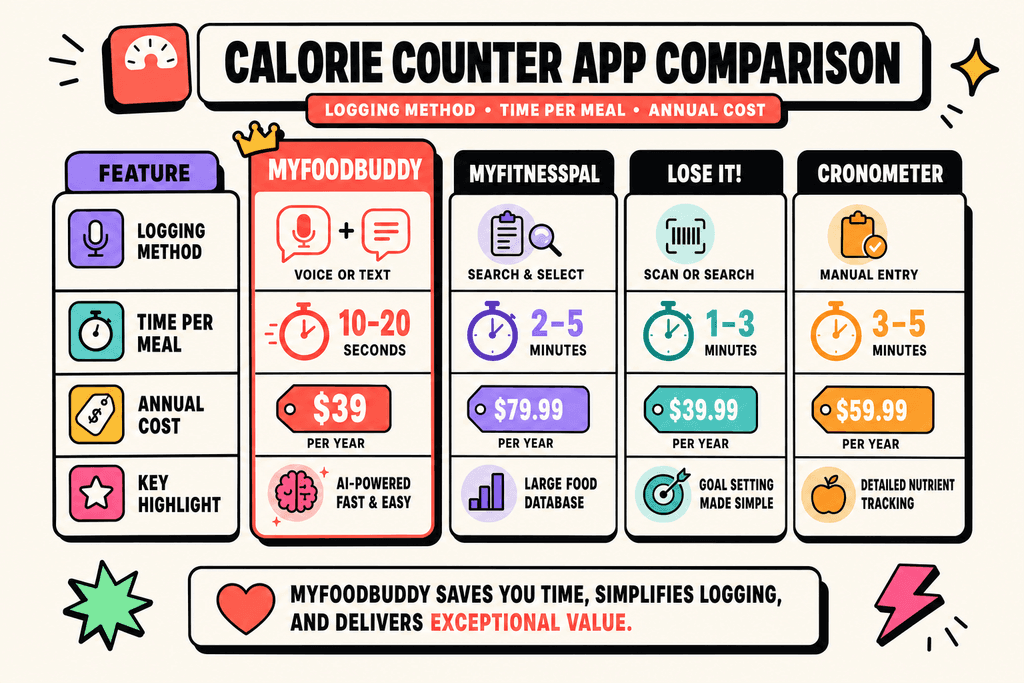
When comparing calorie counter app options, price matters less than time saved. If an app saves you four minutes per meal, that's over seven hours per month for someone tracking three meals daily.
| App Type | Logging Method | Time Per Meal | Annual Cost |
|---|---|---|---|
| Traditional Apps | Manual search & entry | 3-7 minutes | $80-120 |
| AI-Powered Apps | Voice/natural language | Under 30 seconds | $39-99 |
MyFoodBuddy's pricing at $39 per year positions it as one of the most affordable AI-powered options available. The value proposition isn't just about features - it's about getting your time back while still hitting your nutrition goals.
Finding Your Perfect Calorie Tracking Match
The truth is, the best calorie counter app isn't the one with the most features or the biggest food database. It's the one you'll actually open every single day without feeling like it's a chore. Most people quit tracking calories not because they don't care about their health, but because the process takes too long and feels like homework. When logging a simple breakfast takes five minutes of searching, scanning, and adjusting portion sizes, it's no wonder people give up after a week or two.
Speed matters more than you might think. If you can log your meals in seconds instead of minutes, tracking becomes something you can do while waiting in line or sitting at a red light. Voice logging changes the game here because talking is always faster than typing and tapping through menus.
The apps that use AI to understand what you ate remove almost all the friction from tracking. MyFoodBuddy does this by letting you just say what you ate, like "chicken breast with rice and broccoli," and it figures out the rest. No searching through databases or creating custom meals for basic food combinations.
Here's what actually matters when picking a calorie counter app:
- How fast you can log a typical meal
- Whether it understands natural language instead of requiring exact food names
- If it saves your common meals for even faster re-logging
- Whether you can try it risk-free before committing
The only way to know if an app works for your lifestyle is to test the logging speed yourself. Try logging your breakfast, lunch, and dinner for a few days and see which one feels effortless. User-friendly features sound great on paper, but the real test is whether you're still using the app three weeks from now.
MyFoodBuddy offers a 7-day free trial so you can experience voice logging without any commitment. Most people know within the first few days whether an app fits their routine or feels like extra work. The questions below cover some common concerns people have when switching to a new tracking method.
Common Questions About Calorie Counter Apps
Choosing the right calorie counter app can feel overwhelming when there are so many options out there. You probably have questions about how these apps actually work and whether they'll fit into your daily routine. Here are the most common questions people ask when they're trying to find a calorie counter app that won't waste their time.
How accurate are AI-powered calorie counters?
AI-powered calorie counters are surprisingly accurate when they pull from reliable databases like the USDA nutrition database. Most modern apps can estimate calories within 10-15% accuracy for common foods, which is actually similar to manual tracking since portion sizes are hard to judge perfectly anyway. The key is that AI gets smarter over time as it learns your eating patterns and preferences.
Can voice logging work for complex meals?
Voice logging handles complex meals better than you'd think. You can say something like "chicken stir fry with broccoli, bell peppers, and brown rice" and the AI breaks it down into individual ingredients. Apps like MyFoodBuddy use natural language processing to understand context, so you don't need to speak like a robot or list every single ingredient separately.
Do I need to weigh my food for accurate tracking?
You don't need a food scale for tracking to be useful. While weighing food gives you the most precise numbers, using common measurements like "one medium apple" or "a handful of almonds" works fine for most people. The goal is consistency, not perfection, so if you're tracking the same way every day, you'll still see patterns and make progress toward your goals.
How long does it take to see results with calorie tracking?
Most people start noticing changes within 2-4 weeks of consistent tracking. The first week is usually about building the habit and understanding your baseline eating patterns. After that, you can adjust your intake based on real data instead of guessing, which is when the actual progress starts happening.
Are free calorie counter apps good enough?
Free apps can work if you don't mind spending extra time on manual entry and dealing with ads. The problem is that apps like MyFitnessPal require multiple steps to log each meal, which gets tedious fast. Paid apps typically save you time with features like voice logging and AI-powered entry, and at $39 per year for something like MyFoodBuddy, you're paying about 10 cents a day to avoid the frustration.
What's the difference between voice logging and barcode scanning?
Barcode scanning only works for packaged foods with labels, so it's useless when you're eating home-cooked meals or restaurant food. Voice logging works for everything because you just describe what you ate in plain English. You can log an entire meal in seconds by saying what's on your plate, while barcode scanning would require you to scan each individual package before you even start cooking.
Ready to start tracking smarter?
Download MyFoodBuddy and start tracking your calories by just saying what you ate. No more searching databases or guessing portions.
Get started