
Why Calorie Tracking Technology Feels Effortless Now
Calorie tracking technology has evolved beyond tedious manual logging. Discover how AI and voice input make tracking meals effortless in 2024.
You've probably downloaded a calorie tracking app with the best intentions, only to abandon it three weeks later because logging every meal felt like a part-time job. The truth is, most people used to spend 15-20 minutes daily searching databases, weighing portions, and doing mental math just to record what they ate. Modern calorie tracking technology has finally solved this problem by cutting that time down to under 30 seconds per meal, and apps like MyFoodBuddy are leading this shift with voice-powered logging that does all the heavy lifting for you.
Table of Contents
- Why Traditional Calorie Tracking Made You Want to Quit
- Voice Technology Changed Everything About Food Logging
- AI Does the Math So Your Brain Doesn't Have To
- Smart Features That Keep You Consistent Without Thinking
- What This Means for Your Health Goals in 2024
- Your Next Steps with Modern Tracking
- Common Questions About Modern Calorie Tracking
Why Traditional Calorie Tracking Made You Want to Quit
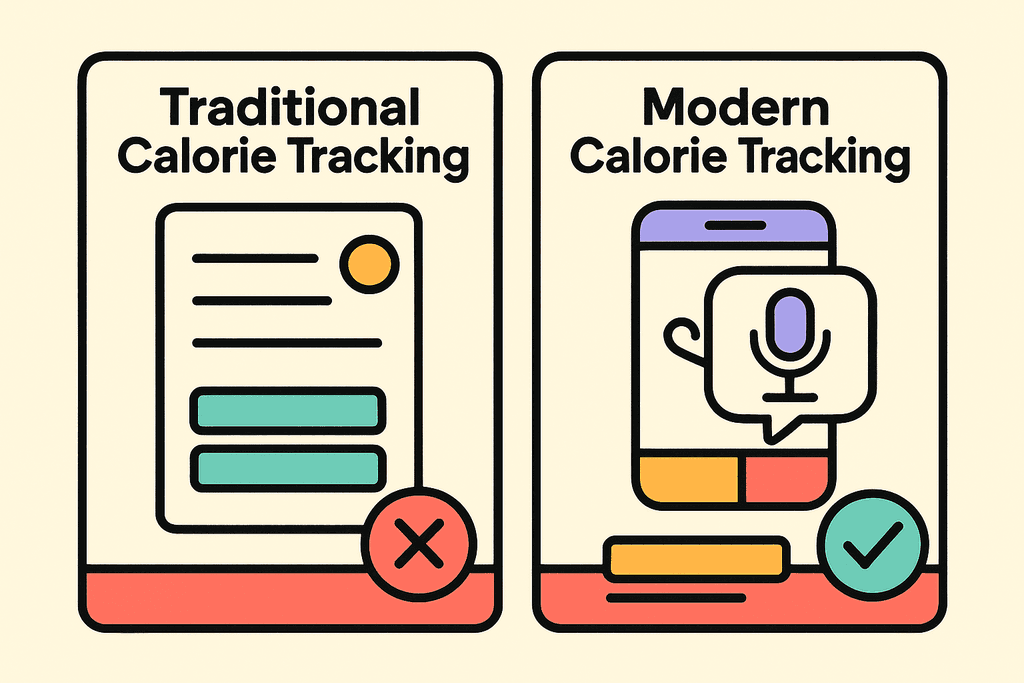
Most people who try calorie tracking apps quit within the first two weeks. The reason isn't lack of motivation or willpower. It's because the apps themselves make the process feel like a part-time job. Every meal turns into a 5-minute research project where you're scrolling through endless food databases, trying to figure out if "chicken breast grilled" has the same calories as "grilled chicken breast" or "chicken breast cooked."
The Database Nightmare
Traditional calorie tracking apps rely on massive food databases that sound helpful in theory. In practice, they create more problems than they solve. You search for "apple" and get 47 different options, each with slightly different calorie counts.
- User-submitted entries with wildly inaccurate information
- Restaurant items that haven't been updated in years
- Generic foods that don't match what you actually ate
- Missing items that force you to guess or create custom entries
The inconsistency wastes time and makes you question whether your tracking is even accurate. When you can't find your exact meal, you either spend 10 minutes creating a custom entry or just pick something close enough and hope for the best.
The Multi-Step Process Nobody Has Time For
Logging a simple breakfast used to mean opening the app, searching for each ingredient, selecting the right option from dozens of choices, adjusting portion sizes, and repeating for every single item. A meal with five ingredients required at least 15 separate taps and selections. Your coffee gets cold while you're still trying to figure out if you had 2 tablespoons or 3 tablespoons of oat milk.
| Method | Time Per Meal | Steps Required | Accuracy |
|---|---|---|---|
| Traditional Apps | 3-7 minutes | 15-25 taps | Depends on database |
| Voice-Based Tracking | 10-30 seconds | 1 voice command | AI-powered precision |
When Tracking Becomes the Burden
The mental load of remembering to log everything before you eat adds stress to every meal. You're supposed to track before eating, but that means pulling out your phone at restaurants, during family dinners, or when you're genuinely hungry and just want to eat. The friction between wanting to track and actually doing it creates guilt when you inevitably forget or skip meals.
- Forgetting to log breakfast until lunchtime
- Feeling awkward tracking at social events
- Losing your streak because one meal was too complicated
- Giving up entirely after a few missed days
This is exactly why calorie tracking technology needed to change. Apps like MyFoodBuddy now let you simply say what you ate and move on with your day, removing all those friction points that made tracking feel impossible to maintain.
Voice Technology Changed Everything About Food Logging
Most people quit tracking calories within the first week. The reason isn't lack of motivation or willpower. It's because traditional apps make you search through endless food databases, measure portions, and tap through multiple screens just to log a simple breakfast. That process takes anywhere from three to five minutes per meal, which adds up to over an hour each day. But voice technology has completely changed how we interact with calorie tracking apps, turning that hour-long chore into something that takes seconds.
Voice Technology Changed Everything About Food Logging
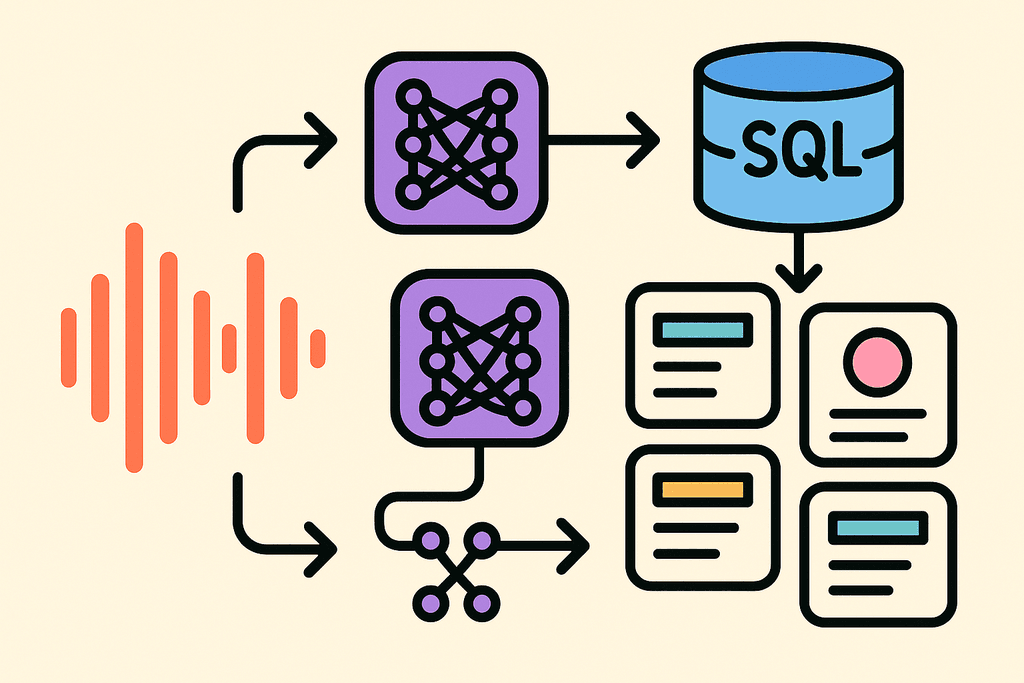
When you use voice input to log meals, you're basically having a conversation with your phone. You say something like "two eggs, toast with butter, and a coffee with oat milk" and the app figures out the rest. Natural language processing technology understands context, so it knows that "a handful of almonds" means roughly one ounce, or that "a large apple" is different from "a small apple."
- Voice recognition converts your speech into text instantly
- AI analyzes the meal description to identify individual food items
- The system estimates portion sizes based on common language patterns
- Nutritional data gets pulled from databases and calculated automatically
- Everything appears in your log within seconds
This matters most when you're actually living your life. Think about ordering at a restaurant with friends or grabbing breakfast before a morning meeting. You don't have time to pull out your phone and spend five minutes searching for each ingredient. With voice logging, you can quickly speak your meal into your phone while walking to your car or waiting for the check. MyFoodBuddy uses both voice and text logging seamlessly, so you can switch between methods depending on where you are.
The technology works because it's trained on how real people describe food. Nobody says "147 grams of grilled chicken breast." They say "a chicken breast" or "some grilled chicken." The AI has learned to translate everyday language into precise nutritional data, which is why it feels so natural to use.
AI Does the Math So Your Brain Doesn't Have To
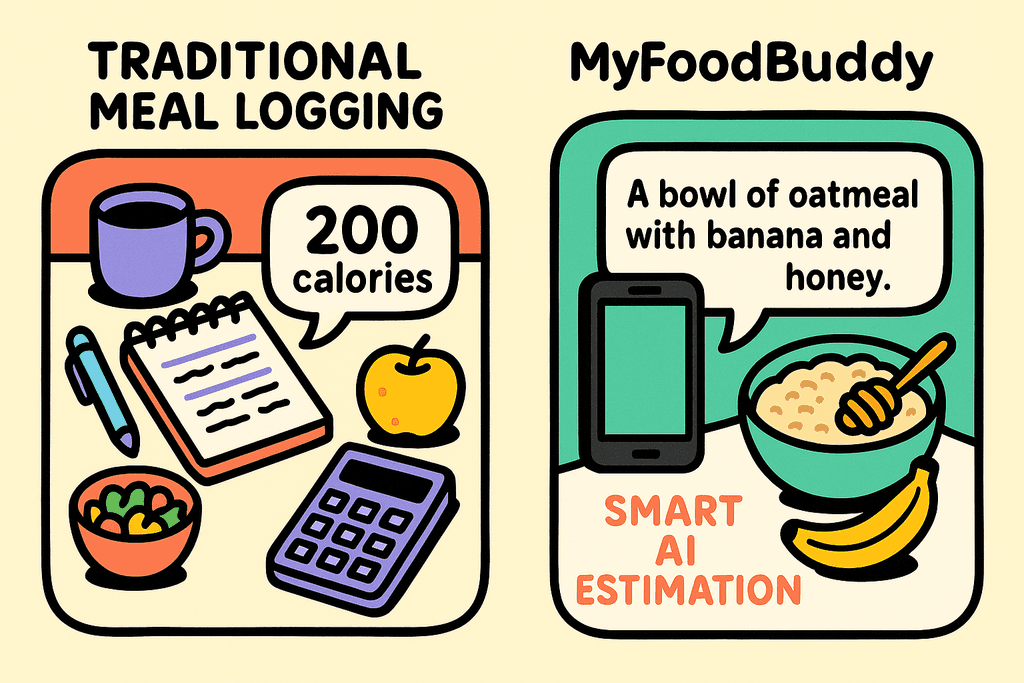
Behind every voice log is a complex system doing work that used to require a nutrition degree to understand. When you say "a bowl of oatmeal with banana and honey," the AI needs to figure out what size bowl you probably used, how much oatmeal fits in that bowl, what a typical banana weighs, and how much honey people usually drizzle on top. This kind of estimation used to be guesswork, but machine learning has made it surprisingly accurate. The system compares your description against millions of other meal logs to determine the most likely portion sizes.
AI Does the Math So Your Brain Doesn't Have To
The nutritional data itself comes from USDA databases, which contain detailed information about thousands of foods. But here's what makes modern calorie tracking technology different. The AI doesn't just look up "banana" and give you generic numbers. It considers the size you mentioned, adjusts for whether you said it was ripe or green, and even factors in regional variations if your location settings indicate you're in a different country.
| What AI Handles | What You Do |
|---|---|
| Portion estimation | Describe your meal |
| Calorie calculation | Nothing |
| Macro breakdown | Nothing |
| Tracking 20+ nutrients | Nothing |
| Database searching | Nothing |
The system tracks over 20 nutrients automatically without you needing to think about vitamins, minerals, or micronutrients. This removes the mental burden that makes traditional tracking feel like a part-time job. You're not doing math in your head or second-guessing whether you logged the right amount. The technology handles all of that complexity in the background.
Machine learning means the system gets smarter over time. If you regularly log "my usual breakfast," it learns what that means for you specifically. The AI adapts to your eating patterns and language, making each log faster and more accurate than the last. This is why automating your calorie tracking saves time and boosts accuracy compared to manual methods.
Smart Features That Keep You Consistent Without Thinking
The hardest part of tracking isn't logging one meal. It's logging every meal for weeks and months. This is where supporting technology makes the difference between giving up after a week and building a lasting habit. Modern apps use features that work quietly in the background to make consistency feel natural rather than forced. The key is reducing friction at every possible point where you might decide it's too much effort.
Meal favorites and category organization solve the repetition problem. Most people eat similar breakfasts throughout the week or have go-to lunch options. Instead of re-logging these meals from scratch each time, you can save them and re-add them with a single tap. MyFoodBuddy organizes meals by categories like Breakfast, Lunch, Dinner, and Snack, so finding your usual meals takes seconds instead of minutes.
- AI coaching provides insights based on your actual eating patterns, not generic advice
- Gamification elements like streaks create gentle motivation without pressure
- Health data integration connects with Apple Health for a complete picture
- Color-coded calendars show your tracking consistency at a glance
- Weight trend charts help you see progress over time
The AI coach, named Fiona in MyFoodBuddy, looks at your food logs and health data to offer personalized suggestions. This isn't about judgment or strict rules. It's more like having someone notice patterns you might miss, like realizing you tend to skip protein at breakfast or that your energy dips on days when you eat certain foods. The insights come from your actual behavior, which makes them relevant and actionable.
What ties all these features together is how they work without requiring extra effort from you. The app learns your habits, remembers your preferences, and adapts to your schedule. You're not managing the technology. It's managing the details so you can focus on your goals. This approach is why maintaining a healthy lifestyle with efficient calorie tracking technology has become more realistic for people with busy lives.
The combination of voice logging, AI calculations, and smart automation creates an experience that feels effortless because the technology handles everything that used to make tracking feel like work. You're left with just the essential part, which is being aware of what you eat without spending your whole day thinking about it. That's the real shift in how voice technology makes calorie counting effortless compared to older methods.
What This Means for Your Health Goals in 2024
The difference between success and failure in health tracking often comes down to one thing: how much effort it takes. When tracking feels like a chore, people quit. Studies show that traditional calorie tracking apps lose about 80% of their users within the first month because the process is too tedious. But when the friction disappears, something interesting happens. People actually stick with it long enough to see results.
The psychology behind this is simple. Habits that require willpower eventually fail because willpower is a limited resource. You might have the motivation to spend 10 minutes logging breakfast on day one, but by day 30, that same task feels impossible. Apps like MyFoodBuddy remove this barrier by letting you speak your meal in seconds instead of searching through databases and measuring portions.
Users report spending 90% less time logging meals compared to traditional apps, turning a 5-minute task into a 30-second one.
Why Effortless Tracking Changes Everything
When tracking becomes effortless, it shifts from something you force yourself to do into something that just happens. This matters because consistency beats perfection every time.
- People who track daily lose twice as much weight as those who track sporadically
- Accurate data helps you spot patterns you'd never notice otherwise, like how certain foods affect your energy
- Quick logging means you capture meals in real-time instead of trying to remember what you ate hours later
- Less mental burden means more energy for actual healthy choices instead of data entry
From Punishment to Empowerment
Traditional tracking feels like homework. Modern calorie tracking technology changes that dynamic completely. Instead of dreading the logging process, users actually want to see their data because it doesn't cost them anything to collect it.
- Voice logging removes the barrier of typing and searching through endless food databases
- AI-powered nutrition extraction means you don't need to guess portion sizes or calculate macros manually
- Real-time insights help you make better decisions throughout the day, not just review mistakes later
The testimonials tell the real story. One user switched from MyFitnessPal after years of frustration, saying the ease of just speaking what they ate made all the difference. Another mentioned how the simplicity helped them actually stick to their goals instead of giving up after a few weeks. When tracking takes seconds instead of minutes, it stops being about discipline and starts being about information.
Your Next Steps with Modern Tracking
The shift in calorie tracking technology isn't about working harder at logging your meals. It's about using tools that actually fit into your life instead of demanding you reshape your entire day around them. The old way required you to search databases, measure portions, and spend several minutes per meal just to get an estimate. Modern calorie tracking technology changed that by letting you speak naturally or type quickly, then handling all the math and database searching in the background.
The difference between sticking with tracking and giving up usually comes down to friction. When something takes too much time or feels too complicated, most people stop doing it within a few weeks. That's why voice-powered calorie trackers have become essential for people who want results without the daily frustration.
MyFoodBuddy uses this approach to make logging feel almost invisible. You say what you ate, and the AI figures out the rest using USDA data. No searching through endless food lists or creating custom meals every time you eat something simple.
The real test isn't whether you can track perfectly for a week. It's whether you'll still be tracking three months from now. Maintaining a healthy lifestyle depends on systems you can actually sustain, and that's where automating your calorie tracking makes the biggest difference.
You can try MyFoodBuddy free for seven days to see if this kind of tracking works better for you. No commitment, just a chance to experience what happens when the technology does the heavy lifting instead of you.
Common Questions About Modern Calorie Tracking
New calorie tracking technology raises a lot of questions, especially if you've spent years tapping through databases and weighing portions. The shift from manual entry to voice-based logging feels almost too easy, which makes people wonder if something's being lost in translation. These are the questions we hear most often from people considering the switch to AI-powered tracking.
How accurate is voice-based food logging compared to manual entry?
Voice logging is just as accurate as manual entry because it uses the same USDA nutritional database that traditional apps rely on. The difference is that AI interprets your natural language and matches it to the database automatically, saving you from scrolling through hundreds of similar items. MyFoodBuddy's AI has been trained on thousands of food descriptions, so it understands context like "a handful of almonds" or "a large apple" without you needing to specify exact grams.
Do I need to speak in a specific way for the app to understand?
You can talk normally, just like you'd tell a friend what you ate. The AI understands casual phrases like "two eggs and toast" or "chicken breast with rice and broccoli" without requiring precise measurements or formal language. If you do know exact amounts, you can include them, but it's not required for the system to work.
What happens if the app doesn't recognize a food I ate?
The app will make its best estimate based on similar foods in the database, and you can always review and adjust the entry manually if needed. Most common foods and restaurant items are recognized instantly, but for homemade recipes or unusual dishes, you might need to tweak portion sizes or swap ingredients. The system learns from corrections over time, getting better at understanding your specific eating patterns.
Can I still manually adjust entries if needed?
Yes, every entry can be edited just like traditional calorie tracking apps. You're not locked into whatever the AI suggests. The goal is to make logging faster, not to remove your control over the data.
How does AI coaching differ from just seeing numbers?
Numbers tell you what happened, but AI coaching explains why it matters and what to do about it. Instead of staring at a chart wondering if you're eating enough protein, an AI coach like Fiona can spot patterns across weeks of data and give you specific suggestions based on your goals. It's like having a nutritionist who actually knows your complete eating history.
Is this calorie tracking technology worth switching from my current app?
If you've ever stopped tracking because it felt like too much work, then yes. Apps like MyFitnessPal require multiple taps and searches for every meal, which adds up to serious time over weeks and months. Voice-based logging cuts that time from minutes to seconds, which is the difference between tracking consistently and giving up after two weeks. The question isn't whether the technology works, it's whether you value your time enough to try something easier.
Ready to start tracking smarter?
Download MyFoodBuddy and start tracking your calories by just saying what you ate. No more searching databases or guessing portions.
Get started