MyFitnessPal App Guide: Easier Food Logging Exists
MyFitnessPal app guide for calorie tracking. Discover why logging food takes too long and how voice-powered AI makes it faster and easier.
You open the MyFitnessPal app ready to log your lunch, but twenty minutes later you're still searching through databases trying to find the exact brand of chicken breast you ate and guessing at portion sizes. Most people abandon calorie tracking within their first week because the process feels more like data entry than progress toward their weight loss goals. There's a better way to track your food that takes seconds instead of minutes, and it might be exactly what you need to finally stick with your plan.
Table of Contents
How MyFitnessPal App Works for Calorie Tracking
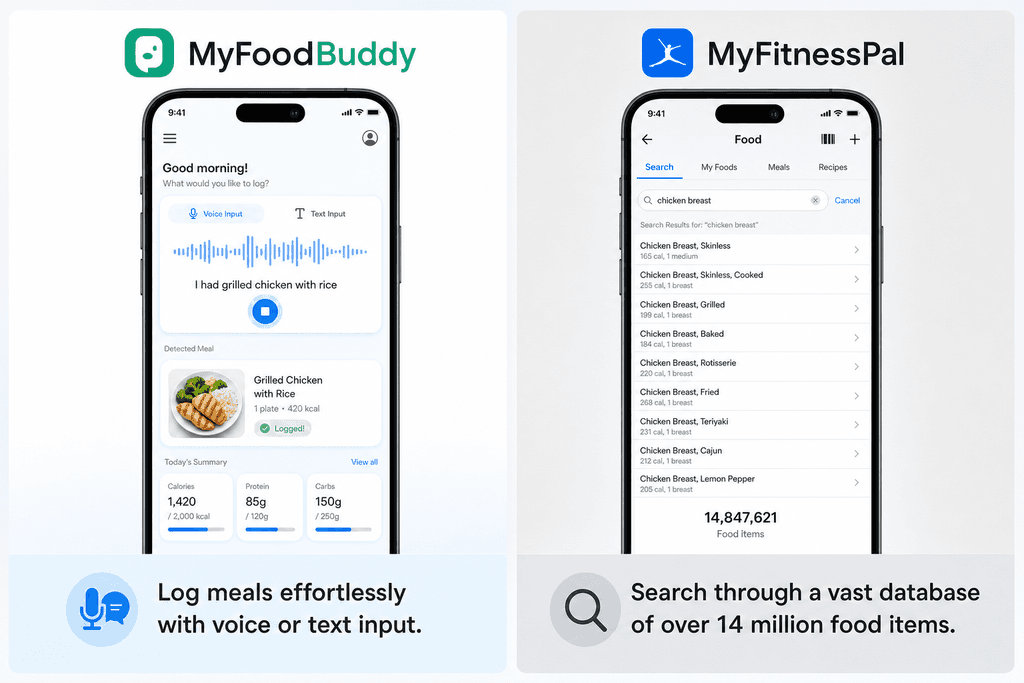
Over 200 million people have downloaded the MyFitnessPal app since it launched in 2005, making it the most popular calorie tracking tool in the world. The app became famous for building the largest food database available, with over 14 million items that users can search through. This massive collection of foods is both the app's biggest strength and its most frustrating feature. When you want to log a meal, you need to search for each ingredient separately, select the right portion size, and manually add everything to your daily log.
The Traditional Logging Process
The myfitnesspal app follows a step-by-step approach that hasn't changed much over the years. Most users spend between 3 to 5 minutes logging each meal accurately, which adds up to about 15 minutes per day if you're tracking three meals.
Here's what the typical logging process looks like:
- Open the app and tap the plus button to add food
- Search through millions of database entries to find your exact food item
- Scroll through dozens of similar options with different brands and serving sizes
- Adjust the portion size to match what you actually ate
- Repeat this process for every single ingredient in your meal
Database Size Versus User Experience
The myfitnesspal database includes everything from restaurant meals to packaged foods to raw ingredients. But having millions of options creates a new problem. When you search for "chicken breast," you might see 500 different entries with slightly different calorie counts. Some are user-submitted and might be wrong. Others are verified but use different serving sizes.
Finding the right entry becomes a guessing game that slows down the whole process. Apps like MyFoodBuddy take a different approach by using AI to understand what you ate from a simple voice or text description, cutting logging time down to seconds instead of minutes.
MyFitnessPal Features and Limitations
The app offers both free and premium versions, though the differences matter quite a bit for serious trackers.
| Feature | Free Version | Premium ($79.99/year) |
|---|---|---|
| Food Database Access | Full access | Full access |
| Barcode Scanner | Yes | Yes |
| Ads | Frequent ads | No ads |
| Macro Goals | Basic only | Custom macros |
| Meal Analysis | Limited | Detailed insights |
| Food Logging Speed | 3-5 min per meal | 3-5 min per meal |
The free version bombards you with ads between logging sessions, which adds even more time to an already slow process. The premium version costs nearly double what alternatives like MyFoodBuddy charge at $39 per year, yet it doesn't actually speed up the logging process. You still need to manually search and select every food item whether you pay or not.
Why People Stick with Manual Logging
Despite the time commitment, millions of people continue using myfitnesspal because they don't know faster options exist. The app became the industry standard before smartphones had good voice recognition or AI capabilities. Many users assume all calorie tracking apps work the same way.
Common reasons people give for staying with manual logging include:
- They've already invested time learning the myfitnesspal system
- Their friends use it and they want to compare progress
- They believe manual entry is more accurate than newer methods
- They haven't tried voice-based alternatives that use AI nutrition extraction
The truth is that technology has moved forward since 2005. Modern apps can understand natural language and extract nutritional data automatically, but many people don't realize this option exists yet.
The Real Time Cost of Manual Food Logging
Most people don't realize they're spending nearly 20 minutes every single day just typing food into an app. When you're trying to lose weight, that adds up to over two hours each week doing nothing but searching through databases and measuring portions. The myfitnesspal app and similar tools require you to hunt through millions of entries just to log a simple chicken salad. Each meal becomes a mini research project instead of a quick task you can finish and forget about.
The numbers tell a frustrating story. A basic breakfast with eggs, toast, and coffee takes about 3-5 minutes to log when you factor in searching for each item and adjusting portion sizes. But that's the easy part.
- Simple meals with 2-3 ingredients take 3-5 minutes of database searching
- Complex homemade dishes can eat up 10+ minutes as you log each ingredient separately
- Restaurant meals require guessing games that add another 5 minutes of scrolling
- Daily total averages 15-20 minutes just for food logging alone
This time investment becomes the main reason people quit tracking after a few weeks. You start with good intentions, but when logging dinner takes longer than eating it, something has to give. The mental load of remembering to log every single thing you eat adds another layer of stress that makes the whole process feel like a chore instead of a helpful tool.
Common MyFitnessPal Frustrations That Stop Weight Loss
The myfitnesspal app has millions of food entries in its database, which sounds helpful until you're staring at 47 different versions of "grilled chicken breast" and have no idea which one is accurate. Some entries were added by other users years ago with questionable calorie counts. Others use metric measurements when you're thinking in cups and ounces. You end up spending more time second-guessing your food choices than actually making progress toward your weight loss goals.
Dealing with duplicate entries and inaccurate user-submitted data turns every meal into a trust exercise. You pick an entry that looks reasonable, but you're never quite sure if those calories are right.
The real problems stack up fast when you're trying to track consistently:
- Searching through endless database entries while your food gets cold
- Measuring and weighing every single ingredient separately for homemade meals
- Guessing portion sizes at restaurants because nothing matches exactly
- The app doesn't understand when you say "chicken breast with rice and veggies"
- Forgetting to log means playing detective hours later trying to remember what you ate
These friction points add up until tracking feels impossible to maintain. You might stick with it for a week or two, but eventually the hassle outweighs the benefits and your weight loss plan falls apart. User-friendly alternatives have started addressing these exact pain points in ways that actually work for busy people.
Voice-Powered AI Changes Everything About Tracking
What if you could just say "grilled chicken salad with ranch dressing" and be done in 10 seconds? That's exactly how modern AI-powered tracking works, and it's why people who struggled with traditional apps are finally seeing results. The technology understands natural language the same way a nutritionist would, so you don't need to translate your meal into database-friendly terms. You eat, you speak, you move on with your day.
Voice input lets you log meals in the time it takes to send a text message. No more hunting through databases or weighing ingredients on a kitchen scale.
| Method | Time Per Meal | Daily Time |
|---|---|---|
| Traditional Manual Logging | 3-5 minutes | 15-20 minutes |
| Voice-Powered AI | 10-15 seconds | 1-2 minutes |
The speed difference makes it actually possible to log meals right after eating instead of trying to remember everything at the end of the day. Apps like MyFoodBuddy use AI to extract nutrition data automatically from whatever you say, whether that's "two eggs scrambled with cheese" or "large pepperoni pizza, three slices." The AI understands context and portion sizes without you needing to specify every tiny detail.
This approach solves the biggest problem with calorie tracking, which isn't the tracking itself but the time it steals from your life. When logging takes 15 seconds instead of 5 minutes, you're 18 times faster at getting the same nutritional information. That's the difference between a sustainable habit and another abandoned diet app collecting dust on your phone. Voice-powered logging removes the friction that stops most people from reaching their weight loss goals.
The technology works because it's built on the same AI that powers modern language understanding, combined with USDA nutritional databases for accuracy. You get the convenience of speaking naturally with the precision of detailed tracking, and that combination is what makes it stick. For anyone who's tried and quit traditional calorie counting, faster logging methods might be exactly what finally works.
Why Easier Logging Means Better Weight Loss Results
Research shows that people who track their food consistently lose twice as much weight as those who track sporadically. The problem isn't that people don't know tracking works. It's that traditional apps like myfitnesspal make it feel like a part-time job. When you're spending five minutes searching through databases and measuring portions for every meal, you're creating friction that kills your motivation over time.
Think about the last time you skipped logging a snack. It probably wasn't because you forgot what you ate. You just didn't want to deal with opening the myfitnesspal app, searching for the right entry, and adjusting serving sizes.
The Friction Problem
Every extra step between eating and logging creates a decision point where you might quit. Here's what happens with traditional tracking:
- You need to stop what you're doing and pull out your phone
- Search through thousands of database entries to find the right food
- Guess at portion sizes or pull out measuring cups
- Manually adjust quantities and serving sizes
- Repeat this process 3-5 times per day, every single day
Voice-powered apps like MyFoodBuddy cut this down to 15 seconds. You just say "chicken breast with rice and broccoli" while you're cooking, and the AI handles the rest.
When Tracking Actually Fits Your Life
The easier something is, the more honest you'll be about it. When logging takes seconds instead of minutes, you're way more likely to track that handful of chips or the cream in your coffee. Those small things add up to hundreds of calories that most people conveniently "forget" to log.
- Log meals while driving home from a restaurant
- Track snacks while your hands are covered in food prep
- Record breakfast while getting ready for work
- Update your log during a quick break without interrupting your flow
The Cost of Complexity
Here's something most people don't consider. The myfitnesspal app costs $79.99 per year for premium features. MyFoodBuddy costs $39 annually and includes voice logging from day one. You're paying less for something that actually saves you time.
| Feature | Traditional Apps | Voice-Powered Apps |
|---|---|---|
| Time per meal | 3-5 minutes | 15 seconds |
| Daily time investment | 15-25 minutes | 1-2 minutes |
| Hands-free logging | No | Yes |
The math is simple. If you save 20 minutes per day on tracking, that's over 120 hours per year. That's three full work weeks you get back just by switching to a faster method. And you're more likely to actually stick with it because it doesn't feel like a chore anymore.
Making Food Logging Work for Your Life
The myfitnesspal app has helped millions of people track their food, but here's the thing most people don't talk about. The average person spends 15-20 minutes per day searching through databases, measuring portions, and manually entering every ingredient. That adds up to over two hours every week, which is why most people quit within the first month. The best calorie tracking tool isn't the one with the biggest database or the most features. It's the one you'll actually use tomorrow, next week, and three months from now.
Voice-powered logging removes the friction that makes people give up on their weight loss goals. When you can just say "chicken breast with rice and broccoli" and move on with your day, tracking becomes something you barely think about. MyFoodBuddy uses AI to handle the tedious parts, so logging a meal takes about 10 seconds instead of several minutes.
Consistency beats perfection every single time. You don't need to weigh every gram or find the exact brand in a database to see results. What matters is showing up daily and keeping track of what you're eating, even if the numbers aren't perfect down to the calorie.
The 7-day free trial gives you enough time to see if faster logging actually makes a difference in your routine. Most people notice they're more likely to log dinner when they're tired because it doesn't feel like homework anymore. When tracking takes less effort than deciding what to watch on Netflix, weight loss starts feeling manageable instead of overwhelming.
Common Questions About Food Logging Apps
Switching from a traditional calorie tracker to something new always brings up questions. People want to know if they're making the right choice, especially when they've spent months or years building habits around apps like myfitnesspal. Here are the most common questions we hear from people considering voice-powered food logging.
How accurate is voice-powered food logging compared to manual entry?
Voice logging uses the same nutritional databases as manual entry apps, including USDA data, so the accuracy is essentially identical. The difference is just how you input the information. When you say "grilled chicken breast with rice and broccoli," the AI extracts the same data you'd manually search for in myfitnesspal, but in a fraction of the time.
Can I still use MyFitnessPal if I want the largest food database?
You absolutely can keep using myfitnesspal if database size matters most to you. However, most people find that AI-powered apps like MyFoodBuddy cover the vast majority of common foods through USDA data and smart recognition. The real question is whether having millions of user-submitted entries is worth the extra time spent searching and verifying accuracy. Many users discover they were only using a small fraction of that massive database anyway.
Does voice logging work for complex meals with multiple ingredients?
Yes, voice logging handles complex meals surprisingly well. You can say something like "homemade burrito bowl with brown rice, black beans, grilled chicken, cheese, sour cream, and salsa" and the AI breaks down each component. For recipes you make regularly, you can save them as favorites and log them with one tap next time.
How much time does voice logging actually save per day?
Most people spend 30-60 seconds logging a meal in traditional apps like the myfitnesspal app when you factor in searching, selecting the right item, and adjusting portions. Voice logging typically takes 5-10 seconds. If you log three meals and two snacks daily, that's about 2-4 minutes saved per day, which adds up to 12-28 hours per year.
Is MyFoodBuddy compatible with fitness trackers and Apple Health?
MyFoodBuddy syncs directly with Apple Health, which means it works with any fitness tracker that also connects to Apple Health. This includes Apple Watch, Fitbit, Garmin, and most other popular devices. Your activity data flows in automatically to help calculate your daily calorie needs.
What happens if the AI doesn't recognize a specific food item?
When the AI encounters an unfamiliar food, you can either describe it differently or use the barcode scanner for packaged items. You also have the option to manually enter nutritional information, just like you would in any other app. The system learns from corrections too, so it gets better over time at recognizing how you describe foods.
Ready to start tracking smarter?
Download MyFoodBuddy and start tracking your calories by just saying what you ate. No more searching databases or guessing portions.
Get started