
Busy Lifestyle Health Tool That Makes Food Logging Easy
Discover how voice-powered food logging saves time for busy people. Track calories in seconds, not minutes, with AI nutrition tools.
You spend three to five minutes logging a single meal while your coffee gets cold and your lunch break disappears. Most people quit calorie tracking apps within the first month because traditional food logging feels like a part-time job, not a health habit. MyFoodBuddy changes that by letting you speak your meals in seconds instead of typing and searching for minutes, turning this busy lifestyle health tool into something you'll actually stick with.
Table of Contents
The Time Problem with Traditional Food Tracking
Most people who try tracking their food give up within the first two weeks. The reason isn't lack of motivation or willpower. It's because traditional calorie counting apps turn every meal into a homework assignment. What should take seconds ends up eating away at your day, one tedious search and measurement at a time.
Why Old School Apps Eat Up Your Time
Think about what happens when you use apps like MyFitnessPal or Cronometer. You finish eating lunch and pull out your phone to log it. But instead of a quick note, you're stuck doing detective work.
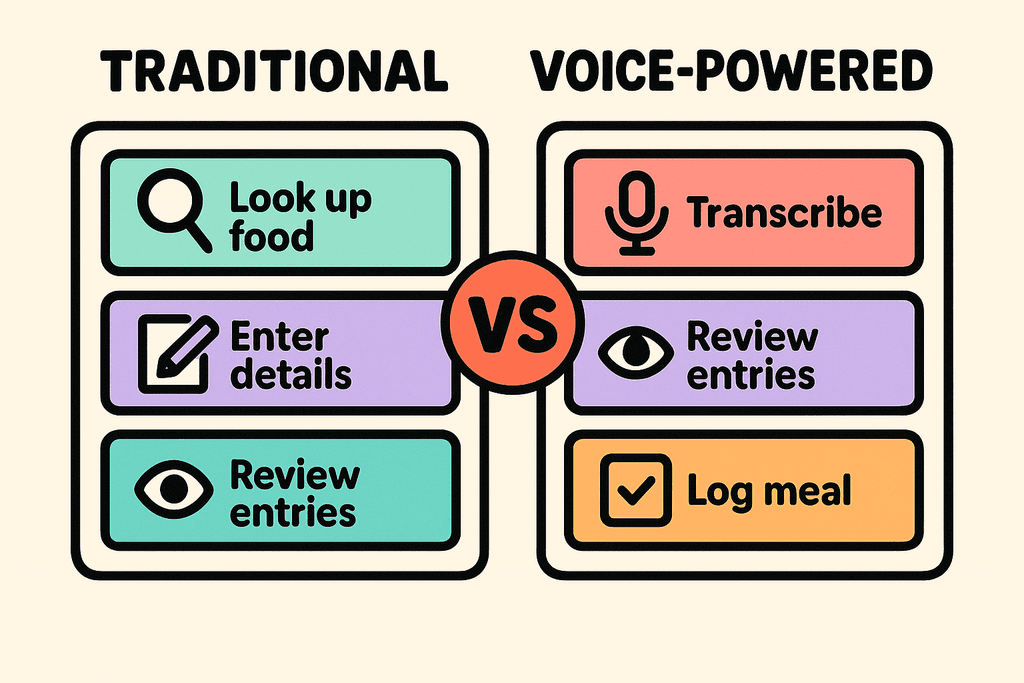
Here's what the process actually looks like:
- Search through massive food databases trying to find the exact brand or recipe that matches what you ate
- Scroll through dozens of similar entries with conflicting nutrition information
- Pull out measuring cups or a food scale to weigh your portions
- Manually adjust serving sizes and recalculate macros for each ingredient
- Repeat this process for every single item on your plate
The Real Cost of Manual Logging
Studies show the average person spends 15 to 20 minutes per day logging food with traditional methods. That's over two hours every week just to track what you're eating. For busy people juggling work, family, and everything else, that time simply doesn't exist.
The time breakdown looks something like this when comparing old methods to voice-powered tools:
Time Comparison: Traditional vs Voice-Powered Logging
Traditional Apps (per meal):
- Searching database: 2-3 minutes
- Measuring portions: 2-4 minutes
- Entering each item: 1-2 minutes
- Adjusting servings: 1-2 minutes
- Total: 6-11 minutes per meal
Voice-Powered Apps like MyFoodBuddy (per meal):
- Speaking what you ate: 10-15 seconds
- AI processes and calculates: 5-10 seconds
- Quick review: 5-10 seconds
- Total: 20-35 seconds per meal
When Tracking Becomes the Barrier
The irony is obvious. Tools meant to help you get healthier end up being the reason you quit. When logging breakfast takes longer than eating it, something's broken.
This time barrier hits hardest for people with busy lifestyles. Parents grabbing quick meals between activities. Professionals eating lunch at their desk. Anyone who doesn't have the luxury of planning and measuring every bite. The busy lifestyle health tool you need has to work around your schedule, not become another time-consuming task on your list.
That's exactly why voice-powered logging exists. Apps like MyFoodBuddy let you speak naturally about what you ate, and AI handles all the database searching and calculation work in seconds. No measuring cups required. No endless scrolling through food lists. Just quick logging that actually fits into a real person's day.
How Voice Logging Changes the Game
Most people quit tracking their food within the first week. The reason is simple: traditional calorie counting apps turn every meal into a math problem. You have to search through databases, measure portions, tap through multiple screens, and manually calculate everything. It's exhausting, especially when you're already juggling work, family, and everything else life throws at you.
How Voice Logging Changes the Game
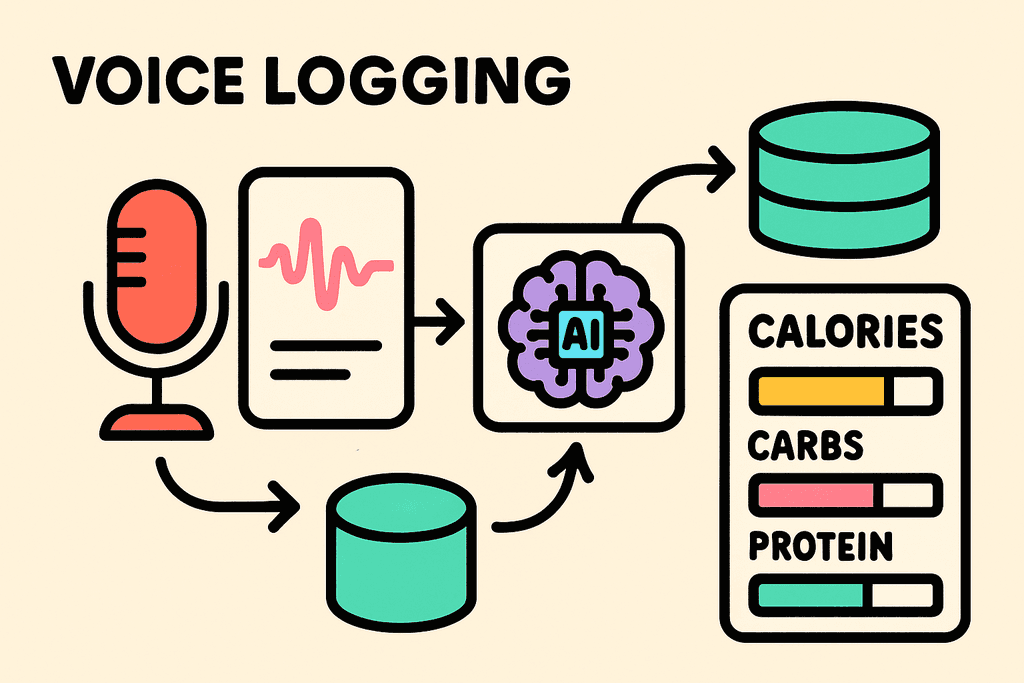
Voice logging flips this entire process on its head. Instead of spending five minutes searching for "scrambled eggs" and then trying to figure out if you had a medium or large egg, you just speak naturally about what you ate. Say something like "two eggs, toast with butter, and a coffee with oat milk" and the app does all the heavy lifting. The AI processes your natural language, matches each food item to the USDA nutritional database, and calculates everything automatically.
- No searching through endless food databases
- No measuring or weighing portions obsessively
- No manual calculations or nutrition label reading
- Works for complex meals with multiple ingredients
The technology behind this is pretty straightforward but powerful. When you speak or type your meal, the AI breaks down each component and cross-references it with comprehensive nutritional data. It understands context too, so if you say "coffee with oat milk," it knows you're not talking about black coffee. This means you can log an entire day's worth of meals in under a minute, which is about how long it used to take just to log breakfast with traditional apps.
What makes this particularly useful for busy people is that you can do it anywhere. Stuck in traffic? Log your lunch. Between meetings? Record what you had for breakfast. The barrier to entry drops so low that tracking becomes something you actually do, not something you feel guilty about skipping.
Smart Features That Save Even More Time
Voice logging is just the starting point. The real time-saver comes when you realize you eat a lot of the same meals throughout the week. Maybe you have the same breakfast four days a week, or you rotate between three different lunch options. Traditional apps make you log these meals from scratch every single time, which feels like punishment for trying to be healthy.
Smart Features That Save Even More Time
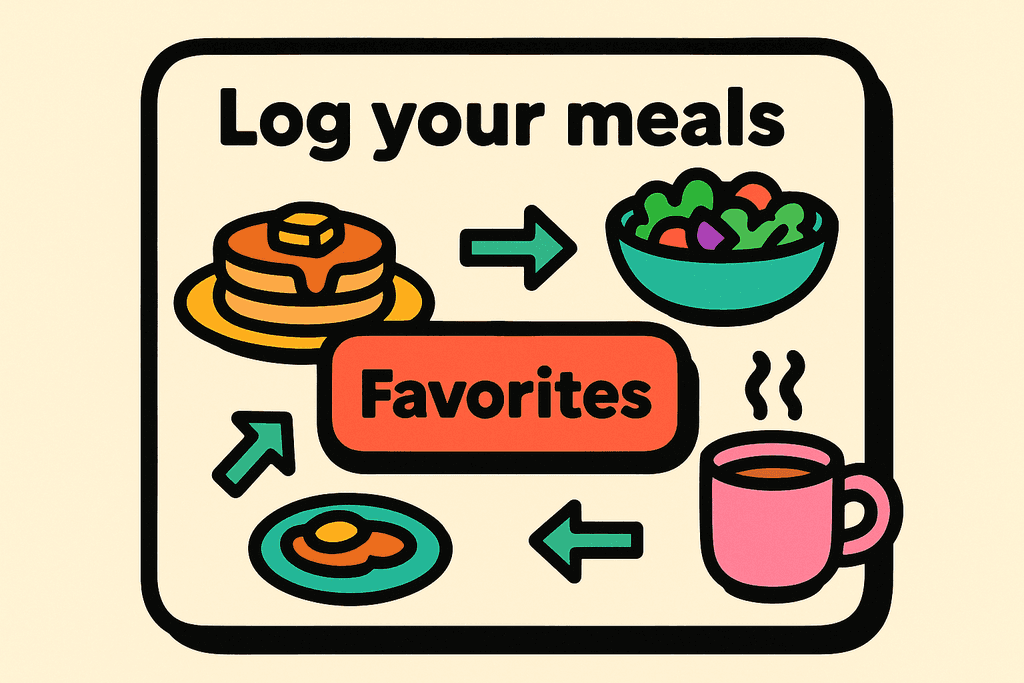
MyFoodBuddy lets you save frequent meals as favorites, so that breakfast you logged on Monday becomes a one-tap entry on Tuesday. The app also automatically categorizes your meals into breakfast, lunch, dinner, and snacks, which means you don't have to think about organization. It just happens in the background while you focus on your actual life.
Then there's Fiona, the AI nutrition coach built into the app. Instead of staring at numbers and trying to figure out what they mean, Fiona analyzes your food logs and provides personalized insights based on your goals. She'll notice patterns you might miss, like consistently low protein intake or eating most of your calories late at night. This removes the mental load of having to be your own nutritionist.
- One-tap re-logging for favorite meals
- Automatic meal categorization throughout the day
- AI coach that analyzes patterns without you lifting a finger
- Apple Health integration syncs data automatically
- Streaks and achievements keep you motivated without being annoying
The Apple Health integration deserves special mention because it means your weight, activity, and other health metrics flow into the app without manual entry. Everything connects, and you get a complete picture of your health without having to be a data entry clerk. The gamification elements like streaks work quietly in the background, giving you a little dopamine hit when you maintain consistency without making the whole experience feel like a mobile game.
For anyone interested in achieving balanced meals without the hassle, these automated features make a massive difference in whether you'll stick with tracking long-term.
Real Results from Busy People
The difference between a tool you use and a tool you abandon usually comes down to friction. When something takes too much effort, it doesn't matter how beneficial it is. You won't do it. This is why people who've been using apps like MyFitnessPal for years are switching to voice-powered options. They're tired of apps that feel like a second job.
One user, Mirro R., mentioned they'd been using MyFitnessPal for years but found it increasingly annoying. They specifically called out how easy it is to use MyFoodBuddy on the go without creating a bunch of meals or spending time searching. That "on the go" part matters because most busy people aren't logging meals from their couch. They're doing it in the car, walking between meetings, or standing in line at the grocery store.
"I used to use a different calorie tracking app, but switching to foodbuddy has been great and much more convenient. I like just being able to say what I've eaten and it calculates all the calories for me." – JakeVdub608
Another user, Zach Abitz, highlighted the simplicity and speed of entering logged meals as what makes this the most convenient app he's used. When you're juggling a busy lifestyle, those seconds add up. The difference between a 30-second food log and a 5-minute food log is the difference between something you do consistently and something you skip when life gets hectic.
- Perfect for logging while commuting or between tasks
- Consistency improves when tracking takes seconds
- Users report switching from apps that felt like work
- Convenience ranks as the top benefit across reviews
The pattern across user feedback is clear: people stick with tracking when it doesn't interrupt their day. Whether you're trying to lose weight without missing out on your favorite coffee or just want to understand your eating patterns better, the tool needs to fit into your life, not the other way around. MyFoodBuddy does exactly that by removing the friction that makes traditional calorie counting feel like a chore.
For busy people looking for a practical busy lifestyle health tool, the combination of voice logging, smart automation, and AI coaching creates something that actually works in real life. You can check out more about how this approach helps with simplifying calorie counting for busy individuals or explore other ways to make nutrition tracking fit your schedule on the FoodBuddy blog.
Why Speed Matters for Long-Term Success
Research shows that people abandon new habits within the first two weeks if they require too much effort. The average person who tries traditional calorie tracking apps quits after just 11 days because the process takes too long. When you're juggling work, family, and everything else life throws at you, spending five minutes searching through food databases for every meal just doesn't work. This is where a busy lifestyle health tool becomes essential for anyone serious about maintaining their health goals without sacrificing their entire day.
The Friction Problem
Every extra tap, search, or selection in an app creates what behavioral scientists call "friction." The more friction exists between you and your goal, the less likely you are to follow through. Traditional tracking apps require multiple steps that add up fast.
- Searching through thousands of food items to find the right match
- Adjusting portion sizes and measurements manually
- Creating custom meals or recipes from scratch
- Verifying nutritional accuracy across different brands
- Logging each ingredient separately for home-cooked meals
Studies on habit formation reveal that behaviors taking less than 30 seconds are 80% more likely to become automatic. Voice logging cuts through all that noise by letting you speak naturally about what you ate.
Voice Versus Traditional Tracking
The difference between voice-powered tools and traditional methods goes beyond just convenience. It fundamentally changes how sustainable the habit becomes over time.
Voice-Powered Benefits
- Log meals in under 10 seconds while multitasking
- No need to stop what you're doing to type
- Works perfectly when your hands are full or dirty
- Natural language means no learning curve
Traditional Tracking Drawbacks
- Requires 3-5 minutes per meal on average
- Demands full attention and both hands free
- Steep learning curve for navigating databases
- Easy to forget details if you wait too long
Consistency Beats Perfection
Here's something most people miss about health tracking. Getting your calories exactly right 50% of the time beats getting them perfect 10% of the time. The goal isn't to track every single nutrient with laboratory precision. The goal is to build awareness and stay consistent enough that you actually reach your health goals. MyFoodBuddy prioritizes this philosophy by making logging so easy that you'll actually do it every day, which matters far more than obsessing over whether your chicken breast was 4.2 or 4.3 ounces.
Making Health Tracking Work for Your Schedule
The biggest problem with traditional calorie tracking isn't that people don't want to be healthy. It's that most apps demand way too much time from people who barely have enough hours in the day. When you're juggling work, family, and everything else, spending five minutes searching through food databases for every meal just doesn't work. That's why most people quit tracking within the first week, even when they really want to stick with it.
Voice-powered logging changes this completely. Instead of typing, searching, and calculating, you just say what you ate and move on with your day. The whole process takes about ten seconds, which is the difference between something you'll actually do every day and something that sits unused on your phone.
When the friction disappears, consistency becomes realistic. You can log breakfast while making coffee, lunch during your break, and dinner while cleaning up. No more forgetting to track because it felt like too much work. Voice technology makes calorie counting fit into busy schedules instead of requiring you to build your schedule around it.
MyFoodBuddy offers a 7-day free trial so you can test whether voice logging actually saves you time. The app handles all the nutrition calculations using AI and USDA data, which means you get accurate tracking without the manual work. If you've tried other apps and quit because they took too long, this might be worth checking out.
The best busy lifestyle health tool is the one you'll actually use tomorrow, next week, and next month. Everything else is just another app taking up space on your phone. Some questions probably came up while reading this, so let's address those below.
Common Questions About Voice Food Logging
Voice logging sounds simple, but most people have questions before they try it. The idea of talking to your phone about what you ate feels different from the traditional method of searching through databases and measuring portions. Here's what people usually want to know about using voice as a busy lifestyle health tool.
How accurate is voice-powered food logging?
Voice logging apps like MyFoodBuddy use AI combined with USDA nutritional databases to calculate calories and nutrients. The accuracy depends on how specific you are when describing your food. If you say "a handful of almonds," you'll get an estimate, but if you say "20 almonds," you'll get more precise numbers. Most voice logging tools are just as accurate as manual entry because they pull from the same nutritional databases that apps like MyFitnessPal use.
Can it handle complex meals with multiple ingredients?
Yes, and this is where voice logging really shines as a busy lifestyle health tool. You can say something like "chicken stir fry with broccoli, bell peppers, soy sauce, and rice" and the app breaks down each ingredient. The AI understands natural language, so you don't need to log each item separately like you would in traditional calorie trackers. MyFoodBuddy processes the entire meal in one go, saving you several minutes of tapping and searching.
What if I eat something unusual or homemade?
Homemade meals work fine with voice logging. Just describe the main ingredients and approximate amounts. The app estimates nutritional values based on common recipes and ingredient combinations. If you make the same dish regularly, you can save it as a favorite meal and re-log it instantly next time. This beats spending time creating custom recipes in apps like Cronometer or MacroFactor.
Is my voice data stored or shared?
Most voice logging apps convert your speech to text and then delete the audio file. The actual voice recording isn't stored long-term, only the text version of what you said. MyFoodBuddy processes your voice input to extract the food information, but your voice itself isn't kept in a database or shared with third parties. Your meal logs are private and synced securely to your account.
Do I need to speak in a specific format?
No special format required. Talk like you're telling a friend what you ate. Say "I had two eggs, toast with butter, and coffee with oat milk" instead of trying to use exact measurements or formal language. The AI figures out what you mean from context. This natural approach makes it work as a practical busy lifestyle health tool because you're not learning a new system or memorizing commands.
How much does a good voice logging app cost?
Pricing varies, but many voice-first calorie trackers charge between $30-100 per year. MyFoodBuddy costs $39 annually with a 7-day free trial, which is less than most people spend on a single month of meal prep containers. The time you save not manually searching for foods often makes the subscription worth it if you're serious about tracking your nutrition consistently.
Ready to start tracking smarter?
Download MyFoodBuddy and start tracking your calories by just saying what you ate. No more searching databases or guessing portions.
Get started