
MyFitness App Basics for Logging Food and Tracking Goals
Learn how MyFitness app simplifies calorie tracking with voice logging, AI nutrition extraction, and personalized goals for easy weight loss.
You start tracking calories with the best intentions, but after three days of searching food databases and measuring every ingredient, you're ready to give up. Most people quit calorie tracking within the first week because traditional apps turn a simple meal into a 10-minute data entry project. MyFoodBuddy changes that by letting you log what you ate in seconds using just your voice, making weight loss tracking actually stick.
Table of Contents
What Makes Food Tracking So Hard
About 80% of people who start using traditional calorie tracking apps quit within the first two weeks. That's not because they lack willpower or don't care about their health goals. The real problem is that most myfitness apps make logging food feel like a part-time job. When you're hungry and just finished eating, the last thing you want to do is spend ten minutes searching through endless food databases and measuring every ingredient.
The Time Drain Problem
Traditional calorie counting apps demand way too much of your time. Each meal becomes a mini research project where you're hunting through thousands of food entries, many of which have conflicting nutritional information.
| Task | Time Required | Daily Total |
|---|---|---|
| Searching food database | 2-4 minutes | 6-12 minutes |
| Measuring portions | 2-3 minutes | 6-9 minutes |
| Adjusting entries | 1-2 minutes | 3-6 minutes |
| Total per day | 15-27 minutes |
That adds up to nearly three hours every week just to track what you eat. Most people don't have that kind of time to spare, which is exactly why apps like MyFoodBuddy let you log meals in seconds using voice or text input instead.
Database Confusion and Accuracy Issues
Here's where things get really messy. When you search for something simple like "chicken breast" in most myfitness tracking apps, you might get hundreds of different entries. Some are from restaurants, some are homemade, and many have wildly different calorie counts for the same food.
- User-submitted entries often contain errors or outdated information
- Restaurant items may not match actual portion sizes you received
- Generic entries don't account for how you actually cooked your food
- Branded products get discontinued but stay in the database forever
You end up guessing which entry is closest to what you actually ate. That guesswork defeats the whole purpose of tracking in the first place.
Portion Estimation Headaches
Even after you find the right food, you still need to figure out how much you ate. Apps expect you to know whether you had 4 ounces or 6 ounces of chicken, or if your rice was one cup or one and a half cups.
- Most people don't own a food scale or want to carry one everywhere
- Eyeballing portions leads to errors of 30-50% on average
- Mixed dishes require logging each ingredient separately
- Eating out makes accurate tracking nearly impossible
These constant estimation challenges create stress around every meal. When tracking becomes stressful, people stop doing it, and their weight loss goals fall apart.
Logging Your Meals in Seconds
Most people quit tracking their food within the first week because traditional apps make you search through endless databases and measure every ingredient. You end up spending more time logging your breakfast than actually eating it. The whole process feels like homework, which is exactly why so many weight loss journeys stall before they even start. But what if you could just tell your phone what you ate and move on with your day? That's where voice input changes everything for people trying to lose weight without the usual headaches.
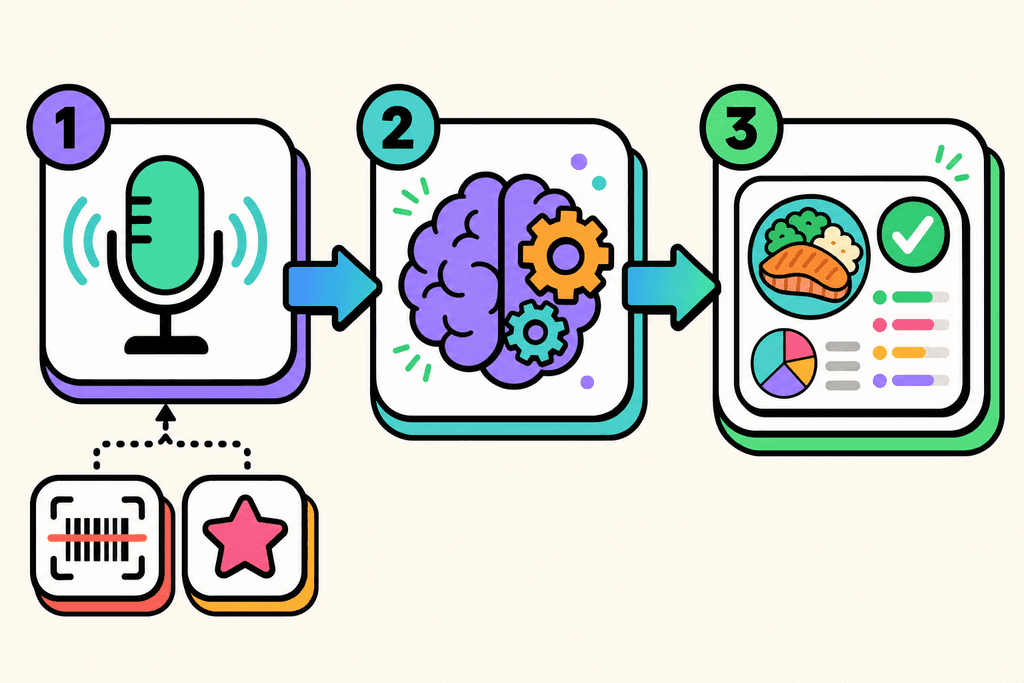
MyFoodBuddy lets you speak naturally about your meals instead of typing or tapping through menus. Just say "I had two scrambled eggs with toast and coffee" and the AI automatically extracts the nutritional information from your description. No searching, no measuring, no math.
- Voice input captures your meal in seconds by letting you speak naturally
- AI extraction pulls out calories, protein, carbs, and fats without manual entry
- Barcode scanning gives instant data for packaged foods
- Saved meals let you re-log breakfast or lunch with one tap
- The entire process takes less than 30 seconds per meal
For packaged foods, the barcode scanner works even faster. Point your camera at any nutrition label and the app pulls in all the data instantly. This is especially helpful when you're grabbing lunch at work or shopping for groceries.
The saved meals feature becomes your best friend after a few days of logging. Most people eat similar breakfasts throughout the week, so instead of re-entering "oatmeal with banana and almonds" every morning, you just tap your saved meal. Same goes for your regular coffee order or that chicken salad you meal prep every Sunday.
Quick Start Checklist for Your First Meal
- Open MyFoodBuddy and tap the microphone icon
- Say what you ate in plain language (like telling a friend)
- Review the AI's nutritional breakdown
- Adjust portions if needed by tapping the serving size
- Save the meal as a favorite if you eat it regularly
- Check your daily progress bar to see remaining calories
Setting Up Your Personal Weight Loss Goals
Knowing how many calories to eat for weight loss confuses most people because every website gives different numbers. Some say 1200 calories, others say 2000, and nobody explains why. The truth is your calorie needs depend on your age, weight, height, and how active you are throughout the day. Getting this number wrong means either losing weight too slowly or feeling hungry and miserable all the time. MyFoodBuddy includes a TDEE calculator that figures out your exact daily calorie needs based on your personal stats and activity level.
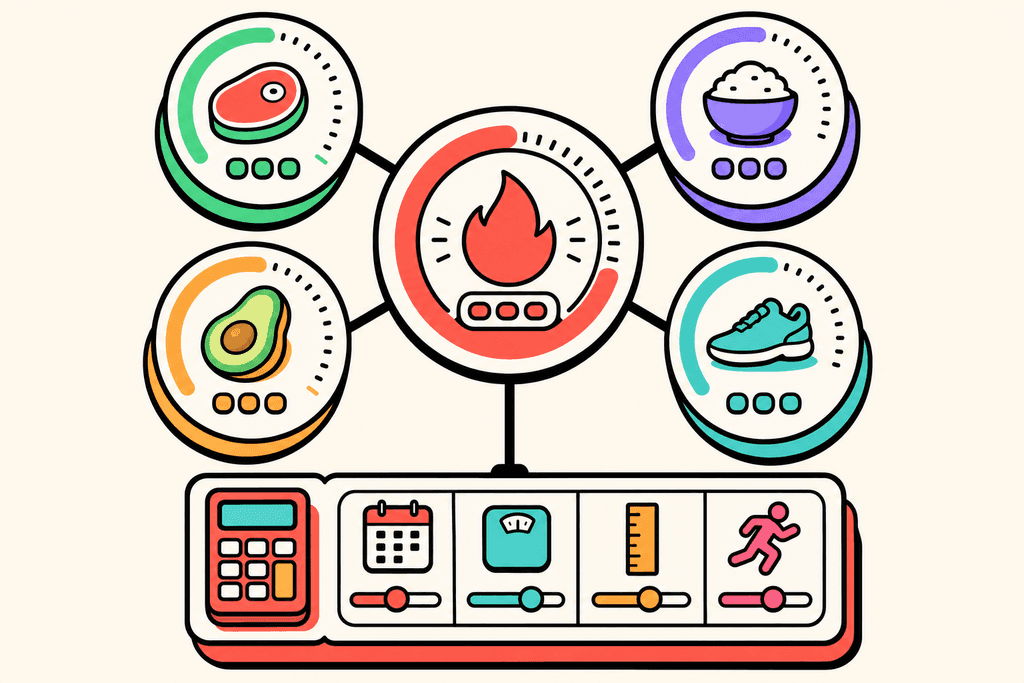
TDEE stands for Total Daily Energy Expenditure, which is just a fancy way of saying how many calories your body burns each day. Once you know this number, you can set a calorie deficit that helps you lose weight at a healthy pace without starving yourself.
| Deficit Level | Daily Reduction | Weekly Loss | Best For |
|---|---|---|---|
| Small | 250 calories | 0.5 lbs | Slow, sustainable loss |
| Moderate | 500 calories | 1 lb | Balanced approach |
| Aggressive | 750 calories | 1.5 lbs | Faster results |
Beyond just calories, you can set custom macro goals for protein, carbs, and fats. This matters because eating enough protein helps you feel full and maintain muscle while losing weight. The app also tracks micro goals for vitamins and minerals, so you're not just losing weight but actually getting healthier.
The really smart part is how your goals automatically adjust based on your activity level from Apple Health. If you go for a long walk or hit the gym, your calorie target increases slightly to account for that extra movement. Visual progress bars show exactly how close you are to hitting your daily targets without doing any mental math.
Tracking Progress and Staying Motivated
Stepping on the scale every morning can mess with your head because weight fluctuates daily based on water retention, sleep, and a dozen other factors. Looking at your weight loss journey through a wider lens helps you see the actual trend instead of getting discouraged by normal day-to-day changes. MyFoodBuddy provides charts and metrics that show your progress over days, weeks, and months, making it easier to spot patterns and celebrate real progress. You can see how your calorie intake, protein consumption, and weight trend over time, which tells a much better story than any single number on a scale.
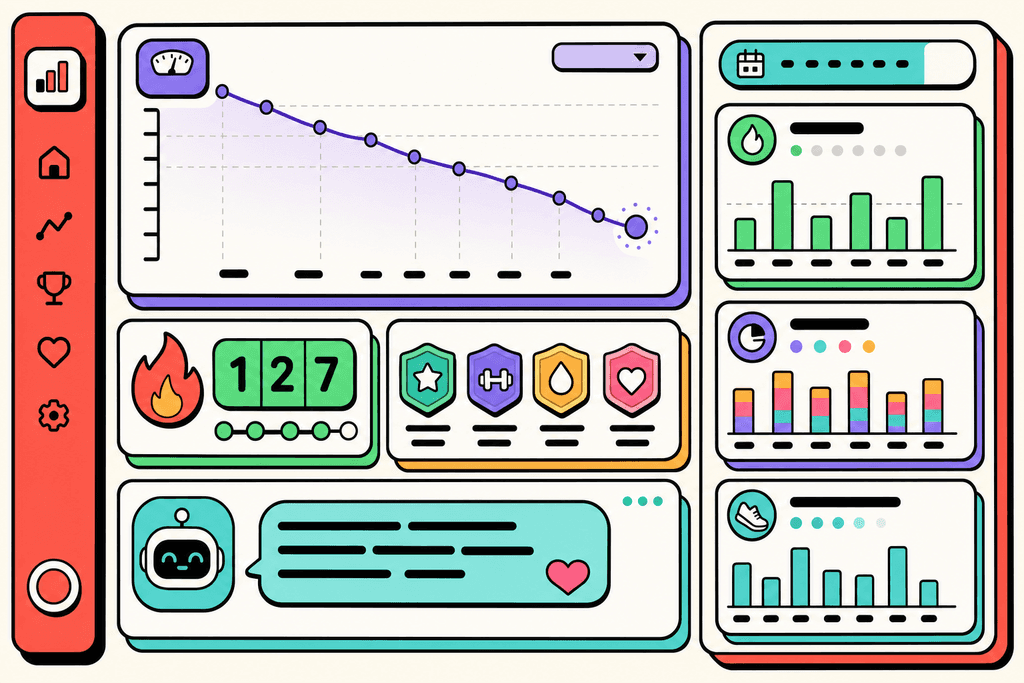
The app includes Fiona, an AI nutrition coach who analyzes your food logs and gives you personalized insights. She might notice you're consistently low on protein at breakfast or that you tend to go over your calorie goal on weekends. These observations help you make small adjustments that add up over time.
- Progress charts visualize your journey across different time periods
- AI coach Fiona spots patterns you might miss on your own
- Sleep and activity integration shows how rest affects your eating habits
- Streaks and achievements reward you for staying consistent
- Smart reminders keep you on track without being annoying
What makes Fiona different from other apps is how she looks at your complete health picture by analyzing food logs alongside sleep and activity data from Apple Health. She might point out that you eat more on days when you sleep poorly, or that your protein intake drops on busy workdays. These connections help you understand your habits better.
User Engagement: MyFoodBuddy users logged 1,901 meals in a single day, showing how quick and easy the process becomes once you get started.
The gamification features like streaks and achievements tap into that same feeling you get from maintaining a Duolingo streak or closing your Apple Watch rings. Logging meals for seven days straight earns you a streak badge, and hitting your protein goal consistently unlocks achievements. These small wins keep you motivated when the scale isn't moving as fast as you'd like. The reminders are designed to be helpful without nagging, gently prompting you to log meals if you haven't checked in by your usual time.
Why Simple Tracking Works Better for Weight Loss
Research shows that people who track their food intake lose twice as much weight as those who don't, but here's the catch: most people quit within the first month. The problem isn't that tracking doesn't work. The problem is that traditional calorie counting apps make it feel like a part-time job. When you need to search through databases, measure portions, and manually enter every ingredient, it's no wonder people give up before seeing results.
The science behind successful weight loss isn't about perfect accuracy. It's about building habits that stick. A study published in the Journal of Medical Internet Research found that consistency in logging meals mattered far more than getting every calorie count exactly right. People who logged their meals regularly, even with rough estimates, lost more weight than those who obsessed over precision but couldn't maintain the habit.
The Friction Problem with Traditional Apps
Every extra step between you and logging a meal creates what behavioral scientists call "friction." Think about apps like MyFitnessPal or Cronometer. They're powerful tools, but they require you to:
- Search through massive food databases to find the right item
- Measure or estimate portion sizes accurately
- Enter each ingredient separately for home-cooked meals
- Navigate multiple screens just to log a simple snack
- Understand nutrition labels and macro calculations
This process can take anywhere from 2 to 5 minutes per meal. Multiply that by three meals plus snacks, and you're spending 15-20 minutes daily just on data entry. That's where most people tap out.
How Voice Input Changes the Game
Voice logging removes the biggest barrier to meal tracking. Instead of typing and searching, you simply say what you ate. MyFoodBuddy uses AI to understand natural language, so you can say "chicken breast with rice and broccoli" and the app figures out the rest. The entire process takes about 10 seconds instead of several minutes.
| Method | Time Per Meal | Daily Time Investment | Monthly Hours |
|---|---|---|---|
| Traditional Apps | 3-5 minutes | 15-20 minutes | 7-10 hours |
| Voice Logging | 10-15 seconds | 1-2 minutes | 30-60 minutes |
The time savings are massive. But more importantly, the reduced friction means you're far more likely to actually do it every single day.
AI Eliminates the Knowledge Barrier
Traditional calorie tracking assumes you understand nutrition. You need to know what macros are, how to read labels, and how to estimate portions. That's a lot to learn when you're just trying to lose a few pounds. AI-powered apps handle all the complex stuff behind the scenes. You don't need to know that protein has 4 calories per gram or that your TDEE calculation requires your activity level. The technology does the thinking for you.
- No need to understand macro ratios or micronutrients
- Automatic portion size estimation from natural descriptions
- Smart recognition of common foods and meals
- Instant nutritional breakdown without manual calculation
Pros and Cons: Traditional vs AI-Powered Tracking
Let's break down how traditional myfitness tracking apps compare to newer AI-powered voice logging tools. Both approaches have their place, but the differences matter when you're trying to build a lasting habit.
| Feature | Traditional Apps | AI Voice Logging |
|---|---|---|
| Learning Curve | Steep | Minimal |
| Time Per Entry | 3-5 minutes | 10-15 seconds |
| Database Size | Massive | AI-generated |
| Accuracy | High (if used correctly) | Good enough |
| User Retention | Low (30-day avg) | Higher |
Traditional apps win on precision, but AI-powered tools win on the metric that actually matters: whether you'll still be using it three months from now. Perfect tracking that you quit after two weeks is worthless compared to good-enough tracking that becomes a natural part of your routine.
Accountability Without the Judgment
Gamification elements like streaks and achievements tap into the same psychology that makes mobile games addictive, but in a productive way. When you see a 30-day logging streak, you don't want to break it. AI coaches like Fiona in MyFoodBuddy provide personalized feedback without the intimidation factor of a human nutritionist. There's no judgment, just data-driven insights that help you understand your patterns and make better choices.
- Streak tracking creates positive momentum
- Achievement badges reward consistency over perfection
- AI coaching offers insights without making you feel guilty
- Progress charts show trends that keep you motivated
The combination of reduced friction, AI assistance, and smart motivation features creates an environment where tracking becomes easy enough to maintain long-term. And that's the real secret to weight loss success.
Start Tracking Without the Hassle
The biggest reason people quit tracking their food is because it takes too long. When you're spending five minutes trying to find the right entry for your breakfast or guessing portion sizes, it's easy to give up after a few days. But tracking doesn't have to feel like a chore that eats up your time. The difference between success and giving up often comes down to how simple the process actually is.
With voice logging, you can track your meals in the time it takes to send a text message. Just say what you ate and the AI figures out the rest. No searching through databases or measuring every ingredient.
The apps that make tracking feel easy are the ones people actually stick with. When you can log breakfast while pouring your coffee or track lunch during your break without pulling out a food scale, consistency becomes natural. MyFoodBuddy handles the complicated stuff so you can focus on your goals instead of fighting with the app.
Here's what makes the difference:
- Voice and text input that works in seconds
- AI that calculates nutrition without manual entry
- Saved meals for things you eat regularly
- A process simple enough to do every single day
If you've tried tracking before and quit because it felt like too much work, the problem wasn't you. The 7-day free trial gives you enough time to see if a simpler approach actually fits into your life. Sometimes the only thing standing between you and your weight loss goals is finding a method that doesn't require a degree in nutrition science.
Common Questions About Food Logging
When you're trying to track what you eat, questions pop up fast. Most people wonder if they're doing it right, if the app will actually work for their lifestyle, or if they'll need to spend hours entering every single meal. These are the questions we hear most often from people who want to start tracking their food but aren't sure how it all works. Here's what you need to know about using MyFoodBuddy to log your meals and hit your goals.
How accurate is voice logging compared to manual entry?
Voice logging in MyFoodBuddy uses AI to understand what you ate and pulls nutritional data from the USDA database, making it just as accurate as manual entry. The difference is speed - you can log a meal in seconds by saying "chicken breast with rice and broccoli" instead of searching through databases and entering portion sizes. If you need to adjust anything, you can always edit the entry after the AI processes it.
Can I track restaurant meals and homemade recipes?
Yes, you can track both restaurant meals and homemade recipes easily. Just tell the app what you ate, like "burrito bowl from Chipotle" or "mom's spaghetti with meat sauce," and the AI will estimate the nutritional content based on typical ingredients and portions. For recipes you make often, you can save them as favorites and log them with one tap next time.
Does the app work offline?
MyFoodBuddy needs an internet connection to process voice and text entries through AI and to pull nutritional data. However, once meals are logged, you can view your history and stats offline. The barcode scanning feature also requires connectivity to look up product information in real-time.
How much does it cost after the free trial?
After your 7-day free trial, MyFoodBuddy costs $39 per year. That's about $3.25 per month, which is significantly cheaper than many other calorie tracking apps that charge monthly fees. The first 10,000 customers get this introductory rate, so it's worth trying while the offer lasts.
Can I sync with other fitness apps and devices?
MyFoodBuddy syncs with Apple Health, which means any data you track there - like steps, workouts, or sleep - flows into the app automatically. This helps Fiona, the AI nutrition coach, give you better insights by looking at your complete health picture, not just what you eat. If your fitness tracker or other apps sync with Apple Health, they'll work with MyFoodBuddy too.
What if I forget to log a meal?
The app includes reminders and streak tracking to help you build the habit of logging meals consistently. If you do forget, you can always go back and add meals from earlier in the day. Consistency matters more than perfection when it comes to tracking your food, so don't stress if you miss one here and there.
Ready to start tracking smarter?
Download MyFoodBuddy and start tracking your calories by just saying what you ate. No more searching databases or guessing portions.
Get started