
FitnessPal Guide for Tracking Calories the Easy Way
Struggling with FitnessPal? Learn how modern calorie tracking apps make losing weight easier with voice logging and AI-powered nutrition tracking.
You open your calorie tracking app to log lunch, and twenty minutes later you're still searching through databases trying to figure out if your homemade stir-fry was 450 or 650 calories. Most people abandon apps like FitnessPal within two weeks because logging meals feels like a part-time job, not a helpful tool. There's a simpler way to track your food that takes seconds instead of minutes, and it might be exactly what you need to finally stick with your weight loss goals.
Table of Contents
- What Makes Traditional Calorie Tracking So Hard
- How Voice and AI Make Calorie Tracking Actually Work
- Features That Keep You Consistent With Your Goals
- Getting Personalized Help From AI Nutrition Coaching
- Why Simpler Tracking Leads to Better Results
- Making Calorie Tracking Work for Your Life
- Common Questions About Modern Calorie Tracking
What Makes Traditional Calorie Tracking So Hard
Most people who download a calorie tracking app quit within the first two weeks. The problem isn't a lack of motivation or willpower. It's that apps like MyFitnessPal and similar platforms make the whole process feel like a part-time job. You open the app excited to start your health journey, but then you're stuck scrolling through endless food databases trying to find the exact brand of yogurt you just ate. Was it the low-fat version or the Greek one? Did you have half a cup or three-quarters? Before you know it, five minutes have passed and you're still not done logging breakfast.
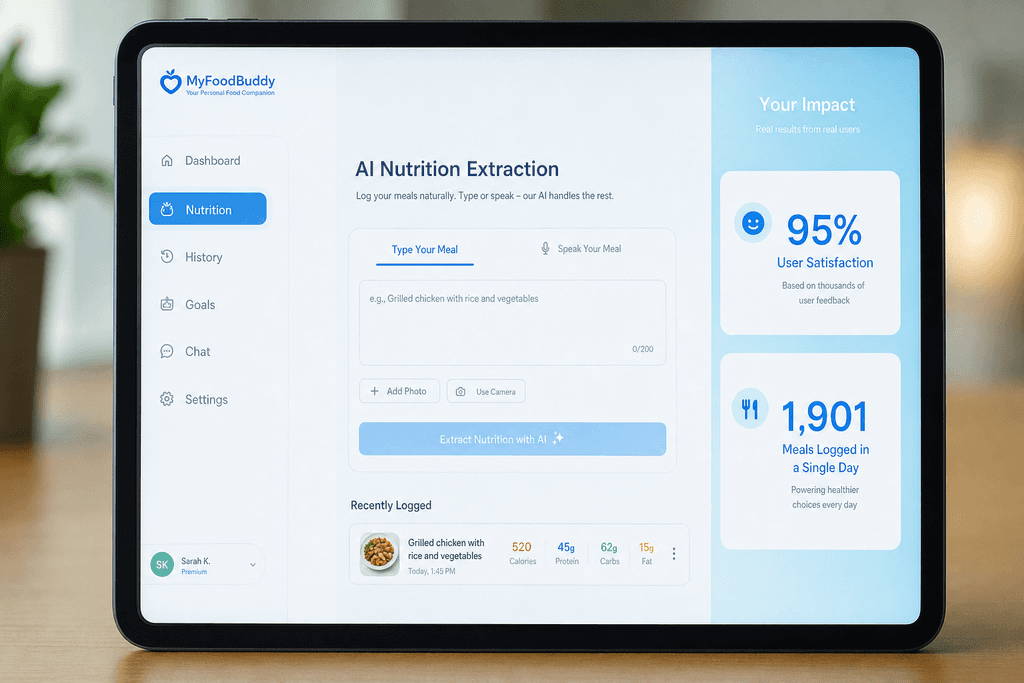
The Database Nightmare
Traditional calorie tracking apps throw millions of food options at you every single time you want to log a meal. This creates a few major headaches that make people want to give up.
- Searching for "chicken breast" returns hundreds of nearly identical entries with slightly different calorie counts
- You waste time comparing entries to figure out which one is actually correct
- Restaurant meals are especially confusing because every user-submitted entry shows different numbers
- Decision fatigue sets in after just a few days of this repetitive searching
The average person spends 15-20 minutes per day just logging their food in traditional apps. That adds up to over two hours every week spent on data entry instead of actually living your life.
Guessing Games with Portions
Even after you find the right food in the database, you still have to estimate how much you ate. Most people are terrible at this, and it's not their fault.
- Eyeballing portion sizes leads to tracking errors of 20-50% on average
- You need measuring cups and a food scale to be accurate, which isn't practical when eating out
- Apps like fitness pal require you to convert everything into grams, ounces, or cups
- One wrong portion estimate can throw off your entire day's calorie count
| Tracking Challenge | Time Impact | Accuracy Loss |
|---|---|---|
| Database searching | 5-8 min per meal | 15-25% error |
| Portion estimation | 3-5 min per meal | 20-50% error |
| Manual entry | 2-4 min per meal | 10-20% error |
Why People Quit So Fast
The complexity of traditional calorie tracking creates a vicious cycle. You start with good intentions, but the daily grind of logging wears you down fast. Studies show that 80% of people abandon their calorie tracking app within the first month. The apps that require the most manual work see the highest dropout rates.
- The time commitment feels unsustainable after the initial excitement wears off
- Inaccurate tracking leads to disappointing results, which kills motivation
- The mental load of constantly thinking about food databases becomes exhausting
This is exactly why apps like MyFoodBuddy focus on speed and simplicity. Instead of searching through databases, you just say what you ate and AI handles the rest. The whole process takes seconds instead of minutes, which means you're way more likely to stick with it long enough to actually see results.
How Voice and AI Make Calorie Tracking Actually Work
Most people quit tracking calories within the first week, and it's not because they lack motivation. The problem is that traditional apps make you spend 5 to 10 minutes per meal searching through massive food databases, measuring portions, and manually entering every ingredient. When you're hungry or busy, that's just not going to happen. But what if you could log an entire meal in the time it takes to send a text message?
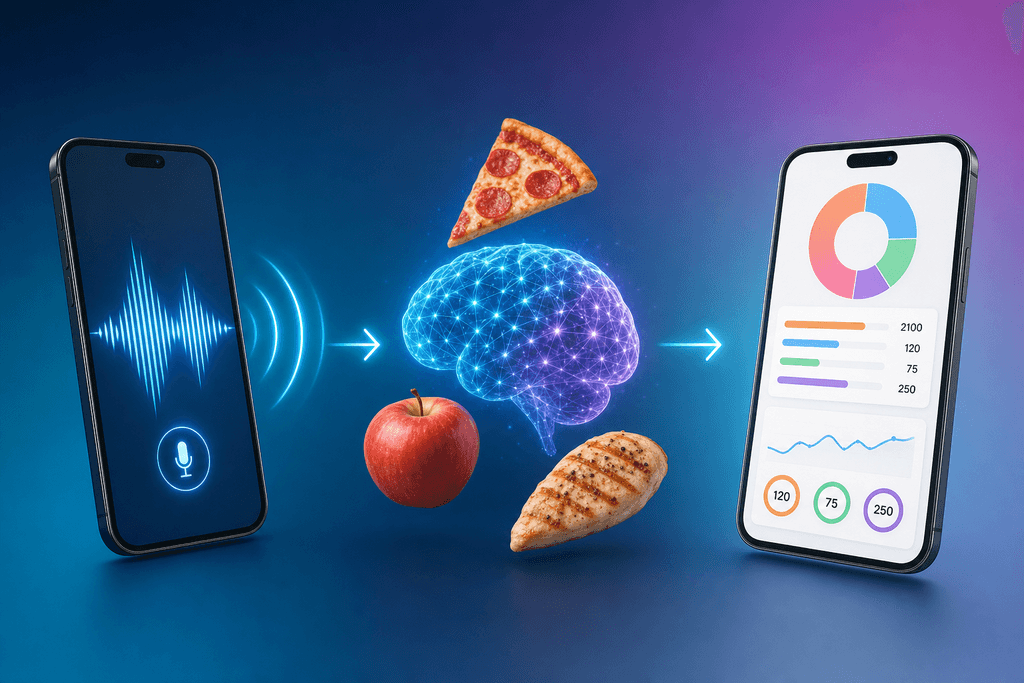
Voice logging changes everything because you can literally just say what you ate while you're still at the table. No typing, no searching, no measuring cups required. Apps like MyFoodBuddy use AI to understand natural language, so you can say "chicken breast with rice and broccoli" and it figures out the rest.
- Traditional method: Open app, search "chicken breast," scroll through 47 options, pick one, enter weight, repeat for each ingredient
- Voice method: Say "grilled chicken breast with a cup of rice and some broccoli" and you're done in 10 seconds
- The AI extracts nutritional data automatically without you touching a single button
The difference between spending 20 minutes versus 20 seconds on meal logging isn't just about convenience. It's about whether you'll actually stick with tracking long enough to see results. When something takes too long, your brain finds excuses to skip it.
| Method | Time Per Meal | Weekly Time Cost |
|---|---|---|
| Traditional Database Search | 5-8 minutes | 2-3 hours |
| Voice + AI | 10-20 seconds | 5-10 minutes |
Here's what this looks like in real life. You grab lunch at a restaurant and order a burger with fries. With old-school fitness pal apps, you'd need to search for the restaurant, find the specific burger, hope they have accurate data, then add the fries separately. With AI-powered voice tracking, you just say "cheeseburger and medium fries from Five Guys" and the app handles the nutritional breakdown. No database hunting required.
Features That Keep You Consistent With Your Goals
The best calorie tracking app isn't the one with the biggest food database. It's the one you'll actually use every single day. That's why features that save you time and keep you motivated matter way more than having a million food entries. Think about the meals you eat regularly - probably the same breakfast most days, similar lunches, a rotation of dinner favorites. Why should you log these from scratch every time?
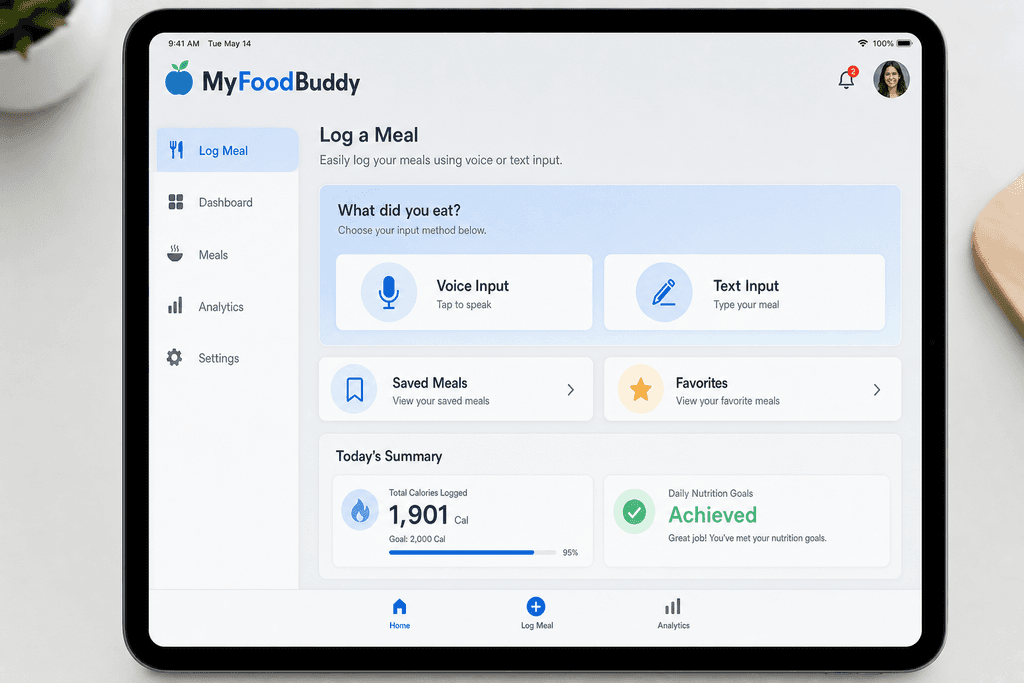
Saved meals and favorites let you re-log your go-to foods with one tap. Had oatmeal with banana and peanut butter yesterday? Tap once and it's logged again today. This feature alone can cut your tracking time in half.
- Barcode scanning works great for packaged foods like protein bars, yogurt, or frozen meals
- One-tap logging for meals you eat regularly saves massive amounts of time
- TDEE calculators help you figure out realistic calorie goals based on your actual activity level
- Streaks and achievements turn tracking into a habit you don't want to break
Most people set their calorie goals way too low because they're guessing. A personalized TDEE calculator looks at your age, weight, height, and activity level to tell you exactly how many calories you need. This prevents the common mistake of eating too little, getting exhausted, and giving up after two weeks.
The gamification stuff might sound silly, but it works. When you've logged meals for 15 days straight, you don't want to break that streak. Apple Health synchronization brings in your step count, workouts, and sleep data so you can see how everything connects. Maybe you notice you eat more on days when you sleep poorly. That's the kind of insight that actually helps you make changes.
Essential Features Checklist:- Voice or quick text input (not just database searching)
- Saved meals for one-tap logging
- Barcode scanner for packaged foods
- Personalized calorie goals, not generic recommendations
- Progress tracking that shows trends over time
- Motivation features like streaks or achievements
Getting Personalized Help From AI Nutrition Coaching
Tracking numbers is one thing, but understanding what those numbers mean is completely different. You might log everything perfectly and still wonder why you're not losing weight, or why you feel tired all the time. This is where AI coaching becomes useful - it spots patterns in your data that you'd never notice on your own. Instead of just showing you charts, it actually tells you what's happening and why.
AI coaches analyze your complete picture by looking at your food logs alongside your sleep quality and activity levels. Maybe you're hitting your calorie goal but eating most of your food late at night. Or you're getting enough protein on workout days but not on rest days. These patterns matter, but they're hard to see when you're just looking at daily totals.
MyFoodBuddy's AI coach Fiona provides insights without making you feel judged. It's not about being perfect - it's about understanding your habits so you can make small changes that actually stick. Real-time feedback helps you make better choices in the moment, not just review what happened last week.
- Pattern recognition shows you trends across weeks and months
- Personalized suggestions based on your specific eating habits and goals
- Integration with sleep and activity data reveals connections you'd miss
- Guidance that helps you understand nutrition, not just count calories
The difference between tracking and coaching is like the difference between owning a scale and having a personal trainer. One gives you data, the other helps you know what to do with it. When you understand why you're eating certain ways or how your food choices affect your energy, you can make smarter decisions without constantly second-guessing yourself.
If you want to learn more about staying consistent with tracking or discover how voice-powered tracking works, there are plenty of resources to help you get started. The key is finding an approach that fits into your actual life, not some perfect version of it.
Why Simpler Tracking Leads to Better Results
Studies show that 80% of people who start tracking calories quit within the first month, and the main reason isn't lack of motivation. It's friction. Every extra step between you and logging your meal creates a tiny barrier, and those barriers add up fast. When you have to search through databases, weigh portions, and manually enter every ingredient, tracking becomes a chore instead of a habit. The psychology is simple: humans avoid things that feel hard, even when we know they're good for us.
The difference between spending 30 seconds versus 5 minutes logging a meal might not seem like much. But multiply that by three meals a day, seven days a week, and you're looking at an extra 2.5 hours of work every week just to track what you ate. That's where most people break. Consistency beats perfection every single time, and you can't be consistent with something that eats up your time and mental energy.
The Friction Problem
Traditional apps like those in the fitnesspal category require multiple steps for each entry. Here's what typically happens when someone tries to log a homemade meal:
- Search for each individual ingredient in a database of thousands
- Measure or estimate portion sizes for every component
- Enter quantities and units separately
- Double-check entries because the database has multiple versions of the same food
- Repeat this process 3-5 times per day
This process creates what behavioral scientists call "decision fatigue." Your brain gets tired from making all these tiny choices, and eventually, you just stop doing it.
When Tracking Gets Easier, Accuracy Goes Up
Here's something that surprises most people: simpler tracking methods actually lead to more accurate data over time. When logging feels like a burden, people start skipping meals, forgetting snacks, or just giving up entirely. An app that captures 90% accuracy on 100% of your meals beats one that gets 95% accuracy on only 60% of your meals.
| Tracking Method | Time Per Meal | 30-Day Adherence |
|---|---|---|
| Traditional Manual Entry | 3-5 minutes | 42% |
| AI Voice Input | 10-20 seconds | 78% |
MyFoodBuddy takes a different approach by letting you just say what you ate. No searching, no measuring, no database hunting. The AI handles the heavy lifting while you get on with your day.
What Users Actually Experience
Real people using simplified tracking tools report something interesting. They don't just track more consistently, they also become more aware of their eating patterns without the stress. When logging takes seconds instead of minutes, it becomes as automatic as checking your phone.
- Users report feeling less guilty about tracking "imperfect" meals
- Snacks and small bites get logged instead of forgotten
- The mental load of "I need to log that later" disappears
- Tracking becomes a neutral habit rather than a judgment activity
One user switching from a traditional fitness pal app noted they finally started logging their afternoon snacks because it didn't feel like homework anymore. Those small entries add up to a much clearer picture of actual intake.
The Real Cost of Free Apps
Free complicated apps seem like a good deal until you calculate the time cost. If you spend an extra 15 minutes per day fighting with a clunky interface, that's 91 hours per year. Your time has value, and struggling with outdated tools costs more than you think. Plus, there's the opportunity cost of giving up entirely because the process is too frustrating.
- Time spent = money lost on your hourly rate
- Mental energy drained from other important tasks
- Higher chance of quitting means wasted effort on previous tracking
- Stress and frustration impact overall wellbeing
Investing $39 per year in a tool that actually works out to about 11 cents per day. That's less than the time you'd waste searching for "chicken breast grilled" in a database for the hundredth time.
Making Calorie Tracking Work for Your Life
The truth is, tracking calories doesn't need to feel like a second job. Most people quit apps like fitness pal or myfitnesspal because they spend too much time searching through databases and measuring every single ingredient. That's not sustainable when you're trying to lose weight and actually live your life at the same time. The apps that work best are the ones you'll actually use tomorrow, next week, and next month.
Simple tools beat complicated ones every time. When you can log your meals in seconds using voice commands instead of minutes of typing and searching, you're way more likely to stick with it. MyFoodBuddy handles the hard part by using AI to figure out the nutrition info while you just say what you ate.
The best part is you can try it risk-free with a 7-day trial to see if it fits your routine. Staying consistent with tracking matters more than having perfect accuracy down to the last calorie. If you've been putting off tracking because other apps felt too slow or annoying, there are better options now that actually respect your time.
Your weight loss journey shouldn't be held back by clunky tools. Find something that works with your lifestyle instead of against it, and you might be surprised how much easier the whole process becomes.
Common Questions About Modern Calorie Tracking
Switching to a new way of tracking what you eat brings up a lot of questions. Most people wonder if the new approach actually works better than what they're used to. The good news is that AI-powered tracking has been tested by thousands of users who were tired of spending 10 minutes logging a single meal. Here are the answers to the most common questions people ask before making the switch.
Is voice tracking as accurate as manual entry?
Voice tracking can be just as accurate as manual entry when the AI is trained on proper nutrition databases like USDA data. When you say "I had a chicken breast with rice and broccoli," the AI breaks down each component and estimates portions based on typical serving sizes. The key difference is speed, you get the same accuracy in 5 seconds instead of 5 minutes of searching through databases. Apps like MyFoodBuddy use this approach to make logging feel effortless while maintaining the precision you need for real results.
How much does better calorie tracking cost compared to free apps?
Free apps like fitnesspal often lock key features behind premium subscriptions that can cost $80 or more per year. Modern AI-powered alternatives typically run around $39 annually, which is less than half the cost while offering voice input, AI coaching, and faster logging. The real cost isn't just money though, it's the time you waste fighting with clunky interfaces every single day.
Can AI really understand what I ate from just talking?
Yes, AI has gotten surprisingly good at parsing natural language and extracting food items with their nutritional values. You don't need to speak in a robotic way or use exact measurements. Just say what you ate like you'd tell a friend, and the AI figures out the rest by cross-referencing massive nutrition databases. It even learns your habits over time to get better at estimating your typical portion sizes.
What happens to my data from fitness pal if I switch?
Your old data stays in your previous app, but most modern tracking apps let you start fresh with a clean slate. Many people actually prefer starting over because it marks a new chapter in their health journey. If you really need historical data, you can usually export it as a CSV file from your old app, though most users find that tracking forward matters more than looking backward.
Do I need to measure and weigh everything for accuracy?
Not really. While weighing food gives you the most precise numbers, AI estimation gets you close enough for consistent progress without the hassle. The goal is to be roughly accurate every day rather than perfectly accurate once in a while. Most people quit tracking because weighing everything becomes exhausting, so using AI estimates keeps you consistent, which matters way more than perfect precision.
How long does it take to see results with consistent tracking?
Most people notice changes within 2 to 4 weeks of consistent tracking, but the real magic happens when tracking becomes a habit you can maintain for months. The easier your tracking method, the longer you'll stick with it. That's why apps that let you log meals in seconds tend to produce better long-term results than complex systems that require 10 minutes per meal. Your body responds to consistency, not perfection.
Ready to start tracking smarter?
Download MyFoodBuddy and start tracking your calories by just saying what you ate. No more searching databases or guessing portions.
Get started