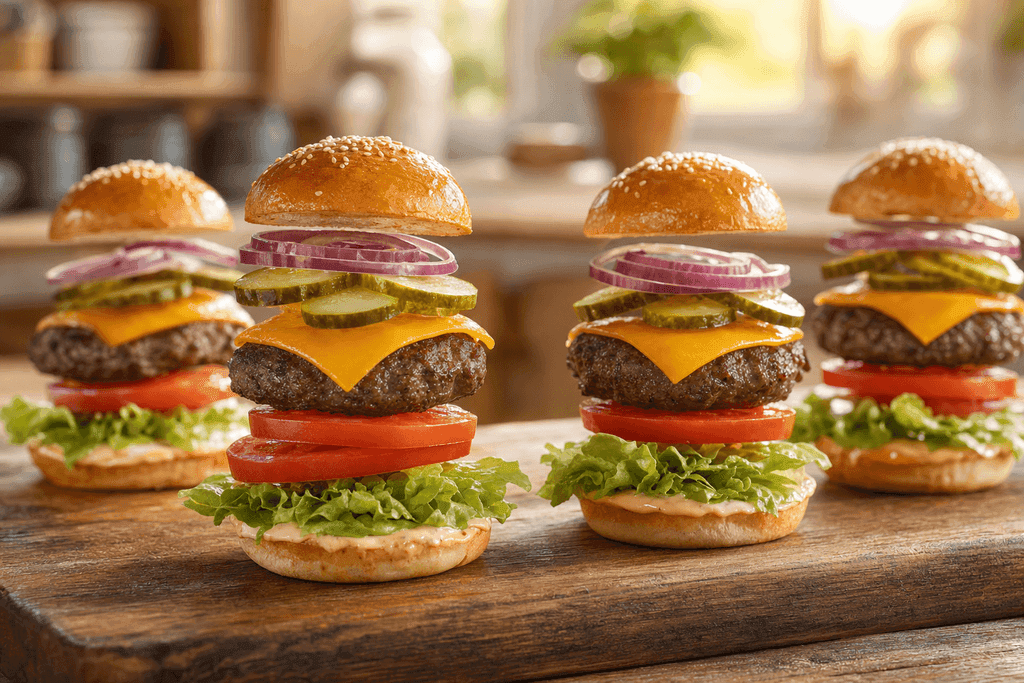
Mini Burger Calories by Patty, Bun, and Toppings
Mini burger calories range from 150-400+ depending on patty size, bun type, and toppings. Learn exact counts to stay on track with your goals.
You grab three mini burgers at a party thinking they're the lighter choice, but those little sliders can pack the same calories as one full-sized burger or more. Most people tracking their food underestimate mini burgers calories by around 30 to 40 percent, which can quietly derail your weight loss progress. Understanding exactly how patties, buns, and toppings stack up helps you enjoy mini burgers without the guesswork, and tools like MyFoodBuddy make logging them as simple as saying what you ate.
Table of Contents
The Mini Burger Calorie Baseline
A single mini burger typically contains between 200 and 400 calories, which might seem small compared to a regular burger's 500 to 800 calories. But here's the thing most people don't realize: those mini burgers add up fast when you're eating two or three in one sitting. Understanding the calorie breakdown of each component helps you make smarter choices, whether you're trying to lose weight or just maintain your current goals. The patty, bun, and toppings each contribute their own calorie count, and knowing these numbers makes tracking your intake much easier. When you log your meals with tools like MyFoodBuddy, you can simply speak what you ate and get accurate nutritional data in seconds, taking the guesswork out of mini burger calories.
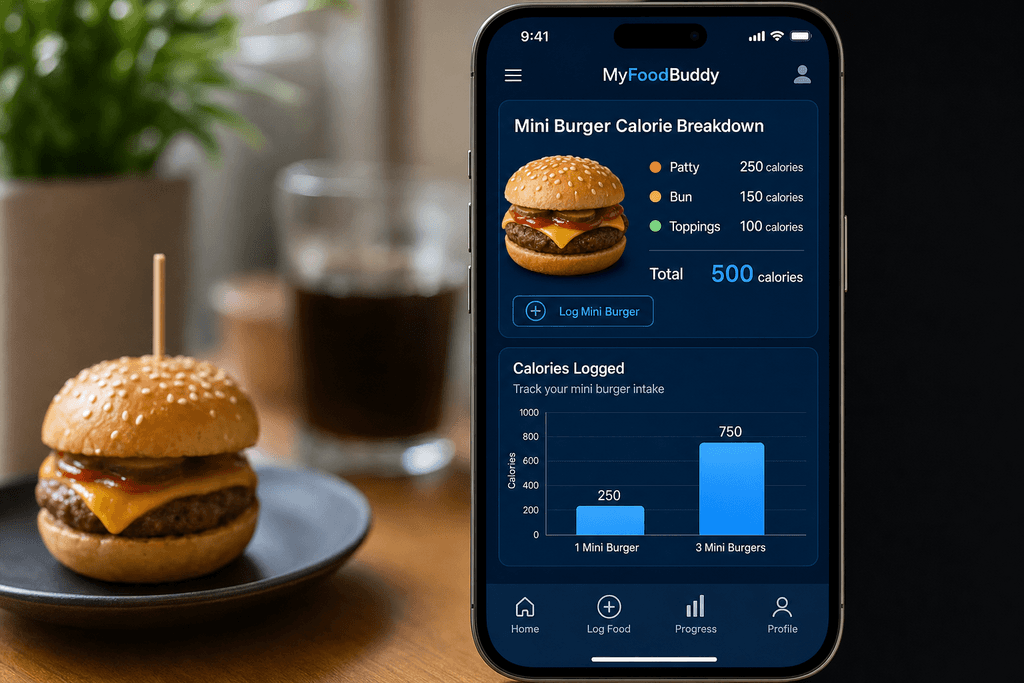
Breaking Down the Basic Components
Every mini burger starts with three main parts, and each one brings its own calorie contribution to your plate. The patty is usually the biggest calorie source, followed by the bun, and then whatever toppings you add on top.
| Component | Typical Size | Calories |
|---|---|---|
| Mini beef patty (80/20) | 2 oz | 150-170 |
| Mini burger bun | 1.5 oz | 100-120 |
| Slice of cheese | 0.5 oz | 40-50 |
| Ketchup | 1 tbsp | 15-20 |
| Mustard | 1 tsp | 3-5 |
| Lettuce & tomato | Small portion | 5-10 |
Why Size Matters for Tracking
Mini burgers might be smaller, but they're not automatically healthier than their full-sized cousins. The calorie density often stays the same, meaning you're getting similar calories per ounce of food. Here's what makes tracking mini burgers important:
- People tend to eat multiple mini burgers in one meal, thinking they're being healthier
- The "small size" creates a false sense of security about calorie intake
- Restaurant mini burgers often have hidden calories in special sauces and premium toppings
- Portion control becomes harder when burgers look tiny on your plate
Traditional calorie tracking apps make you search through endless databases and measure every ingredient separately. That's why many people give up on tracking altogether, especially with foods like mini burgers where you're eating several at once.
The Tracking Challenge
Most calorie counting apps require you to log each component individually, which gets tedious fast. You end up spending more time entering data than actually enjoying your meal. Apps like MyFitnessPal or Cronometer make you select the exact patty weight, bun type, and every single topping from their databases, which can take several minutes per burger.
- Manual entry takes 3-5 minutes per mini burger when done accurately
- Estimating portion sizes leads to tracking errors of 20-30%
- Multiple mini burgers mean multiple separate log entries
The baseline numbers in the table above give you a starting point, but real-world mini burgers vary widely based on cooking method, fat content, and toppings. That's where the details really start to matter for your daily calorie goals.
How Patty Size Changes Your Calorie Count
A single ounce difference in your mini burger patty can add or subtract nearly 100 calories from your meal. Most people don't realize that what looks like a tiny slider can pack anywhere from 70 to 250 calories depending on the meat you choose and how big that patty actually is. The size matters more than you'd think, especially when you're trying to stay within your daily calorie budget. When you're tracking your food, getting the patty size right is the difference between an accurate log and one that's way off.
A 1-ounce slider patty made from 80/20 ground beef contains about 70-80 calories, while a 3-ounce mini patty from the same meat jumps to 230-240 calories. That's triple the calories for what still counts as a "mini" burger at most restaurants.
| Patty Size | 80/20 Beef | 90/10 Beef | 93/7 Beef | Turkey | Plant-Based |
|---|---|---|---|---|---|
| 1 oz | 75 cal | 60 cal | 50 cal | 55 cal | 65 cal |
| 2 oz | 150 cal | 120 cal | 100 cal | 110 cal | 130 cal |
| 3 oz | 230 cal | 180 cal | 150 cal | 165 cal | 195 cal |
The fat content in your beef makes a huge difference too. Switching from 80/20 ground beef to 93/7 lean beef saves you about 25 calories per ounce, which adds up fast when you're eating multiple sliders. Turkey and chicken patties usually fall somewhere in the middle, with a 2-ounce turkey patty coming in around 110 calories.
Plant-based patties aren't always the low-calorie option people expect. A 2-ounce plant-based mini patty typically has 130 calories, which is actually more than lean beef or turkey. The oils and binders used to make them taste good add extra calories that catch people off guard.
- Grilled patties keep their original calorie count
- Pan-fried patties absorb 20-40 extra calories from cooking oil
- Deep-fried sliders can add 50-70 calories per patty
- Butter-basted patties pick up an extra 30-50 calories
When you're logging your mini burgers in an app like MyFoodBuddy, you can just say "two-ounce beef slider" and the AI figures out the calories for you. No need to pull out a food scale or guess between different entries.
Bun Choices That Make or Break Your Calorie Budget
The bun on your mini burger often has more calories than the patty itself. A standard mini burger bun ranges from 80 to 150 calories, and that's before anyone butters or toasts it. Most restaurants use different sized buns for their sliders, so what counts as "mini" at one place might be regular-sized somewhere else. This makes tracking mini burgers calories tricky if you're not paying attention to the actual bun you're eating.
A basic white mini bun contains about 100-120 calories, while a brioche slider bun can hit 140-150 calories because of the added butter and eggs in the dough.
| Bun Type | Calories | Carbs (g) |
|---|---|---|
| White mini bun | 100-120 | 18-22 |
| Wheat mini bun | 90-110 | 16-20 |
| Brioche slider | 140-150 | 20-24 |
| Pretzel bun | 130-145 | 24-28 |
| Thin bun | 60-80 | 12-15 |
| Lettuce wrap | 5-10 | 1-2 |
Pretzel buns taste amazing but they're calorie bombs for mini burgers. A pretzel slider bun adds 130-145 calories, and the high sodium content means you'll probably want to drink more water later. Wheat buns save you maybe 10-20 calories compared to white, which isn't much of a difference.
Here's where things get sneaky. Buttered and toasted buns add an extra 30-50 calories that most people forget to count. That butter they brush on before grilling the bun isn't free, and it makes your "healthy" turkey slider suddenly have the same calories as a regular one.
- Swap to a thin bun and save 40-60 calories
- Use lettuce wraps and cut 90-140 calories
- Ask for no butter when toasting saves 30-50 calories
- Skip the top bun only and save 50-75 calories
The easiest swap is going with a lettuce wrap, which drops your bun calories to almost nothing. You lose that satisfying bread texture, but you can eat two sliders for the calorie cost of one with a regular bun.
Toppings That Add Up Fast
Toppings can double or even triple your mini burger's calorie count before you realize what happened. A plain slider with just a patty and bun might be 200 calories, but add cheese, bacon, and special sauce and you're suddenly at 400-450 calories. The problem gets worse with mini burgers because the topping-to-burger ratio is way higher than regular burgers. That slice of cheese covers the entire tiny patty, and the sauce has nowhere to go except all over everything.
A single slice of American cheese adds 70-80 calories to your slider, and cheddar or Swiss can be even higher at 90-110 calories per slice.
| Topping | Calories | Category |
|---|---|---|
| Cheese slice | 70-110 | High |
| Bacon (1 strip) | 40-50 | High |
| Special sauce (1 tbsp) | 60-80 | High |
| Mayo (1 tbsp) | 90-100 | High |
| Avocado (2 slices) | 45-55 | Medium |
| Fried onions (1 tbsp) | 35-45 | Medium |
| BBQ sauce (1 tbsp) | 25-35 | Medium |
| Lettuce | 2-5 | Low |
| Tomato (1 slice) | 3-5 | Low |
| Pickles (3 chips) | 0-5 | Low |
| Mustard (1 tsp) | 3-5 | Low |
| Raw onions | 5-8 | Low |
Mayo and special sauces are the real calorie traps. One tablespoon of mayo contains 90-100 calories, and most mini burgers get at least that much spread on both buns. Special sauces are usually mayo-based with added sugar, so they're not much better at 60-80 calories per tablespoon.
Bacon seems like a small addition but each strip adds 40-50 calories. When you're eating three or four sliders, those bacon strips add up to an extra 150-200 calories you might not have planned for.
- Swap mayo for mustard and save 85-95 calories
- Use half the cheese or skip it entirely for 70-110 calorie savings
- Choose grilled onions instead of fried and save 20-30 calories
- Pick ketchup over special sauce and save 40-50 calories
- Load up on lettuce, tomato, and pickles for under 15 total calories
Building a satisfying mini burger under 250 calories is totally possible if you're smart about it. Start with a 2-ounce lean beef or turkey patty (100-120 calories), use a thin bun or lettuce wrap (60-80 calories or 5-10 calories), and pile on the low-calorie toppings like lettuce, tomato, pickles, onions, and mustard (under 20 calories combined). You end up with a burger that's filling and flavorful without blowing your calorie budget.
The portion size issue matters even more on mini burgers because everything is concentrated. That tablespoon of sauce that would spread across a quarter-pounder is drowning your tiny slider. When you're tracking in MyFoodBuddy, you can just say what toppings you added and it calculates everything automatically, which beats trying to measure sauce with a spoon while you're hungry.
If you want to learn more about making smarter burger choices, check out our guide on lowest calorie fast food meals you can track easily or see how hamburger calories compare across different fast food chains. Understanding these numbers helps you make better decisions without giving up the foods you actually enjoy.
Making Mini Burgers Work for Your Goals
So here's what you need to remember about mini burgers calories. A basic mini burger starts around 150-200 calories, but once you add cheese, bacon, and special sauces, you're looking at 300-400 calories or more. The patty itself is usually the smallest part of the calorie count, while the bun and toppings can really add up fast. If you're trying to lose weight, this doesn't mean you have to skip mini burgers completely.
The trick is knowing what you're actually eating. Most people underestimate how many calories are in their mini burgers because they forget about the mayo or don't realize that fancy bun has 120 calories on its own. Similar to common mistakes people make with regular hamburger calories, the toppings are where things get tricky.
This is where tracking makes a real difference. Apps like MyFoodBuddy let you just say what you ate and the AI figures out the calories for you. No need to search through databases or guess portion sizes. You can check out other low-calorie fast food options that are just as easy to track. If pizza is another takeout staple for you, Pizza Hut pizza calories by crust size and toppings make it just as easy to log the exact order without guessing.
The bottom line is this. Mini burgers can fit into your weight loss plan if you know what's in them. Whether you're making them at home or ordering out, keeping track of the calories doesn't have to be complicated. Once you understand the basics of how patties, buns, and toppings add up, you can make choices that keep you on track without feeling like you're missing out.
Common Questions About Mini Burger Calories
Tracking mini burgers calories can feel tricky when you're trying to stay on top of your nutrition goals. These smaller versions of our favorite food come with their own set of questions, especially when you're counting every bite. Whether you're meal prepping at home or grabbing sliders at your favorite restaurant, knowing the details helps you make better choices. Here are the most common questions people ask about mini burger calories and how to track them properly.
How many mini burgers equal one regular burger?
Most mini burgers use 2-ounce patties, while regular burgers typically have 4-ounce patties. This means two mini burgers roughly equal one regular burger in terms of meat, but the total calories can vary based on buns and toppings. A single mini burger with basic toppings runs about 200-250 calories, so two would put you around 400-500 calories compared to a regular burger's 500-600 calories.
Are mini burgers better for weight loss than regular burgers?
Mini burgers can be better for weight loss because they give you built-in portion control. The smaller size makes it easier to stop at one or two burgers instead of finishing a massive regular burger just because it's on your plate. That said, eating three or four mini burgers defeats the purpose, so the key is treating them as actual smaller portions rather than an excuse to eat more total food.
What's the lowest calorie mini burger combination?
The lowest calorie mini burger uses a 2-ounce lean turkey or chicken patty with lettuce wraps instead of buns, coming in around 120-150 calories. If you want a bun, choose a small whole wheat slider bun and skip the cheese and mayo-based sauces. Load up on mustard, pickles, lettuce, and tomato instead, keeping your total under 200 calories per mini burger.
How do restaurant mini burgers compare to homemade?
Restaurant mini burgers typically pack 50-100 more calories than homemade versions because they use fattier meat blends and add butter to the buns. Chain restaurants also tend to use pre-made patties with higher sodium and fat content. Making mini burgers at home lets you control the meat quality and portion sizes, plus you can weigh everything for accurate tracking.
Do I need to track every topping on a mini burger?
Yes, toppings can add 100-200 calories to a mini burger, especially cheese, bacon, and creamy sauces. While lettuce and tomato barely register, that slice of cheese adds 70-100 calories and bacon adds another 40-60 calories per strip. With MyFoodBuddy, you can just say what you ate like "mini burger with cheese and bacon" and the AI figures out the calories for you instead of manually adding each ingredient.
Can I eat mini burgers every day and still lose weight?
You can eat mini burgers daily and lose weight as long as you stay within your calorie goals. A basic mini burger fits easily into most weight loss plans at 200-300 calories, leaving room for other meals and snacks. The real challenge is variety in your diet for overall nutrition, but if mini burgers help you stick to your calorie target because you enjoy them, that consistency matters more than perfect food choices.
Ready to start tracking smarter?
Download MyFoodBuddy and start tracking your calories by just saying what you ate. No more searching databases or guessing portions.
Get started