
5 Surprising Facts About Hamburger Calories
Discover shocking truths about hamburger calories that might change how you track your meals. Learn what really adds up in your favorite burger.
Most people think a basic hamburger has around 250 calories, but the average restaurant burger actually packs between 600 and 1,200 calories before you even add fries. This massive gap happens because we forget about the hidden calories in buns, sauces, cheese, and cooking oils that traditional tracking apps like MyFitnessPal make tedious to log individually. Understanding what really drives hamburger calories up can help you enjoy your favorite meal without derailing your health goals, and tools like MyFoodBuddy make it easier to track the full picture by simply saying what you ate.
Table of Contents
Why Hamburger Calories Matter More Than You Think
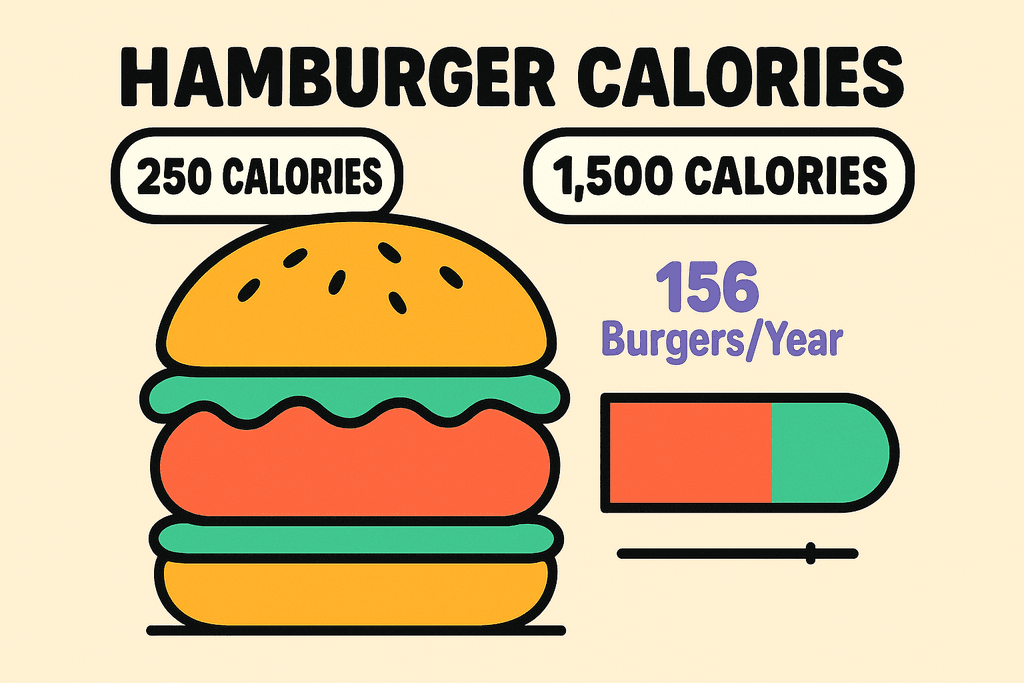
Americans eat about three hamburgers per week on average, which adds up to roughly 156 burgers every year. That's a lot of beef, cheese, and buns passing through our bodies. But here's what most people don't realize: a single hamburger can pack anywhere from 250 to 1,500 calories depending on what's on it and where you get it. When you're trying to lose weight or just maintain a healthy lifestyle, those numbers matter way more than you might think.
The Daily Calorie Budget Problem
Most adults need between 1,600 and 2,400 calories per day to maintain their weight. When you grab a burger for lunch, you might be eating half your daily calories in one meal without even knowing it. The problem gets worse when you add fries and a drink, which can push a single meal past 2,000 calories.
| Daily Calorie Goal | Basic Burger (% of Daily) | Deluxe Burger (% of Daily) | Premium Burger (% of Daily) |
|---|---|---|---|
| 1,600 calories | 250 cal (16%) | 750 cal (47%) | 1,200 cal (75%) |
| 2,000 calories | 250 cal (13%) | 750 cal (38%) | 1,200 cal (60%) |
| 2,400 calories | 250 cal (10%) | 750 cal (31%) | 1,200 cal (50%) |
Why Guessing Doesn't Work
The biggest challenge with hamburger calories is that they're almost impossible to estimate accurately. Two burgers that look the same size can have wildly different calorie counts based on the meat's fat content, the type of cheese, the sauce, and even how the bun is prepared. Research shows that people typically underestimate restaurant meal calories by 20-50%, and burgers are some of the worst offenders.
Traditional calorie tracking apps make this problem harder because they require you to search through hundreds of burger options, measure portion sizes, and log each ingredient separately. That's why tools like MyFoodBuddy let you simply say what you ate and handle the calculations automatically, making it way easier to stay on track with your goals.
The Hidden Calorie Multipliers
What makes hamburger calories so tricky is all the extras that sneak in. Here's what can turn a reasonable meal into a calorie bomb:
- Special sauces and mayo add 50-200 calories per tablespoon
- Cheese slices contribute 70-110 calories each
- Bacon strips pack 40-50 calories per slice
- Buttered or toasted buns add an extra 50-100 calories
Even small changes make a huge difference. Swapping regular ground beef for lean beef saves about 100 calories per patty. Skipping the mayo cuts another 100 calories. These little decisions add up fast when you're eating burgers multiple times per week.
The Condiment Calorie Bomb
Most people think the beef patty is what makes a burger high in calories, but that's only half the story. The real sneaky culprits are sitting right on top of your burger, and they're adding way more to your daily intake than you'd guess. A plain burger patty might clock in at around 250 calories, but once you start piling on the extras, you're looking at a completely different meal. The worst part is that most of us don't even think about tracking these additions when we log our food.
Two tablespoons of mayo adds about 180 calories to your burger. That special sauce you love at your favorite restaurant? It's usually mayo-based with added sugar, pushing it even higher. A slice of American cheese contributes another 70 calories, and if you're getting a double cheese situation, well, you do the math.
- Regular mayo: 90 calories per tablespoon
- Special sauce: 100-120 calories per tablespoon
- Cheese slice: 70-110 calories depending on type
- Bacon (2 strips): 80-90 calories
- Crispy onions: 140 calories per serving
The problem gets worse when you consider that restaurants don't exactly measure their condiments with precision. That "light drizzle" of sauce is probably closer to three or four tablespoons, not one. When you're manually entering your food into traditional tracking apps, it's easy to forget about these extras or underestimate how much was actually used.
Voice logging captures everything you mention automatically, which means if you say "cheeseburger with mayo and bacon," the app accounts for all those ingredients. You don't have to remember to add each topping separately or guess at portions. The AI pulls from USDA data to give you accurate counts for standard restaurant portions.
If you want to save calories without sacrificing flavor, try swapping mayo for mustard (only 10 calories per tablespoon) or using fresh vegetables like tomatoes and lettuce for crunch instead of crispy onions. Even switching from regular cheese to a lighter option can save you 30-40 calories per slice.
Restaurant vs Homemade Burgers
A homemade quarter-pound burger with a standard bun and basic toppings typically contains around 500-600 calories. That same burger from a popular chain restaurant can easily hit 1,200 calories or more. The difference isn't just about portion size, though that's definitely part of it. Restaurants use cooking methods and ingredients that are designed to taste amazing, not to keep calories low.
Restaurant burgers are often cooked on flat-top grills with added butter or oil, which soaks into the meat and bun. The buns themselves are frequently buttered and toasted, adding an extra 50-100 calories you wouldn't get at home. Many chains also use higher-fat beef blends (80/20 or even 70/30) compared to the leaner options most people buy for home cooking.
| Burger Type | Calories |
|---|---|
| Homemade quarter-pounder | 500-600 |
| Five Guys cheeseburger | 980 |
| Red Robin Whiskey River BBQ | 1,180 |
| Cheesecake Factory burgers | 1,200-1,800 |
The portion sizes have grown over the years too. What used to be a standard burger patty in the 1980s was about 3 ounces. Now, many restaurant "regular" burgers start at 6 ounces or more. Some places pride themselves on half-pound or even full-pound patties as their standard offering.
Tracking helps you spot these differences quickly. When you log a restaurant burger and see it's triple the calories of your homemade version, it becomes easier to make informed choices. Apps that use USDA data can pull accurate nutritional information for most major restaurant chains, so you're not just guessing.
The good news is that knowing this information doesn't mean you can't enjoy restaurant burgers. It just means you can plan around them better, maybe skipping the fries or saving half for later.
The Bun Makes or Breaks Your Calorie Budget
If you've ever wondered why that gourmet burger felt so much heavier than a regular one, the bun is probably why. A standard sesame seed bun contains about 120-150 calories, which is pretty reasonable. But restaurants love using fancy buns like brioche, pretzel, or ciabatta, and these can pack anywhere from 250 to 400 calories before you even add the burger. That's more than doubling your bread calories right there.
Brioche buns are made with butter and eggs, giving them that rich, soft texture everyone loves. That richness comes at a cost of about 280-350 calories per bun. Pretzel buns are dense and chewy, usually weighing more than standard buns, which pushes them to around 300 calories. Even whole wheat buns, which sound healthier, often contain added sugars and oils that bring them to 200-220 calories.
| Bun Type | Calories |
|---|---|
| Standard white bun | 120-150 |
| Whole wheat bun | 200-220 |
| Brioche bun | 280-350 |
| Pretzel bun | 300-320 |
| Lettuce wrap | 5-10 |
The size matters too. Some restaurants serve burgers on oversized buns that are nearly twice the diameter of a standard bun. These aren't just wider, they're thicker too, which means you're eating significantly more bread than you might realize.
Switching to a lettuce wrap can save you 120-400 calories depending on what bun you're replacing. Thin buns or slider-sized buns are another option if you still want that bread experience but with fewer calories. Some places now offer "skinny" buns that are about half the thickness of regular ones.
When you're tracking your meals, these variations matter. Saying "burger on a brioche bun" versus just "burger" gives you a much more accurate calorie count. The detailed tracking that comes with voice-powered apps means you can mention these specifics naturally and get the right numbers without having to look up each component separately.
Burger Size Perception vs Reality
Here's something that happens all the time: someone orders a burger, logs it as a "regular burger" in their tracking app, and wonders why they're not losing weight. The problem is that "regular" doesn't mean the same thing everywhere. A quarter-pound patty has become the new standard at many restaurants, but people still think of it as a regular-sized burger. Meanwhile, they're logging it as if it were a much smaller portion.
The calorie difference between common patty sizes is bigger than most people think. A 1/4 pound (4 oz) cooked patty contains about 280 calories, while a 1/3 pound patty jumps to around 375 calories. Half-pound burgers, which are increasingly common, clock in at 560 calories just for the meat. That's before any toppings, cheese, or bun.
- 1/4 lb patty (4 oz cooked): 280 calories
- 1/3 lb patty (5.3 oz cooked): 375 calories
- 1/2 lb patty (8 oz cooked): 560 calories
- Double quarter-pounder: 560 calories
Restaurant serving sizes have grown steadily over the past few decades. What was considered a large burger in the 1990s is now often the standard size. Some chains have made their reputation on oversized portions, and customers have come to expect bigger burgers as the norm.
The best way to estimate portion sizes is to ask or check the menu for weight specifications. Most chain restaurants list this information online. If you're at a local spot, don't be afraid to ask your server how big the patty is. They usually know whether it's a quarter-pound, third-pound, or larger.
Voice logging makes this easier because you can just say the size when you log your meal. "Half-pound cheeseburger with fries" captures the portion accurately without you having to calculate anything. The app handles the math and pulls the right nutritional data based on what you actually ate, not what you thought you ate.
The Side Dish Multiplier Effect
You might be carefully considering your burger choice, weighing the options between different toppings and bun types. But then you order it as a combo meal without thinking twice, and suddenly your 600-calorie burger becomes a 1,200-calorie meal. The sides that come with burgers are often just as calorie-dense as the burger itself, sometimes even more so. A medium order of fries from a typical fast-food restaurant contains 300-400 calories, and that's before you add ketchup. If you're ordering from Sonic, a searchable table of Sonic calories for burgers, drinks, and sides makes it much easier to see how fast that combo total adds up.
Onion rings are even worse, usually packing 400-500 calories for a side portion. Sweet potato fries sound healthier but often contain just as many calories as regular fries because of how they're prepared. The portions at sit-down restaurants are typically larger than fast-food sides too, which means you could be looking at 500-800 calories just from your side dish.
| Side Dish | Calories |
|---|---|
| Small fries | 220-280 |
| Medium fries | 340-400 |
| Large fries | 480-540 |
| Onion rings | 400-500 |
| Side salad (no dressing) | 20-50 |
| Coleslaw | 150-200 |
The combo meal trap is real. It feels like you're getting a better deal, and you probably are from a price perspective. But from a calorie perspective, you're often getting way more food than you need. That "value" comes with a cost to your daily calorie budget.
Lower-calorie alternatives exist at most places if you know to ask for them. A side salad with dressing on the side can replace fries for a fraction of the calories. Some restaurants offer fruit cups, steamed vegetables, or even a small cup of soup as side options. These typically range from 50-150 calories instead of 400-500.
When you're tracking your full meal, including sides, you get the complete picture of what you're actually consuming. It's easy to focus on the main item and forget that the sides can double your total intake. Comprehensive meal tracking, like what you get with voice-powered calorie tracking, captures everything you mention in one go, so nothing gets forgotten or underestimated.
Understanding hamburger calories means looking at the whole meal, not just the burger itself. From condiments to buns to sides, every component adds up. The more accurately you track these details, the better you can make choices that fit your goals without giving up the foods you enjoy.
Wrap-up
So there you have it. Hamburger calories aren't as straightforward as you might think. The bun can pack more calories than the patty itself, toppings can double your meal's calorie count without you noticing, and restaurant burgers often hide way more calories than homemade versions. Plus, the cooking method matters more than most people realize, and those "healthy" burger swaps don't always save you as many calories as promised.
The good news is that knowing these facts gives you real power. You don't have to give up burgers to stay on track with your health goals. You just need to understand what you're eating and make choices that work for you.
Tracking what you eat doesn't mean restricting yourself or spending hours calculating numbers. Tools like MyFoodBuddy let you log your meals in seconds using voice or text, so you can say "cheeseburger with fries" and get accurate nutritional info without the hassle. When tracking is this easy, it becomes something you actually stick with instead of another thing you quit after a week.
The truth is, you can enjoy your favorite burgers and still hit your goals. It's about being informed, not being perfect. Whether you're grabbing fast food or making burgers at home, understanding hamburger calories helps you make better choices without feeling like you're missing out.
Still have questions about tracking burger calories or making smarter choices at your favorite restaurants? Check out the FAQ section below for answers to the most common questions.
Common Questions About Hamburger Calories
Tracking hamburger calories brings up a lot of questions, especially when you're trying to stay on top of your nutrition goals. Most people wonder if they need to weigh every pickle or if eyeballing is good enough. The truth is, getting accurate numbers doesn't have to be complicated, but knowing what matters most can save you a ton of time. Here are the questions that come up most often when people start paying attention to what's actually in their burgers.
How many calories are in an average hamburger?
A basic hamburger with a beef patty and bun typically contains between 250 to 350 calories, but that number climbs fast once you add cheese, sauce, and toppings. Restaurant burgers often pack 600 to 1,200 calories because they use larger patties and load on the extras. The size of the patty and what you put on it makes the biggest difference in the final count.
What's the lowest calorie way to eat a burger?
Skip the bun or use lettuce wraps to cut out 150 to 200 calories right away. Choose lean beef or turkey patties, and pile on vegetables instead of cheese and mayo-based sauces. Mustard and pickles add flavor without many calories, and grilling instead of frying keeps the fat content lower.
Do I need to track every ingredient in my burger?
You don't need to obsess over every sesame seed, but tracking the main components like the patty, bun, cheese, and sauces gives you a solid estimate. The small stuff like lettuce and tomato won't make or break your daily totals. With MyFoodBuddy, you can just say "cheeseburger with lettuce, tomato, and mayo" and the app figures out the nutritional breakdown for you without needing to log each item separately.
How can I estimate burger calories when eating out?
Most chain restaurants list nutrition info online, so you can look it up before or after your meal. For local spots without published data, compare the burger to similar ones from chains to get a ballpark figure. A quarter-pound patty is roughly 250 calories, a bun adds 150 to 200, and each slice of cheese is about 100 calories.
Can I still eat burgers while trying to lose weight?
Yes, burgers can fit into a weight loss plan if you account for the calories and adjust your other meals accordingly. The key is knowing what you're eating and making it work within your daily goals rather than avoiding foods you enjoy. Tracking helps you see where you have room to indulge without derailing your progress.
What's the easiest way to track burger calories accurately?
Using voice or text logging makes tracking way faster than traditional apps that require searching through databases and measuring everything. MyFoodBuddy lets you describe what you ate in plain language, and the AI calculates the nutritional values using USDA data. It turns a five-minute task into something that takes seconds, which means you're more likely to actually do it consistently.
Ready to start tracking smarter?
Download MyFoodBuddy and start tracking your calories by just saying what you ate. No more searching databases or guessing portions.
Get started