
Lowest Calorie Fast Food Meals You Can Track Easily
Find the lowest calorie fast food meals at top chains. Compare options under 500 calories and track them instantly with voice logging.
Most people think fast food means calorie overload, but major chains now serve complete meals with fewer than 400 calories. Finding the lowest calorie fast food meal options keeps you on track without giving up convenience, and tracking them is easier than you'd expect. With tools like MyFoodBuddy that let you log meals in seconds using voice or text, you can enjoy fast food guilt-free while staying within your daily goals.
Table of Contents
Why Low-Calorie Fast Food Matters
Most people need somewhere between 1,600 and 2,400 calories each day to maintain their weight, depending on their age, gender, and how active they are. That might sound like a lot until you realize that a single fast food combo meal can pack in over 1,200 calories before you even add a dessert. When you're trying to lose weight or just eat healthier, those numbers can make or break your entire day. The good news is that fast food doesn't have to destroy your calorie goals if you know what to order.
The Fast Food Reality
Americans eat fast food more than you might think. We're busy, we're tired, and sometimes we just need something quick between meetings or after a long day. Fast food fits into our lives whether nutritionists like it or not.
Here's why people keep going back:
- It's ready in minutes, not hours
- You know exactly what you're getting every time
- It's available almost everywhere you go
- It costs less than most sit-down restaurants
| Meal Type | Recommended Calories | Typical Fast Food Calories |
|---|---|---|
| Breakfast | 300-500 | 600-900 |
| Lunch | 400-600 | 800-1,200 |
| Dinner | 500-700 | 900-1,400 |
Making Smart Choices Count
The difference between a 1,200-calorie meal and a 400-calorie meal at the same restaurant often comes down to just a few simple swaps. Skip the mayo, choose grilled instead of fried, or swap the fries for a side salad. These small changes add up fast when you're trying to stay under 500 calories per meal.
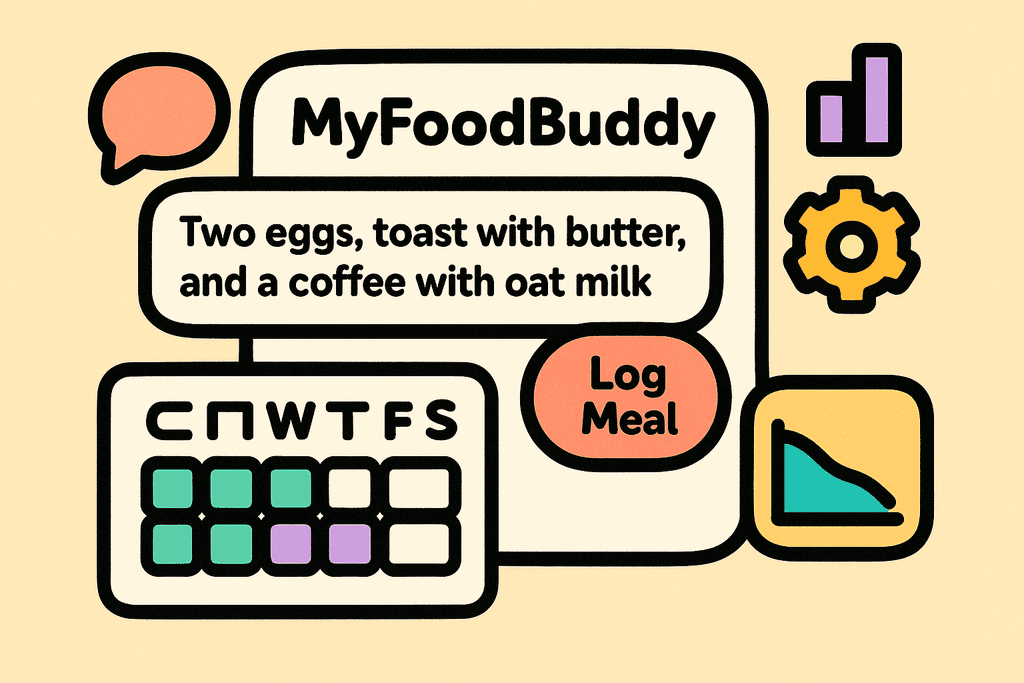
Tracking what you eat makes these choices easier to stick with. Apps like MyFoodBuddy let you quickly log your meals by just saying what you ate, so you can see exactly where you stand without doing math in your head. When you can track a meal in seconds instead of minutes, you're way more likely to actually do it.
Staying Accountable Without the Hassle
The biggest problem with eating out is that most people underestimate how many calories they're actually consuming. A "small" burger might have 500 calories, but add cheese, special sauce, and regular fries, and you're suddenly at 1,100 calories for one meal.
Here's what happens when you track your fast food:
- You see patterns in what you're actually eating
- You learn which menu items fit your goals
- You can plan ahead before you get to the restaurant
- You stay honest about portion sizes and extras
The key is finding the lowest calorie fast food meal options that still taste good and keep you full. That's exactly what we're going to show you next.
Top Low-Calorie Breakfast Options
Most people think fast food breakfast means giving up on their calorie goals before the day even starts. But here's something that might surprise you: some of the biggest chains actually offer breakfast items that clock in under 350 calories. The trick is knowing what to order and what to skip. When you're rushing to work and need something quick, these options can keep you on track without making you feel like you're missing out.
The McDonald's Egg McMuffin sits at just 310 calories and packs 17 grams of protein to keep you full until lunch. It's been on the menu since the 1970s for a reason. Over at Starbucks, their Egg White & Red Pepper Sous Vide Bites come in at only 170 calories, making them one of the lowest calorie fast food meal choices you can grab with your morning coffee.
- Starbucks Egg White & Red Pepper Sous Vide Bites: 170 calories, 13g protein
- Dunkin' Veggie Egg White Omelet: 280 calories, 18g protein
- McDonald's Egg McMuffin: 310 calories, 17g protein
- Chick-fil-A Hash Brown Scramble Bowl: 470 calories, 27g protein
The Dunkin' Veggie Egg White Omelet gives you 280 calories worth of vegetables and protein without the cheese and butter that usually pile on extra calories. If you need something more filling, the Chick-fil-A Hash Brown Scramble Bowl at 470 calories is still reasonable and keeps you satisfied for hours.
| Breakfast Item | Calories | Protein | Best For |
|---|---|---|---|
| Starbucks Egg Bites | 170 | 13g | Light eaters |
| Dunkin' Veggie Omelet | 280 | 18g | Veggie lovers |
| Egg McMuffin | 310 | 17g | Classic choice |
| Hash Brown Bowl | 470 | 27g | Bigger appetite |
What you want to avoid are the breakfast sandwiches loaded with sausage, bacon, and cheese. Those can easily hit 600-800 calories before you add hash browns or a sugary drink. Skip the croissants too, since the buttery pastry alone adds 300 calories before any filling.
Lunch and Dinner Winners Under 500 Calories
Finding a filling lunch or dinner under 500 calories at a fast food place sounds impossible, but it's actually easier than you think. The secret is knowing which menu items are built lighter from the start and which ones you can customize. A Subway 6-inch Turkey Breast sandwich comes in at just 280 calories, leaving you plenty of room for chips or a cookie if you want them. The key is loading up on vegetables instead of heavy sauces and cheese.
Chipotle might seem like a calorie bomb, but a Chicken Burrito Bowl with light portions hits around 465 calories. Ask for extra lettuce and salsa instead of sour cream and cheese, and you've got a meal that feels indulgent but won't wreck your daily goals. The Chick-fil-A Grilled Chicken Sandwich at 390 calories proves that grilled beats fried every single time.
- Taco Bell Chicken Soft Taco (Fresco Style): 140 calories each
- Subway 6-inch Turkey Breast: 280 calories
- McDonald's Artisan Grilled Chicken Sandwich: 380 calories
- Chick-fil-A Grilled Chicken Sandwich: 390 calories
- Chipotle Chicken Burrito Bowl (light): 465 calories
Here's where things get interesting. Taco Bell's Fresco Style option replaces cheese and sauce with pico de gallo, cutting calories dramatically. A Chicken Soft Taco drops to just 140 calories this way. You could eat three of them and still be under 450 calories total.
| Meal Option | Calories | Protein | Customization Tip |
|---|---|---|---|
| Taco Bell Soft Taco | 140 | 11g | Order Fresco Style |
| Subway Turkey | 280 | 18g | Skip cheese and mayo |
| McDonald's Grilled Chicken | 380 | 37g | No mayo |
| Chick-fil-A Grilled | 390 | 28g | Lettuce wrap option |
| Chipotle Bowl | 465 | 32g | Light rice and beans |
The McDonald's Artisan Grilled Chicken Sandwich at 380 calories gives you a solid 37 grams of protein. Just ask them to hold the mayo and you'll save another 50 calories. Most places will customize your order if you ask, so don't be shy about requesting changes.
Tracking these meals becomes simple when you use MyFoodBuddy, where you can just say "Chipotle chicken bowl, light rice, no cheese" and the app calculates everything for you. No more guessing or spending five minutes searching through databases.
Smart Swaps That Save Hundreds of Calories
The difference between a 400-calorie meal and an 800-calorie meal often comes down to just a few simple choices. Most people don't realize how much calories add up from things like cooking methods, condiments, and drinks. Making smart swaps doesn't mean eating less food or feeling hungry. It means getting the same amount of food with way fewer calories attached to it.
Choosing grilled over fried saves you 150-300 calories on almost any sandwich or entree. A fried chicken sandwich at most chains runs around 500-600 calories, while the grilled version of the same sandwich sits at 300-400 calories. That's a massive difference for what tastes pretty similar when it's loaded with toppings.
- Grilled instead of fried: Saves 150-300 calories
- Skip cheese and mayo: Saves 100-200 calories
- Water instead of regular soda: Saves 150-300 calories
- Fresco Style at Taco Bell: Saves 50-100 calories per item
- Dressing on the side: Saves 100-150 calories
- Smaller portion sizes: Saves 200-400 calories
Cheese and mayo might seem innocent, but they pack a punch. Skipping both saves you 100-200 calories without making your meal taste bland. Load up on lettuce, tomatoes, onions, and pickles instead. You get more volume and crunch for basically zero calories.
The drink choice matters more than most people think. A medium soda adds 150-300 calories of pure sugar with zero nutritional value. Switch to water, unsweetened tea, or diet soda and you've just saved enough calories for an extra taco or side item.
| High-Calorie Choice | Calories | Low-Calorie Swap | Calories | Savings |
|---|---|---|---|---|
| Fried chicken sandwich | 550 | Grilled chicken sandwich | 350 | 200 |
| With cheese and mayo | 450 | No cheese or mayo | 300 | 150 |
| Regular soda | 250 | Water or diet | 0 | 250 |
| Large fries | 500 | Small fries | 230 | 270 |
At Taco Bell, ordering Fresco Style replaces dairy-based sauces with fresh pico de gallo. This simple swap cuts 50-100 calories per item and actually makes the food taste fresher. When you order salads, always ask for dressing on the side. Most restaurants drown salads in 300 calories worth of dressing when you only need a fraction of that.
Portion sizes make a huge difference too. A large fries has 500 calories while a small has 230 calories. You still get fries, just not enough to make you feel stuffed and regretful. The same goes for burgers - a single patty instead of a double saves 200-300 calories.
Keeping track of all these swaps and customizations used to be a headache. Apps like MyFitnessPal require you to manually adjust every single ingredient. With MyFoodBuddy, you just say what you ordered with your modifications and it handles the math. If you're trying to find the lowest calorie fast food meal options regularly, having a tool that makes tracking this easy means you'll actually stick with it. Check out more tips on achieving balanced meals without the hassle to see how simple nutrition tracking can be.
Making Fast Food Tracking Actually Easy
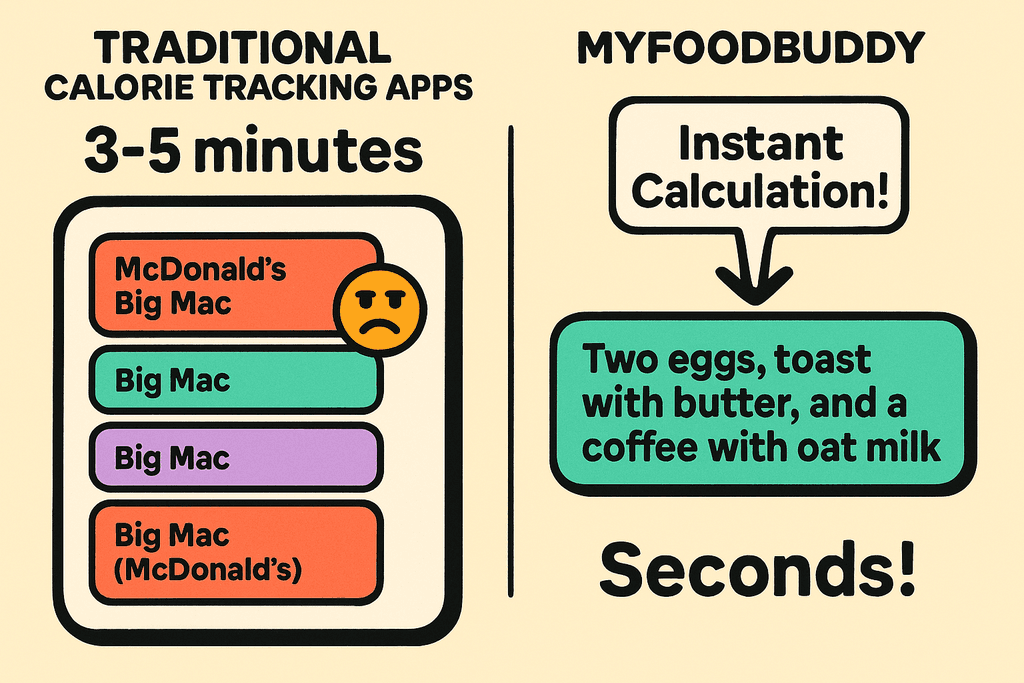
The average person spends 3-5 minutes logging a single meal in traditional calorie tracking apps like MyFitnessPal or Cronometer. That might not sound like much, but when you're trying to track a fast food meal with multiple components, it turns into a frustrating scavenger hunt through endless database entries. You're scrolling through dozens of variations of the same item, wondering if you should log the "McDonald's Big Mac" or the "Big Mac (McDonald's)" or the user-submitted version that might be completely wrong. Fast food tracking shouldn't feel like a part-time job, but that's exactly what it becomes with apps that rely on manual searching and tapping.
The problem gets worse when you realize how many variations exist for a single fast food item. A Chick-fil-A sandwich could be regular or deluxe, grilled or fried, with or without cheese. Each combination requires separate searching and selection.
Time Comparison:
15 seconds vs 4 minutes
Voice tracking compared to manual entry for a typical fast food meal
Why Voice Tracking Changes Everything
Voice-powered tracking eliminates the entire searching process. Instead of hunting through databases and second-guessing your selections, you simply speak naturally about what you ate. The technology handles all the complexity behind the scenes, matching your words to accurate nutritional data without requiring you to make dozens of micro-decisions.
- No more scrolling through similar-sounding menu items
- No more guessing which database entry is correct
- No more tapping through multiple screens to log one meal
- No more abandoning your tracking because it takes too long
MyFoodBuddy takes this approach with fast food tracking. You can say "Chick-fil-A grilled chicken sandwich" and the app automatically calculates all the nutritional information. The AI understands restaurant names, menu items, and common modifications without requiring you to navigate complex menus or search results.
The Favorite Meals Advantage
Here's where tracking gets even simpler. Most people order the same few items when they visit their favorite fast food restaurants. Saving these meals as favorites means you never have to log them manually again. One tap brings back your usual Subway order or your go-to Taco Bell combination, complete with all the nutritional data already calculated.
- Save your regular orders once, reuse them forever
- Organize favorites by restaurant or meal type
- Track your lowest calorie fast food meal options instantly
This combination of voice input and saved favorites turns what used to be a 4-minute chore into a 10-second task. That's the difference between tracking consistently and giving up after a week.
Your Fast Food Strategy Starts Now
Finding the lowest calorie fast food meal doesn't mean you have to give up convenience or taste. The options we covered show that most major chains offer something that fits into your daily calorie goals, whether it's a grilled chicken sandwich from Chick-fil-A, a Fresco taco from Taco Bell, or a simple hamburger from McDonald's. The trick is knowing what to order and having a way to track it without spending ten minutes searching through databases.
Smart choices at fast food restaurants come down to a few simple rules. Skip the mayo and special sauces, choose grilled over fried, and watch out for those sneaky high-calorie drinks. Most people mess up their calorie goals not because of the burger itself, but because they add a large soda and fries without thinking about it.
The real challenge isn't finding low-calorie options though. It's actually tracking them consistently without getting frustrated and giving up. Traditional calorie counting apps make you tap through multiple screens and search for the exact menu item, which gets old fast. MyFoodBuddy lets you just say what you ate, like "grilled chicken sandwich from Chick-fil-A with a side salad," and the AI figures out the rest using USDA data.
When you're sitting in your car after grabbing lunch, the last thing you want to do is spend five minutes logging your meal. Voice tracking means you can log it while you're driving away, and the app handles all the nutritional calculations automatically. That's the difference between tracking for a week and actually sticking with it for months.
If you want more tips on making healthy choices easier, check out our guide on achieving balanced meals without the hassle or learn how to stay consistent tracking calories without burning out.
Common Questions About Low-Calorie Fast Food
Finding and tracking low-calorie fast food options doesn't have to be complicated. Most people have the same questions when they're trying to make better choices at their favorite restaurants. Here are the answers to help you stay on track without spending hours researching nutrition info or second-guessing your orders.
What's the lowest calorie meal at McDonald's?
The Hamburger (250 calories) or 6-piece Chicken McNuggets (250 calories) are your best bets for the lowest calorie fast food meal at McDonald's. If you want something more filling, the Artisan Grilled Chicken Sandwich comes in at 380 calories and includes veggies. Skip the fries and grab apple slices or a side salad to keep your total meal under 400 calories.
Can I eat fast food every day and lose weight?
Yes, you can lose weight eating fast food daily as long as you stay in a calorie deficit. The key is choosing lower calorie options and tracking everything you eat consistently. Weight loss comes down to calories in versus calories out, not whether your food comes from a restaurant or your kitchen. That said, fast food tends to be lower in nutrients and higher in sodium, so mixing in some whole foods when possible helps you feel better overall.
How do I track fast food meals quickly?
The fastest way is using voice logging instead of searching through databases. With MyFoodBuddy, you can just say "Big Mac with no fries and a Diet Coke" and the app calculates everything for you in seconds. Traditional apps like MyFitnessPal require you to search through multiple entries and manually select each item, which takes way longer when you're eating on the go.
Are salads always the lowest calorie option?
Not even close. Many fast food salads pack 500-800 calories once you add the dressing and toppings. A Wendy's Apple Pecan Chicken Salad has 570 calories, while their Jr. Hamburger has only 250 calories. Grilled chicken sandwiches without mayo or crispy chicken tenders often beat salads in the calorie department. Always check the nutrition info before assuming salad equals healthy.
What drinks should I order to save calories?
Stick with water, unsweetened iced tea, black coffee, or diet sodas to save 150-300 calories per meal. A large regular Coke adds 290 calories that won't fill you up at all. If you really want something sweet, most places offer small sizes that cut the damage in half.
How accurate are fast food calorie counts?
Fast food calorie counts are generally accurate within 10-20% since chains follow standardized recipes. The biggest variations come from employees adding extra sauce or cheese, or portion sizes being slightly off. These published numbers are still way more reliable than guessing, so use them as your baseline when tracking. If you're consistently not seeing results, you might be underestimating portions elsewhere in your diet.
Ready to start tracking smarter?
Download MyFoodBuddy and start tracking your calories by just saying what you ate. No more searching databases or guessing portions.
Get started