
Hamburger Calories Guide for Fast Food Orders
Compare hamburger calories across popular fast food chains. Make smarter choices with our complete calorie breakdown and tracking tips.
Why Hamburger Calories Matter More Than You Think
That basic burger you grabbed for lunch could have anywhere from 250 to over 1,000 calories depending on what you ordered, and most people guess wrong by hundreds of calories. The gap between a simple hamburger and a loaded specialty burger can pack more calories than an entire meal should contain. Understanding hamburger calories means you can still enjoy fast food without derailing your health goals, and apps like MyFoodBuddy make tracking these numbers as simple as saying what you ate.
Table of Contents
The Fast Food Hamburger Landscape
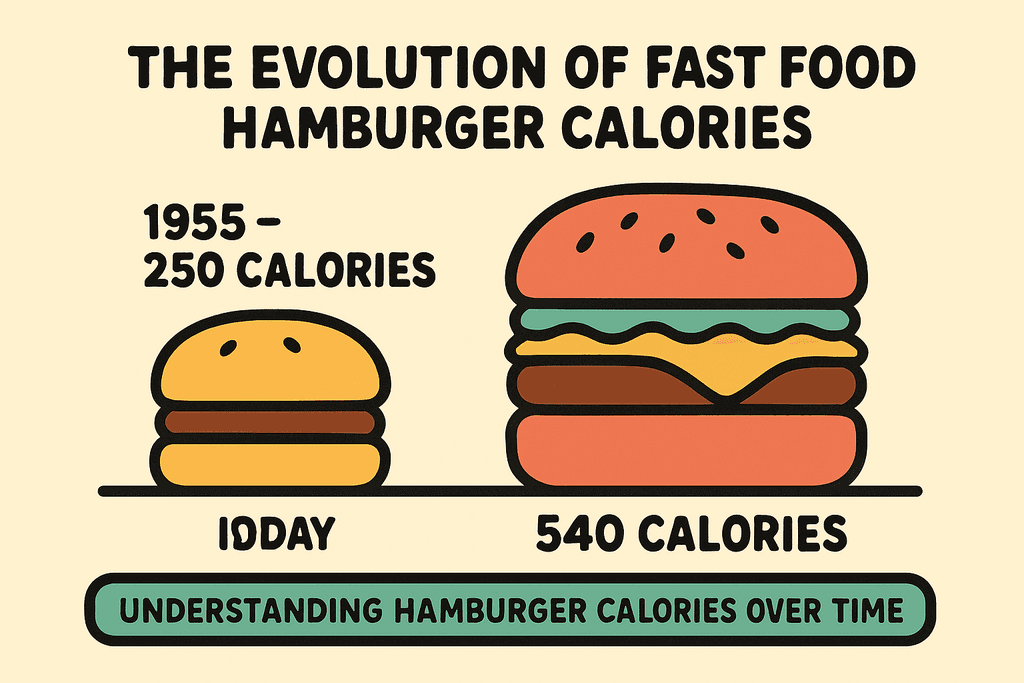
The average fast food hamburger today packs about 540 calories, but that number tells only part of the story. When McDonald's first opened in 1955, their standard hamburger had just 250 calories and weighed 1.6 ounces of beef. Now, the typical burger patty has doubled or even tripled in size, and that's before we talk about the premium options loaded with bacon, cheese, and special sauces. Understanding hamburger calories across different chains helps you make smarter choices without giving up the foods you enjoy.
Major Chains and Their Burger Ranges
Fast food chains have expanded their menus way beyond the basic burger. Each restaurant now offers everything from kid-sized options to massive triple-patty creations that could feed two people.
- McDonald's ranges from the 250-calorie hamburger to the 1,350-calorie Double Quarter Pounder with Cheese
- Burger King's menu spans from 240 calories for a Hamburger to over 1,150 for a Triple Whopper with Cheese
- Wendy's offers options between 250 calories for a Jr. Hamburger and 1,090 for a Dave's Triple
- Five Guys burgers start at around 700 calories and can exceed 1,500 with all the toppings
The variety means you have control over your calorie intake if you know what to look for. Apps like MyFoodBuddy make tracking these choices simple by letting you just say what you ate instead of searching through endless menu databases.
How Burger Portions Have Grown
Portion sizes haven't just grown a little. They've exploded over the past 50 years, and hamburger calories have increased right along with them.
- 1960s burgers averaged 3.9 ounces total weight
- 1980s burgers grew to about 5.8 ounces
- 2000s burgers reached 7.6 ounces on average
- Today's premium burgers often exceed 10 ounces
This growth happened gradually, so most people didn't notice. But your body definitely noticed those extra calories adding up meal after meal.
Calorie Ranges by Burger Category
Not all burgers are created equal when it comes to calories. The type of burger you choose makes a huge difference in your daily calorie count, and knowing these ranges helps you plan better.
| Burger Category | Calorie Range | Common Examples |
|---|---|---|
| Basic/Value | 240-350 | McDonald's Hamburger, BK Hamburger |
| Standard Single | 450-650 | Big Mac, Whopper, Dave's Single |
| Premium Single | 650-850 | Quarter Pounder Deluxe, Bacon King Jr |
| Double Patty | 700-1,000 | Double Quarter Pounder, Dave's Double |
| Triple/Specialty | 1,000-1,500+ | Triple Whopper, Baconator Triple |
These categories show why tracking matters. Moving from a basic burger to a premium option can add 500 calories to your meal without you realizing it. When you're trying to stay within your daily goals, those differences add up fast.
Basic Burgers Your Lower Calorie Options
A plain hamburger from McDonald's has about 250 calories, which might surprise you if you thought all fast food was automatically terrible for your diet. The truth is that basic burgers without all the extras can actually fit into most calorie goals pretty easily. When you stick to a single patty, standard bun, and simple toppings like ketchup and mustard, you're looking at a meal that won't completely derail your day. The problem starts when we add layers of cheese, bacon, and special sauces that can double or even triple those numbers.
Here's what you're getting with basic burgers at major chains:
- McDonald's Hamburger: 250 calories
- Burger King Hamburger: 240 calories
- Wendy's Jr. Hamburger: 250 calories
- Five Guys Little Hamburger: 480 calories
The bun itself accounts for roughly 120-150 calories in most cases, while a standard beef patty adds another 100-150 calories depending on the size. Adding cheese bumps things up by about 50-70 calories, which doesn't sound like much until you realize that's nearly a 30% increase on a basic burger. Condiments matter too, but not as much as you'd think.
| Addition | Calories Added |
|---|---|
| Cheese slice | 50-70 |
| Ketchup (1 packet) | 10 |
| Mayo (1 packet) | 40 |
| Special sauce | 60-80 |
The size of the bun makes a bigger difference than most people realize. A regular bun versus a large sesame seed bun can mean an extra 50-100 calories before you even get to the meat. Some chains use bigger buns for their premium burgers, which is one reason why those calories climb so fast.
Smart Swaps to Cut Hamburger Calories
Ordering a single patty instead of a double saves you 100-200 calories instantly, and honestly, most people don't need that much protein in one sitting anyway. Skipping the mayo or special sauce in favor of mustard and ketchup cuts another 30-60 calories without making your burger taste like cardboard. These small changes add up fast, and you still get to enjoy your meal without feeling like you're on some restrictive diet.
Here are the modifications that make the biggest difference:
- Skip the cheese: Saves 50-70 calories
- Hold the mayo: Saves 40-60 calories
- Single patty instead of double: Saves 100-200 calories
- No bacon: Saves 80-100 calories
- Extra vegetables instead of sauce: Saves 40-80 calories
Lettuce wraps are becoming more common at fast food chains, and they can save you 120-150 calories by ditching the bun entirely. Some people love this swap, others find it messy and unsatisfying. The key is finding modifications you can actually stick with, not just the ones that save the most calories on paper.
| Burger | Original Calories | Modified Calories |
|---|---|---|
| Big Mac | 550 | 400 (no sauce) |
| Whopper | 670 | 500 (no mayo) |
| Baconator | 960 | 680 (single patty) |
Most chains let you customize your order pretty extensively. You can ask for extra pickles, onions, lettuce, and tomatoes without adding many calories. Loading up on vegetables makes your burger feel more substantial even when you've cut out some of the higher-calorie ingredients.
The reality is that tracking these modifications used to be a pain. You'd have to remember what you ordered, estimate the calorie savings, and manually adjust everything in your tracking app. With voice-powered tracking, you can just say "Whopper with no mayo and extra lettuce" and let the AI figure out the exact numbers. It's the kind of convenience that actually helps you stick with tracking long-term, which matters more than any single meal choice. The same thing applies when you're dealing with pizza orders too, especially once you see how Pizza Hut pizza calories change by crust, size, and toppings.
If you're serious about managing your hamburger calories without giving up fast food entirely, check out our guide on calorie counting at In-N-Out Burger for more chain-specific tips. And if you want to see how easy tracking can be when you don't have to manually input every ingredient, voice technology makes fast food tracking actually manageable.
Making Hamburger Calories Work for Your Goals
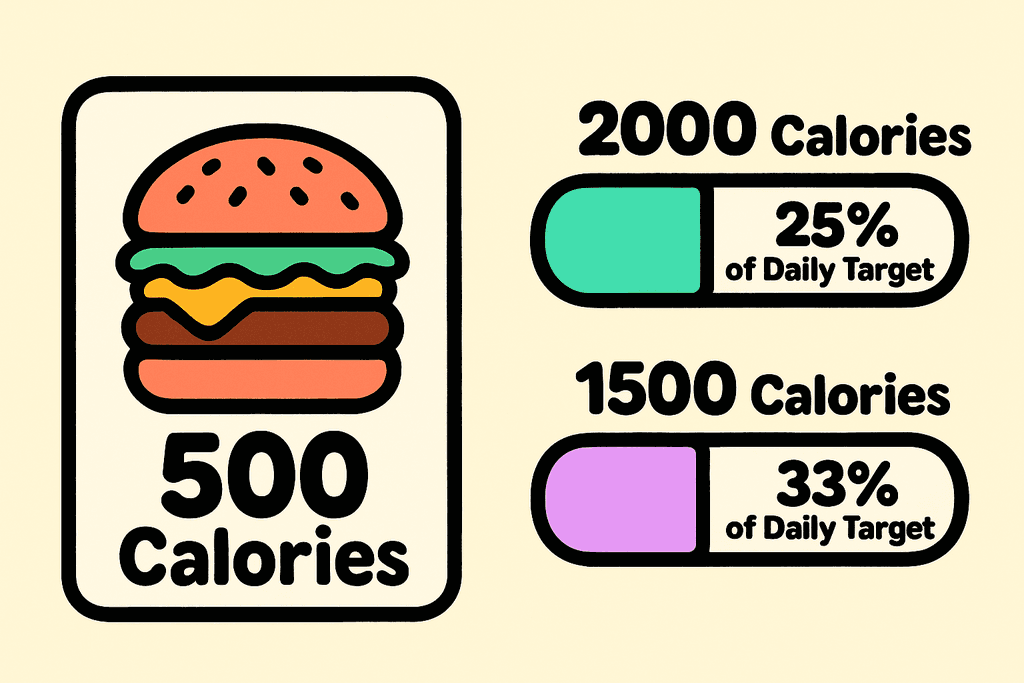
A 500-calorie hamburger means something completely different depending on your daily calorie target. For someone eating 2,000 calories per day, that burger takes up 25% of their entire budget. Someone on a 1,500-calorie weight loss plan just spent a third of their day's food on one meal. But here's what most people miss: knowing the exact hamburger calories in your order is the only way to make informed decisions about fitting fast food into your goals.
73% of people underestimate the calories in restaurant meals by an average of 175 calories per meal. That's nearly 1,225 calories per week of untracked eating.
The math gets messy fast when you're trying to track hamburger calories manually. You have to search through databases, guess portion sizes, and hope the nutritional info matches what you actually got. Most tracking apps require you to input each ingredient separately, which turns a quick lunch into a 5-minute data entry session.
Why Traditional Tracking Fails with Fast Food
Fast food orders are complicated. You might order a burger with no pickles, add bacon, and swap regular fries for a small. Traditional calorie tracking apps make you hunt through menus and customize every single modification.
- Searching for the exact burger variant wastes time when you're hungry
- Manual entry requires remembering every modification you made
- Multiple steps mean you're more likely to skip tracking altogether
- Database entries often don't match current menu items or sizes
People who track their food intake are 3.5 times more likely to lose weight successfully, but only if they actually stick with tracking consistently.
This is where voice-based tracking changes everything. With MyFoodBuddy, you just say "Quarter Pounder with Cheese, medium fries, and a Diet Coke" and the app calculates the hamburger calories automatically. No searching, no manual entry, no guessing. The difference between tracking taking 10 seconds versus 5 minutes determines whether you'll still be tracking next month.
Fitting Burgers into Different Calorie Targets
The key to making fast food work is knowing exactly where you stand after each meal. A 700-calorie burger combo might fit perfectly into a 2,500-calorie maintenance plan but derail a 1,600-calorie cut.
- 1,500 calories daily: A 500-calorie burger leaves 1,000 for two other meals
- 2,000 calories daily: That same burger is just 25% of your budget
- 2,500 calories daily: You have plenty of room for sides and drinks
The people who succeed at balancing convenience with health goals aren't the ones who avoid fast food completely. They're the ones who track accurately enough to make it work without thinking about it.
Taking Control of Your Fast Food Choices
Now you know the score when it comes to hamburger calories at your favorite fast food spots. A basic burger might run you 250-300 calories, while those loaded double or triple patty monsters can push past 1,000 calories before you even add fries. The difference between a regular cheeseburger and a premium bacon burger can be 400-500 calories, which is basically another small meal.
The thing is, knowing what you're eating changes everything. You don't have to give up burgers or avoid fast food completely. You just need the right information to make choices that fit your goals.
Traditional calorie tracking apps make this harder than it needs to be. You're sitting in the drive-through trying to search through databases and create custom meals while your food gets cold. MyFoodBuddy handles this differently by letting you just say what you ate, like "Big Mac with medium fries," and the app calculates everything for you using AI and USDA data.
The best part about understanding hamburger calories is that you can still enjoy fast food without derailing your progress. Maybe you skip the mayo and save 100 calories. Maybe you go for a single patty instead of a double and save 300. These small tweaks add up, but only if you're actually tracking them.
Whether you're trying to lose weight, maintain, or just eat more mindfully, tracking your fast food orders doesn't have to be complicated. The easier it is to log your meals, the more likely you'll stick with it. And sticking with it is what actually gets results.
Common Questions About Hamburger Calories
Tracking hamburger calories doesn't have to be complicated, but a lot of people have the same questions when they're trying to figure out what they're actually eating. Whether you're counting calories for weight loss or just want to make smarter choices at the drive-thru, these answers will help you understand what you're dealing with. The numbers can be surprising, and knowing what to look for makes all the difference when you're trying to stay on track.
What's the lowest calorie hamburger at major chains?
Most basic hamburgers without cheese clock in around 250-300 calories at places like McDonald's, Burger King, and Wendy's. The plain hamburger at McDonald's sits at about 250 calories, while Burger King's hamburger is around 240 calories. If you skip the cheese, mayo, and special sauces, you can keep things pretty reasonable even at fast food spots.
How many calories are in an average fast food hamburger?
A standard fast food hamburger with cheese typically ranges from 300-400 calories, but that number jumps fast when you add bacon, special sauces, or go for a larger patty. Double patties or premium burgers can easily hit 600-900 calories before you even think about sides. The toppings and condiments matter more than most people realize.
Do burger calories include fries and drinks?
No, the calorie counts you see for burgers are just for the sandwich itself. A medium fries adds another 300-400 calories, and a regular soda can tack on 150-200 more. When you order a combo meal, you're often looking at 1,000+ calories total, which is why it's important to track each item separately.
Can I eat hamburgers and still lose weight?
Yes, you can eat hamburgers and lose weight as long as you're staying within your calorie goals for the day. The key is knowing exactly what you're eating and making it fit your plan. Some people skip breakfast or have a lighter lunch to make room for a burger dinner, while others choose smaller burgers or skip the fries.
How accurate are fast food calorie counts?
Fast food chains are required to provide calorie information, and studies show they're generally accurate within about 10-20%. The biggest variations come from portion sizes and how much sauce employees add. It's close enough to use for tracking, but there's always some wiggle room in the real numbers.
What's the easiest way to track hamburger calories?
The fastest way is to use voice logging instead of searching through databases and entering everything manually. With MyFoodBuddy, you can just say "Quarter Pounder with cheese and medium fries" and the app calculates everything for you using AI and USDA data. It turns what used to take several minutes of searching and selecting into a few seconds of talking, which makes it way easier to actually stick with tracking when you're eating out.
Ready to start tracking smarter?
Download MyFoodBuddy and start tracking your calories by just saying what you ate. No more searching databases or guessing portions.
Get started