
4 Common Mistakes With Hamburger Calories
Avoid these 4 hamburger calorie mistakes that sabotage your diet. Learn accurate tracking tips to stay on track with your goals.
That burger you logged as 500 calories might actually be closer to 900, and this single mistake could explain why your weight loss has stalled for weeks. Most people underestimate hamburger calories by 200 to 500 calories because they forget about toppings, misjudge portion sizes, or pick generic entries in tracking apps like MyFitnessPal. The good news is that fixing these common errors is easier than you think, especially when you use tools like MyFoodBuddy that automatically calculate accurate nutritional values from simple voice or text descriptions.
Table of Contents
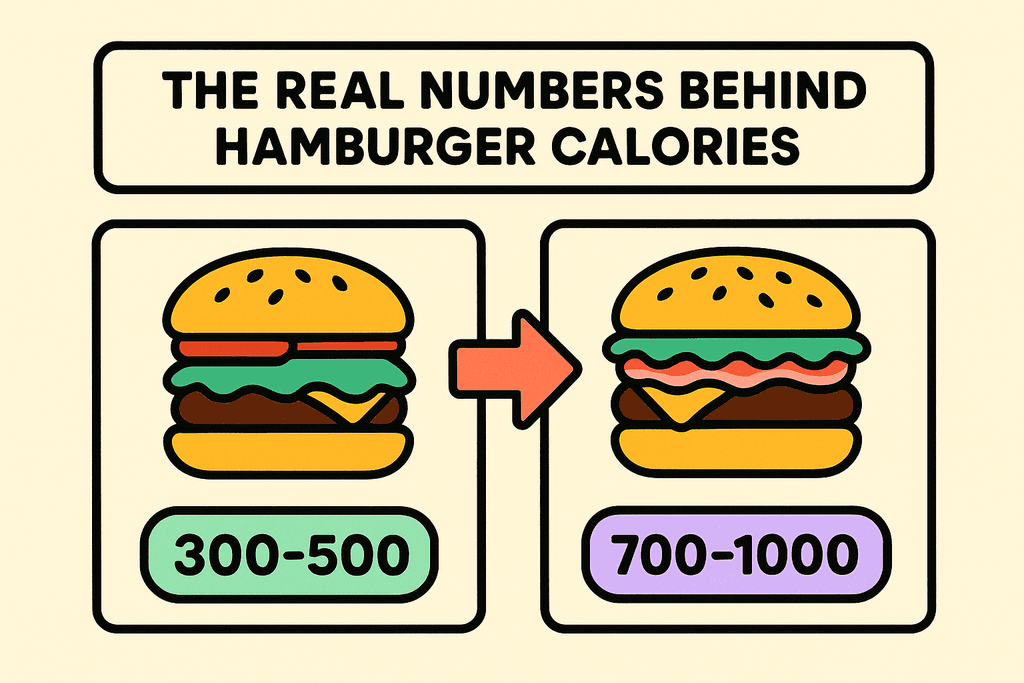
The Real Numbers Behind Hamburger Calories
A basic hamburger from a fast food restaurant packs around 250 calories, but that number can jump to over 1,500 calories depending on what you add to it. Most people guess their burger has about half the calories it actually contains. This gap between what we think we're eating and reality is one of the biggest reasons tracking hamburger calories gets so tricky. The difference between a plain patty and a fully loaded burger is massive, and most of us fall somewhere in the middle without really knowing where.
Why Burger Calories Change So Much
The calorie count in hamburgers varies wildly based on a few key factors. Understanding these helps explain why your homemade burger might be totally different from what you grab at a restaurant.
- Patty size and fat content make the biggest difference (a 4oz lean patty has 200 calories while an 8oz regular patty has 600)
- Cheese adds 100-150 calories per slice, and many burgers come with two
- Buns range from 120 calories for basic white bread to 250 for brioche or pretzel buns
- Sauces and spreads can add 50-200 calories without you noticing
- Toppings like bacon, fried onions, or avocado each bring their own calorie load
When you log food with MyFoodBuddy, you can just say "cheeseburger with bacon" and the app figures out a realistic calorie estimate. No more guessing or searching through endless database entries like you'd have to do with traditional tracking apps.
Actual Calorie Counts Across Burger Types
Here's what different types of burgers actually contain. These numbers surprise most people because restaurant portions are usually bigger than what we make at home.
| Burger Type | Calories | Protein (g) | Fat (g) |
|---|---|---|---|
| Plain fast food burger | 250-300 | 12-15 | 9-13 |
| Cheeseburger | 350-450 | 18-22 | 15-22 |
| Bacon cheeseburger | 500-650 | 25-30 | 28-38 |
| Double patty burger | 600-800 | 35-45 | 35-50 |
| Premium restaurant burger | 900-1,500 | 40-60 | 55-95 |
| Homemade lean burger | 300-400 | 25-30 | 12-18 |
The Estimation Problem
Research shows people underestimate restaurant meal calories by 20-50% on average. Burgers are especially hard to estimate because you can't see what's inside the patty or how much sauce they used. A burger that looks similar to one you had last week might have 300 more calories just from different preparation methods.
- Restaurant burgers often use higher fat ground beef (80/20 or 70/30 instead of 90/10)
- Butter on the bun adds 100+ calories that you can't see
- Portion sizes at chains are rarely consistent between locations
- Special sauces can range from 50 to 300 calories per burger
Apps like MyFitnessPal require you to search through hundreds of entries and pick the right one, which takes time and often leads to picking the wrong option. With voice logging, you just describe what you ate and move on with your day.
Mistake 1: Forgetting About the Toppings
Most people think the beef patty is where all the hamburger calories hide, but that's only half the story. The real calorie bombs are sitting right on top of that patty, and they're easy to forget when you're logging your meal. A plain burger might clock in around 300 calories, but add cheese, bacon, and some special sauce, and you're suddenly looking at 600 or more. The toppings can literally double your calorie count, yet they're the first thing people skip when tracking their food.
Special sauces are the sneakiest culprits because they look innocent but pack a serious punch. That creamy mayo-based sauce you love? It's probably adding 100-150 calories per serving. Ketchup and mustard are relatively safe at around 15-20 calories per tablespoon, but most restaurants don't stop at one tablespoon.
- Cheese slice: 70-110 calories
- Two strips of bacon: 80-100 calories
- Special sauce (2 tablespoons): 100-150 calories
- Mayonnaise (1 tablespoon): 90-100 calories
- Avocado or guacamole: 50-80 calories
- Fried onions: 70-100 calories
The difference between logging "hamburger" and "cheeseburger with bacon" might seem small, but it's actually a gap of 200-300 calories. That's the difference between staying on track with your goals and wondering why the scale isn't moving. When you use an app that lets you speak your order naturally, like saying "cheeseburger with bacon and mayo," you're more likely to remember all those extras.
You don't need to obsess over every calorie to get this right. A quick mental check of what's actually on your burger takes two seconds. Count the cheese, count the bacon, mention the sauce. If you're using voice logging, just say what you see and let the app do the math.
Mistake 2: Using Generic Database Entries
Searching for "hamburger" in most calorie tracking apps gives you about fifty different options, and they're all over the map. One entry says 300 calories, another says 800, and you're left guessing which one matches what you actually ate. The problem is that a hamburger isn't a standard unit of measurement. It could be a small slider or a half-pound monster, and the database doesn't know which one you had.
Restaurant burgers are a whole different beast compared to what you make at home. A homemade burger with a quarter-pound patty, basic toppings, and a regular bun might be around 500 calories. That same "quarter-pounder" from a fast food place could be 750 calories because of the way they prepare it, the type of bun they use, and the sauce they slather on.
| Logging Method | Time Required | Accuracy |
|---|---|---|
| Generic "hamburger" | 10 seconds | Poor |
| Specific details | 2 minutes | Good |
| Voice logging | 15 seconds | Good |
Being specific doesn't mean you need to spend five minutes searching through databases. Just mention the patty size (quarter-pound, third-pound, etc.), whether it's single or double, and the main toppings. Something like "double cheeseburger with a quarter-pound patty" gives way better results than just "burger."
The beauty of using natural language to log your food is that you can be specific without the hassle. Instead of clicking through menus and searching databases, you just describe what you ate like you're telling a friend. The AI figures out the rest based on standard portion sizes and USDA data.
Mistake 3: Ignoring the Bun and Sides
Everyone focuses on the meat and toppings, but the bun is quietly adding 150-250 calories to your meal. A standard sesame seed bun runs about 150 calories, but if you're at a restaurant with those big brioche buns, you're looking at 200-250 calories easy. Pretzel buns and specialty breads can push even higher. Some people think going bunless saves them from tracking, but then they forget they're eating their burger with a fork while munching on fries.
Fries are where things get really interesting. A small order might be 200-300 calories, but most people order medium or large, which can be 400-600 calories. Add that to your 600-calorie burger, and your "quick lunch" just became a 1,200-calorie meal.
- Regular hamburger bun: 120-150 calories
- Brioche bun: 200-250 calories
- Pretzel bun: 220-280 calories
- Small fries: 200-300 calories
- Medium fries: 350-450 calories
- Onion rings (medium): 400-500 calories
The meal versus individual item question trips people up constantly. Do you log "cheeseburger" and "fries" separately, or do you search for "cheeseburger meal"? The answer depends on what gives you better accuracy, but honestly, the fastest way is just to say what you ordered and let the app break it down for you.
Apps like MyFoodBuddy make this simple because you can just say "cheeseburger with medium fries and a Coke" and it calculates everything. No need to decide whether to log items separately or search for combo meals. You can check out more tips on tracking calories at popular burger chains if you eat out frequently.
Mistake 4: Eyeballing Portion Sizes
Here's something most people don't know: that quarter-pound burger you ordered isn't actually a quarter pound by the time it reaches your plate. Meat shrinks when it cooks, losing about 25% of its weight from water and fat. So a quarter-pound raw patty becomes roughly three ounces cooked. This matters because some database entries use raw weight and others use cooked weight, and mixing them up can throw off your tracking by 50-100 calories per burger.
People are terrible at estimating portion sizes without practice. Studies show we consistently underestimate how much we're eating, especially with foods we love. That burger you think is a quarter-pounder might actually be a third-pound or even half-pound patty. Restaurants aren't always consistent either, and what they call a quarter-pound might vary from location to location.
Restaurant serving sizes are almost always bigger than you think. What looks like a normal burger to you might be double the size of what you'd make at home. Fast casual places and sit-down restaurants tend to serve larger portions than fast food chains, but they're less standardized, making it harder to find accurate calorie counts.
| Patty Description | Raw Weight | Cooked Weight | Calories |
|---|---|---|---|
| Quarter-pound | 4 oz | 3 oz | 220-250 |
| Third-pound | 5.3 oz | 4 oz | 290-330 |
| Half-pound | 8 oz | 6 oz | 440-500 |
You don't need a food scale at restaurants to get decent estimates. Compare the patty to the size of your palm (about 3-4 ounces for most people). If it's bigger than your palm, it's probably more than a quarter-pound. If it's way bigger, you're looking at a half-pound burger. The key is being honest about what you're seeing rather than defaulting to the smallest option in the database.
Voice-powered tracking helps here because you can describe what you see: "large cheeseburger, looks like a half-pound patty." The AI uses context and standard restaurant portions to give you a reasonable estimate. It's not perfect, but it's way better than randomly picking a database entry and hoping for the best. For more on how voice technology improves accuracy, check out this guide on voice-powered tracking.
Track Smarter, Not Harder
Getting hamburger calories right doesn't have to be complicated. The four mistakes we covered are pretty common, but they're also easy to fix once you know what to watch for. Forgetting about the bun and toppings, eyeballing portion sizes, trusting restaurant estimates blindly, and not accounting for cooking methods can all throw off your tracking by hundreds of calories. That's the difference between hitting your goals and wondering why nothing's working.
The good news is you don't need to become obsessed with every detail. You just need to be aware of what actually matters. A basic understanding of how to track calories at popular burger spots goes a long way toward keeping your diet on track without making you miserable.
Here's where modern tools actually help. Instead of spending five minutes searching through databases and adding each ingredient separately, you can just say what you ate. MyFoodBuddy lets you log "a quarter pound burger with cheese, lettuce, tomato, and mayo on a sesame bun" and handles the rest. The AI breaks down all those components you might forget about and gives you accurate numbers based on USDA data.
The whole point is making accurate tracking so easy that you actually stick with it. Traditional apps require too many steps, which is why most people quit after a few weeks. Voice-powered tracking removes that friction completely.
If you've been struggling with getting your hamburger calories right, or any food tracking for that matter, it might be time to try a different approach. The mistakes are fixable, but only if your tracking method doesn't make you want to give up entirely.
Common Questions About Hamburger Calories
Tracking hamburger calories brings up a lot of questions, especially when you're trying to stay on top of your nutrition goals. The good news is that most burger-related tracking issues have pretty simple solutions once you know what to look for. Whether you're eating out or cooking at home, understanding how to handle burger calories makes the whole process less stressful. Here are the most common questions people ask about tracking their favorite meal.
How many calories in an average hamburger?
A basic hamburger with a standard beef patty and bun typically contains between 250-350 calories. That number jumps significantly when you add cheese, bacon, special sauces, and larger patties. A fully loaded restaurant burger can easily hit 800-1200 calories before you even count the fries.
Do I need to weigh my burger to track it accurately?
Weighing gives you the most accurate numbers, but it's not always practical when you're eating out or on the go. The better approach is to estimate based on visual cues and common portion sizes, which gets you close enough for consistent tracking. Apps like MyFoodBuddy let you simply describe what you ate in plain language, and the AI figures out reasonable calorie estimates without needing a food scale.
What's the lowest calorie way to eat a burger?
Skip the cheese and mayo-based sauces, use a lettuce wrap instead of a bun, and stick with a single patty. You can also choose leaner meat like turkey or chicken, which cuts calories while keeping the burger experience. Pile on vegetables like lettuce, tomato, onions, and pickles for volume without many extra calories.
How do I track a restaurant burger when nutrition info isn't available?
Look for similar items from chain restaurants that do publish their nutrition data, or break down the burger into components (bun, patty size, toppings). Most traditional calorie trackers make this tedious because you have to search and add each ingredient separately. With voice-based tracking, you can just say "cheeseburger with bacon and fries from a local restaurant" and get a reasonable estimate in seconds.
Is it better to make burgers at home for calorie control?
Home cooking gives you complete control over portion sizes, meat quality, and toppings, which makes tracking more accurate. You can measure exactly how much meat you're using and choose lower-calorie alternatives for buns and condiments. Restaurant burgers often have hidden calories from butter on the bun and oil used in cooking that you can avoid at home.
Can I still eat burgers while losing weight?
Absolutely, as long as hamburger calories fit within your daily targets. The key is being honest about portions and making smart swaps when possible, like choosing a smaller patty or skipping high-calorie toppings. Consistency matters more than perfection, so if tracking your burger takes too long with complicated apps, you're less likely to stick with it long-term.
Ready to start tracking smarter?
Download MyFoodBuddy and start tracking your calories by just saying what you ate. No more searching databases or guessing portions.
Get started