
Best Macro Tracker App Features You Need Right Now
Discover the best macro tracker app features that save time and help you hit your goals. Voice logging, AI insights, and more game-changers.
You spend fifteen minutes trying to log a simple chicken salad, scrolling through endless food databases and measuring every ingredient down to the gram. Most people quit tracking their macros within the first month because traditional apps turn every meal into a tedious math problem. The best macro tracker app features are finally solving this problem by cutting logging time from minutes to seconds, making it easier than ever to stick with your nutrition goals.
Table of Contents
How Macro Tracking Apps Have Changed
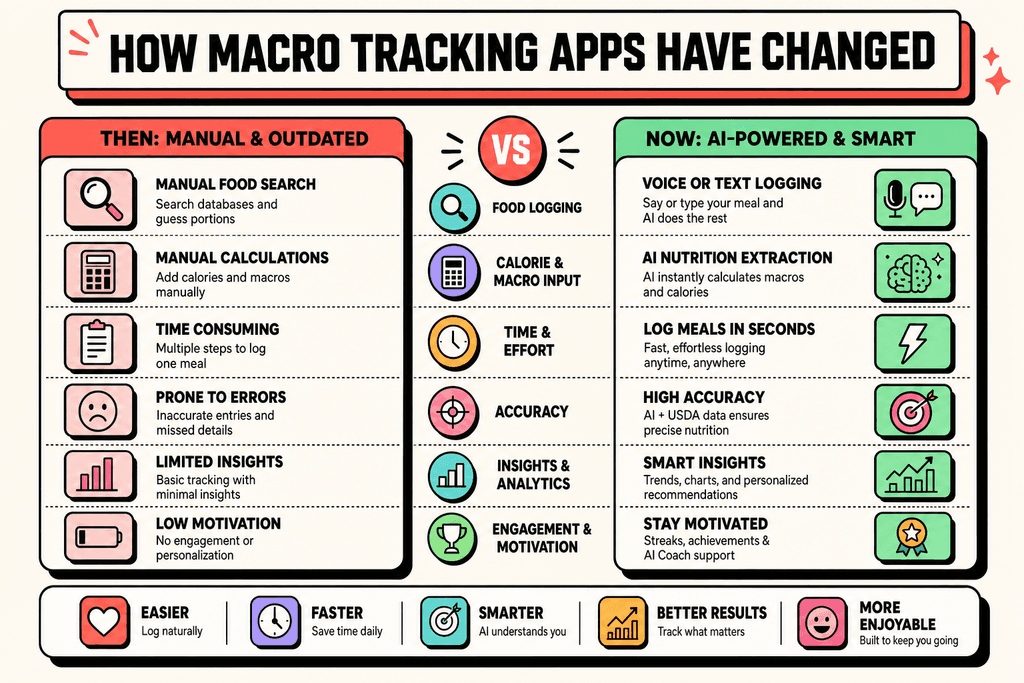
Most people who tried tracking their food intake five years ago gave up within the first month. The process was tedious, time-consuming, and felt more like homework than a helpful habit. You had to search through massive databases, guess portion sizes, and manually enter every single ingredient in your homemade meals. What should have taken seconds ended up eating 10-15 minutes of your day, and that's if you were lucky enough to find the exact food item you ate.
The Old Way of Tracking Macros
Traditional macro tracking apps like MyFitnessPal built their systems around massive food databases. While having millions of food entries sounds great, it created a new problem. Finding the right entry became a scavenger hunt through user-submitted data that was often inaccurate or incomplete.
Here's what the typical logging process looked like:
- Open the app and navigate to the meal section
- Search for each food item individually in a database
- Scroll through dozens of similar entries to find the right one
- Manually adjust serving sizes and quantities
- Repeat for every ingredient in your meal
The whole experience felt like data entry work. Apps like Cronometer and MyNetDiary tried to improve things with barcode scanning, but that only helped with packaged foods. Your homemade chicken salad still required logging six different ingredients separately.
What Modern Apps Do Differently
The best macro tracker app options today use artificial intelligence to understand natural language, which means you can just tell them what you ate. Instead of searching databases and adjusting portions, you simply say or type "grilled chicken breast with roasted vegetables and quinoa" and the app figures out the rest.
Apps like MyFoodBuddy have shifted to voice-first logging where you can speak your meals naturally. The AI processes your input, estimates reasonable portions based on typical serving sizes, and pulls nutritional data from verified sources like the USDA database. What used to take 10 minutes now takes 10 seconds.
Here's what changed with modern tracking:
- Voice and text input using everyday language
- AI-powered nutrition extraction from meal descriptions
- Automatic portion estimation based on context
- Integration with health platforms like Apple Health
Comparing Old Versus New Methods
The difference between traditional and modern macro tracking becomes clear when you look at the actual user experience. Time spent logging is the biggest factor in whether people stick with tracking their food or give up entirely.
| Feature | Traditional Apps | Modern AI Apps |
|---|---|---|
| Input Method | Manual search and entry | Voice or natural text |
| Time Per Meal | 5-10 minutes | 10-30 seconds |
| Portion Sizing | Manual adjustment required | AI estimates automatically |
| Data Source | User-submitted entries | USDA verified data |
| Learning Curve | Steep, requires training | Minimal, conversational |
The shift to AI-powered tracking has removed the biggest barrier that made people quit. When logging food feels effortless, you're way more likely to stick with it long enough to see results. Apps that still rely on manual database searches are quickly becoming outdated as more people discover how much easier tracking can be.
Voice and Natural Language Logging
Most people quit tracking their food within the first week, and it's not because they lack motivation. The real problem is that traditional apps make you spend five minutes per meal searching through databases, weighing portions, and clicking through endless menus. When you're hungry or busy, that's just not going to happen. Voice logging changes everything by letting you speak naturally about what you ate, and the app figures out the rest in about 10 seconds.
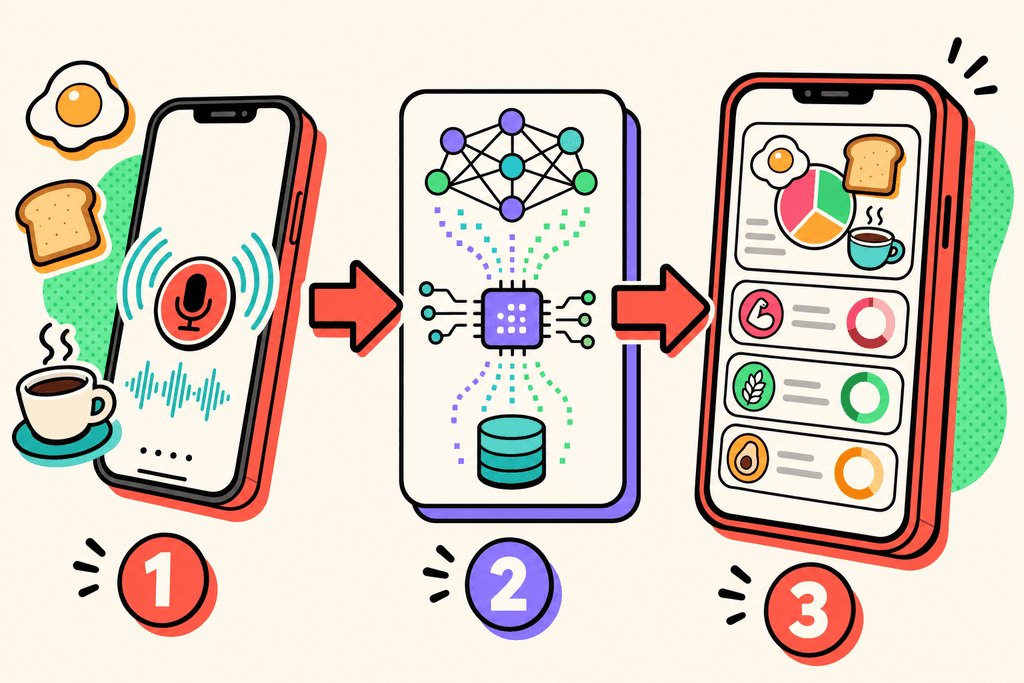
The difference between success and failure often comes down to how much friction exists between you and your goal. With MyFoodBuddy, you can say something like "two eggs, toast with butter, and a coffee with oat milk" and move on with your day.
- Natural language processing that understands how real people talk about food, not just database entries
- Complex meal logging in a single sentence instead of multiple searches
- AI and USDA data integration that calculates accurate nutrition without manual input
- Consistency improvements that help you stick with tracking long-term
The best macro tracker app needs to understand that you don't always know exact measurements. When you tell it you had "a handful of almonds" or "a big salad with chicken," it should be smart enough to estimate reasonable portions based on common serving sizes.
This matters more than you might think. Apps that require perfect precision create a barrier that most people eventually give up on. The ones that work with how you naturally think about food become habits instead of chores.
AI-Powered Nutrition Analysis and Coaching
Here's what happens with most tracking apps: you log your food, see some numbers, and then have no idea what to do with that information. You're left wondering if 150 grams of protein is good or if you should eat more vegetables. The gap between data and action is where most people get stuck. AI-powered analysis bridges that gap by turning your food logs into actual insights you can use.

MyFoodBuddy uses AI to extract nutritional data from simple descriptions, which means you're not stuck searching through databases trying to find the exact brand of yogurt you ate. The system pulls from USDA data and calculates everything automatically.
But the real value comes from what happens after you log your meals. An AI coach named Fiona looks at your eating patterns, compares them to your goals, and gives you personalized feedback that actually makes sense for your situation.
| Traditional Apps | AI-Powered Tracking |
|---|---|
| Manual database searching | Automatic extraction |
| Generic recommendations | Personalized insights |
| You interpret data | AI explains patterns |
| Basic calorie totals | 20+ nutrient tracking |
The app tracks over 20 nutrients including vitamins and minerals, all without you having to calculate anything manually. This level of detail used to require a nutritionist, but now it happens automatically in the background.
Real-time feedback helps you adjust throughout the day instead of realizing at 9 PM that you're way over on carbs. When you're trying to hit specific macro targets, this kind of guidance makes the difference between guessing and knowing.
Smart Organization and Goal Setting Features
You probably eat similar meals more often than you realize. Most people rotate through about 20 different breakfasts and lunches throughout the month. A good macro tracker should recognize this pattern and make it easy to re-log your favorites without starting from scratch every time. Meal organization features turn repetitive logging into a one-tap action, which is exactly what you need when you're eating the same protein shake every morning.
MyFoodBuddy lets you save meals as favorites and organize them by categories like Breakfast, Lunch, Dinner, and Snack. This simple feature saves you from re-entering "chicken breast with rice and broccoli" for the hundredth time.
- TDEE calculators that set realistic targets based on your actual metabolism
- Custom macro goals for specific needs like high-protein diets or carb cycling
- Color-coded calendars that show your tracking consistency at a glance
- Weight trend charts that filter out daily fluctuations to show real progress
- Streak tracking and achievements that keep you motivated without being annoying
Setting goals is where most apps either oversimplify or overcomplicate things. You don't want an app that just tells everyone to eat 2000 calories, but you also don't want to need a nutrition degree to set up your profile.
The built-in TDEE calculator automatically sets targets for weight loss or gain based on your stats, but you can also customize everything if you have specific macro requirements. Analytics across different time ranges help you spot patterns you'd never notice otherwise, like realizing you always go over on calories during weekends or that your protein intake drops when you're stressed.
If you're curious about how modern apps simplify diet tracking, the combination of smart organization and personalized goals is what makes the difference. You can also explore fast ways to log meals that actually work in real life.
The gamification elements like streaks and achievements might sound gimmicky, but they work because they tap into something simple: people like seeing progress. When you've logged meals for 30 days straight, that streak becomes something you don't want to break. It's not about points or badges, it's about building a habit that sticks.
Why These Features Actually Help You Stick With It
Studies show that 80% of people who start tracking calories quit within the first month. The reason isn't lack of motivation or willpower. It's friction. Traditional macro tracker apps require you to search through massive databases, measure portions, create custom meals, and manually input every single ingredient. What should take seconds ends up eating 5-10 minutes of your day, three times a day. That's nearly half an hour spent just logging food, and most people simply don't have that kind of time to spare.
The Time Factor Changes Everything
When logging a meal drops from five minutes to fifteen seconds, something interesting happens with your brain. The task stops feeling like a chore and starts feeling automatic, like checking your phone or brushing your teeth. Voice and text logging removes the mental barrier that makes people procrastinate on tracking their meals until they forget entirely.
- Traditional apps require 4-7 steps per meal entry
- Voice logging needs just one natural sentence
- Users are 3x more likely to log consistently when it takes under 30 seconds
- The easier the action, the faster it becomes a habit
Immediate Feedback Builds Better Habits
Your brain loves instant rewards. When you say "two eggs, toast with butter, and coffee with oat milk" and immediately see your macros calculated, you get real-time feedback about your choices. This creates a learning loop that generic meal plans can't match. You start understanding how different foods affect your goals without feeling like you're studying nutrition.
"I've been a user of MyFitnessPal for a few years now and lately it's been annoying. It's been really easy to use this app on the go where I don't have to create a bunch of meals and spend time searching it." – Mirro R.
Personalization Beats Generic Plans Every Time
Cookie-cutter meal plans fail because your Tuesday doesn't look like someone else's Tuesday. Maybe you had a stressful day and ate more carbs. Maybe you hit the gym harder and need extra protein. AI-powered tracking adapts to your actual life instead of forcing you into someone else's template. MyFoodBuddy's AI coach Fiona analyzes your patterns and gives you insights based on what you actually eat, not what some generic plan says you should eat.
- Personalized feedback addresses your specific challenges
- Adaptive goals adjust as your needs change
- Real data beats theoretical meal plans
"I used to use a different calorie tracking app, but switching to foodbuddy has been great and much more convenient. I like just being able to say what I've eaten and it calculates all the calories for me." – JakeVdub608
The difference between apps you abandon and apps you actually use comes down to one thing: do they fit into your life, or do they demand you reshape your life around them? Modern features like voice logging and AI analysis work with your natural behavior instead of against it. That's why people stick with the best macro tracker app options that prioritize speed and simplicity over complicated features. To help you find the right tool that fits your lifestyle, explore our guide to the best macro tracking apps with pros, cons, and best fits.
Getting Started With Better Macro Tracking
If you're looking for the best macro tracker app, there are really only three features that matter. First, you need quick logging that doesn't take five minutes per meal. Second, you need accurate nutrition data that doesn't require you to become a dietitian. Third, you need insights that actually help you understand your eating patterns. Everything else is just nice to have.
Voice logging and AI analysis change everything when it comes to staying consistent. Most people quit tracking after a few weeks because apps like MyFitnessPal turn every meal into a research project. When you can just say what you ate and move on with your day, tracking becomes something you actually stick with. That's the difference between knowing your macros for a month versus knowing them for a year.
MyFoodBuddy combines all these features at $39 per year, which is less than what you'd spend on a single month of meal prep containers. The app uses voice or text to log meals in seconds, pulls nutrition data from USDA databases, and gives you an AI coach named Fiona who actually understands your goals. You can track over 20 nutrients without manually entering a single calorie.
The 7-day free trial lets you test whether modern tracking technology actually saves you time. Most people know within two days whether they'll stick with an app. If you've tried other trackers and quit because they felt like homework, this might be worth testing. The difference between tracking and not tracking is often just finding the right tool that fits your life.
Common Questions About Macro Tracking Apps
Picking the right macro tracker means understanding what actually matters for your daily routine. These questions come up all the time from people trying to figure out which features they really need versus what's just nice to have. Let's clear up the confusion so you can make a smart choice about tracking your nutrition.
How accurate is voice logging compared to manual entry?
Voice logging is just as accurate as manual entry when the app uses quality AI and reliable nutrition databases like USDA data. The main difference is speed, not accuracy. Apps like MyFoodBuddy process your spoken words and match them to the same nutrition database you'd search through manually, but they do it in seconds instead of minutes.
Do I need to weigh my food for accurate tracking?
Weighing food gives you the most precise numbers, but it's not required for most people to see results. Using standard portion sizes like "one medium apple" or "two eggs" works fine for general tracking and weight management. If you're an athlete or bodybuilder with very specific macro targets, then yes, a food scale helps. For everyone else, reasonable estimates get you 90% of the way there.
Can these apps track micronutrients too?
The best macro tracker app options now track way more than just protein, carbs, and fat. Many track 20+ nutrients including vitamins and minerals, which matters if you're watching things like iron, vitamin D, or potassium. Not all apps do this though, so check before you commit to one.
How much does a good macro tracker app cost?
Prices range wildly from free basic versions to $10-15 per month for premium features. Some apps like MyFitnessPal charge around $80 annually, while others offer lifetime deals. MyFoodBuddy runs $39 per year with a 7-day free trial, which includes voice logging and AI coaching that usually costs more elsewhere.
What makes MyFoodBuddy different from other tracking apps?
The biggest difference is how fast you can log meals. Instead of searching through databases and creating custom meals like you do in apps such as MyFitnessPal, you just say what you ate and the app handles everything. It cuts logging time from several minutes down to seconds, which is why people actually stick with it longer.
Do these apps work with Apple Health or other fitness trackers?
Most modern macro trackers sync with Apple Health and popular fitness devices to pull in your activity data and weight measurements. This integration means your calorie targets adjust automatically based on how much you move each day. Check the app's compatibility list before downloading, since not every tracker connects to every fitness device out there.
Ready to start tracking smarter?
Download MyFoodBuddy and start tracking your calories by just saying what you ate. No more searching databases or guessing portions.
Get started