
Whataburger Nutritional Information Guide
Track Whataburger meals easily with nutritional info. Learn calories, macros & how to log fast food orders for your health goals.
Ordering your favorite Whataburger meal is easy, but figuring out exactly what you just ate can feel like solving a puzzle. Most people underestimate their fast food calories by nearly 40%, which makes tracking nutritional information whataburger meals accurately pretty important if you're trying to stick to health goals. Instead of spending minutes searching through traditional apps like MyFitnessPal or Cronometer, tools like MyFoodBuddy let you simply say what you ordered and handle the nutrition math for you.
Table of Contents
- Understanding Whataburger Menu Basics
- Popular Whataburger Items and Their Nutrition
- Sides, Drinks, and Add-Ons That Impact Your Goals
- Tracking Your Whataburger Order the Easy Way
- Making Whataburger Work for Your Health Goals
- Your Whataburger Nutrition Tracking Simplified
- Common Questions About Whataburger Nutrition
Understanding Whataburger Menu Basics
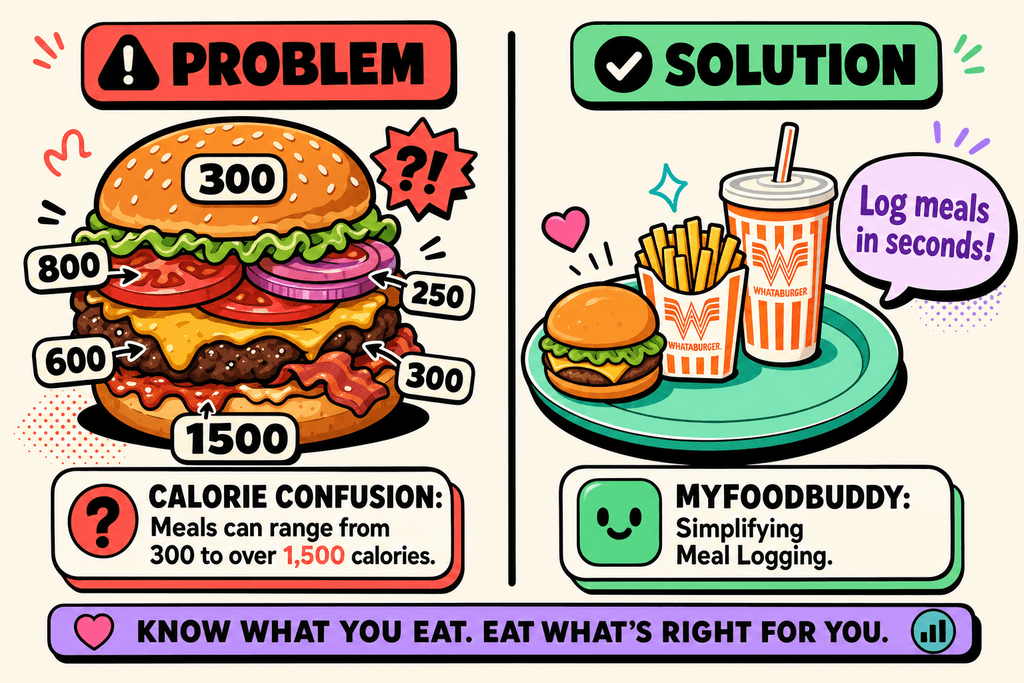
A single meal at Whataburger can pack anywhere from 300 to over 1,500 calories, and most people have no idea where their order falls on that spectrum. The Texas-based burger chain serves everything from simple breakfast items to massive triple-meat burgers, and the nutritional information whataburger provides shows just how different each choice can be. When you're trying to track what you eat, fast food restaurants like Whataburger create a real challenge because the same-looking burger can have wildly different nutrition facts depending on what you add or remove. Most calorie tracking apps like MyFitnessPal require you to hunt through hundreds of menu variations, which turns a quick meal into a 10-minute data entry session.
Main Menu Categories
Whataburger breaks down its menu into several main sections, each with its own nutritional profile. Understanding these categories helps you know what you're getting into before you order.
- Burgers and sandwiches ranging from the basic Whataburger Jr. to the triple-meat monsters
- Chicken options including strips, sandwiches, and the Whatachick'n
- Breakfast items served on buns or as platters with pancakes
- Sides like fries, onion rings, and apple slices
- Shakes, drinks, and desserts that can double your meal's calorie count
The variety is great for taste but tough for tracking. Each category has items that seem similar but have completely different nutritional values.
Calorie Ranges by Category
Here's where things get interesting. The nutritional information whataburger posts shows massive differences even within the same category.
| Menu Category | Lowest Calories | Highest Calories | Protein Range |
|---|---|---|---|
| Burgers | 310 | 1,130 | 16-61g |
| Chicken Items | 430 | 850 | 28-45g |
| Breakfast | 300 | 1,020 | 12-38g |
| Sides | 35 | 510 | 0-7g |
| Shakes | 630 | 1,090 | 11-15g |
That's a huge spread. Your burger choice alone could mean the difference between staying on track or blowing past your daily goals.
Why Restaurant Tracking Fails
Traditional calorie counting falls apart at fast food restaurants. The average person spends 3-5 minutes trying to log a single restaurant meal in apps like Cronometer or MyNetDiary because there are so many variations to sort through.
- Menu items have dozens of customization options that change the nutrition facts
- Database entries often conflict with each other or use outdated information
- You have to remember every modification you made to your order
- Combo meals require logging each item separately in most apps
This is exactly why apps like MyFoodBuddy exist. Instead of hunting through databases, you just say what you ate and the AI figures out the nutritional information whataburger style meals contain. No searching, no guessing, no five-minute logging sessions.
Common Nutritional Concerns
Fast food gets a bad reputation, but the real issue is knowing what you're actually eating. Sodium content at Whataburger ranges from 115mg to over 3,000mg per item, which matters a lot if you're watching your salt intake.
- Hidden calories in sauces and dressings can add 100-300 calories you didn't plan for
- Breakfast items often have more sodium than burgers
- Shakes contain as many calories as some full meals
- Even "lighter" options can pack 600+ calories once you add sides
The problem isn't Whataburger specifically. It's that tracking restaurant meals accurately takes too much time and effort, so people either guess or give up entirely.
Popular Whataburger Items and Their Nutrition
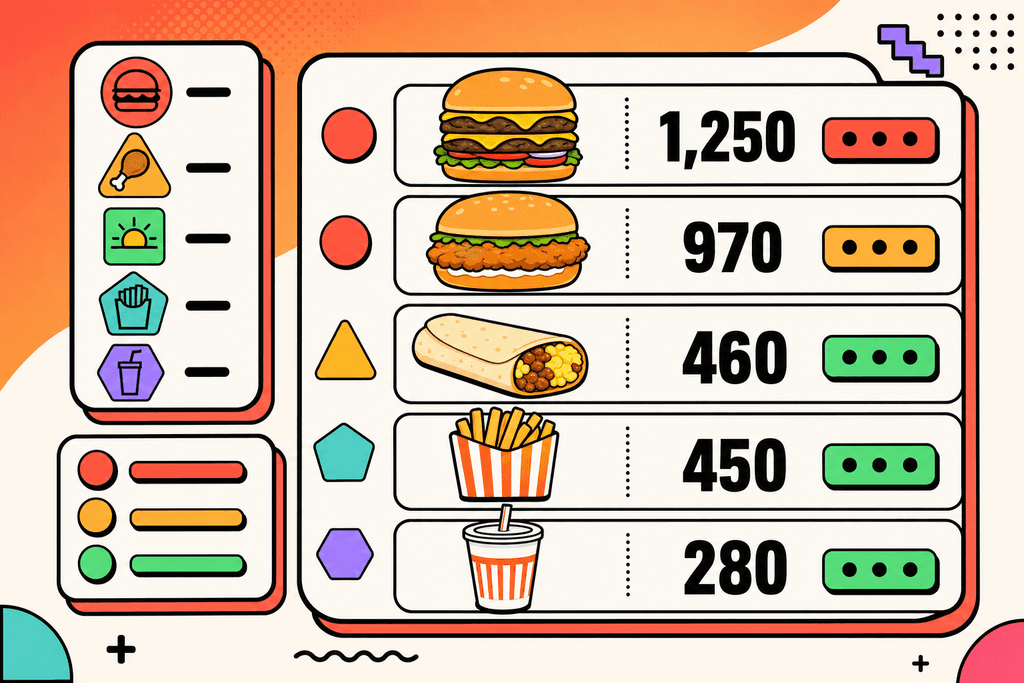
A single Whataburger with cheese packs around 630 calories, which might surprise you if you're trying to stay within your daily calorie budget. The original Whataburger comes in at about 590 calories without cheese, with 28 grams of protein and 26 grams of fat. If you're someone who tracks macros, knowing these numbers before you order can make or break your nutrition goals for the day. The Double Meat Whataburger jumps significantly to around 900 calories, offering 48 grams of protein but also 48 grams of fat. That's nearly half your daily calorie intake if you're aiming for 2000 calories per day.
Popular Whataburger Items and Their Nutrition
The chicken options at Whataburger give you some variety, but the calorie counts vary quite a bit depending on what you choose. The Whatachick'n Sandwich contains approximately 510 calories with 28 grams of protein, while the grilled version drops down to about 450 calories.
| Menu Item | Calories | Protein (g) | Fat (g) |
|---|---|---|---|
| Whataburger | 590 | 28 | 26 |
| Double Meat Whataburger | 900 | 48 | 48 |
| Whatachick'n Sandwich | 510 | 28 | 23 |
| Grilled Chicken Sandwich | 450 | 35 | 14 |
Breakfast at Whataburger can either set you up for success or blow your calorie budget before lunch. The Breakfast on a Bun with bacon sits at around 370 calories, making it one of the lighter options. But add a hash brown stick and you're looking at an extra 220 calories. The Honey Butter Chicken Biscuit, a fan favorite, contains about 610 calories with 23 grams of protein and 33 grams of fat.
Here's something most people don't think about: toppings and modifications can add 50-200 calories to your order without you realizing it. Adding bacon adds about 80 calories, extra cheese adds 70, and that creamy pepper sauce you love adds around 100 calories per serving.
- Bacon: +80 calories
- Cheese slice: +70 calories
- Avocado: +50 calories
- Creamy pepper sauce: +100 calories
- Honey butter: +90 calories
Sides, Drinks, and Add-Ons That Impact Your Goals
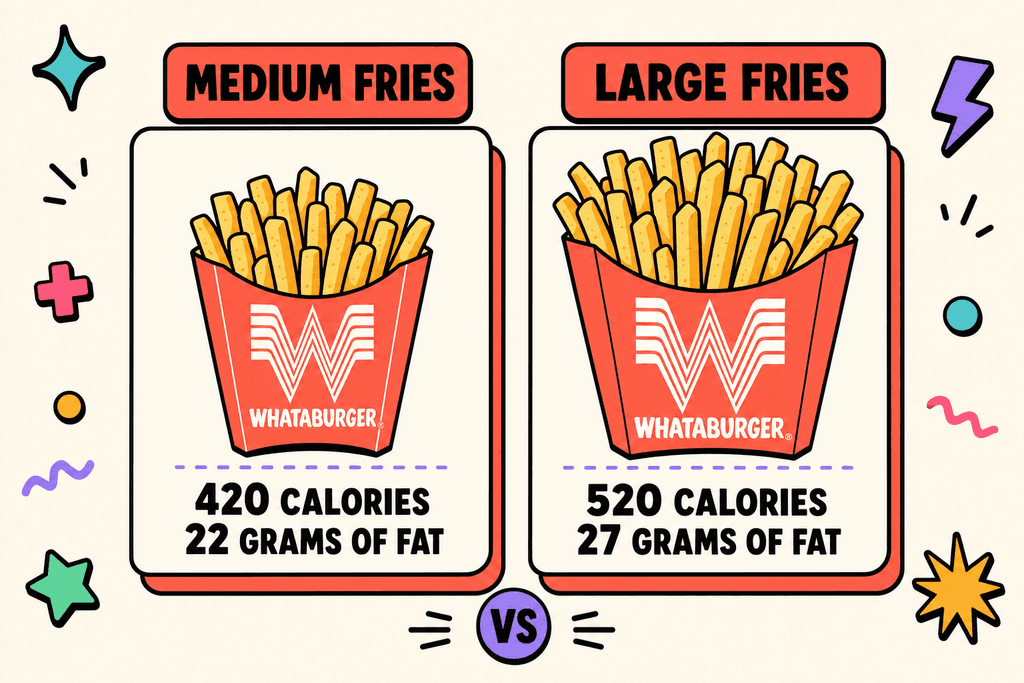
The sides at Whataburger are where things get tricky for anyone watching their nutritional information whataburger orders. A small order of french fries contains about 310 calories, but most people order a medium, which jumps to 420 calories. The large fries clock in at a hefty 520 calories, and that's before you add any ketchup or sauce. Onion rings are even more calorie-dense, with a medium order containing around 520 calories and 27 grams of fat. That's more calories than some of the burgers themselves.
Sides, Drinks, and Add-Ons That Impact Your Goals
Drinks can sneak up on you faster than you'd think. A large Dr Pepper adds 280 calories of pure sugar to your meal, while a large chocolate shake contains a massive 1,160 calories.
- Small fries: 310 calories
- Medium fries: 420 calories
- Large fries: 520 calories
- Medium onion rings: 520 calories
- Large chocolate shake: 1,160 calories
- Large Dr Pepper: 280 calories
Those little sauce packets sitting in your bag aren't as innocent as they look. Ranch dressing contains about 320 calories per packet, while honey mustard has around 110 calories. If you're using two or three packets with your chicken strips, you could be adding 200-600 calories without even thinking about it. The good news is that some sauces like picante sauce only have about 5 calories per packet.
Smart swaps can save you hundreds of calories without making you feel like you're missing out. Switching from a large shake to a diet soda saves you over 1,000 calories. Choosing grilled chicken instead of fried saves about 60 calories and cuts the fat content significantly. If you're craving something similar to Whataburger but want to compare options, check out our hamburger calories guide for fast food orders to see how different chains stack up.
Building a balanced meal at Whataburger means thinking about the total picture. A grilled chicken sandwich with a small fries and unsweetened tea comes in around 750 calories, which fits into most people's lunch budget. Compare that to a Double Meat Whataburger with large fries and a shake, which could hit 2,500 calories in one sitting.
Tracking Your Whataburger Order the Easy Way
Traditional calorie tracking apps make logging a Whataburger meal feel like homework. You have to search through databases, find the right item, select the correct size, add each modification separately, then repeat the process for your fries, drink, and any sauces. What should take seconds ends up taking five minutes or more. Most apps like MyFitnessPal require you to create custom meals or search through hundreds of similar-sounding items just to log a simple burger combo. This is exactly why so many people give up on tracking after a few weeks.
The problem gets worse when you customize your order. Each topping, sauce, or modification requires another search and another entry. If you ordered a Whataburger with no tomatoes, extra pickles, and added jalapeños, you're looking at multiple steps just to get an accurate count.
Voice logging changes everything when it comes to tracking fast food. Instead of tapping through menus and searching databases, you just say what you ate. Something like "Whataburger with cheese, medium fries, and a large unsweetened tea" gets processed in seconds. MyFoodBuddy uses AI to understand your order and calculate the nutritional information whataburger meals contain automatically, pulling from USDA data to give you accurate numbers.
- Open the app and tap the voice button
- Say your complete order naturally: "Double Meat Whataburger, large onion rings, and a medium Dr Pepper"
- The AI processes your meal and calculates all nutritional values
- Review and confirm your entry in seconds
The difference between spending five minutes manually entering each item versus ten seconds speaking your order adds up over time. When tracking becomes this easy, you're more likely to stick with it. Our app handles the complicated part of figuring out calories, protein, carbs, and fats so you can focus on your goals instead of data entry. If you're curious about tracking at other fast food spots, our guide on calorie counting made simple at In-N-Out Burger shows how voice logging works across different restaurants.
The best part is that MyFoodBuddy learns your preferences over time. If you always order the same Whataburger meal, you can save it as a favorite and re-log it with a single tap. No more searching, no more manual entry, just quick tracking that actually fits into your busy life. For more tips on avoiding common tracking mistakes, check out our article on common mistakes with hamburger calories.
Making Whataburger Work for Your Health Goals
The biggest mistake people make with fast food isn't eating it, it's not tracking it properly. When you grab a Whataburger meal, you're looking at anywhere from 500 to 1,500 calories depending on what you order. That range matters a lot when you're trying to lose weight or build muscle. The difference between hitting your goals and wondering why nothing's working often comes down to knowing exactly what you're eating and making it fit your daily targets.
Most traditional calorie tracking apps make logging fast food meals a pain. You have to search through databases, pick the right portion sizes, and hope the nutritional information whataburger provides matches what's in the app. With MyFoodBuddy, you just say "Whataburger Jr with small fries" and the AI handles the rest.
Weight Loss Strategies at Whataburger
Fitting Whataburger into a calorie deficit is totally doable if you know which menu items give you the most food for the fewest calories. The key is choosing options that keep you full without blowing your daily budget.
- Stick to junior-sized burgers instead of double or triple patties to save 300-500 calories
- Skip the mayo and special sauces, which add 100-200 calories you won't miss much
- Choose apple slices or a small fry instead of large fries to cut 200+ calories
- Order water or unsweetened tea instead of regular soda to save 150-300 calories
The Whataburger Jr. clocks in around 310 calories, which leaves plenty of room in most weight loss plans. Compare that to a double meat burger at 850+ calories and you see why smart ordering matters more than avoiding fast food completely.
Building Muscle with High Protein Choices
If you're trying to build muscle, Whataburger actually has some solid high-protein options. The challenge is getting enough protein without overdoing the calories and fat.
- Double meat burgers provide 50+ grams of protein in one meal
- Grilled chicken sandwiches offer lean protein with fewer calories than beef
- Add extra patties to any burger for about 25 grams more protein
- Pair your meal with a protein shake if you need to hit higher targets
Pros and Cons of Different Ordering Strategies
| Strategy | Pros | Cons |
|---|---|---|
| Junior Burgers Only | Low calorie, budget friendly | May not satisfy hunger |
| Double Meat Options | High protein, very filling | High calories and fat |
| Grilled Chicken | Lean protein source | Less satisfying than beef |
| Customized Orders | Perfect macro balance | Requires careful tracking |
Why Accurate Tracking Changes Everything
Here's the truth about eating fast food while pursuing health goals: it works when you track it consistently and accurately. The problem with most tracking methods is they take too long, so people either guess or skip logging altogether. Consistent logging builds better eating habits because you start seeing patterns in what works and what doesn't.
When you can quickly log your Whataburger meal by just speaking into your phone, you're way more likely to actually do it. That consistency is what separates people who successfully balance fast food with their goals from those who struggle. The nutritional information whataburger provides is only useful if you actually record it and see how it fits into your bigger picture.
Your Whataburger Nutrition Tracking Simplified
Eating at Whataburger doesn't have to derail your health goals, but keeping track of nutritional information whataburger offers can feel like a chore. We've covered everything from the surprisingly high calorie counts in those honey butter chicken biscuits to the smarter swaps you can make when ordering your favorite burgers. The real challenge isn't knowing what's in your food, it's actually logging it consistently without spending ten minutes searching through databases.
Most people give up on tracking because traditional apps make you hunt for the exact menu item, adjust serving sizes, and manually enter every ingredient. That's where tools like modern nutrition tracking come in handy. With MyFoodBuddy, you can just say "Whataburger double meat with fries" and the app figures out the rest using AI and USDA data.
The key takeaway here is simple. Knowing the nutritional information whataburger provides is only half the battle. The other half is making tracking so easy that you actually stick with it. Whether you're comparing hamburger calories across different chains or trying to find the lowest calorie fast food options, consistency matters more than perfection.
Your nutrition goals are totally achievable when you have the right system in place. The questions below should help clear up any remaining confusion about tracking your Whataburger meals.
Common Questions About Whataburger Nutrition
Tracking your meals at Whataburger doesn't have to be complicated, but a lot of people have similar questions when they're trying to stay on top of their nutrition goals. Whether you're counting calories for weight loss or just trying to make smarter choices, these answers should help clear things up. The good news is that with the right approach and tools, you can enjoy Whataburger without derailing your progress.
Where can I find official nutritional information for Whataburger?
Whataburger provides complete nutritional information on their official website under the nutrition section. You can also find printed nutrition guides at most locations if you ask at the counter. When logging meals in MyFoodBuddy, you can simply say "Whataburger double meat burger" and the app pulls accurate data automatically, saving you from having to look it up yourself.
How do I estimate calories for custom Whataburger orders?
Custom orders get tricky because adding or removing ingredients changes the totals. The easiest way is to start with the base item's nutritional information from Whataburger, then add or subtract based on what you modified. With MyFoodBuddy, you can just describe your exact order in plain language like "Whataburger with no mayo and extra pickles" and the AI figures out the adjustments for you.
What are the best low-calorie options at Whataburger?
The Grilled Chicken Sandwich without mayo sits around 450 calories, making it one of the lighter choices. The Whatachick'n Strips (3-piece) come in at about 420 calories before sauce. For breakfast, the Egg Sandwich on a small bun is under 350 calories and keeps you full without the heavy calorie load.
Can I still eat Whataburger while trying to lose weight?
Absolutely, as long as you're tracking your intake and staying within your calorie goals. Weight loss comes down to being in a calorie deficit, not avoiding specific restaurants. The key is making informed choices and logging everything accurately so you know exactly where you stand for the day.
How do I track modified Whataburger orders accurately?
Traditional apps like MyFitnessPal require you to search for each ingredient separately and manually adjust quantities, which takes forever. MyFoodBuddy handles this differently by letting you describe your modifications naturally, and the AI calculates the nutritional information based on what you actually ate. It turns a five-minute logging session into about ten seconds.
How can I stay within my macro goals when eating at Whataburger?
Check your remaining macros before ordering so you know what you're working with. If you need more protein and less fat, go for grilled chicken instead of fried. Skip the cheese and mayo to cut fat, or add extra meat if you need protein. Planning your other meals around your Whataburger visit also helps you stay balanced throughout the day.
Ready to start tracking smarter?
Download MyFoodBuddy and start tracking your calories by just saying what you ate. No more searching databases or guessing portions.
Get started