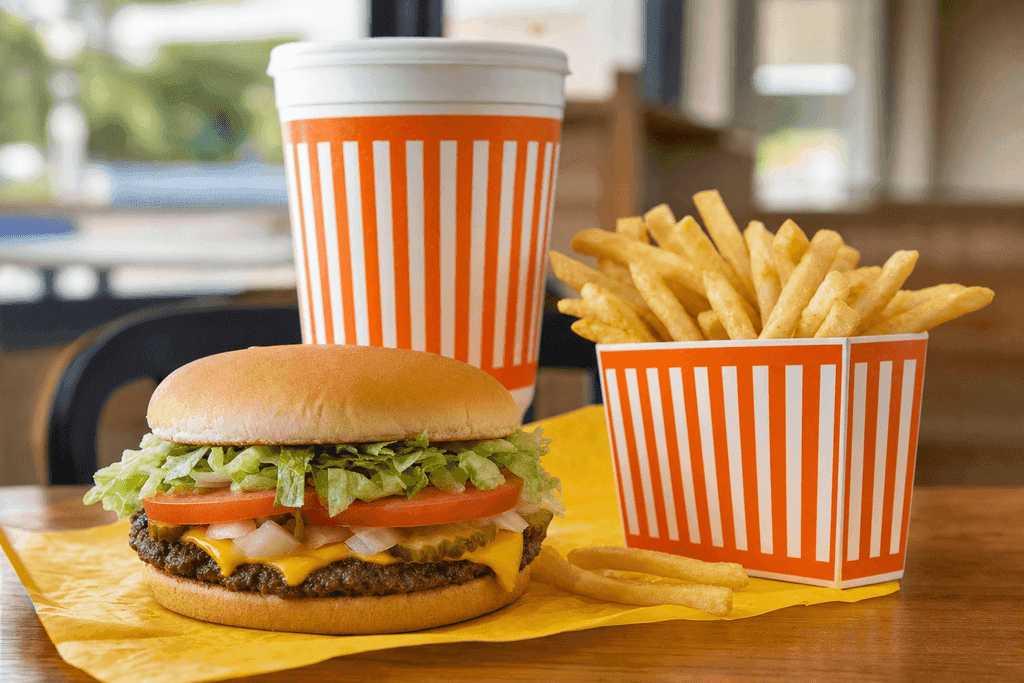
Whataburger Nutrition Info You Need to Know
Complete Whataburger nutrition info for burgers, sides, and shakes. Calorie counts, macros, and smart ordering tips for your weight loss goals.
You scan the Whataburger menu and everything looks amazing, but that nagging voice in your head wonders how many calories you're about to eat. A single Whataburger meal can pack more than 1,500 calories, which might be your entire daily budget if you're trying to lose weight. The good news is that knowing the whataburger nutrition info before you order means you can still enjoy your favorite fast food without derailing your progress, and apps like MyFoodBuddy make tracking those restaurant meals as simple as speaking what you ate into your phone.
Table of Contents
Understanding Fast Food Nutrition Labels
A single Whataburger meal can pack more calories than most people burn in three hours of walking. That's the reality of fast food nutrition, and it catches a lot of people off guard when they start tracking what they eat. The good news is that Whataburger, like all chain restaurants, has to share their nutrition info publicly, which makes it easier to make smart choices when you're trying to lose weight or just eat healthier.
What the Numbers Actually Mean
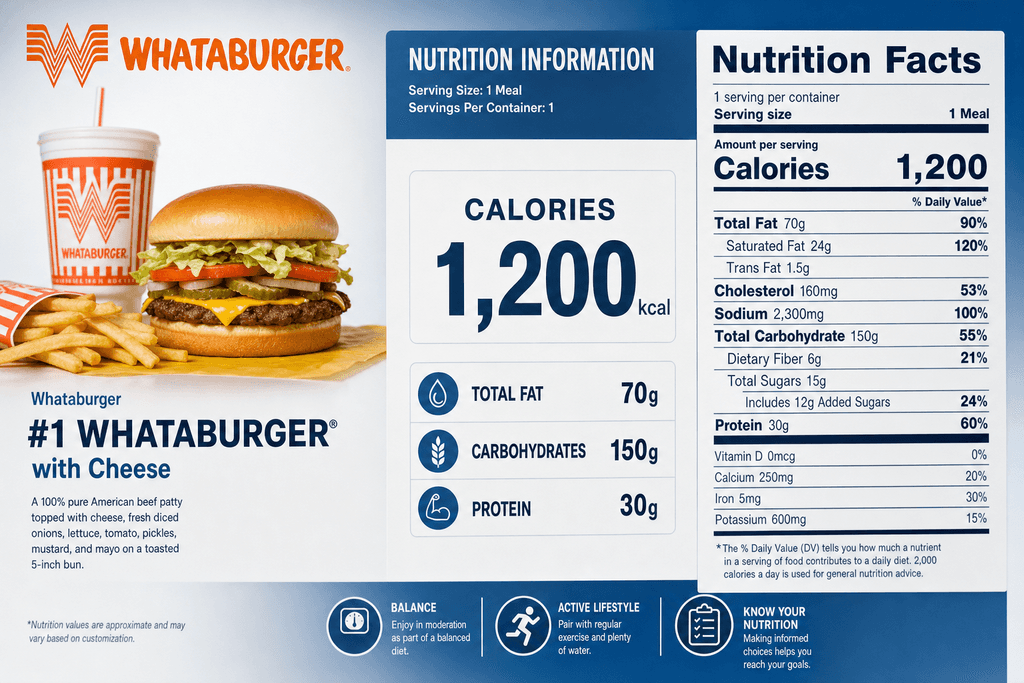
When you look at whataburger nutrition info, you'll see a bunch of different numbers. Not all of them matter equally when you're trying to drop pounds or maintain your weight. Here's what actually counts:
- Calories are the big one because they determine whether you gain, lose, or maintain weight
- Protein helps you feel full and keeps your muscles strong while losing fat
- Carbs and fats give you energy but add up fast in restaurant food
- Sodium doesn't affect fat loss directly but can make you retain water and feel bloated
Most calorie tracking apps like MyFitnessPal or Cronometer will ask you to log all these numbers. With MyFoodBuddy, you can just say "I had a Whataburger with cheese and medium fries" and the AI figures out the nutrition data for you in seconds.
How Restaurants Report Their Data
Whataburger lists nutrition information for each menu item based on standard recipes and portion sizes. But here's the thing most people don't realize about restaurant nutrition labels:
- The actual burger you get might have more sauce or cheese than the "standard" version
- Condiments and add-ons can add 50-200 extra calories you didn't account for
- Drink refills aren't included in the listed calories for your meal
- Combo meals show total calories, but you need to break them down to track properly
Why Tracking Matters More Than You Think
Restaurant calories are sneaky because they're often 20-30% higher than homemade versions of the same food. Fast food restaurants use more oil, butter, and sugar to make things taste better, which is why a seemingly simple burger can have 1,000+ calories.
| Nutrition Metric | What It Means | Why It Matters for Weight Loss |
|---|---|---|
| Calories | Energy from food | Main factor in weight change |
| Protein (g) | Muscle building nutrient | Keeps you full longer |
| Carbs (g) | Quick energy source | Easy to overeat |
| Fat (g) | Dense energy source | 9 calories per gram |
| Sodium (mg) | Salt content | Causes water retention |
The key to making whataburger nutrition info work for your goals is actually logging it consistently. When you track every meal, even the fast food ones, you start to see patterns in where your calories come from and can make better choices next time.
Popular Whataburger Burgers and Their Calories
A single Whataburger patty with the standard toppings clocks in at around 590 calories, which might surprise you if you thought it was a lighter option. The classic Whataburger comes with mustard, lettuce, tomatoes, pickles, and onions on a five-inch bun, and it packs 25 grams of protein alongside 28 grams of fat. That protein content is actually pretty solid for keeping you full, but the fat and carbs add up fast when you start customizing. Most people don't realize how much the cheese, bacon, and special sauces can change the numbers.
When you move up to the Double Meat Whataburger, you're looking at roughly 890 calories with two beef patties. The Triple Meat Whataburger pushes past 1,190 calories and delivers a massive 60 grams of protein, but also comes with over 60 grams of fat.
| Burger | Calories | Protein (g) | Fat (g) | Carbs (g) |
|---|---|---|---|---|
| Whataburger | 590 | 25 | 28 | 61 |
| Double Meat | 890 | 42 | 45 | 62 |
| Triple Meat | 1,190 | 60 | 62 | 63 |
| Patty Melt | 780 | 38 | 42 | 54 |
| Avocado Bacon Burger | 810 | 33 | 48 | 58 |
The Patty Melt sits at about 780 calories and uses Texas toast instead of a regular bun, which changes the texture but not necessarily the calorie count by much. The Avocado Bacon Burger comes in around 810 calories, and while avocado adds healthy fats, it still adds fats.
Here's what really matters for tracking: every modification changes your whataburger nutrition info. Adding cheese adds roughly 100 calories, bacon adds another 80, and switching to a large bun can add 50 more. If you're trying to stay within a calorie budget, skipping the cheese and mayo can save you 200+ calories without losing much flavor.
- Ask for no mayo to save about 110 calories
- Skip the cheese to cut 100 calories
- Get mustard instead of special sauces
- Order a single patty instead of double
- Add extra veggies for volume without many calories
The Whataburger Jr. is your best bet if you want something under 350 calories. It's a smaller version with one patty and fewer toppings, but it still gives you that Whataburger taste without wrecking your daily goals.
Sides That Won't Wreck Your Calorie Budget
French fries are the default side at Whataburger, and they're easy to underestimate. A small order has about 280 calories, which seems reasonable until you realize most people order a medium at 410 calories or a large at 510 calories. The large fries alone can be almost as many calories as a single Whataburger patty, and that's before you add ketchup or any dipping sauces. The problem with fries is they don't keep you full for long, so you're spending a big chunk of your calorie budget on something that won't help with satiety.
Onion rings are even higher at around 420 calories for a medium order, and they pack more fat than the fries. If you're choosing between the two, fries are slightly better from a calorie perspective, but neither is great if you're trying to keep your meal light.
| Side Option | Calories | Protein (g) | Fat (g) |
|---|---|---|---|
| Apple Slices | 35 | 0 | 0 |
| Small Fries | 280 | 4 | 14 |
| Medium Fries | 410 | 5 | 20 |
| Large Fries | 510 | 7 | 25 |
| Medium Onion Rings | 420 | 5 | 23 |
The apple slices are your secret weapon here. At just 35 calories, they give you something to munch on without adding much to your total. They won't fill you up like fries, but if you're pairing them with a protein-heavy burger, you might not need a heavy side anyway.
Most people don't think about how sides can double their meal calories. A Whataburger with large fries pushes you over 1,100 calories before you even add a drink. That's more than half your daily calories if you're aiming for 2,000 per day.
- Choose apple slices to save 375+ calories vs medium fries
- Order a small fries instead of medium to save 130 calories
- Skip the side entirely and add extra veggies to your burger
- Share a large fries if you really want them
For protein and staying full longer, none of the sides really help much. Your best bet is focusing on the burger itself and keeping the side minimal or skipping it completely.
Shakes and Drinks That Fit Your Macros
Whataburger shakes are thick, creamy, and loaded with calories that sneak up on you fast. A small shake runs around 580 calories, a medium hits 850 calories, and a large can exceed 1,100 calories depending on the flavor. That large shake alone is more calories than most of their burgers, and it's all liquid, which means your body processes it quickly without keeping you full. Chocolate, vanilla, and strawberry are the standard flavors, and they're all pretty similar in terms of calories and sugar content.
The real issue with shakes is how easy they are to forget when you're tracking. You might carefully log your burger and fries, then completely overlook that you just drank 850 calories in five minutes.
- Small shake: ~580 calories, 80g+ sugar
- Medium shake: ~850 calories, 115g+ sugar
- Large shake: 1,100+ calories, 150g+ sugar
Soft drinks and sweet tea add up too, though not as dramatically. A large Coke has about 310 calories, and a large sweet tea sits around 220 calories. These might seem small compared to a shake, but they still add empty calories that don't help with hunger or nutrition.
Zero-calorie options include diet sodas, unsweetened tea, and water. If you're serious about staying within your calorie goals, switching from a regular Coke to a Diet Coke saves you 310 calories instantly. That's enough to fit in a small fries or save room for dessert later.
Apps like MyFoodBuddy make it simple to log these drinks by just saying what you had. Instead of manually searching for "Whataburger large chocolate shake" and entering all the details, you can just speak or type "large chocolate shake from Whataburger" and the AI pulls the nutrition info automatically. It takes seconds instead of minutes, which makes a huge difference when you're trying to stay consistent with tracking.
Liquid calories are the easiest to overlook because they don't feel like "eating." But a large shake plus a burger and fries can push you past 2,000 calories in one meal, which is a full day's worth for many people trying to lose weight.
Building a Whataburger Meal That Fits Your Goals
Putting together a Whataburger meal that fits your calorie target doesn't mean you have to skip everything you like. It just means being smart about what you order and where you can cut back without feeling deprived. A 500-calorie meal is totally doable if you focus on the burger and skip the high-calorie sides and drinks. A 700-calorie meal gives you more flexibility to add a small side or keep some toppings you enjoy.
For a 500-calorie meal, your best option is a Whataburger Jr. with no cheese and no mayo, paired with apple slices and water or unsweetened tea. This keeps you around 480 calories total while still giving you a burger experience.
| Meal Type | Items | Total Calories |
|---|---|---|
| 500-Calorie | Whataburger Jr (no cheese/mayo) + Apple Slices | ~480 |
| 700-Calorie | Single Whataburger (no mayo) + Small Fries | ~690 |
| 700-Calorie | Whataburger Jr + Small Fries + Diet Drink | ~630 |
A 700-calorie meal gives you more room to work with. You could get a regular Whataburger without mayo and add apple slices, or go with a Whataburger Jr. and include small fries. Both options keep you under 700 calories and feel more like a complete meal.
The key modifications that save the most calories are skipping mayo, cheese, and special sauces. Mayo alone is about 110 calories, and most people won't miss it if there's mustard and veggies on the burger. Cheese adds another 100 calories, so cutting both saves you 210 calories right there.
- Always order water or diet drinks instead of regular soda
- Ask for extra lettuce and tomato for more volume
- Choose mustard over mayo or special sauce
- Get a single patty instead of double when possible
- Pick apple slices over any fried side
What you should skip depends on your goals, but generally the shakes and large fries are the biggest calorie bombs. What you should keep is the protein from the burger itself, since that's what will actually keep you satisfied. If you're tracking with something like MyFoodBuddy, you can quickly log your Whataburger meal by speaking what you ordered, and it'll calculate everything for you in seconds. This makes it way easier to stay consistent compared to apps where you have to search through databases and manually add each item.
Understanding whataburger nutrition info helps you make better choices without giving up fast food completely. If you want more tips on tracking calories at other burger spots, check out our guide to hamburger calories at fast food restaurants or see how In-N-Out compares for calorie counting. For broader strategies on finding low-calorie fast food meals, we've got you covered there too. If you're comparing burger chains, our guide to Culver's nutrition facts and macros for popular menu items breaks down ButterBurgers, shrimp dinners, and custard the same way.
The Real Challenge of Tracking Restaurant Meals
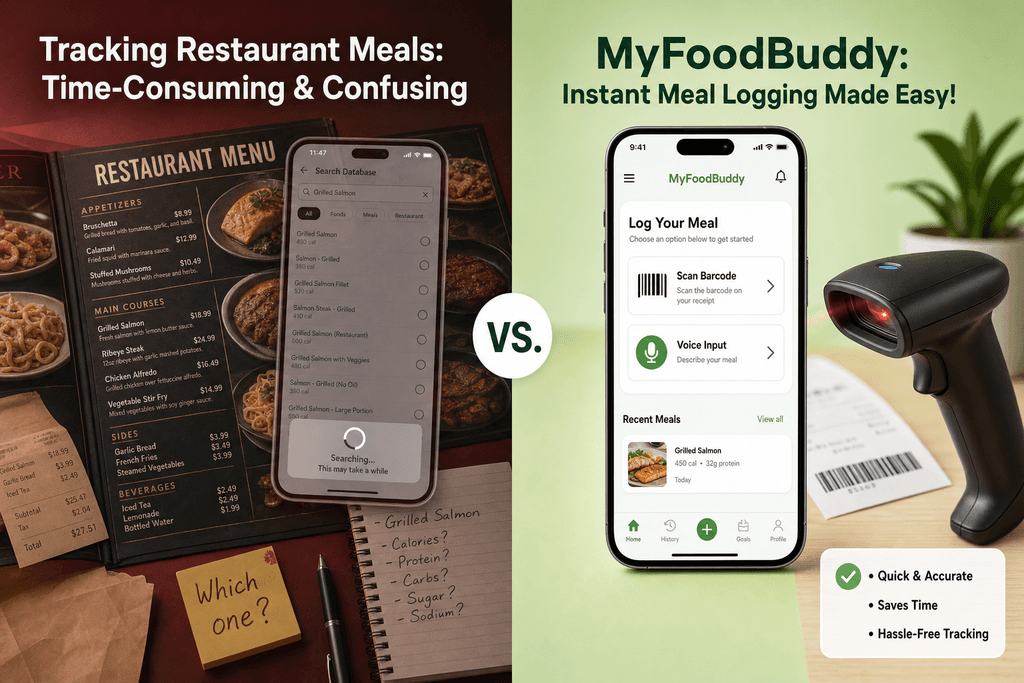
Most people who start tracking calories quit within the first month, and eating out is usually the breaking point. When you're sitting at Whataburger with friends or grabbing a quick lunch between meetings, the last thing you want to do is pull out your phone and spend five minutes searching through a database. You have to find the right restaurant, scroll through dozens of menu items, adjust portion sizes, and hope the whataburger nutrition info in the app is actually accurate. It's tedious, it's awkward, and honestly, it makes you feel like that person who can't just enjoy a meal.
The numbers tell the real story. Traditional calorie tracking apps require an average of 3-5 minutes per meal entry when you're dealing with restaurant food. That's because you're not just logging "chicken breast" anymore.
| Tracking Method | Time Per Meal | Daily Time Investment |
|---|---|---|
| Manual database search | 3-5 minutes | 9-15 minutes |
| Voice input | 10-15 seconds | 30-45 seconds |
When you multiply that by three meals a day, you're looking at 15-20 minutes of your day just typing into an app. No wonder people give up.
Why Restaurant Meals Break Tracking Habits
There are specific reasons why fast food and restaurant meals cause people to abandon their tracking goals entirely. It's not just about willpower or motivation.
- Menu items have multiple components that need separate entries
- Portion sizes at restaurants rarely match standard database entries
- Social pressure makes it awkward to spend time on your phone
- The mental load of remembering everything you ate hours later
The Whataburger Patty Melt alone has the bun, the beef patties, the cheese, the grilled onions, and the creamy pepper sauce. In older apps, you might need to log each component separately or spend time finding the exact menu item in a cluttered database.
How Voice Tracking Solves the Restaurant Problem
Voice-based tracking changes everything about logging restaurant meals. Instead of navigating menus and databases, you just say what you ate. MyFoodBuddy lets you speak naturally, like "I had a Whataburger with cheese and medium fries," and the AI figures out the whataburger nutrition info automatically.
- No searching through restaurant databases
- No awkward typing at the table
- No trying to remember meal details hours later
- Takes seconds instead of minutes
The difference between 15 seconds and 5 minutes might not seem huge, but it's the difference between a habit that sticks and one that doesn't. When tracking is quick, you actually do it consistently.
Consistency Beats Perfection Every Time
Here's what most people get wrong about calorie tracking. They think they need to be perfect, logging every single gram and macro down to the decimal point. But the real key to reaching your goals is just showing up every day, even when the data isn't perfect.
- Tracking 80% of your meals consistently beats tracking 100% for two weeks then quitting
- Approximate data over three months is more valuable than perfect data for three days
- The easier the process, the longer you'll stick with it
When you make tracking so simple that it doesn't feel like a chore, you stop making excuses. You log the Whataburger meal even when you're running late. You track the breakfast taquitos even though you're not sure of the exact ingredients. That consistency is what actually moves the needle on your health goals, not obsessing over whether your estimate was off by 50 calories.
Making Whataburger Work for Your Weight Loss
Here's the thing about whataburger nutrition info: knowing the numbers doesn't mean you have to give up your favorite burger spot. You just need to understand what you're eating and make choices that fit your goals. A Whataburger Jr. with a side salad hits different than a triple meat with large fries, and both can work depending on your day. The key is having the information and using it to stay in control.
Most people quit tracking calories because apps like MyFitnessPal make it feel like homework. You're stuck searching through endless food databases and guessing portion sizes while your food gets cold. With MyFoodBuddy, you just say what you ate and move on with your life. No searching, no math, just quick logging that actually sticks.
The same approach works whether you're at In-N-Out, Chick-fil-A, or grabbing a burger anywhere else. Fast food doesn't have to derail your progress when you know the numbers and can track them in seconds.
Weight loss isn't about perfection or avoiding every restaurant you love. It's about making informed choices most of the time and having a system that doesn't make you want to quit after three days. When tracking takes five seconds instead of five minutes, you'll actually do it long enough to see results.
Common Questions About Whataburger Nutrition
Tracking calories at fast food restaurants can feel confusing, especially when you're trying to make smart choices while still enjoying your favorite meals. These questions come up all the time from people who want to eat at Whataburger without derailing their health goals. Whether you're counting calories for weight loss or just trying to stay on track, knowing the answers can make ordering a whole lot easier.
What's the lowest calorie burger at Whataburger?
The Whataburger Jr. is your best bet at around 310 calories. If you want something more filling, the regular Whataburger without cheese comes in at about 590 calories, which is still reasonable compared to the bigger options on the menu.
How many calories in a Whataburger with cheese?
A standard Whataburger with cheese has approximately 650 calories. That extra slice of cheese adds about 60 calories to the regular burger, so if you're watching your intake closely, skipping the cheese is an easy way to save some calories without losing much flavor.
Are Whataburger's grilled chicken options healthier?
The Grilled Chicken Sandwich has around 510 calories, making it a lighter choice than most burgers. However, keep in mind that the bun and toppings still add up, so it's not exactly a low-calorie meal. The grilled chicken does give you more protein with less fat compared to beef options.
Can I eat Whataburger every day and still lose weight?
Technically yes, if you stay within your calorie deficit. Weight loss comes down to calories in versus calories out, so if a Whataburger meal fits your daily calorie goal, you can still lose weight. That said, eating fast food daily makes it harder to get all the nutrients your body needs, and you might feel hungrier because these meals aren't as filling as whole foods.
How do I track a custom Whataburger order?
Most calorie tracking apps require you to manually add or subtract ingredients, which gets tedious fast. With MyFoodBuddy, you can just say or type exactly what you ordered, like "Whataburger with no mayo, extra pickles, and a small fries," and the AI figures out the whataburger nutrition info for you. It saves you from doing math or searching through ingredient lists.
What's the healthiest meal at Whataburger?
The Grilled Chicken Sandwich with a side salad and water is probably your healthiest complete meal option. If you want a burger, go for the Whataburger Jr. with apple slices instead of fries. Skip the sugary drinks and sauces since those add empty calories quickly without making you feel full.
Ready to start tracking smarter?
Download MyFoodBuddy and start tracking your calories by just saying what you ate. No more searching databases or guessing portions.
Get started