MyFitnessPal Premium Features, Cost, and Worth
MyFitnessPal Premium costs $19.99/month or $79.99/year. Discover what features you get and if it's worth it for your weight loss goals.
You've probably spent more time wrestling with MyFitnessPal's food database than actually eating your meals. The free version gets you started, but those constant ads and locked features make you wonder if MyFitnessPal Premium is worth the upgrade. Before you hand over your credit card, let's break down what you're actually getting and whether it solves the real problem of tracking your food without losing your mind.
Table of Contents
Understanding MyFitnessPal's Two Tiers
Over 200 million people have downloaded MyFitnessPal since it launched back in 2005, making it one of the oldest and most popular calorie tracking apps out there. The app started as a simple food diary but has grown into a massive platform with millions of foods in its database. Like many apps today, MyFitnessPal operates on a freemium model where basic features are free but you need to pay for the premium version to unlock everything. The big question most users face is whether that upgrade is actually worth the money.
What You Get for Free
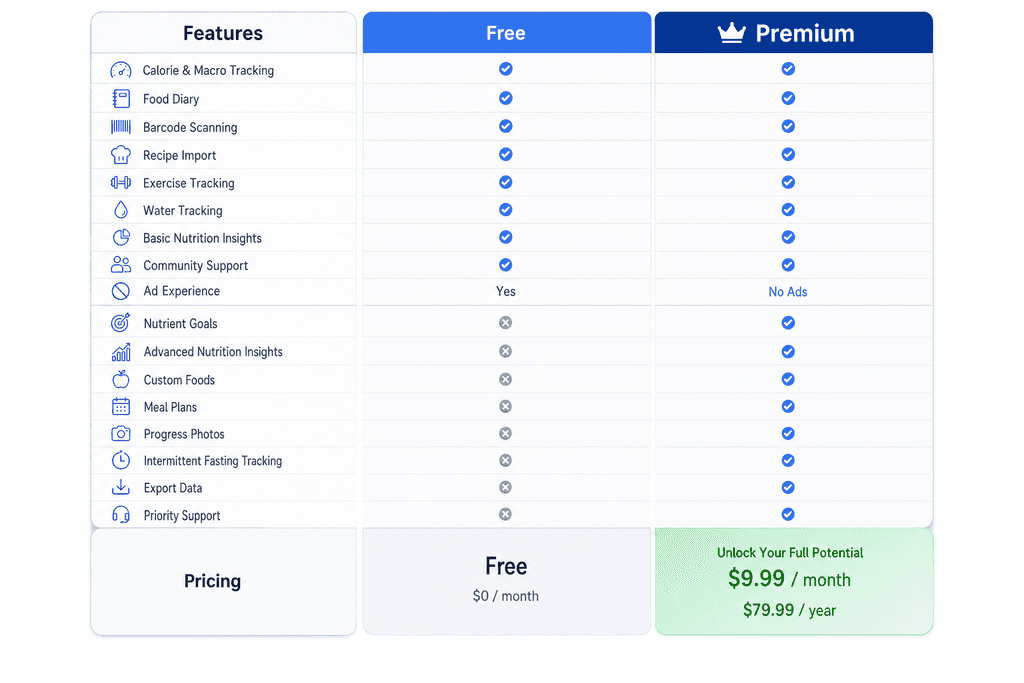
The free version of MyFitnessPal covers the basics pretty well. You can log your meals, track calories, and access their huge food database without paying a cent. Most people start here and many stick with it for months or even years.
Here's what the free tier includes:
- Basic calorie and macro tracking with standard goals
- Access to the food database with millions of items
- Barcode scanner for packaged foods
- Exercise logging and basic activity tracking
- Community forums and friend connections
The free version works fine if you just want simple calorie counting. But it comes with ads and limited customization options that can get annoying over time.
Premium Features Breakdown
MyFitnessPal Premium costs $79.99 per year or $19.99 per month if you pay monthly. That's a pretty big jump from free, so you'd expect some solid upgrades. The premium tier removes ads and adds features focused on customization and deeper insights into your eating patterns.
Premium subscribers get access to:
- Custom macro goals by meal instead of just daily totals
- Food analysis showing nutrients beyond basic macros
- Meal plans and guided programs
- Priority customer support
- Ad-free experience across the app
The catch is that premium doesn't actually make logging meals faster or easier. You still have to search through the database, pick the right entry, and adjust serving sizes manually. Apps like MyFoodBuddy take a different approach by letting you just say what you ate and having AI figure out the rest in seconds.
Comparing Free vs Premium Side by Side
Looking at the actual differences helps you see what you're paying for. Some features matter a lot depending on your goals, while others might not be worth the extra cost.
| Feature | Free Version | Premium Version |
|---|---|---|
| Price | $0 | $79.99/year |
| Calorie Tracking | Yes | Yes |
| Macro Goals | Daily totals only | Custom by meal |
| Food Database | Full access | Full access |
| Barcode Scanner | Yes | Yes |
| Ads | Yes | No |
| Nutrient Analysis | Basic | Detailed |
| Meal Plans | No | Yes |
| Customer Support | Standard | Priority |
The truth is that most premium features focus on giving you more data and customization options. But they don't solve the main problem that makes people quit tracking, which is the time it takes to log every single meal. That's where newer apps are trying to do things differently by using voice input and AI to speed up the whole process.
Premium Features That Actually Matter
Most people who upgrade to MyFitnessPal Premium do it because they hit a wall with the free version. You're tracking your meals, watching the scale, but something feels missing. The premium version promises to fill those gaps with features that sound impressive on paper. But here's what you actually get when you pay up.
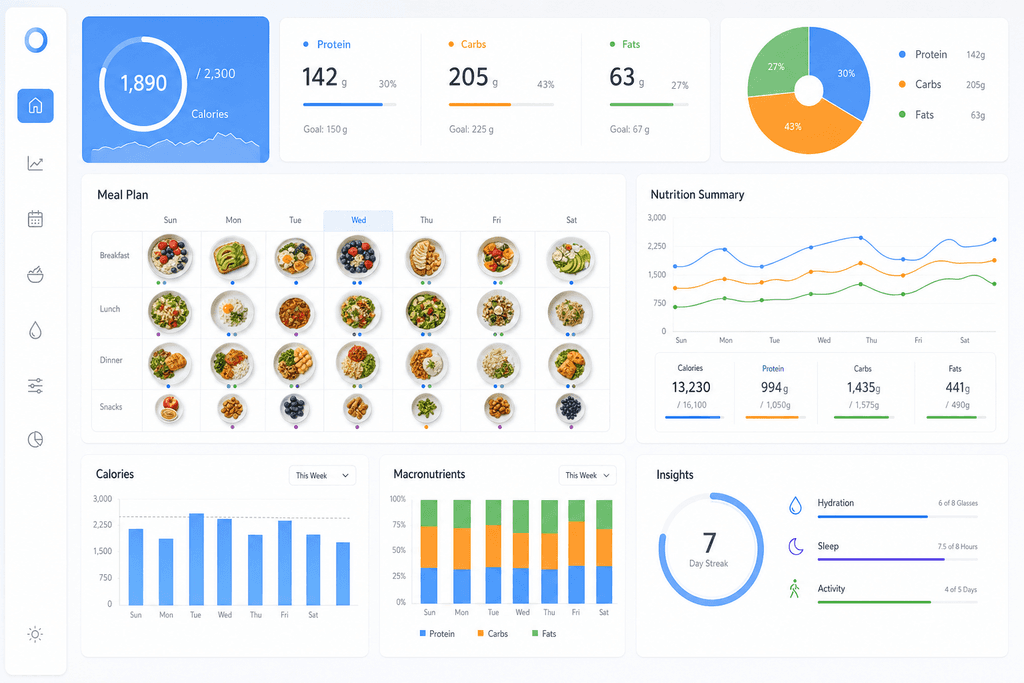
Custom macro goals are probably the most useful feature for anyone serious about weight loss. Instead of just counting calories, you can set exact targets for protein, carbs, and fats. This matters because eating 1,500 calories of donuts hits different than 1,500 calories of chicken and vegetables. Your body needs the right balance to lose weight without feeling miserable or losing muscle.
- Meal planning and recipe importing let you plan your week ahead and save recipes from websites
- Food analysis shows patterns in your eating habits over weeks and months
- Ad-free experience removes the banner ads that pop up between logging meals
- Priority support gets you faster responses when something breaks
- Advanced analytics provide charts and graphs about your nutrition trends
The meal planning feature sounds great until you realize it still requires you to log everything manually. You're just planning what you'll have to type in later. The recipe importer works okay for popular food blogs, but it often misses ingredients or gets serving sizes wrong.
Food analysis can be eye-opening if you've been tracking consistently for a while. You might discover you're eating way more sodium on weekends or that your protein intake drops every Thursday. But this only helps if you're already good at logging everything, which brings us to the real problem.
The Real Cost Beyond the Price Tag
MyFitnessPal Premium costs about $80 per year, but that's not the expensive part. The real cost is the time you spend every single day searching through food databases, measuring portions, and typing in every ingredient. Premium doesn't fix this at all. You're still spending 5 to 10 minutes per meal doing data entry work.

Think about what that adds up to. Three meals a day means 15 to 30 minutes of logging. That's up to 3.5 hours per week just recording what you ate. Over a month, you're spending a full workday entering food into an app. And Premium doesn't reduce this time by even one minute.
| Activity | Time Per Meal | Weekly Total |
|---|---|---|
| Searching database | 2-4 minutes | 42-84 minutes |
| Measuring portions | 2-3 minutes | 42-63 minutes |
| Entering ingredients | 1-3 minutes | 21-63 minutes |
The friction of detailed logging is why most people quit tracking within a few weeks. It's not because they need better charts or meal planning features. They quit because spending 20 minutes logging a homemade stir-fry feels like homework. Premium gives you more tools to analyze the data, but it doesn't make creating that data any easier.
This is where apps like MyFoodBuddy take a different approach. Instead of making you search and measure everything, you just say what you ate and AI figures out the nutrition. A meal that takes 8 minutes to log in MyFitnessPal takes about 10 seconds with voice input. That time difference is what actually keeps people consistent.
Why Many Users Look for Alternatives
Here's something most MyFitnessPal Premium users won't tell you at first: they're still spending 5-10 minutes per meal logging their food. The premium features add useful tools like meal planning and custom macros, but they don't actually solve the biggest problem with calorie tracking. You're still tapping through endless database searches, adjusting portion sizes, and second-guessing whether you picked the right entry. Premium makes the experience slightly better, but it doesn't make it faster.
The core issue is that traditional tracking apps were built around manual database searches, and no amount of premium features changes that fundamental design. You pay $80 per year for recipe importing and macro planning, but you still need to find "chicken breast grilled" among 47 different entries every single time you eat it.
What Modern Tracking Actually Looks Like
Voice-based AI tracking apps approach the problem differently. Instead of making you search and select, they let you just say what you ate. Apps like MyFoodBuddy use AI to understand "grilled chicken salad with olive oil dressing" and log it in seconds, not minutes.
- Traditional apps require 3-5 minutes per meal to search and log
- Voice AI apps reduce logging to 10-15 seconds of speaking
- No database searching or portion size adjusting needed
- AI extracts nutrition data automatically from natural language
The Cost Versus Convenience Equation
MyFitnessPal Premium costs $79.99 per year and still requires manual searching. Modern alternatives like MyFoodBuddy cost $39 per year and cut your logging time by 90%. The math isn't complicated.
| Feature | MyFitnessPal Premium | AI Voice Tracking Apps |
|---|---|---|
| Annual Cost | $79.99 | $39 (MyFoodBuddy) |
| Time Per Meal | 3-5 minutes | 10-15 seconds |
| Input Method | Manual search | Voice or text AI |
| Database Navigation | Required | Not needed |
Why Friction Matters More Than Features
Most people quit tracking within two weeks, and it's not because they lack meal planning tools or custom macro goals. They quit because logging food takes too long and feels like homework. Premium features don't address this fundamental friction point.
- Adding features doesn't reduce the time investment required
- Voice AI removes the need to navigate databases entirely
- Speaking naturally is faster than any search interface
- Lower friction means better long-term adherence
The future of calorie tracking isn't about adding more features to the old model. It's about removing the friction that made tracking feel like a chore in the first place. That's why apps built around voice AI and natural language processing are gaining traction with users who tried myfitnesspal premium and still found themselves giving up after a few weeks.
Making the Right Choice for Your Goals
So here's the thing about myfitnesspal premium. It works great if you're already tracking every single day and need those extra macro breakdowns or meal planning features. But if you're like most people trying to lose weight, the problem isn't that you need more features. The problem is that tracking takes too long and you end up quitting after a week or two.
Think about why you stopped tracking last time. Was it because you needed better recipe importing, or was it because spending five minutes searching for "homemade chicken stir fry" every night got old fast? Most people fall off because the process feels like homework, not because they're missing premium charts.
The best tracker is honestly the one you'll use tomorrow, next week, and three months from now. That's why user-friendly features matter more than advanced ones for most people. If you're spending more than 30 seconds logging a meal, you're probably not going to stick with it long term.
Modern options like voice-powered trackers let you log meals in seconds without searching databases or weighing food. MyFoodBuddy does exactly this, where you just say what you ate and move on with your day. At $39 per year compared to myfitnesspal premium's higher cost, it's worth considering if speed matters more to you than extra features you might not use.
Before you decide, ask yourself what actually stopped you from tracking consistently before. Your answer will tell you whether you need premium features or just less friction in your daily routine.
Common Questions About MyFitnessPal Premium
Before you pull out your credit card for MyFitnessPal Premium, you probably have some questions bouncing around in your head. Most people wonder about the same things when they're thinking about upgrading from the free version. Here are the answers to what everyone asks about myfitnesspal premium before they commit to paying.
Can you cancel Premium anytime?
Yes, you can cancel your MyFitnessPal Premium subscription whenever you want without any penalties. If you cancel, you'll keep access to Premium features until the end of your current billing period, then your account automatically switches back to the free version.
Does Premium make logging faster?
Not really. The Premium version doesn't actually speed up the meal logging process itself since you still have to search through their database and manually enter portions. If faster logging is what you're after, apps like MyFoodBuddy let you just speak what you ate and the AI figures out the calories in seconds instead of making you tap through multiple screens.
Is there a free trial for Premium?
MyFitnessPal typically offers a free trial period for Premium, usually around 30 days, though this can vary depending on current promotions. You'll need to enter payment information to start the trial, and it will auto-renew unless you cancel before the trial ends.
What happens to your data if you cancel?
All your logged meals, weight entries, and other data stay in your account even after you cancel Premium. You just lose access to the extra features like custom macro goals and detailed reports. Your basic food diary and progress tracking remain intact and accessible in the free version.
Are there cheaper alternatives with similar features?
Several calorie tracking apps cost less than myfitnesspal premium while offering comparable or better features. Apps like Cronometer and MyNetDiary have their own premium tiers at different price points. Some newer apps focus on making the actual logging process easier rather than just adding more charts and reports to look at.
Can you share Premium with family members?
No, MyFitnessPal Premium subscriptions are individual only and cannot be shared with family members. Each person needs their own separate Premium subscription if they want access to the upgraded features. This can get expensive fast if multiple people in your household want to track their nutrition seriously.
Ready to start tracking smarter?
Download MyFoodBuddy and start tracking your calories by just saying what you ate. No more searching databases or guessing portions.
Get started