
Voice-Powered Calorie Tracker Pros and Cons
Discover the pros and cons of voice-powered calorie trackers. Learn how voice logging simplifies meal tracking and if it's right for you.
Most people quit tracking calories within the first week because typing every ingredient and searching through endless food databases feels like a part-time job. Voice-powered calorie tracker apps like MyFoodBuddy are changing this by letting you simply say what you ate while the AI handles all the math and searching. This article breaks down the real pros and cons of voice logging so you can decide if it's actually worth ditching your old tracking method.
Table of Contents
How Voice-Powered Calorie Trackers Work
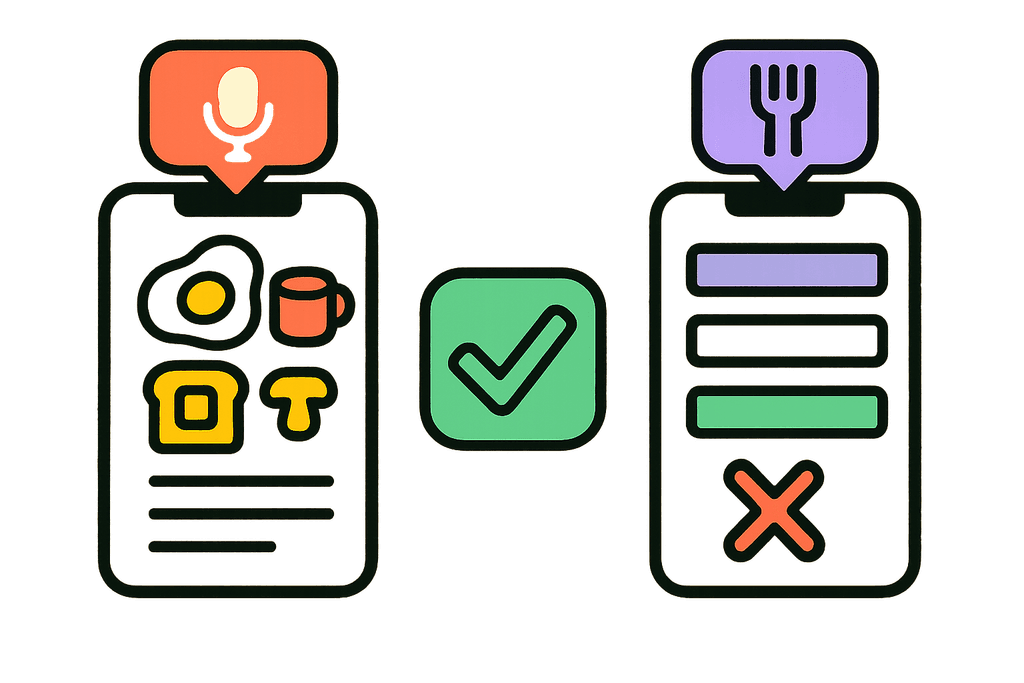
Most people quit tracking calories within the first month, and the biggest reason is simple: it takes too long. Traditional calorie tracking apps make you search through massive food databases, scan barcodes, measure portions, and manually enter every single ingredient. A voice-powered calorie tracker changes this by letting you just say what you ate, like "two eggs, toast with butter, and coffee with oat milk," and the app figures out the rest. The technology behind this might sound complicated, but it's actually pretty straightforward once you break it down.
The Tech Behind Voice Recognition
When you speak into a voice-powered calorie tracker, several things happen in just a few seconds. The app first converts your voice into text using speech recognition technology, similar to what Siri or Google Assistant uses. Then the real magic happens with AI that understands natural language, meaning it can figure out what "a handful of almonds" or "a big bowl of pasta" actually means in terms of calories and nutrients.
Here's what the technology does behind the scenes:
- Converts your spoken words into written text using voice recognition software
- Breaks down your description into individual food items and quantities
- Matches those items against nutrition databases like the USDA database
- Calculates total calories and nutrients based on standard serving sizes
- Learns from your corrections to get better over time
AI Processing of Food Descriptions
The AI in apps like MyFoodBuddy doesn't just recognize words. It actually understands context and food relationships. If you say "chicken breast with rice and broccoli," the AI knows these are three separate items that need individual nutrition calculations. It can even handle vague descriptions like "medium apple" or "small coffee" by using average portion sizes from nutrition databases.
The system pulls data from sources like the USDA nutrition database, which contains detailed information on thousands of foods. This means you're getting accurate calorie counts without having to weigh your food or measure every ingredient. The AI also recognizes common cooking methods, so "grilled chicken" gets calculated differently than "fried chicken."
Voice Logging vs Traditional Methods
The difference between voice logging and traditional calorie tracking is like the difference between texting and sending a telegram. With traditional apps like MyFitnessPal or Cronometer, you're stuck doing multiple steps for every single food item. You search the database, scroll through dozens of similar items, pick the right one, adjust the serving size, and repeat for each ingredient. This process can take 3-5 minutes per meal, which adds up to over an hour per week just logging food.
| Method | Time Per Meal | Steps Required | Accuracy |
|---|---|---|---|
| Voice Logging | 10-20 seconds | 1-2 steps | 85-90% |
| Barcode Scanning | 1-2 minutes | 3-4 steps | 95% |
| Manual Database Search | 3-5 minutes | 5-8 steps | 90-95% |
| Recipe Builder | 5-10 minutes | 10+ steps | 95% |
Voice logging cuts this down to seconds. You just speak naturally about what you ate, and the app handles everything else. Apps like Cal AI and Calory have tried to implement this, but the accuracy and speed vary quite a bit between different platforms.
Integration with Nutrition Databases
Behind every voice-powered calorie tracker is a massive nutrition database doing the heavy lifting. The USDA database alone contains nutritional information for over 300,000 foods, including everything from raw ingredients to restaurant meals. When you log "grilled salmon," the app searches this database and pulls detailed information on calories, protein, fats, carbs, and even micronutrients like vitamin D and omega-3s.
Modern apps don't just rely on one database though. They combine multiple sources:
- USDA FoodData Central for whole foods and basic ingredients
- Restaurant nutrition data from chain establishments
- User-generated entries for common homemade meals
- Branded food databases for packaged products
MyFoodBuddy tracks over 20 different nutrients by pulling from these various sources, giving you a complete picture of your nutrition without the manual work. The app learns which database entries you prefer over time, so if you always eat a specific brand of Greek yogurt, it'll start suggesting that automatically when you mention yogurt.
The Benefits of Voice-Powered Calorie Tracking
Most people who start tracking calories quit within the first month, and the reason isn't lack of motivation. It's the tedious process of searching through endless food databases, measuring portions, and tapping through multiple screens just to log a simple breakfast. Voice-powered calorie tracking changes this by letting you speak naturally about what you ate, and the app figures out the rest. Instead of spending five minutes hunting for "medium banana" in a database, you just say "banana" and move on with your day.
The speed difference is massive. Traditional apps require you to open the app, search for each ingredient, select the right option from dozens of similar items, adjust serving sizes, and repeat for every single food. With voice logging, you describe your entire meal in one sentence and you're done in seconds.
- Log complete meals in under 10 seconds instead of several minutes
- No need to stop what you're doing to type on a small screen
- Works while you're cooking, driving, or eating
- Natural language means no memorizing specific food names
- Eliminates the frustration of scrolling through search results
The real magic happens with consistency. When logging takes seconds instead of minutes, you actually do it every day. People stick with voice-powered calorie trackers longer because there's almost no friction between thinking about logging and actually doing it. You can track your food while walking to your next meeting or standing in line at the coffee shop.
Apps like MyFitnessPal require multiple taps and searches for each food item, which adds up fast when you're trying to log three meals and snacks daily. MyFoodBuddy handles this differently by using AI to understand phrases like "two eggs, toast with butter, and a coffee with oat milk" without making you search for each item separately. The app pulls nutritional data from USDA sources and calculates everything automatically.
Hands-free logging solves problems you didn't know you had. You can log your breakfast while packing your lunch, or record your dinner ingredients as you're cooking. This means you capture meals when they're fresh in your mind, not hours later when you've forgotten half of what you ate.
The Drawbacks You Should Know About
Voice-powered calorie tracking isn't perfect, and pretending it is would be dishonest. The biggest challenge is portion size accuracy because saying "a bowl of pasta" doesn't tell the app if that's one cup or three cups. The AI makes educated guesses based on typical serving sizes, but these estimates can be off if your portions are larger or smaller than average. This matters more for calorie-dense foods like nuts, oils, or cheese where small differences add up quickly.
Privacy is another real concern. Not everyone feels comfortable saying "large pepperoni pizza and three beers" out loud in public or around family members. Some people track their food privately for personal reasons, and voice logging requires speaking your intake where others might hear.
| Advantage | Disadvantage |
|---|---|
| Fast logging | Less precise portions |
| Hands-free use | Privacy concerns |
| No database searching | Needs internet connection |
| Natural language | Learning curve for descriptions |
Noisy environments create technical problems. Trying to log your meal in a busy restaurant or gym might result in the app mishearing you. Background noise can make voice recognition less accurate, which means you might need to repeat yourself or switch to text input anyway.
Complex dishes present another challenge. Describing a homemade casserole with ten ingredients takes longer by voice than it sounds, and you might forget components. Restaurant meals with sauces and mixed ingredients require you to guess at what's actually in the dish. The AI does its best to estimate, but these estimates can vary significantly from the actual nutritional content.
Most voice-powered systems need an internet connection to process your speech through AI. If you're somewhere without service, you'll need to wait or use text input instead. This dependency on connectivity isn't a dealbreaker, but it's worth knowing before you rely on voice logging exclusively. For more insights on how voice technology handles different eating situations, check out our guide on simplifying calorie counting for busy individuals.
Who Benefits Most from Voice Logging
Busy professionals who barely have time to eat, let alone log their meals, get the most value from voice-powered calorie tracking. If you're rushing between meetings or eating lunch at your desk while working, speaking your meal takes five seconds versus the two minutes you'd spend with traditional apps. The time savings compound daily, turning calorie tracking from a chore into something you can actually maintain long-term. People who've tried apps like Cronometer or MacroFactor but quit because of the time investment often find voice logging finally makes tracking sustainable.
Anyone who eats similar meals regularly will love the favorites feature combined with voice input. You can save "usual breakfast" and re-log it by voice in seconds, or describe slight variations like "usual breakfast but with almond milk instead." This works great for people with routine eating patterns.
- Former app quitters: People who abandoned MyFitnessPal or similar apps due to complexity
- Multitaskers: Those who need to log while doing other activities
- Simple eaters: People with consistent meal patterns and straightforward foods
- Tech-comfortable users: Those willing to learn how to describe foods effectively
- Goal-focused individuals: People who need consistency more than perfect precision
Voice tracking might not fit everyone's needs. If you're a bodybuilder who needs exact macro counts down to the gram, or someone preparing for a physique competition, the estimation inherent in voice logging could be too imprecise. Athletes with very specific nutritional requirements might prefer the detailed control of manual entry.
People who cook elaborate recipes with many ingredients might find it easier to use text input or photo-based logging for those specific meals. Voice works best for straightforward foods and common dishes. When you're making a complex stir-fry with fifteen ingredients, listing them all by voice becomes tedious.
Traditional logging still wins in certain situations. When you're in a quiet library, at a business dinner, or anywhere speaking aloud would be inappropriate or disruptive, text input makes more sense. The best approach combines both methods based on your situation. MyFoodBuddy offers both voice and text logging for exactly this reason, letting you choose what works best in each moment. If you're curious about maintaining consistency with your tracking approach, our article on staying consistent with calorie tracking offers practical strategies that work with any logging method.
Making Voice Tracking Work for You
Getting accurate results from a voice-powered calorie tracker isn't just about speaking into your phone. The way you describe your meals makes a huge difference in how well the AI understands what you ate. Most people jump in and start logging without thinking about how to phrase things, which leads to frustration when the numbers don't match up. The good news is that with a few simple adjustments to how you describe your food, you can get surprisingly accurate tracking that actually saves time instead of creating more work.
Describing Portions Like a Pro
The biggest mistake people make with voice logging is being too vague about portions. Saying "I had chicken for lunch" leaves the AI guessing whether you ate three ounces or an entire rotisserie bird. Being specific about quantities turns voice logging from a guessing game into an accurate tracking tool.
- Use common measurements like cups, tablespoons, or ounces when possible
- Reference standard serving sizes like "a palm-sized piece of chicken" or "a baseball-sized apple"
- Mention brand names for packaged foods to help the AI find exact nutritional data
- Include cooking methods since "fried chicken" and "grilled chicken" have very different calorie counts
MyFoodBuddy's AI has been trained to understand natural language, so you don't need to sound like a robot. Just add those key details naturally as you speak.
When Voice Works Best and When It Doesn't
Voice logging shines in certain situations but falls flat in others. Knowing when to use your voice versus when to type or manually enter data will save you from headaches down the road.
| Best for Voice | Better Manual Entry |
|---|---|
| Simple meals with few ingredients | Complex recipes with many components |
| Common foods and brands | Homemade dishes with custom ingredients |
| On-the-go logging | Precise macro tracking for athletes |
| Restaurant meals | Unusual or ethnic foods |
Improving Accuracy Over Time
The more you use voice logging, the better you'll get at it. But there are specific techniques that speed up this learning curve and help the AI recognize your patterns faster.
- Review your logged entries for the first week to catch any misinterpretations
- Save frequently eaten meals as favorites so you can quickly re-log them
- Use consistent terminology for the same foods instead of switching between different names
- Speak clearly and at a normal pace in a quiet environment when possible
MyFoodBuddy learns from your corrections, so when you fix a misunderstood entry, the system gets smarter about your eating habits and speech patterns.
Combining Methods for Best Results
The most successful users don't rely on voice alone. They mix voice logging with other methods depending on the situation. Use voice for quick breakfast logging before rushing out the door, then switch to manual entry for that complicated dinner recipe you're trying for the first time. This hybrid approach gives you speed when you need it and precision when it matters most.
Voice Logging Accuracy Checklist
- Include specific portion sizes in your description
- Mention brand names for packaged or restaurant foods
- State the cooking method used for proteins and vegetables
- Speak in a quiet environment to reduce background noise interference
- Review the logged entry immediately after speaking to catch errors
- Save commonly eaten meals as favorites for one-tap re-logging
- Use voice for simple meals and manual entry for complex recipes
- Correct any mistakes right away to help the AI learn your preferences
Is Voice Tracking Right for You
Voice-powered calorie trackers come with real benefits and some drawbacks you should know about. The speed and convenience are hard to beat, especially when you're eating on the go or just don't want to spend five minutes searching through food databases. But the accuracy can vary depending on how you describe your food, and you'll need to be comfortable talking to your phone in public sometimes. The technology works best when you give clear descriptions and understand that estimates are just that, estimates.
If you've tried traditional calorie counting apps and quit because they took too much time, voice tracking might be exactly what you need. People who eat similar meals regularly, busy professionals, and anyone who values convenience over perfect precision tend to get the most out of these tools. MyFoodBuddy makes this process even simpler by combining voice logging with AI-powered nutrition extraction, so you can say what you ate and move on with your day.
Getting started is pretty straightforward. Most voice-powered apps offer free trials, so you can test them without commitment. The key is giving it at least a week to become part of your routine. You might feel awkward talking to your phone at first, but most people get used to it quickly.
The future of calorie tracking is clearly moving toward less manual work and more automation. Voice technology keeps getting better at understanding natural language, which means fewer corrections and more accurate logs over time. If you're curious about how accurate these trackers really are or want to learn more about using voice technology for diet monitoring, there's plenty to explore.
Common Questions About Voice Calorie Tracking
Voice-powered calorie tracking is still pretty new to most people, so it makes sense that you'd have questions about how it actually works. Whether you're wondering about accuracy or just feeling a bit awkward about talking to your phone in public, these are the things everyone wants to know before they start using a voice-powered calorie tracker. Let's clear up the most common concerns so you can decide if this method fits your lifestyle.
How accurate is voice-powered calorie tracking?
Voice-powered calorie trackers like MyFoodBuddy use AI combined with USDA nutritional databases to estimate calories and macros based on what you say. The accuracy depends on how specific you are when logging, just like any other tracking method. If you say "a handful of almonds" versus "one ounce of almonds," you'll get different results. The key is being as detailed as possible with portions and preparation methods, and the AI does a pretty solid job of interpreting your input and matching it to accurate nutritional data.
Can I use voice tracking in public without feeling awkward?
Most voice-powered calorie trackers also offer text input for situations where speaking out loud isn't ideal. You can type your meal in natural language just like you'd say it, and the app processes it the same way. That said, talking to your phone is pretty normal these days, and a quick "two eggs and toast" into your phone isn't much different from sending a voice message to a friend.
What happens if the app doesn't recognize my food?
If the voice-powered calorie tracker doesn't understand something you logged, you can usually edit the entry manually or add more details. Most apps will take their best guess based on similar foods in their database, and you can adjust portions or swap items if needed. The more you use the app, the better it gets at understanding your specific eating patterns and food preferences.
Do I need internet connection for voice logging?
Yes, voice-powered calorie trackers typically need an internet connection because the AI processing happens on remote servers. The app needs to send your voice input to be analyzed and matched against nutritional databases in real time. If you're somewhere without internet, you can usually save your entry as a note and log it properly once you're back online.
Can voice tracking work for complex homemade meals?
Voice tracking handles homemade meals by breaking down the ingredients you mention. You can say something like "chicken stir fry with rice, broccoli, and soy sauce" and the app will estimate based on typical portions of each ingredient. For recipes you make often, you can save them as favorites in apps like MyFoodBuddy so you don't have to list every ingredient each time. The more detail you provide about ingredients and amounts, the more accurate your log will be.
How does voice tracking compare to barcode scanning?
Barcode scanning works great for packaged foods, but it's useless for fresh ingredients, restaurant meals, or homemade dishes. Voice tracking covers everything because you're describing what you actually ate, not just what has a barcode. Apps like MyFitnessPal rely heavily on barcode scanning and manual searching, which means you're stuck doing multiple steps for every meal. Voice-powered calorie trackers cut that process down to seconds by letting you describe your entire meal in one go, making it way more practical for everyday use.
Ready to start tracking smarter?
Download MyFoodBuddy and start tracking your calories by just saying what you ate. No more searching databases or guessing portions.
Get started