
My Pal Fitness App Guide for Tracking Calories
Learn how My Pal Fitness (MyFoodBuddy) makes calorie tracking easy with voice input, AI nutrition extraction, and personalized coaching for weight loss.
You open your tracking app to log lunch, and twenty minutes later you're still searching through databases trying to figure out if your chicken wrap was six ounces or eight. Most people quit tracking calories within two weeks because apps like MyFitnessPal turn a simple meal into a math problem that eats up your day. MyFoodBuddy changes that by letting you just say what you ate and moving on with your life.
Table of Contents
- Understanding Calories and Macros for Weight Loss
- How Voice and AI Make Tracking Actually Easy
- Setting Up Your Personal Weight Loss Goals
- Staying Consistent with Tracking Features
- Why MyFoodBuddy Works When Other Apps Don't
- Start Tracking Without the Stress
- Common Questions About Tracking with MyFoodBuddy
Understanding Calories and Macros for Weight Loss
Your body burns energy every single day just by existing, and that energy comes from the food you eat. A calorie is simply a unit that measures how much energy is in your food. When you eat more calories than your body burns, you gain weight. When you eat fewer calories than you burn, you lose weight. It really is that simple, even though diet culture tries to make it complicated. Tracking your calories gives you actual data instead of guessing, which is why people who track their food lose more weight than people who don't. Apps like my pal fitness and others have made this easier, but the basic science hasn't changed. If you're looking for a more user-friendly alternative, read our MyFitnessPal calorie counter review and alternatives for 2024.
What Are Macros and Why They Matter
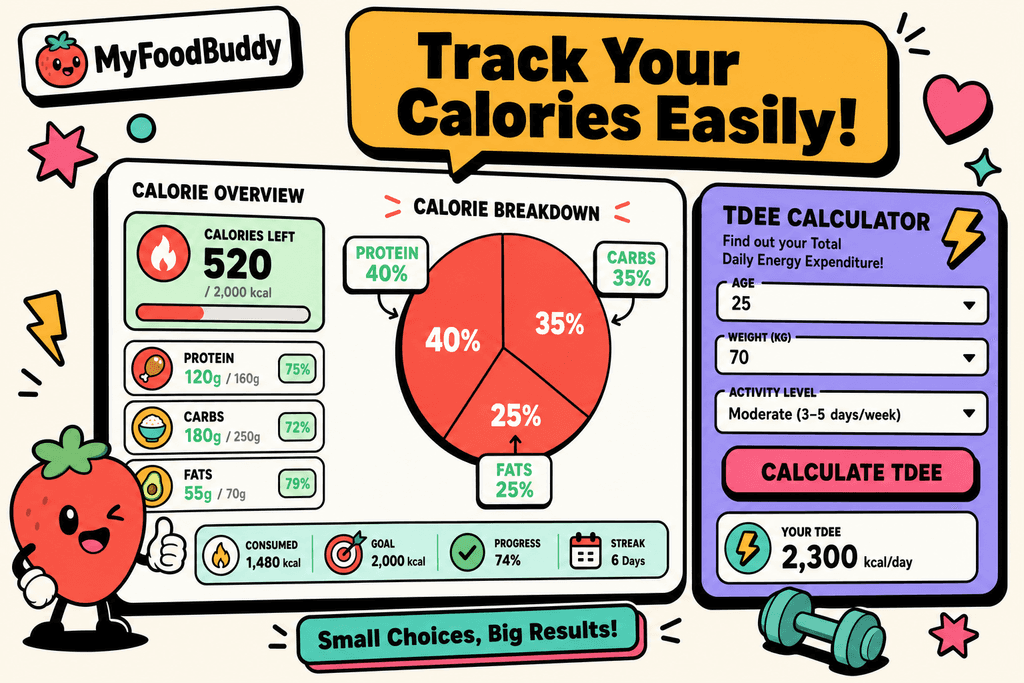
Macros is short for macronutrients, which are the three main types of nutrients in food. Every calorie you eat comes from one of these three macros, and they all do different jobs in your body.
- Protein builds and repairs your muscles, keeps you full longer, and helps you maintain muscle while losing fat
- Carbs give you quick energy for workouts and daily activities, and they fuel your brain
- Fats help your hormones work properly, keep your skin healthy, and help you absorb vitamins
Most people focus only on calories, but the type of calories matters too. Eating 200 calories of chicken affects your body differently than 200 calories of candy, even though the calorie count is the same.
How Many Calories You Need
The number of calories you need depends on your age, weight, height, and how active you are. A safe weight loss goal is losing one to two pounds per week, which means eating 500 to 1000 calories less than your body burns each day. Going lower than that can mess with your metabolism and make you lose muscle instead of fat.
| Weight Loss Goal | Daily Calorie Deficit | Expected Loss Per Week |
|---|---|---|
| Slow and steady | 250-500 calories | 0.5-1 pound |
| Moderate pace | 500-750 calories | 1-1.5 pounds |
| Faster results | 750-1000 calories | 1.5-2 pounds |
Why Tracking Beats Guessing
Most people are terrible at estimating how much they eat. Studies show we underestimate our food intake by 30% to 50% on average. That's why restrictive diets that ban entire food groups often fail - they're based on rules instead of data.
- Tracking shows you exactly where your calories come from each day
- You can still eat foods you enjoy as long as they fit your calorie goals
- You learn proper portion sizes without having to guess
- You can adjust based on real results instead of feelings
Tools like MyFoodBuddy make tracking take just seconds by letting you speak what you ate instead of searching through databases. The easier tracking becomes, the more likely you are to stick with it long enough to see real results.
How Voice and AI Make Tracking Actually Easy
Most people quit tracking calories within the first week, and it's not because they lack willpower. The real problem is that traditional apps make you spend five to ten minutes per meal searching through endless food databases, measuring portions, and manually entering every ingredient. When you're hungry or busy, that's just not going to happen. MyFoodBuddy takes a different approach by letting you simply say what you ate and having AI do all the heavy lifting for you.
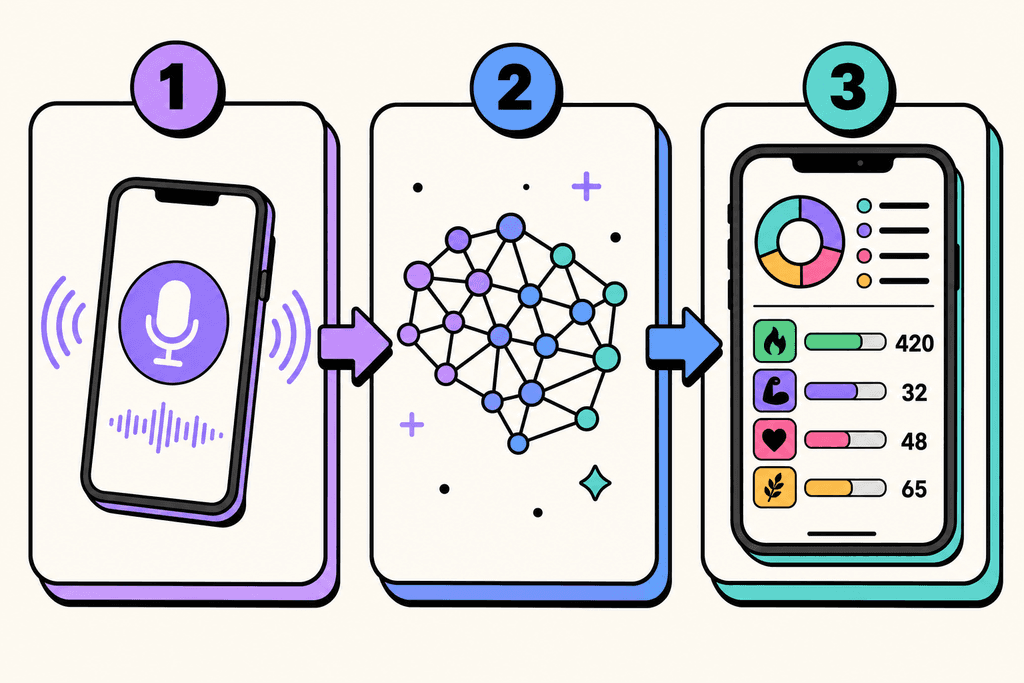
The voice input feature works exactly like talking to a friend about your meal. You might say "I had two scrambled eggs with cheese and whole wheat toast" and the app instantly understands what you mean. The AI breaks down your description, figures out the portion sizes, and calculates all the calories and macros without you touching a single button.
- Voice logging takes about 30 seconds per meal
- Traditional apps require 5+ minutes of searching and selecting
- AI understands cooking methods like "grilled," "fried," or "baked"
- Portion sizes are automatically estimated from natural language
Here's what this looks like in real life. For breakfast, you could say "oatmeal with banana and almond butter" and get instant nutrition data. At lunch, "chicken salad with ranch dressing" works just fine. The AI knows that chicken salad usually means grilled chicken unless you specify otherwise, and it accounts for typical restaurant or homemade portions.
For packaged foods, the barcode scanner makes things even faster. Just point your phone at the barcode and everything logs automatically. This is perfect for your morning protein bar or that afternoon snack you grab from the pantry.
| Method | Time Required | Effort Level |
|---|---|---|
| Voice Input | 30 seconds | Very Low |
| Barcode Scan | 10 seconds | Minimal |
| Traditional Apps | 5+ minutes | High |
Setting Up Your Personal Weight Loss Goals
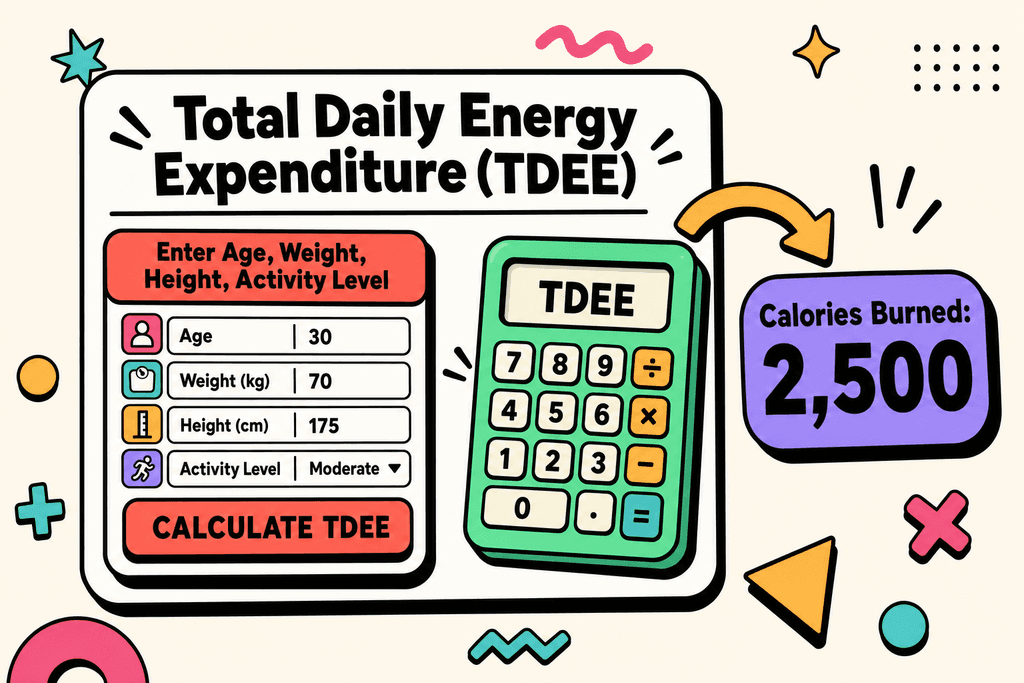
Losing weight comes down to eating fewer calories than your body burns, but figuring out those numbers can feel like solving a math problem. The TDEE calculator in MyFoodBuddy does this calculation for you based on your age, weight, height, and activity level. TDEE stands for Total Daily Energy Expenditure, which is just a fancy way of saying how many calories you burn in a normal day. Once you know this number, you can create a calorie deficit that actually works.
A safe calorie deficit is usually around 500 calories below your maintenance level. This typically leads to losing about one pound per week, which might not sound exciting but it's the kind of steady progress that actually sticks. Going too low on calories can backfire by making you tired, hungry, and more likely to quit.
- Enter your current stats into the TDEE calculator
- Review your maintenance calorie number
- Subtract 500 calories for weight loss
- Set your daily calorie goal in the app
- Adjust macro percentages for your needs
- Connect Apple Health for automatic activity tracking
Your macro goals matter just as much as total calories when you're trying to lose weight. Most people do better with higher protein intake because it keeps you full longer and helps maintain muscle mass. A common split is 40% carbs, 30% protein, and 30% fat, but MyFoodBuddy lets you customize these based on what works for your body and preferences.
The best part is that your goals aren't set in stone. As you lose weight, your body needs fewer calories to maintain itself. The app's integration with Apple Health tracks your activity levels and can help you adjust your targets over time without having to do the math yourself.
Staying Consistent with Tracking Features
The difference between people who lose weight and keep it off versus those who don't usually comes down to one thing: consistency. You don't need to be perfect every single day, but you do need to track often enough to stay aware of your eating patterns. MyFoodBuddy includes several features designed to make consistent tracking feel less like a chore and more like a habit you can actually maintain for months.
The saved meals feature is probably the most underrated tool for staying consistent. Most of us eat the same breakfast four or five days a week, right? Instead of logging "Greek yogurt with berries" every single morning, you save it once and then tap one button to re-log it whenever you eat it again.
- Save your regular meals for instant one-tap logging
- Mark favorites to quickly find foods you eat often
- Build up a personal database of your actual eating habits
- Reduce decision fatigue around meal planning
Streaks and achievements might sound silly, but they work. Seeing that you've logged meals for seven days straight creates a little motivation to not break the chain. The app tracks these milestones without being annoying about it, giving you a quiet sense of progress that builds over time.
Fiona, the AI nutrition coach, analyzes your food logs alongside your sleep and activity data to give you personalized insights. She might notice that you tend to go over your calorie goal on days when you sleep less than six hours, or that your protein intake drops on weekends. These patterns are hard to spot on your own but incredibly valuable for making lasting changes.
The analytics section shows charts of your calorie intake, macro breakdown, and weight trends over different time periods. You can zoom out to see monthly patterns or zoom in to examine a specific week. This visual feedback helps you understand what's actually working instead of just guessing based on how you feel.
| Feature | Benefit |
|---|---|
| Saved Meals | One-tap logging |
| Streaks | Daily motivation |
| AI Coach | Pattern recognition |
| Analytics | Progress tracking |
Setting reminders ensures you don't forget to log meals, especially dinner when you're tired and just want to relax. A gentle notification at your usual meal times keeps tracking top of mind without being pushy. Over time, logging becomes automatic and you won't even need the reminders anymore.
Why MyFoodBuddy Works When Other Apps Don't
Studies show that 80% of people who start tracking calories quit within the first month. The problem isn't willpower or motivation. It's the fact that most apps make you spend 5-10 minutes per meal searching through massive databases, weighing food, and manually entering every ingredient. When you're hungry or busy, that's just not going to happen. MyFoodBuddy takes a different approach by letting you simply say what you ate and moving on with your day.
The Time Problem Nobody Talks About
Traditional calorie tracking apps require you to become a part-time nutritionist. You need to know exactly how many ounces of chicken you ate, whether that apple was small or medium, and if your salad dressing was regular or light. The average person spends 15-20 minutes per day logging meals in apps like my pal fitness alternatives.
- Voice input takes 10-15 seconds per meal versus 3-5 minutes of manual searching
- AI extraction eliminates the need to measure or weigh portions
- One-tap re-logging for common meals saves even more time
- Barcode scanning handles packaged foods instantly
Accuracy Without the Effort
Here's what most people don't realize about manual database searching. You might spend five minutes finding the "right" entry, but there are often 20 different versions of the same food with wildly different calorie counts. AI-powered extraction using USDA data actually gives you more consistent results because it's pulling from verified sources every time.
| Feature | MyFoodBuddy | Traditional Apps |
|---|---|---|
| Time per meal | 10-15 seconds | 3-5 minutes |
| Input method | Voice or text | Manual search |
| Data source | AI + USDA verified | User-submitted database |
| Annual cost | $39 | $75-120 |
| Learning curve | Minimal | Steep |
What Users Actually Say
The testimonials tell the real story. JakeVdub608 mentioned that just being able to say what you ate made all the difference. Zach Abitz called out the simplicity and speed as the key factors. These aren't people praising fancy features or detailed analytics. They're talking about finally being able to stick with tracking because it doesn't feel like a chore anymore.
- Users report actually maintaining their tracking streaks
- Less friction means more consistent data over time
- Better data leads to better results and insights
At less than half the cost of premium my pal fitness alternatives, MyFoodBuddy proves that sometimes the best solution isn't the one with the most features. It's the one you'll actually use every single day.
Start Tracking Without the Stress
Here's the thing about losing weight: you need to track what you eat. There's no way around it. But most apps make this feel like a part-time job, which is why so many people give up after a week or two. The good news is that tracking doesn't have to take forever or make you want to throw your phone across the room.
MyFoodBuddy handles the heavy lifting for you. Just say what you ate or type it in, and the AI figures out the calories and macros in seconds. No searching through endless food databases or measuring every single thing you eat.
The 7-day free trial gives you a full week to see if this actually works for your life. That's enough time to figure out if voice logging really is as fast as it sounds, and whether having an AI nutrition coach makes a difference in staying on track.
When tracking stops feeling like a chore, you're way more likely to stick with it. And sticking with it is the only thing that actually matters when you're trying to lose weight. The app costs $39 per year after the trial, which breaks down to about three bucks a month.
You probably have questions about how the voice input works, what happens if the AI gets something wrong, or how it compares to other apps you've tried before. Let's get into those.
Common Questions About Tracking with MyFoodBuddy
When you're trying to figure out if a calorie tracking app is right for you, you probably have some questions. Most people wonder about the same things before they start using my pal fitness tools like MyFoodBuddy. Here are the answers to what people ask us most often, so you can decide if this app fits your life.
How accurate is the AI at calculating calories?
The AI uses USDA nutritional data combined with machine learning to estimate calories and nutrients from your meal descriptions. While it's designed to be as accurate as possible, the precision depends on how detailed your input is. If you say "a big bowl of pasta," you'll get a general estimate, but if you mention "one cup of whole wheat pasta with marinara sauce," the AI can give you a much more precise calculation.
Can I track macros or just calories?
MyFoodBuddy tracks both macros and micros, not just calories. You can set personalized goals for protein, carbs, and fats, and the app will show you how each meal contributes to those targets. The analytics section breaks down your macro intake over different time periods, which is helpful if you're following a specific diet plan or trying to build muscle.
Does it work with my fitness tracker or Apple Health?
Yes, MyFoodBuddy syncs directly with Apple Health to pull in your activity data and other health metrics. This means your AI nutrition coach Fiona can look at your sleep patterns, exercise, and food intake together to give you better insights. If your fitness tracker connects to Apple Health, it'll work with the app automatically.
What if I eat out at restaurants, can it still track that?
Restaurant meals are actually one of the easiest things to log with voice input. Just say something like "chicken burrito from Chipotle" or "medium pepperoni pizza from Domino's," and the AI will pull nutritional data for those specific menu items. For local restaurants without nutritional info available, describe what's in the dish and the AI will estimate based on typical ingredients and portion sizes.
How much does it cost after the free trial?
After your 7-day free trial, MyFoodBuddy costs $39 per year. That's less than most people spend on a single month of other my pal fitness apps like MyFitnessPal Premium, which runs about $80 annually. The first 10,000 customers get this introductory rate, so it's worth trying the free trial to see if the voice logging feature saves you enough time to be worth it.
Can I track meals for the whole family?
The app is designed for individual tracking rather than family meal planning. However, you can use the saved meals feature to quickly log dishes that multiple family members eat. If you're cooking for your family and want to track your own portion, just specify your serving size when you log it, like "one plate of the chicken stir fry I made for dinner."
Ready to start tracking smarter?
Download MyFoodBuddy and start tracking your calories by just saying what you ate. No more searching databases or guessing portions.
Get started