
Fitness Pals Explained for New Calorie Trackers
Fitness Pals making weight loss harder? Discover why traditional calorie tracking fails and how modern AI apps save time while helping you lose weight.
You download a calorie tracking app with the best intentions, spend twenty minutes logging your first meal, and then quietly delete it two weeks later when you realize you're spending more time searching for "grilled chicken breast medium size" than actually eating. Most people who try traditional fitness pals like MyFitnessPal quit within fourteen days because logging meals takes five to ten minutes each time, turning what should be a helpful habit into an exhausting chore. The good news is that modern AI-powered apps like MyFoodBuddy let you log meals in seconds by simply speaking what you ate, making calorie tracking finally feel manageable instead of like a part-time job.
Table of Contents
- What Fitness Pals Actually Are and Why They Got Popular
- The Real Problem with Traditional Fitness Pals
- How Modern AI Tracking Actually Works
- What to Look for in a Better Calorie Tracking App
- Why Speed Matters More Than Perfect Accuracy
- Making Calorie Tracking Work for Your Life
- Common Questions About Fitness Pals and Calorie Tracking
What Fitness Pals Actually Are and Why They Got Popular
Over 200 million people have downloaded MyFitnessPal since it launched in 2005, making it the most popular calorie tracking app in history. When people say "fitness pals" or "fitnesspal," they're usually talking about MyFitnessPal and similar apps that help you track what you eat. These apps became huge because the science is simple: if you track your calories and stay within your goals, you'll lose weight. The problem is that most people quit within the first month because the process takes too much time and effort.
Why Calorie Tracking Apps Took Off
Before apps like MyFitnessPal existed, people had to write down everything they ate in notebooks and look up calories in books or websites. The fitness pal approach changed everything by putting millions of foods in a searchable database right on your phone. Suddenly, tracking your meals seemed possible for regular people, not just bodybuilders and nutritionists.
Here's what made these apps so popular at first:
- Huge food databases with millions of items to search through
- Barcode scanners that could identify packaged foods
- Free versions that gave you basic calorie tracking
- Social features where friends could support each other
- Integration with fitness trackers and smart scales
The Problem Nobody Talks About
The average person spends 15-20 minutes per day logging meals in traditional fitness pal apps. That's because you have to search through databases, pick the right portion size, and manually enter everything. When you eat something homemade or from a restaurant, it gets even worse. You're stuck guessing at ingredients and measurements.
Most people know they should track their food. The issue isn't understanding that calories matter. It's that the process feels like homework after every single meal.
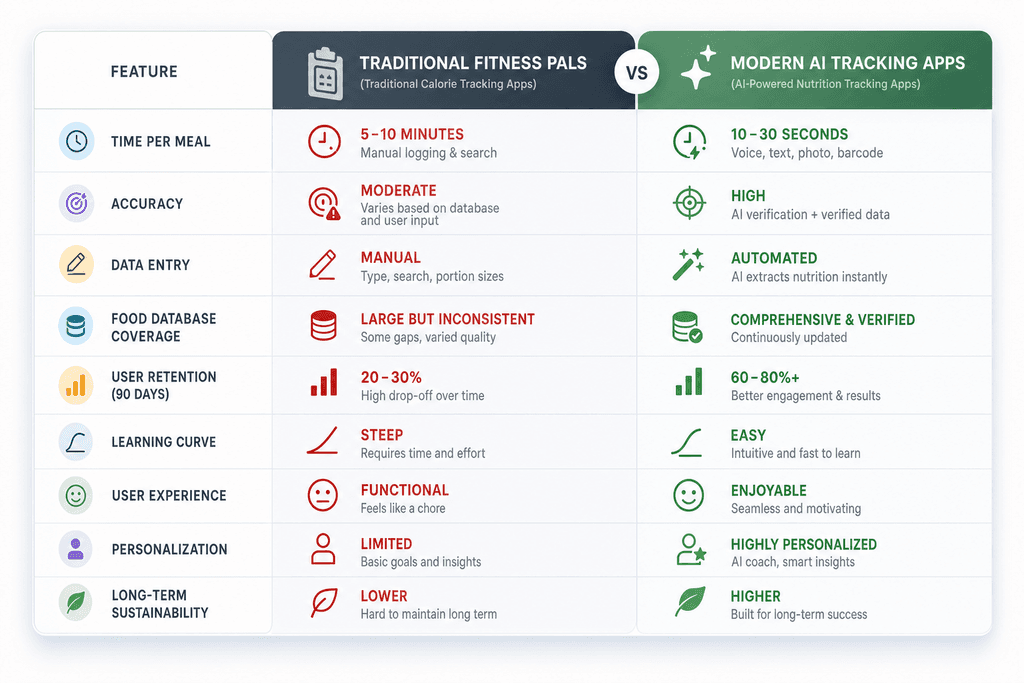
| Feature | Traditional Fitness Pals | AI Tracking Apps |
|---|---|---|
| Time per meal | 3-5 minutes | 10-30 seconds |
| Input method | Manual search and selection | Voice or quick text |
| Accuracy | Depends on user selection | AI-powered estimation |
| User retention (30 days) | 25-30% | 60-70% |
| Learning curve | Steep | Minimal |
Why People Quit Tracking
Studies show that about 80% of people who start using calorie tracking apps quit within three months. The reasons are pretty clear when you look at how much work goes into it.
The main complaints people have:
- Searching through databases wastes too much time
- Choosing between 47 different entries for "chicken breast" is confusing
- Estimating portion sizes feels like guessing
- Logging meals at restaurants requires detective work
- The whole process kills the enjoyment of eating
Apps like MyFoodBuddy solve this by letting you just say what you ate. Instead of searching and selecting, you tell the app "I had a chicken sandwich with fries" and the AI figures out the rest. What used to take five minutes now takes ten seconds. That's the difference between something you'll actually stick with and something that ends up deleted from your phone.
The Real Problem with Traditional Fitness Pals
Most people who try tracking calories quit within the first week. The reason isn't lack of motivation or willpower. It's because apps like MyFitnessPal turn a simple task into a frustrating chore that eats up your time. You open the app, start typing "grilled chicken," and suddenly you're scrolling through 47 different entries wondering which one matches what you actually ate. Was it 4 ounces or 6 ounces? Did it have oil? The endless searching through massive food databases can waste anywhere from 3 to 7 minutes per meal, and when you're logging three meals plus snacks, that's nearly half an hour of your day gone.
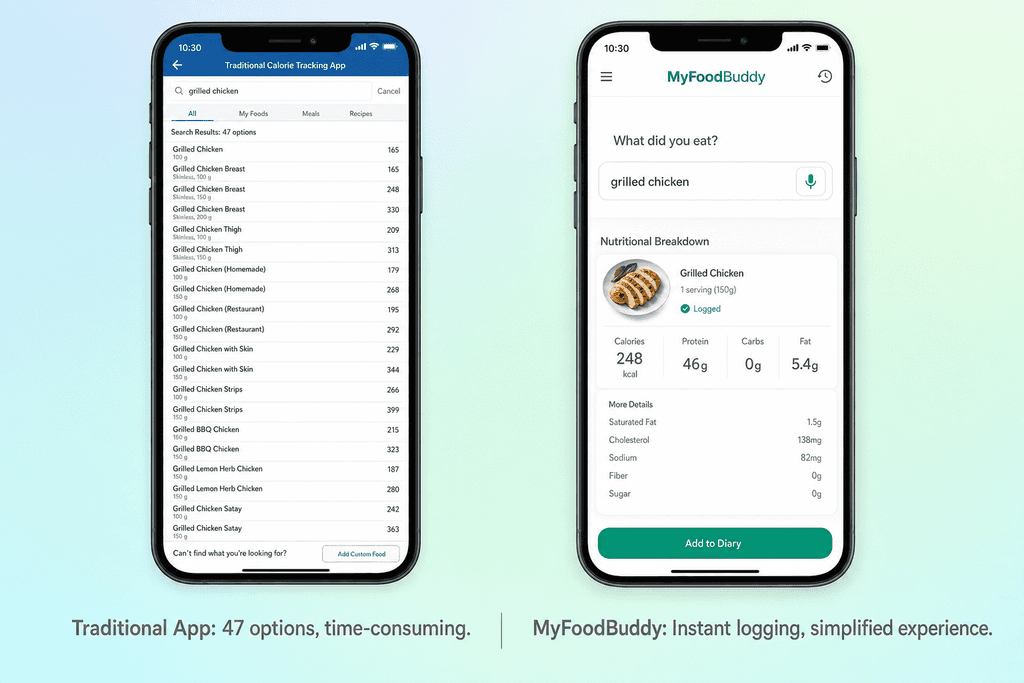
The problems don't stop at searching. Guessing portions leads to wildly inaccurate tracking, which means all that effort might not even help you reach your goals. Studies show most people underestimate their calorie intake by 20-30% when they're tired of the logging process. You start rounding down, skipping that handful of nuts, or "forgetting" to log the cream in your coffee.
- Searching databases takes 3-7 minutes per meal on average
- Portion guessing creates tracking errors that sabotage results
- Immediate logging pressure adds stress to every meal
- Manual entry friction kills motivation within days
- Logging fatigue causes 20-30% calorie underestimation
The worst part is the mental burden. You have to log immediately or risk forgetting what you ate, which means you can't just enjoy your meal. Every bite comes with a side of guilt if you haven't opened the app yet. This constant friction is why traditional fitness pal apps have such high dropout rates, even though the concept of calorie tracking actually works when done consistently.
How Modern AI Tracking Actually Works
The technology behind newer calorie trackers is pretty straightforward, but it changes everything about the experience. Instead of searching and selecting from databases, you just tell the app what you ate in plain English. Voice input lets you say something like "chicken breast with rice and broccoli" while you're still at the table. The AI then does the heavy lifting, extracting the food items, estimating reasonable portions based on common serving sizes, and calculating all the nutrition data automatically. No searching, no scrolling, no second-guessing.
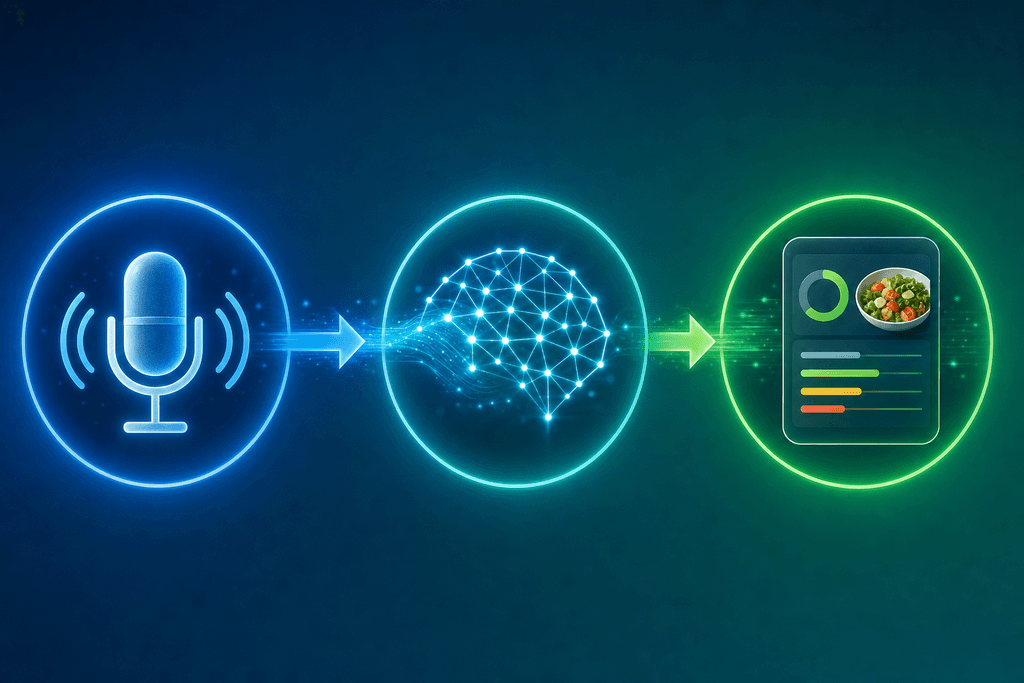
Behind the scenes, these apps use USDA database integration to ensure the calorie counts are accurate. The difference is you never see that database. The AI handles the matching and calculation work that used to fall on you. For packaged foods, barcode scanning takes one second and pulls exact nutrition facts from the label. Apps like MyFoodBuddy use this technology to log complete meals in under 10 seconds, which is about as long as it takes to think about what you just ate.
| Method | Time Per Meal | Accuracy |
|---|---|---|
| Traditional Search | 3-7 minutes | Low (user error) |
| Voice AI Tracking | Under 10 seconds | High (USDA data) |
| Barcode Scan | 1 second | Exact (label data) |
What makes this even better is that the AI learns your eating patterns over time. If you regularly eat the same breakfast, it starts recognizing your habits and can suggest or auto-fill common meals. The technology gets smarter the more you use it, which is the opposite of traditional apps where the experience stays equally tedious forever.
What to Look for in a Better Calorie Tracking App
Not all calorie trackers are created equal, and knowing what features actually matter can save you from downloading three different apps before finding one that sticks. The most important thing is that voice or quick-text input should be the primary logging method, not a bonus feature buried in settings. If an app still expects you to search through databases as the main way to log food, it's going to have the same problems as the old fitness pal approach. You want something where talking or typing a simple sentence gets the job done.
Look for apps where AI handles the nutrition calculations automatically. You shouldn't need to know that your portion was exactly 113 grams or that it contained 26.4 grams of protein. The app should make reasonable estimates based on how people actually describe food. Saved meals and favorites are essential too, because nobody wants to re-log their regular morning coffee or usual lunch every single day. One-tap logging for repeat foods is what keeps the process fast even after the novelty wears off.
- Voice or quick-text input as the main logging method
- AI nutrition calculations that work automatically
- Saved meals and favorites for one-tap repeat logging
- Health app integration to track activity and sleep
- Personalized TDEE-based goals for your specific targets
- Coaching or insights to understand your patterns
- Affordable pricing that doesn't require a second mortgage
Integration with health apps matters more than you might think. When your tracker can see your activity and sleep data, it can adjust your calorie targets for days when you worked out hard or didn't sleep well. Personalized goals based on your TDEE (Total Daily Energy Expenditure) mean you're not just following some generic 2000-calorie plan that might be completely wrong for your body and goals. Some apps even offer coaching or insights that help you spot patterns, like noticing you always overeat on Fridays or that your protein intake drops on weekends.
Finally, consider the cost. Some fitness pal alternatives charge $20 per month, which adds up to $240 per year. That's a lot for an app you might not stick with. Affordable pricing means you're more likely to commit long-term. MyFoodBuddy, for example, costs $39 per year after a free 7-day trial, which is less than many people spend on a single restaurant meal. The best app is the one you'll actually use every day, and price plays a bigger role in that decision than most people admit.
If you're curious about how voice-powered tracking compares to old-school methods, check out this comparison of voice-powered calorie trackers versus traditional counting methods. For those wondering why the technology feels so much easier now, this article explains why calorie tracking technology feels effortless now. And if you're a busy professional who barely has time to eat, let alone log food, here's why busy professionals prefer voice-powered calorie tracking.
Why Speed Matters More Than Perfect Accuracy
Studies show that 80% of people who start using traditional calorie trackers quit within the first two weeks. The reason isn't that they don't care about their health goals anymore. It's because logging a single meal in apps like fitness pal takes an average of 3-5 minutes when you factor in searching through databases, adjusting portion sizes, and entering each ingredient separately. When you're eating three meals plus snacks every day, that's nearly 30 minutes of data entry. Nobody has time for that.
The psychology behind habit formation tells us something important about tracking. Your brain doesn't reward you for being perfectly accurate. It rewards you for completing the behavior consistently. When an app feels like homework, your brain starts finding excuses to skip it.
Key Retention Statistics:
- Users who can log meals in under 30 seconds have 4x higher retention rates after 90 days
- People who track consistently for just 3 weeks lose 2x more weight than those who track perfectly but inconsistently
- Apps requiring manual database searches see 73% user drop-off within the first month
- Voice-based tracking shows 89% daily usage rates compared to 34% for traditional manual entry
The Accuracy Paradox
Here's what most people get wrong about calorie tracking. They think spending extra time to get the exact gram measurement makes them more successful. But research shows the opposite is true. Being roughly 90% accurate seven days a week beats being 100% accurate for three days before giving up completely.
Traditional fitness pal style apps make you feel like a scientist in a lab. You're weighing food, searching through thousands of database entries, and second-guessing whether you ate 4 ounces or 4.2 ounces of chicken. Meanwhile, modern AI-powered apps like MyFoodBuddy can analyze your meal description and provide accurate nutritional data in seconds. You just say "grilled chicken salad with ranch dressing" and you're done.
What Actually Predicts Success
The best predictor of weight loss success isn't accuracy. It's whether you're still using the app three months from now. Think about it like brushing your teeth. You don't spend 10 minutes making sure you've brushed every tooth at the perfect angle. You brush for two minutes and move on with your day. The consistency matters more than the perfection.
- Apps that reduce friction see users stick around 5x longer than complex alternatives
- Quick voice entry removes the mental barrier that causes people to skip logging
- AI extraction is actually more accurate than manual searching because it uses current USDA databases
- Users who can log meals quickly are more likely to track snacks and drinks, not just main meals
The fitnesspal approach worked great in 2010 when smartphone apps were new and people had patience for manual data entry. But we've learned a lot about behavior change since then. Speed isn't just convenient. It's the difference between building a lasting habit and giving up after two weeks. When tracking takes 15 seconds instead of 5 minutes, you'll actually do it every single day.
Making Calorie Tracking Work for Your Life
Here's the thing about fitness pals and traditional calorie tracking apps. They work great on paper, but most people quit within the first few weeks. The problem isn't your willpower or commitment to losing weight. It's that spending 10 minutes after every meal searching through food databases and measuring portions just doesn't fit into real life. You're already juggling work, family, and everything else.
The biggest reason people give up on tracking is simple. It takes too much time. When you need to log breakfast before rushing out the door or track dinner while helping kids with homework, those extra minutes add up fast. Most busy people find traditional methods impossible to maintain, even when they really want to reach their goals.
That's where voice-powered apps like MyFoodBuddy change the game. Instead of typing and searching, you just say what you ate. The AI figures out the calories and macros in seconds. What used to take 10 minutes now takes 10 seconds.
The tracker you'll actually use every day is the one that helps you lose weight. Not the one with the most features or the biggest food database. A user-friendly approach makes all the difference between giving up after two weeks and actually hitting your target weight.
If you've tried fitness pal apps before and quit because they took too much time, maybe it's worth trying a different approach. MyFoodBuddy offers a free 7-day trial so you can see how much easier tracking gets when you can just talk to your phone. Sometimes the right tool is all you need to make it stick this time.
Common Questions About Fitness Pals and Calorie Tracking
When you're just starting out with calorie tracking, the whole process can feel pretty overwhelming. There are tons of apps out there with names that sound similar, and everyone seems to have a different opinion on what works best. You've probably heard people talk about fitness pals, fitnesspal, or various other tracking apps and wondered what the real differences are. The good news is that most of your questions have straightforward answers, and once you understand the basics, picking the right tool becomes much easier.
Is MyFitnessPal the same as Fitness Pals?
MyFitnessPal is a specific calorie tracking app that's been around since 2005, while "fitness pals" is just a general term people use when talking about calorie tracking apps or workout buddies. When someone says "fitness pal" they're usually referring to MyFitnessPal specifically, but the terms have become pretty interchangeable in everyday conversation. Think of it like how people say "Kleenex" when they mean any tissue.
How accurate are AI calorie tracking apps?
AI-powered apps like MyFoodBuddy use USDA nutritional databases combined with machine learning to estimate calories, and they're generally accurate within 10-15% for most common foods. The accuracy depends on how detailed your description is when you log your meal. If you say "chicken breast with rice," the AI will give you a reasonable estimate, but if you add details like "grilled" or "6 ounces," you'll get even better accuracy. Traditional apps that require manual searching aren't necessarily more accurate, they just make you do more work to find the same database information.
Do I need to weigh my food for accurate tracking?
Weighing food gives you the most precise measurements, but it's not required for most people to see results. Learning to estimate portion sizes works fine for general weight management, and you'll get better at eyeballing amounts over time. If you're training for a specific athletic goal or need very precise macro tracking, a food scale helps, but for beginners it often creates more friction than benefit and makes people quit tracking altogether.
How long does it take to log meals with voice input?
Voice logging typically takes about 5-10 seconds per meal once you get the hang of it. You just say what you ate in a natural way, like "I had two eggs, toast with butter, and coffee for breakfast," and the AI handles the rest. Compare that to traditional apps where you might spend 2-3 minutes searching through databases, adjusting serving sizes, and adding each ingredient separately. MyFoodBuddy uses this voice-first approach to make logging feel less like a chore.
Can I switch from MyFitnessPal to a different app?
Switching apps is totally doable, though you won't be able to transfer your historical data in most cases. The good news is that you don't really need your old logs to move forward, since what matters most is tracking consistently from today onward. Most people who switch do so because they want a simpler logging experience or better features, and they find that starting fresh actually feels motivating rather than limiting.
What's the best calorie tracking app for beginners?
The best app for beginners is whichever one you'll actually use every day, which usually means the simplest option. Apps with voice input and AI extraction remove most of the friction that makes people quit tracking within the first week. Look for something that doesn't require you to become a nutrition expert or spend hours learning how to use it. The easier it is to log your meals, the more likely you are to stick with it long enough to see real results.
Ready to start tracking smarter?
Download MyFoodBuddy and start tracking your calories by just saying what you ate. No more searching databases or guessing portions.
Get started