
Fit Pal and FitnessPal Explained for New Users
Learn what Fit Pal and FitnessPal are, how they work for weight loss, and discover easier calorie tracking alternatives in 2024.
You've probably searched for "fit pal" or "fitness pal" hoping to find an easy way to track your calories and finally lose those extra pounds. Here's the thing: most people using these search terms are actually looking for MyFitnessPal, the popular calorie counting app that's been around since 2005. This guide will clear up the confusion around fit pal terminology and show you what actually works for tracking food without spending hours each day logging every bite.
Table of Contents
- Understanding the FitnessPal Family of Apps
- How FitnessPal Works for Weight Loss
- The Real Challenge with Traditional Calorie Tracking
- Faster Alternatives to Manual Food Logging
- Why Tracking Method Matters for Your Success
- Finding Your Best Calorie Tracking Solution
- Common Questions About Fit Pal and Calorie Tracking
Understanding the FitnessPal Family of Apps
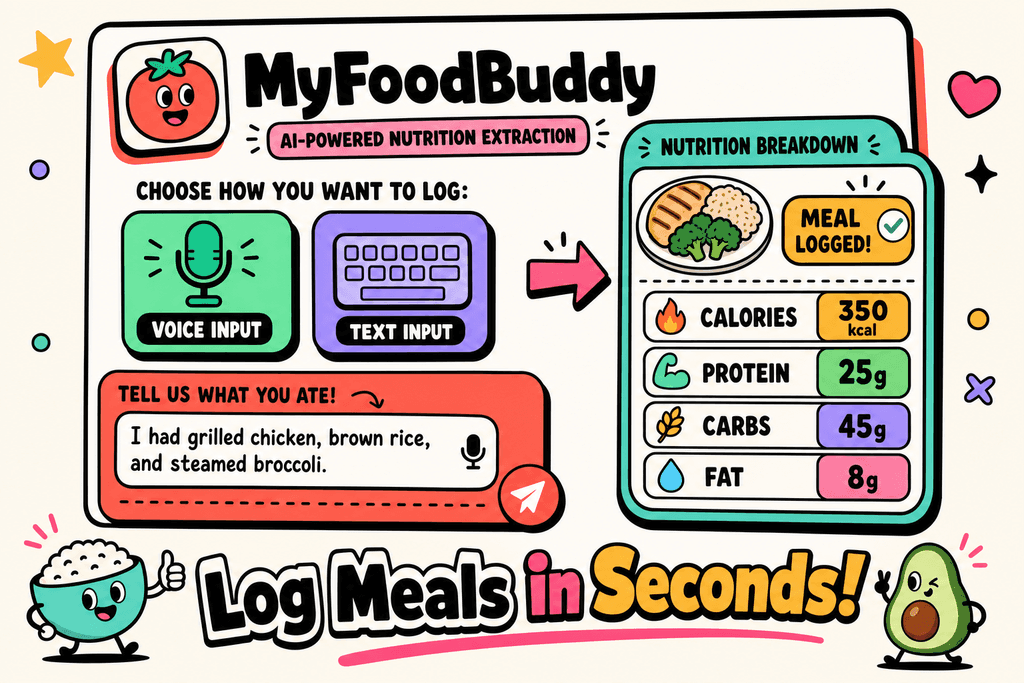
Over 200 million people have downloaded MyFitnessPal since it launched back in 2005, making it the most recognized name when someone searches for "fitness pal" or "fit pal" online. The app started as a simple website where people could log their meals and count calories, but it quickly became the default choice for anyone trying to lose weight or get healthier. MyFitnessPal is the official name, though you'll hear people call it FitnessPal, fitness pal, or just MFP for short. The core idea was straightforward: help people track what they eat so they could stay within their calorie goals and finally see results on the scale.
Why MyFitnessPal Became So Popular
MyFitnessPal solved a real problem that dieters faced for decades. Before apps like this existed, people had to manually look up calories in books or guess portion sizes, which made tracking feel like a part-time job. The app changed things by building a massive food database with millions of items.
Here's what made it stand out from other fitness pals:
- A huge database with over 14 million foods that users could search
- Barcode scanning to quickly log packaged foods
- Free access to basic calorie tracking features
- A social community where users could share progress and recipes
- Integration with fitness trackers and other health apps
The Numbers Behind Fitness Pal Apps
The calorie tracking market has exploded over the past decade. More than half of American adults have tried tracking their food at some point, and apps like MyFitnessPal made it easier than ever before. Under Armour bought the company for $475 million in 2015, which shows just how valuable this space became.
| Metric | MyFitnessPal Stats |
|---|---|
| Total Downloads | 200+ million |
| Food Database Size | 14+ million items |
| Daily Active Users | 50+ million |
| Year Founded | 2005 |
How Traditional Calorie Tracking Actually Works
Most fitness pal apps follow the same basic formula. You enter your current weight, your goal weight, and how fast you want to lose or gain. The app calculates how many calories you should eat each day based on your activity level. Then comes the hard part: logging every single thing you eat throughout the day.
The typical process looks like this:
- Search for the food in the database
- Select the right brand or recipe version
- Adjust the serving size to match what you actually ate
- Confirm and add it to your daily log
- Repeat for every meal and snack
This method works, but it takes time. Studies show the average person spends 15-20 minutes per day logging meals in traditional apps, which is why so many people quit after a few weeks. Apps like MyFoodBuddy take a different approach by letting you just say what you ate instead of searching through endless database entries, but we'll get into those differences later.
The challenge with any fitness pal app isn't the technology itself. It's getting people to stick with it long enough to see real results. Most users abandon calorie tracking within the first month because the manual logging process feels like too much work after the initial motivation wears off.
How FitnessPal Works for Weight Loss
Most people who search for "fitness pal" or "fit pal" are looking for ways to track their food and lose weight. The basic idea behind apps like FitnessPal is pretty simple. You tell the app your current weight, your goal weight, and how fast you want to lose it. Then the app does some math to figure out how many calories you should eat each day. If you stick to that number and eat less than your body burns, you create what's called a calorie deficit, which is how weight loss actually happens.
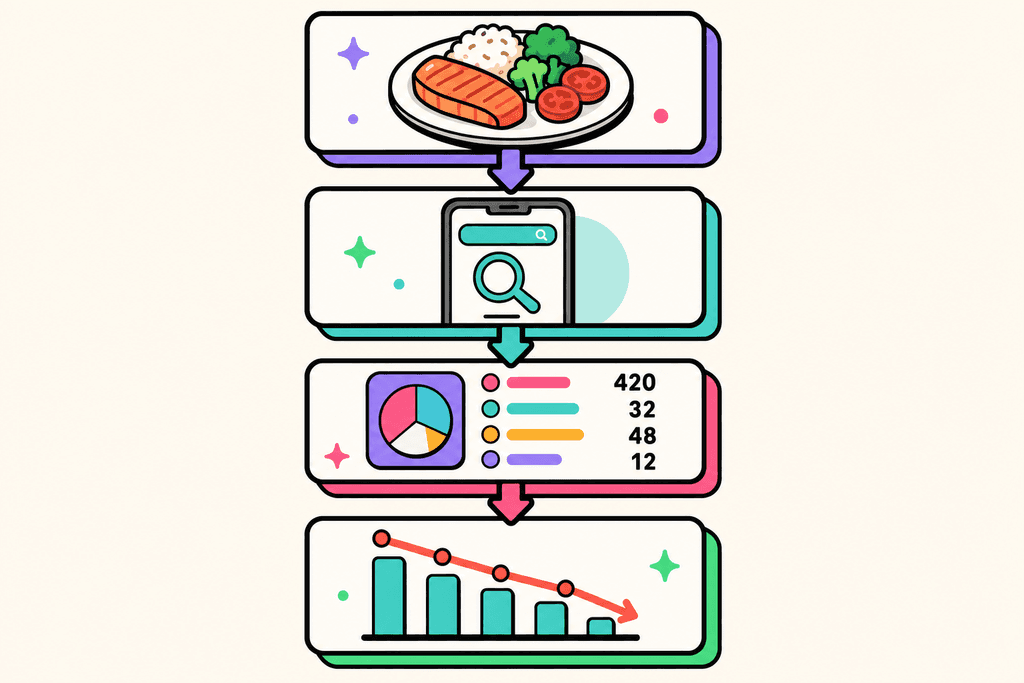
The app calculates your daily calorie target based on your age, height, weight, and activity level. For example, if your body burns 2,200 calories per day and you want to lose one pound per week, the app might tell you to eat 1,700 calories daily. That 500-calorie difference adds up to about one pound of fat loss per week, since a pound of fat equals roughly 3,500 calories.
Here's what tracking typically involves:- Searching through a massive database of foods to find what you ate
- Selecting the right portion size from dropdown menus
- Scanning barcodes on packaged foods for quicker entry
- Manually entering nutrition info for foods not in the database
- Watching your daily totals for calories, protein, carbs, and fats
The macro tracking part is where things get interesting. Beyond just counting calories, these apps show you how much protein, carbohydrates, and fats you're eating. This matters because eating enough protein helps you maintain muscle while losing fat, which keeps your metabolism higher.
| Weight Loss Goal | Weekly Loss Target | Daily Calorie Deficit |
|---|---|---|
| Slow and steady | 0.5 lbs per week | 250 calories |
| Moderate pace | 1 lb per week | 500 calories |
| Aggressive | 2 lbs per week | 1,000 calories |
The theory behind fitness pal apps is solid. Track what you eat, stay under your calorie goal, and the weight comes off. But there's a catch that most people discover within their first week of trying.
The Real Challenge with Traditional Calorie Tracking
Nobody warns you about how much time you'll spend staring at your phone, scrolling through endless food lists. When you eat a chicken breast, you don't just log "chicken breast" and move on. First, you search and get 47 different options. Was it grilled, baked, or fried? Skinless or with skin? Then you need to figure out if you ate 4 ounces or 6 ounces, because that difference matters when you're trying to stay within a tight calorie budget.
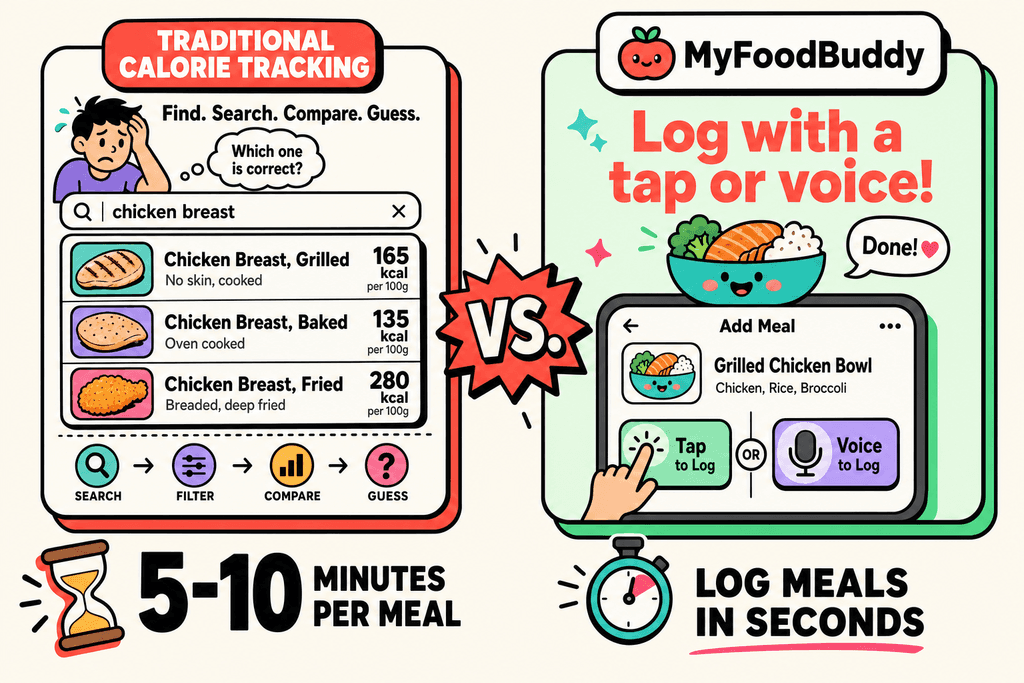
The average person spends 5 to 10 minutes per meal just logging their food. That's 15 to 30 minutes per day if you're tracking three meals. Over a week, you're looking at nearly three hours of data entry. Most people didn't sign up for a part-time job when they decided to lose weight.
Common frustrations that make people quit:- Searching "grilled chicken" returns 200+ database entries with different calorie counts
- Guessing portion sizes because you didn't bring a food scale to the restaurant
- Logging a homemade stir-fry means entering 8 separate ingredients individually
- Finding conflicting nutrition info for the same food from different sources
- Forgetting what you ate at lunch and trying to reconstruct it hours later
Research shows that around 80% of users abandon calorie tracking apps within the first month. The problem isn't that people lack willpower or don't care about their goals. The problem is that the process feels like homework, and nobody wants to do homework three times a day for the rest of their life.
The worst part is when you eat something homemade or from a local restaurant that isn't in the database. You either skip logging it (which defeats the purpose) or spend 15 minutes breaking down every ingredient and measuring everything. That's when most people think "this isn't worth it" and stop tracking altogether.
Faster Alternatives to Manual Food Logging
The good news is that calorie tracking technology has come a long way from the old database-searching method. Newer apps use AI to understand what you ate without making you play detective in a food database. Instead of typing "grilled chicken breast 6oz" and scrolling through options, you can just say or type "I had grilled chicken with rice and broccoli for lunch" and let the app figure out the details. The technology extracts the foods, estimates reasonable portions, and logs everything in seconds.
This is where apps like MyFoodBuddy change the game. You can literally speak into your phone and say what you ate, and the AI pulls the nutritional information automatically. No searching, no scrolling, no selecting from dropdown menus. Just talk or type naturally, the way you'd tell a friend what you had for dinner.
Time comparison for logging a typical meal:| Method | Time Required | Steps Involved |
|---|---|---|
| Traditional database search | 5-10 minutes | Search, scroll, select, adjust portions |
| Barcode scanning | 2-3 minutes | Scan, verify, adjust servings |
| Voice/AI logging | 10-20 seconds | Speak or type what you ate |
The difference between spending 10 seconds versus 10 minutes per meal might not sound huge, but it adds up fast. Over a month, that's the difference between spending 30 minutes total versus 15 hours on food logging. When tracking becomes that quick, you're way more likely to stick with it long enough to actually see results.
MyFoodBuddy uses AI and USDA data to give you accurate nutrition info without the tedious work. You can also scan barcodes for packaged foods, save your favorite meals for one-tap logging, and get insights from Fiona, the built-in AI nutrition coach. The app costs $39 per year after a 7-day free trial, which is less than most people spend on a single takeout meal.
Why easier tracking leads to better results:- You actually log every meal instead of skipping the annoying ones
- Consistency matters more than perfection when losing weight
- Less friction means you'll keep tracking for months, not just weeks
- You spend your mental energy on making good food choices, not on data entry
The whole point of tracking calories is to build awareness of what you're eating so you can make better choices. But if the tracking process is so painful that you quit after two weeks, you never get the chance to build that awareness. The easier the tool, the longer you'll use it, and the longer you use it, the better your results will be.
Why Tracking Method Matters for Your Success
Studies show that people who track their meals consistently lose twice as much weight as those who track sporadically. But here's the problem: most people quit tracking within the first month. The reason isn't lack of motivation or willpower. It's because traditional fitness pal apps make logging food feel like a part-time job. When you spend 10 minutes searching through databases and measuring portions for every meal, that friction adds up fast.
The math is pretty simple. If you save just 5 minutes per meal by using voice input instead of manual searching, that's 15 minutes per day. Over a month, you've saved 7.5 hours of your life. That's almost a full workday you could spend doing literally anything else.
What Users Say About Switching Methods
Real people who switched from traditional fitnesspal tracking methods to voice-based logging report sticking with their goals much longer. JakeVdub608 mentioned that being able to "just say what I've eaten" made tracking actually convenient for the first time. Zach Abitz called out the "simplicity and speed" as the main reason he kept using the app instead of giving up like he had with other fitness pals.
- Traditional apps require 8-12 taps per meal on average
- Voice logging takes about 10 seconds total
- Users who spend less than 30 seconds logging are 3x more likely to maintain streaks
- The easier the process, the more honest people are about what they actually ate
Building Habits That Actually Stick
Perfect accuracy doesn't matter if you quit after two weeks. A tracking method that's 85% accurate but gets used every single day will always beat a method that's 95% accurate but feels like homework. Consistency beats perfection when it comes to long-term weight loss success.
This is where apps like MyFoodBuddy focus their energy. Instead of making you weigh every ingredient or scroll through endless food databases, you just tell it what you ate. The AI handles the rest, and you move on with your day.
- Sustainable habits form when the barrier to entry is low
- Most people abandon fit pal tracking because of time investment, not results
- Voice input removes the biggest friction point in the entire process
The testimonials tell the same story over and over. People wanted to track calories but couldn't stick with complicated systems. When the process became as simple as talking to your phone, tracking stopped being a chore and started being automatic. That's the difference between trying to lose weight and actually losing it.
Finding Your Best Calorie Tracking Solution
So here's the thing about fit pal and fitnesspal. When people search for these terms, they're usually looking for MyFitnessPal, which has been around forever and works great for some people. It's the traditional way of tracking calories where you search through databases, measure portions, and manually log everything. Some folks don't mind spending 5-10 minutes per meal doing this, and if that's you, that's totally fine. If you're curious about the premium features and costs of MyFitnessPal, see our article on MyFitnessPal Premium Features, Cost, and Whether It Is Worth It.
But most people trying to lose weight quit tracking after a few weeks because it just takes too long. The best tracker isn't the one with the most features or the biggest food database. It's the one you'll actually use every single day, even when you're tired or busy or just don't feel like it.
That's where newer options like MyFoodBuddy come in. Instead of searching and measuring, you just say what you ate and the AI figures out the calories in seconds. It's the same goal as fitness pal apps, just way less work on your end.
The truth is that losing weight doesn't require perfect tracking or hitting your macros exactly right every day. What it requires is showing up consistently, even when it's not perfect. The easier your tracking method is, the more likely you'll stick with it long enough to actually see results. You might have some questions about how all this works in practice, so let's get into those.
Common Questions About Fit Pal and Calorie Tracking
If you're searching for "fit pal" or trying to figure out the calorie tracking world, you probably have some questions. Most people do when they first start tracking what they eat. Here are the answers to the most common questions we hear from folks just getting started with fitness pal apps and calorie counting in general.
Is Fit Pal the same as FitnessPal?
People often search for "fit pal" when they mean MyFitnessPal, which is one of the older calorie tracking apps out there. The names get mixed up a lot because they sound similar. MyFitnessPal has been around for years and built a big user base, but the term "fitness pal" has become almost generic for any calorie tracking app, kind of like how people say "Kleenex" for tissues.
How accurate is FitnessPal for weight loss?
The accuracy of any calorie tracker depends mostly on how you use it. Manual entry apps like MyFitnessPal rely on you picking the right foods from their database, which can have multiple entries for the same item with different calorie counts. If you're guessing portion sizes or choosing the wrong database entry, your tracking won't be very accurate. The app itself is just a tool, and like any tool, it works better when you use it correctly and consistently.
How long does it take to log meals in traditional calorie trackers?
Most people spend about 5-10 minutes per meal when they're manually searching databases and weighing portions. That adds up to 15-30 minutes per day if you're tracking three meals. Some folks get faster with practice, but it's still a time commitment that makes a lot of people quit after a few weeks. The searching, selecting, and portion adjusting process gets old pretty fast.
Are there easier alternatives to manual calorie tracking?
Yes, newer apps use AI to make the process much faster. Instead of searching through databases, you can just say or type what you ate in plain language. MyFoodBuddy uses AI to extract nutritional information from your input, so logging a meal takes seconds instead of minutes. You literally just tell it "chicken breast with rice and broccoli" and it figures out the rest.
Do I need to track calories forever to maintain weight loss?
Not necessarily, but many people find some form of tracking helpful long-term. The goal is usually to learn portion sizes and develop better eating habits, which can eventually become automatic. Some people track strictly during weight loss, then switch to occasional check-ins during maintenance. Others prefer to keep tracking because it takes so little time with modern apps that it's not a burden anymore.
What's the difference between free and paid calorie tracking apps?
Free apps usually have ads and limited features, while paid versions offer things like custom macro goals, detailed analytics, and better support. The bigger difference is often in how the app works, not just what features it has. Older free apps might make you do all the work manually, while newer paid apps use AI to save you time. MyFoodBuddy costs $39 per year after a free trial, which breaks down to about $3 per month for an app that actually saves you time instead of eating it up.
Ready to start tracking smarter?
Download MyFoodBuddy and start tracking your calories by just saying what you ate. No more searching databases or guessing portions.
Get started