
Fitness Pal App Guide for Logging Meals and Macros
Learn how to log meals and track macros with fitness apps. Discover faster, easier ways to hit your weight loss goals without the hassle.
You open your fitness app to log lunch, and twenty minutes later you're still searching through databases trying to figure out if your homemade stir-fry was two cups or three. This daily frustration is exactly why most people abandon calorie tracking within two weeks, even when they're motivated to lose weight. The good news is that modern apps like MyFoodBuddy are using voice input and AI technology to cut logging time down to just seconds, which means you can actually stick with tracking long enough to see real results.
Table of Contents
How Fitness Tracking Apps Have Changed
Most people who tried tracking calories five years ago gave up within a week. The process was exhausting because you had to search through massive food databases, measure every ingredient, and manually enter portion sizes for each meal. Apps like MyFitnessPal pioneered digital calorie tracking, but they still required you to do most of the heavy lifting. What started as a helpful tool often turned into a time-consuming chore that felt more like homework than health tracking.
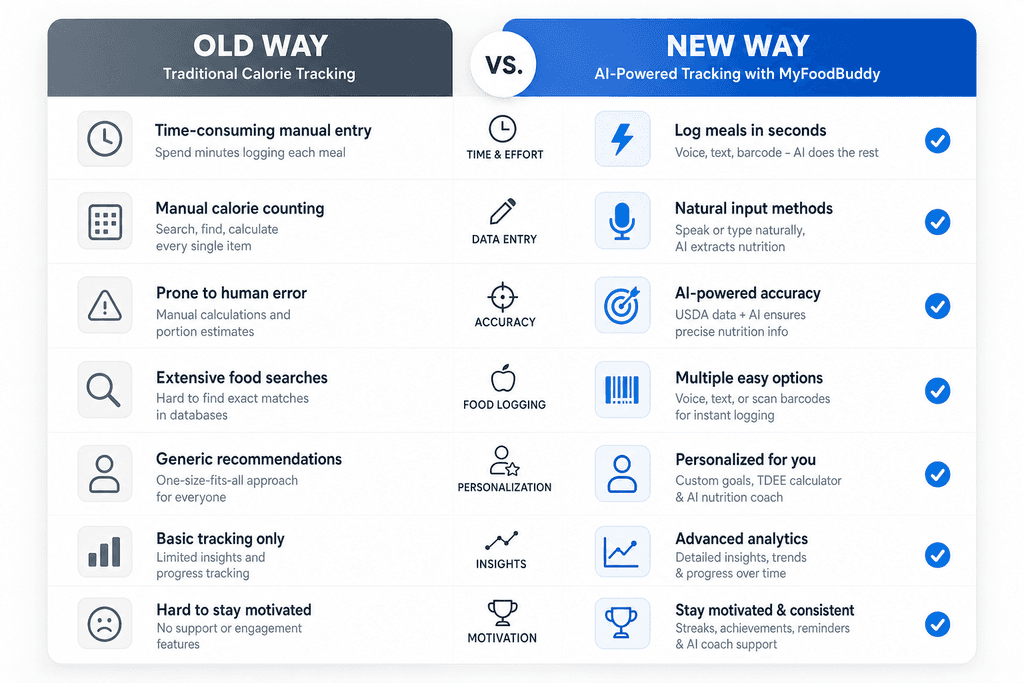
The Old Way of Tracking Meals
Traditional fitness pal apps made you work for every calorie count. You'd spend several minutes per meal just trying to find the right food item in a database with thousands of entries.
- Searching through endless food databases to find exact matches
- Weighing and measuring every ingredient separately
- Manually calculating portion sizes and serving amounts
- Entering each food item one by one into the app
- Spending 5-10 minutes logging a single meal
The whole process felt like a part-time job. Many people found themselves avoiding certain foods just because they were too complicated to log.
How AI Changed the Game
New apps use artificial intelligence to understand what you ate without all the manual work. Instead of searching databases, you just tell the app what you had for lunch in plain English. Voice logging has cut meal entry time from several minutes down to just seconds, making it actually possible to stick with tracking long-term.
- AI understands natural language like "chicken breast with rice and broccoli"
- Automatic extraction of nutritional data from simple descriptions
- Voice input that works while you're still eating
- Smart recognition of common meals and portion sizes
Apps like MyFoodBuddy use this AI approach to let you log meals by just saying what you ate. The technology handles all the database searching and calculation work behind the scenes.
What Makes Modern Tracking Different
The biggest shift isn't just about speed. Modern apps connect your food intake with sleep patterns, activity levels, and other health metrics to give you a complete picture. Integration with health data means you're not just counting calories in isolation anymore.
| Feature | Traditional Apps | AI-Powered Apps |
|---|---|---|
| Meal Entry Method | Manual database search | Voice or text input |
| Time Per Meal | 5-10 minutes | 10-30 seconds |
| Portion Calculation | Manual measurement required | AI estimates from description |
| Health Integration | Limited or none | Syncs with activity and sleep |
| Learning Curve | Steep, requires training | Minimal, conversational |
This shift matters because the easier something is to do, the more likely you'll actually keep doing it. When tracking takes seconds instead of minutes, it stops being a burden and becomes a simple habit.
Setting Up Your Fitness App for Success
Most people jump into calorie tracking apps and start logging food without setting up their goals properly. This is like trying to drive somewhere without knowing the destination. Before you log a single meal, you need to figure out how many calories your body actually needs each day. This number is called your Total Daily Energy Expenditure or TDEE, and it's different for everyone based on your age, weight, height, and how active you are. Getting this number right makes the difference between seeing results and spinning your wheels for months.
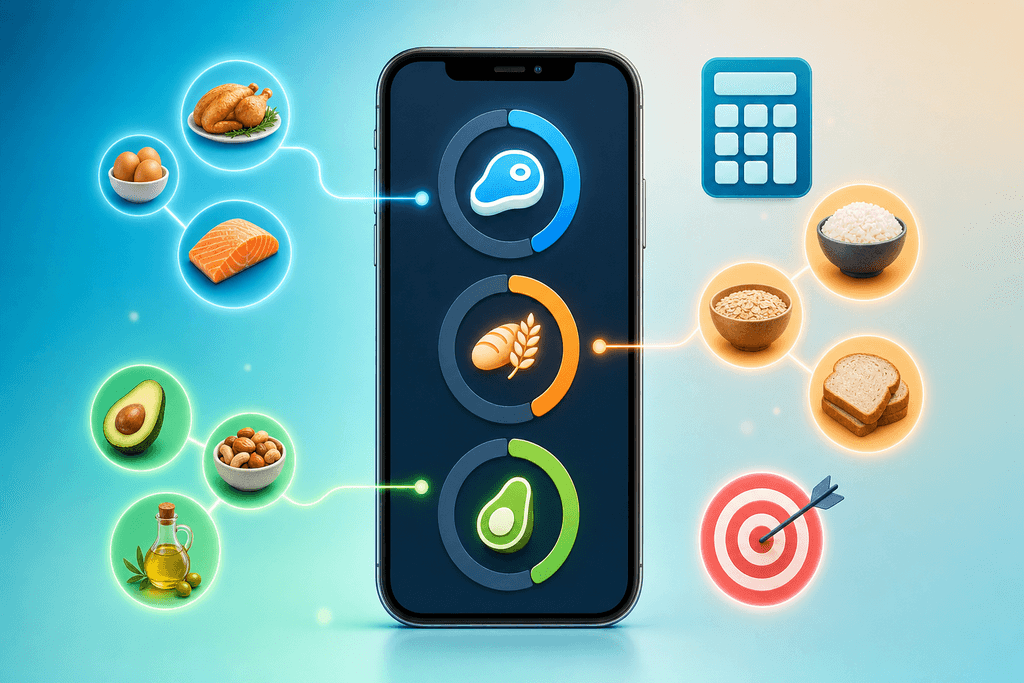
MyFoodBuddy includes a TDEE calculator that does the math for you. Once you know your maintenance calories, you can set a realistic deficit for weight loss. Most experts recommend cutting 300-500 calories per day for steady, sustainable fat loss.
Quick Setup Checklist
- Calculate your TDEE using the built-in calculator
- Set your calorie goal at 300-500 below maintenance for weight loss
- Choose your macro split based on your lifestyle (40% carbs, 30% protein, 30% fat is a good starting point)
- Enable notifications for meal reminders if you tend to forget to log
- Sync with Apple Health to track activity and adjust calories automatically
The macro split matters more than most people think. If you're active and work out regularly, you'll want more protein to maintain muscle while losing fat. A good rule is to aim for 0.7 to 1 gram of protein per pound of body weight. The rest of your calories can come from carbs and fats based on what keeps you feeling full and energized.
The Fastest Ways to Log Your Meals
The biggest reason people quit tracking their food is because it takes too long. Traditional apps make you search through databases, adjust serving sizes, and tap through multiple screens just to log a simple meal. This is where voice logging changes everything. Instead of spending five minutes finding the right entry for your breakfast, you just say "two eggs scrambled with cheese and toast" and the AI figures out the rest. Voice logging takes about 10 seconds compared to 2-3 minutes of manual entry.
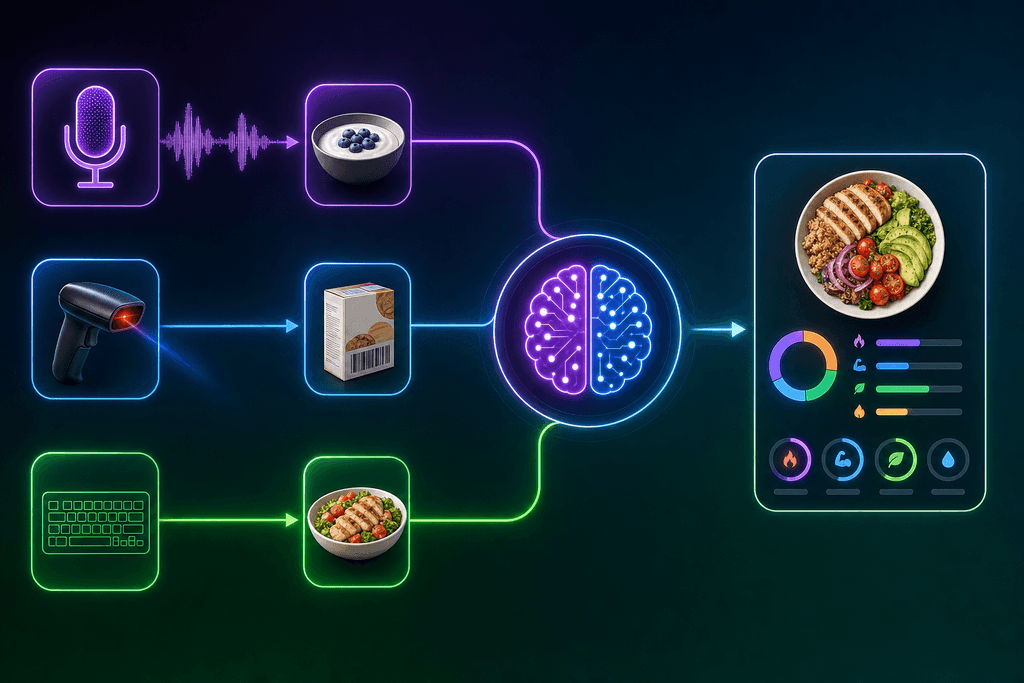
MyFoodBuddy's AI understands natural language, so you don't need to speak like a robot. You can say things like "chicken breast with rice and broccoli" or "protein shake with banana" and it extracts the nutritional data automatically using USDA information.
| Logging Method | Time Required | Best For |
|---|---|---|
| Voice Input | 10 seconds | Home-cooked meals |
| Barcode Scan | 5 seconds | Packaged foods |
| Saved Meals | 2 seconds | Repeat meals |
| Manual Entry | 2-3 minutes | Complex recipes |
For packaged foods, barcode scanning is your best friend. Point your camera at the barcode and the app pulls up the exact nutrition info in seconds. But the real time-saver is creating saved meals for things you eat regularly. If you have the same breakfast most days, log it once and then just tap to add it again. One tap beats typing or talking every single time.
When describing mixed meals to the AI, be specific about cooking methods and portions. Instead of saying "chicken," say "grilled chicken breast, palm-sized portion." The more detail you give, the more accurate your tracking becomes. You can learn more about fast meal logging techniques that work for busy schedules.
Tracking Macros Without Losing Your Mind
Here's something nobody tells you about macro tracking: you don't need to hit your numbers perfectly every single day. The people who succeed with tracking are the ones who aim for 80% accuracy and consistency instead of 100% perfection. If you're within 5-10 grams of your protein goal and roughly on target with carbs and fats, you're doing great. Obsessing over every single gram is a fast track to burnout and giving up entirely.
The real skill in macro tracking is learning to estimate portions when you can't weigh your food. A palm-sized portion of protein is about 3-4 ounces. A fist of carbs like rice or pasta is roughly one cup. Your thumb is about a tablespoon of fats like peanut butter or oil.
Flexible vs Strict Tracking
| Approach | Pros | Cons |
|---|---|---|
| Strict Daily | Maximum accuracy | High stress, hard to maintain |
| Weekly Average | More sustainable, less stress | Requires patience |
Restaurant meals are where most people panic, but they're easier to handle than you think. Most chain restaurants have nutrition info available online. For local spots, make your best guess and add 20% more calories than you estimate because restaurants use more oil and butter than you do at home. It's better to slightly overestimate than to not log at all.
MyFoodBuddy's AI coach Fiona can spot patterns in your eating that you might miss. Maybe you're consistently low on protein on weekends, or your energy crashes when carbs drop too low. These insights help you adjust your approach without overthinking every meal. Check out what to track for actual results beyond just calories.
The key is to track your weekly averages instead of stressing about daily perfection. If you go over your calories on Saturday, you can balance it out by being slightly under on Sunday and Monday. Your body doesn't reset at midnight. What matters is the overall trend over weeks and months, not whether you hit exactly 150 grams of protein on Tuesday.
If you're looking for better alternatives to traditional tracking apps, the combination of voice logging and AI analysis makes the whole process feel less like homework and more like a quick daily habit.
Why Traditional Fitness Apps Make You Quit
Studies show that 80% of people who start using a traditional app fitness pal abandon it within the first month. The reason isn't lack of motivation or willpower. It's the app itself. When you need to spend five minutes searching through databases, weighing food, and manually entering every ingredient in your lunch, tracking becomes a chore instead of a habit. Your brain starts associating meal logging with stress, and eventually you just stop opening the app altogether.
The Friction That Kills Your Progress
Traditional calorie tracking apps were built around databases, not around how people actually eat. You end up spending more time logging your meal than you did eating it. Research shows a clear pattern in user behavior.
- Apps requiring more than 30 seconds per meal entry see 70% dropout rates within two weeks
- Users who spend less time logging have 3x better long-term retention
- The average person quits after logging just 12 meals when using database-heavy apps
- Voice-based logging reduces entry time by 85% compared to manual search methods
The math is simple. If breakfast takes three minutes to log, lunch takes four, and dinner takes five, you're spending 12 minutes daily just on data entry. That's 84 minutes per week doing something that feels like homework.
What Actually Keeps People Tracking
Speed matters more than perfection when building a tracking habit. Apps like MyFoodBuddy let you speak what you ate and move on with your day. The AI handles the nutrition breakdown while you're already doing something else.
- Streak tracking creates daily accountability without feeling pushy
- Visual progress charts show patterns you'd miss in raw numbers
- Achievement systems reward consistency over perfection
- Health data integration provides context beyond just calories
Real Users, Real Differences
Before switching: "I'd open MyFitnessPal, search for 'chicken breast,' scroll through 47 options, guess the portion size, then repeat for every side dish. By day three I'd just skip logging dinner." - JakeVdub608
After switching: "Switching to foodbuddy has been great and much more convenient. I like just being able to say what I've eaten and it calculates all the calories for me." - JakeVdub608
The pattern: "Really takes the pain out of tracking calories! Finally, a calorie tracking app that is easy to use and helps me stick to my goals." - Eknop232
Why Integration Changes Everything
When your app fitness pal connects with your sleep data, step count, and workout logs, something interesting happens. You start seeing how everything connects. Poor sleep leads to higher calorie days. More steps mean you can eat more without gaining weight.
- Apple Health sync provides automatic activity tracking
- AI coaches like Fiona analyze patterns across multiple health metrics
- Accountability increases when the app knows your full health picture
The apps that win aren't the ones with the biggest food databases. They're the ones that respect your time and make tracking feel effortless instead of exhausting.
Your Next Steps to Easier Meal Tracking
Tracking your meals doesn't have to feel like a second job. The biggest difference between apps like the old app fitness pal approach and newer options comes down to how much time you spend logging. When you can just say what you ate instead of searching through endless food databases, you're way more likely to stick with it. That's the whole point, because consistency beats perfection every single time when you're trying to lose weight.
The right app should match how you actually live your life. If you're always on the go, voice logging makes sense. If you eat a lot of packaged foods, barcode scanning helps. MyFoodBuddy handles both of these, plus it learns what you eat regularly so you can log meals in seconds.
Here's what matters most when you start:
- Pick an app that won't slow you down
- Try the voice features even if they feel weird at first
- Don't stress about getting every single calorie perfect
- Give it at least two weeks before deciding if it works for you
The truth is, tracking gets easier the more you do it. Your brain starts remembering portion sizes better. You figure out which meals to save as favorites. The whole process becomes almost automatic, but only if the app doesn't fight you every step of the way.
If you've been putting off tracking because other apps felt too complicated, there are simpler options now that actually respect your time. The question isn't whether tracking works for weight loss, it's whether you'll find a method simple enough to keep doing it.
Common Questions About Meal and Macro Tracking
Tracking your food can feel overwhelming at first, especially when you're not sure if you're doing it right. Most people have the same questions when they start using an app fitness pal or any calorie tracking tool. Here are the answers to help you track with confidence and actually stick with it long enough to see results.
How accurate are AI-powered nutrition estimates?
AI-powered estimates are typically accurate within 10-15% of actual values, which is good enough for most tracking purposes. The technology uses USDA databases and machine learning to recognize foods and portion sizes from your descriptions. MyFoodBuddy combines AI with verified nutrition data to give you reliable estimates without the hassle of weighing every ingredient.
Do I need to track every single meal and snack?
You don't have to be perfect, but consistency matters more than you think. Tracking most of your meals (aim for 80-90%) gives you enough data to spot patterns and make progress. The meals you skip logging are usually the ones that matter most, like that handful of chips or the coffee creamer that adds up throughout the day.
What's the difference between tracking calories vs macros?
Calories tell you how much energy you're eating, while macros (protein, carbs, and fat) show you where those calories come from. Tracking just calories works fine for basic weight loss, but paying attention to macros helps you maintain muscle, feel fuller longer, and have better energy levels. Most app fitness pal tools let you track both at the same time anyway.
How long does it take to see results from tracking?
Most people notice changes within 2-4 weeks of consistent tracking. The first week is usually just learning your actual eating patterns, which can be eye-opening on its own. Real physical changes take longer, but you'll start feeling more in control of your eating habits almost immediately once tracking becomes a quick daily habit.
Can I still eat out and track my food?
Yes, and it's easier than you think with modern tracking tools. You can estimate restaurant meals by describing what you ate in plain language, like "chicken burrito with rice and cheese." Apps like MyFoodBuddy let you just say what you ate out loud, and the AI figures out the nutrition for you in seconds.
Is voice logging as accurate as manual entry?
Voice logging gives you the same accuracy as manual entry because it's using the same nutrition databases. The difference is speed—saying "two eggs and toast with butter" takes 3 seconds versus a minute of searching and selecting items. The best tracking method is the one you'll actually use every day, and voice logging removes the friction that makes people quit.
Ready to start tracking smarter?
Download MyFoodBuddy and start tracking your calories by just saying what you ate. No more searching databases or guessing portions.
Get started