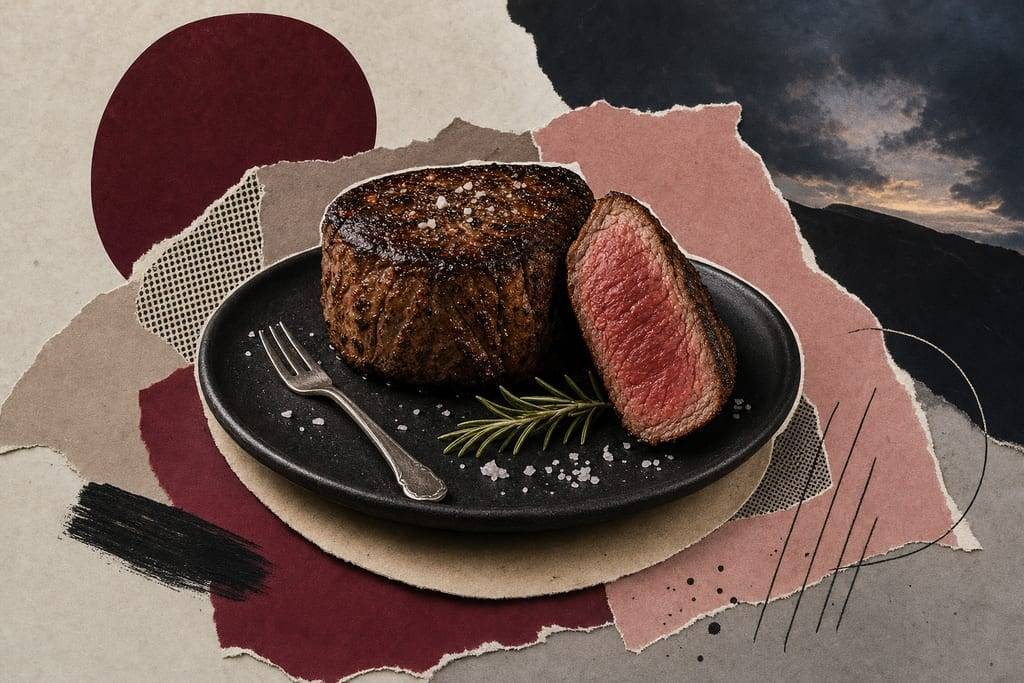
Filet Mignon Nutrition Facts for a 6 Oz Serving
6 oz filet mignon nutrition info: around 330 calories and 48g protein. Get the full macro breakdown, raw vs cooked weight, and faster steak logging.
If you want the 6 oz filet mignon nutrition info before you log dinner, a cooked, fully trimmed serving runs about 330 calories, 48g of protein and 14g of fat, based on USDA FoodData Central figures for broiled beef tenderloin, lean only, trimmed to 0 inch fat (170g). That protein-to-calorie ratio makes filet one of the leanest cuts on a steakhouse menu, which is why it fits so well into a cut. The catch is that trim level, whether you weighed the steak raw or cooked, and any butter the kitchen finished it with will push that number up.
Table of Contents
6 Oz Filet Mignon Calories, Protein and Fat
The trim level is the first thing that moves the number. A lean-only portion and a lean-plus-fat portion of the same cut are two different entries in USDA FoodData Central, and the gap is worth knowing before you log.
| Per 6 oz (170g), broiled | Lean only | Lean plus fat |
|---|---|---|
| Calories | 330 | 410 |
| Protein | 48g | 45g |
| Total fat | 14g | 24g |
| Saturated fat | 5g | 9g |
| Cholesterol | 140mg | 140mg |
Plain beef is naturally low in sodium, around 100mg for the serving, so almost everything on a steakhouse plate comes from the salt and sauce. On the micro side, that same portion delivers roughly 5mg of iron, 8mg of zinc and well past a full day of B12.
A 6 oz filet carries zero carbs and zero sugar, so the entire entry is protein and fat. Figures come from USDA FoodData Central for beef tenderloin, scaled to 170g. Nutrition checked: November 2026. Grade, trim and seasoning all shift the totals.
Raw or Cooked, Which 6 Oz Are You Eating
Steak loses water and rendered fat on the grill, usually around 25 percent of its starting weight. An 8 oz raw filet typically plates out near 6 oz cooked, which means the cooked portion is the denser one, ounce for ounce.
Six ounces raw and six ounces cooked are not the same amount of food. Match the USDA label to the state you actually weighed the meat in, because each entry says raw or cooked right in the name.
- Weigh raw and log raw, or weigh cooked and log cooked. Never mix the two.
- Expect a well-done filet to shrink more than a rare one from the same starting weight.
- If you weighed raw but want the cooked entry, subtract about a quarter of the raw weight.
- Use a kitchen scale. A thick medallion looks smaller than a flat one at the same weight.
Eyeballing a steak is where most people lose 100 calories in either direction, the same way portion guesses skew a hamburger calorie count.
What Butter, Bacon and the Steakhouse Add
Everything the kitchen finishes the steak with stacks on top of the base number. The steak is rarely the problem, the finish is, since fat carries 9 calories per gram and a single pat of compound butter is nearly all fat.
- Compound butter pat, about 1 tablespoon: roughly 100 calories, 11g fat.
- Bacon wrap, one slice: roughly 45 calories, 3.5g fat.
- Pan-sear in oil or butter: count what the meat absorbed, not what stayed in the pan.
- Menu weights are usually pre-cooked, so an 8 oz restaurant filet is closer to 6 oz on your plate.
That is four separate database lookups for one dinner, before you even get to the asparagus. Saying "six ounce filet mignon with garlic butter and asparagus" into foodbuddy pulls the macros from USDA data in a few seconds, which is the difference between logging the meal and skipping it.
If you ask the kitchen to hold the butter, say so when you log it. A dry-seared filet and a basted one are not the same entry.
Put Tonight's Steak in the Log Before You Order Sides
Do one thing at dinner tonight: get the steak on a scale after it comes off the heat, or take the menu weight and knock off a quarter for shrink. Then log it in a single entry with whatever the kitchen put on top, not as three separate guesses later. Once that number is down, you still have room to pick your sides instead of apologising for them. Speaking the whole plate into foodbuddy takes a few seconds, and the 7-day trial is free, $39 a year after, cancel anytime.
More About Your 6 Oz Filet
Is a 6 oz filet mignon leaner than a 6 oz ribeye or New York strip?
Yes. Ribeye carries the most intramuscular fat of the three, so it lands highest in calories at the same weight. New York strip sits in the middle, with a fat cap you can trim off before cooking. Filet has the least marbling, which is why it comes out ahead on protein per calorie.
Does USDA Prime beef have more calories than Choice or Select at the same weight?
Yes, a little. USDA grades beef mostly on marbling, the flecks of fat inside the muscle. Prime has the most, Select the least, and fat carries more than twice the calories of protein per gram. A Prime filet still stays lean compared with other cuts, but it will log slightly higher than a Select one.
Does sous vide or reverse searing change the calories compared with grilling?
No, not in any real way. The protein and fat in the meat stay put. What changes is water loss, so a sous vide steak holds more moisture and weighs more coming out than a grilled one from the same raw steak. Count the butter or oil you add, not the method.
Ready to start tracking smarter?
Download MyFoodBuddy and start tracking your calories by just saying what you ate. No more searching databases or guessing portions.
Get started