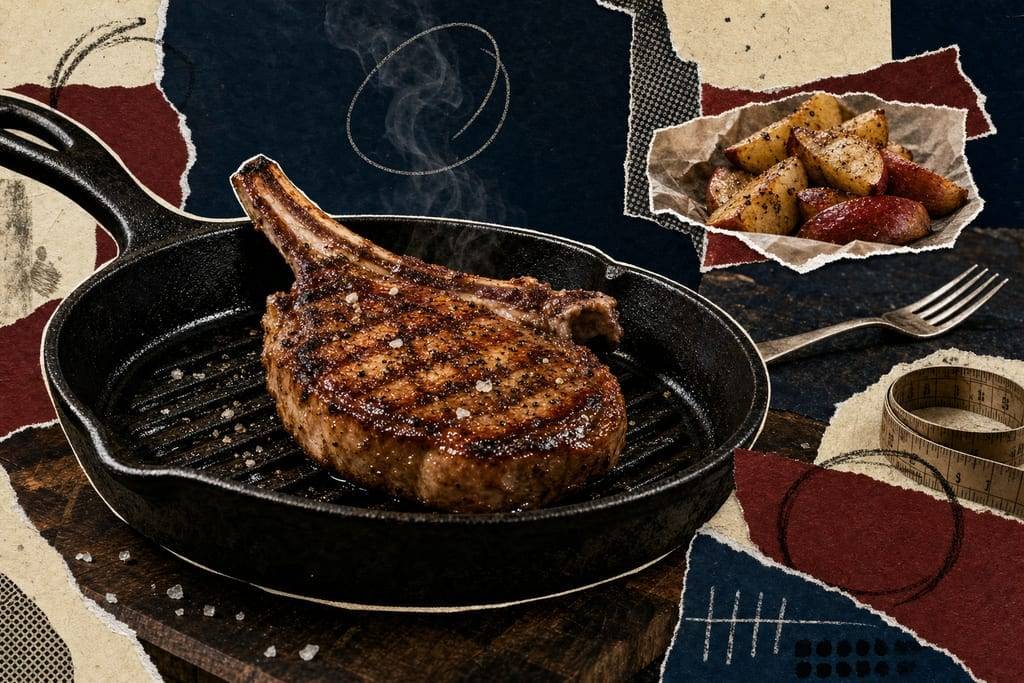
Bone-In Pork Chop Calories and Macros by Serving Size
Bone-in pork chop calories and macros by serving size, from 3 oz to a full chop, plus how to handle bone weight so your log stays accurate.
Bone-in pork chop calories land at about 211 for a 3 ounce (85 g) cooked portion, broiled, with the lean and fat eaten, according to USDA FoodData Central. That number counts the meat you actually eat, not the bone left on your plate, which is why a chop that weighs 5 ounces raw can still log as a 3 ounce serving. Nutrition checked: November 2026. USDA lists separate entries for rib, sirloin and blade chops, and for broiled versus pan-fried, so the cut and the pan matter more than most people expect.
Table of Contents
Bone-In Pork Chop Calories From 3 oz to a Full Chop
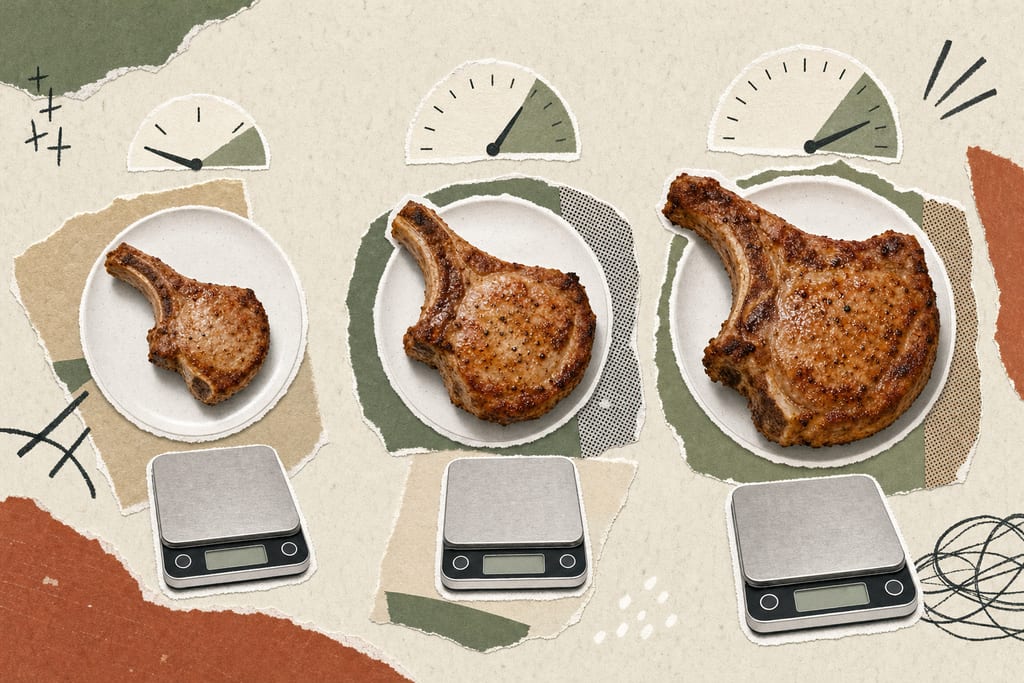
Portions scale in a straight line, so once you have the per-100-gram figure you can size any plate. The numbers below come from the USDA FoodData Central entry for pork loin chop, bone-in, lean and fat, broiled, and they count edible meat only.
| Cooked portion | Calories | Protein | Fat |
|---|---|---|---|
| 85 g (3 oz) | 211 | 23 g | 13 g |
| 100 g | 248 | 27 g | 15 g |
| 113 g (4 oz) | 280 | 31 g | 17 g |
| 170 g (6 oz) | 422 | 46 g | 26 g |
Carbs are 0 g on a plain chop, so every calorie here comes from protein and fat. A 6 ounce serving clears 46 grams of protein, which handles most dinner targets in one piece of meat.
Pick the FoodData Central line that matches your cut, center loin, center rib or sirloin, and the way you cooked it. Trim level and brand move the fat grams, and lean-only versions of each cut are listed separately.
The Bone Is Messing Up Your Numbers
Bone and connective tissue have zero calories, but they still sit on the scale. Weigh a whole chop at 8 ounces and log 8 ounces of meat, and you have just invented a couple hundred calories that never reached your mouth.
Raw weight off the package is not cooked weight either. Meat loses water as it cooks and can shrink by a quarter or more, so the two figures are not swappable in a log.
Here is the order that gets you a clean number:
- Cook the chop, then cut the meat off the bone before you weigh anything.
- Put only the meat you plan to eat on the scale, in grams.
- If you prefer weighing raw, record the raw weight first, then weigh the bare bone after dinner and subtract it.
- Write the edible weight down next to the cut name and reuse it for the same chop size.
Run that once and the rest of your pork dinners become one-tap entries, which is most of what tracking calories and protein efficiently comes down to.
How Cooking Changes a Pork Chop's Macros
A plain broiled or grilled chop is the baseline, and everything that hits the pan stacks on top of it. Using USDA figures for the extras, here is what common additions cost:
- Olive oil, 1 tablespoon: about 119 calories, all fat.
- Butter, 1 tablespoon: about 102 calories.
- Dry breadcrumb coating, 2 tablespoons: about 53 calories plus whatever oil it soaks up.
- Barbecue sauce, 2 tablespoons: about 58 calories, mostly sugar.
Breaded and pan-fried chops also pick up carbs, which the plain version never has. If you cut the fat rim off before eating, log the lean-only entry instead, since that line drops several grams of fat per serving.
Getting all of that into a log is the annoying part, so with foodbuddy you can just say "6 ounces of grilled bone-in pork chop with a tablespoon of olive oil" and the macros come back from USDA data. The same trick works for the rest of your calorie counting for homemade meals, where the oil and sauce usually go unrecorded.
Weigh One Chop Tonight and Save the Number
Pull the meat off the bone at dinner tonight, set it on a gram scale, and log that weight. One minute of work gives you a figure you can trust for every chop of that size you buy. Save it under the cut name so the next one takes a single tap instead of a fresh guess. Do that for the five or six meals you actually repeat and your log stops being a chore. The app is free for 7 days, then $39 a year, and you can cancel anytime.
Pork Chop Questions We Get
How do I log a bone-in pork chop at a restaurant when I can't weigh it?
Estimate from the menu description and the plate. Menus don't always list the raw or cooked weight, so treat any portion as an estimate rather than an exact figure. Add a tablespoon of butter or oil, since kitchens finish chops in fat almost every time. Round up when you are unsure, and log your meal in the app so you can adjust the entry later if you find the restaurant's own nutrition information.
Does brining or marinating a pork chop overnight change its calories?
A plain salt-water brine adds no calories, just sodium and water weight. Sugar brines and bottled marinades are different, because some of that sugar and oil stays on the meat, though the exact amount absorbed varies. Dry rubs are close to zero.
Does a bone-in pork chop give me more protein per calorie than a chicken breast?
No, skinless chicken breast wins on protein per calorie because it carries far less fat. A plain pork chop is still a solid protein source, and trimming the fat rim narrows the gap a lot. Pick pork when you want the taste and have the calories, chicken when the budget is tight.
Ready to start tracking smarter?
Download MyFoodBuddy and start tracking your calories by just saying what you ate. No more searching databases or guessing portions.
Get started