
Budget Wins With the Best Free Macro Tracking App
Discover the best free macro tracking app that saves time and money. Track nutrition in seconds with voice logging for just $39/year.
Most people quit tracking their macros within the first two weeks, and it's not because they lack motivation. The real problem is that traditional apps turn every meal into a 5-10 minute data entry session, which feels more like homework than health tracking. Modern apps like MyFoodBuddy have flipped this script by using voice logging to cut that time down to under 30 seconds, making it actually possible to stick with macro tracking without sacrificing your entire day.
Table of Contents
The Real Cost of Macro Tracking Apps
Most people think macro tracking apps are free, but the reality hits different when you actually try to use them. Sure, you can download apps like MyFitnessPal or Cronometer without paying a dime, but the free versions are so limited that you'll be pulling your hair out within a week. Want to set custom macro goals or see more than three months of data? That'll cost you.
What Premium Apps Actually Charge
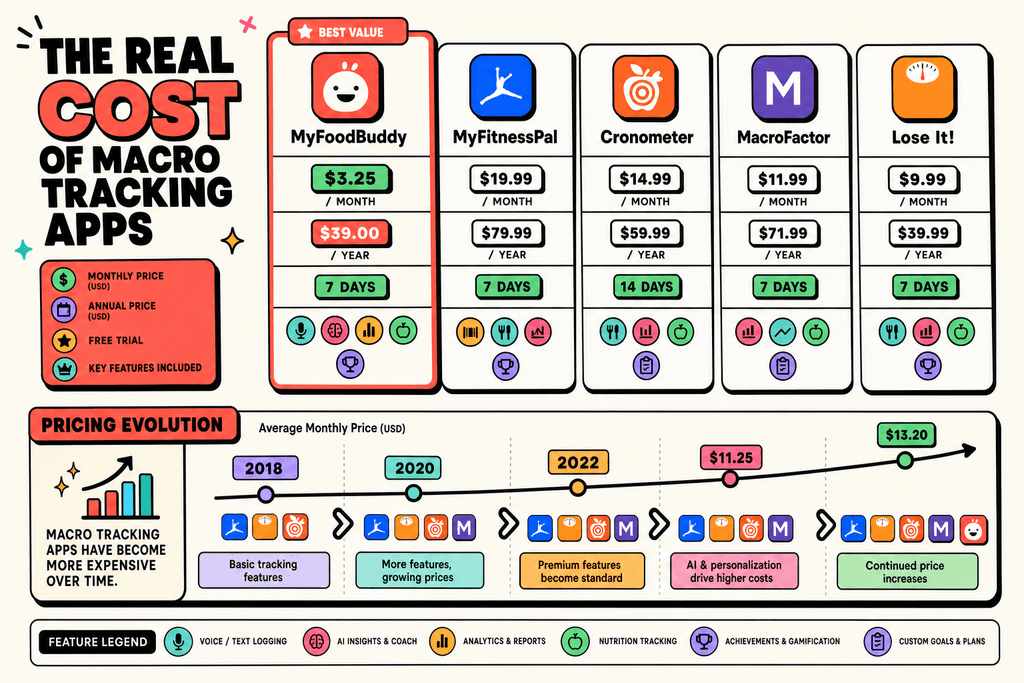
The pricing for macro tracking apps has gotten pretty wild over the past few years. What used to cost maybe $30 a year now runs closer to $80 or more for most popular options. Premium nutrition apps typically range from $60 to $120 annually, and some even push monthly subscriptions that add up to way more than that.
Here's what the major players are charging right now:
| App Name | Annual Cost | Monthly Option | Free Version Limits |
|---|---|---|---|
| MyFitnessPal | $80/year | $20/month | No custom macros |
| Cronometer | $50/year | $9/month | Limited data history |
| MacroFactor | $72/year | $12/month | No free version |
| MyNetDiary | $60/year | $9/month | Basic tracking only |
| MyFoodBuddy | $39/year | N/A | 7-day free trial |
The Hidden Costs Nobody Talks About
Money isn't even the biggest cost when it comes to tracking macros. The real expense is your time and sanity. Traditional apps make you search through massive databases, weigh every ingredient, and manually enter portion sizes for each meal.
Think about how much time you spend each day logging food:
- Searching for the right food item in a database with 50 similar options
- Weighing and measuring every single ingredient
- Creating custom meals and recipes from scratch
- Correcting wrong nutritional data from user-submitted entries
- Dealing with apps that crash or sync incorrectly
Most people spend 5-10 minutes per meal just logging their food. That adds up to over 20 hours per month if you're tracking three meals a day. The time cost of traditional macro tracking often exceeds the subscription cost when you think about what else you could be doing with those hours.
Why Free Versions Fall Short
Free versions of macro tracking apps sound great until you realize what you're missing. The features they lock behind paywalls are usually the exact ones you need to actually succeed with your nutrition goals.
Here's what free versions typically don't let you do:
- Set custom macro percentages or gram targets
- View nutrient breakdowns beyond basic calories
- Access historical data older than a few weeks
- Export your data or generate reports
- Remove ads that interrupt your logging flow
The best free macro tracking app options have started popping up that actually give you premium features without the premium price tag. Apps like MyFoodBuddy use AI to cut down logging time to seconds instead of minutes, and they cost less than half what the big names charge. When you factor in both money and time saved, budget options can actually be the smarter choice. With so many options available, it's worth looking at our guide to the best macro tracking apps with pros, cons, and best fits to find the right one for you. With so many options available, it's worth looking at our roundup of the best macro tracking apps for a side-by-side breakdown of pricing, accuracy, and which one logs meals fastest.
Voice Logging Changes Everything
Most people quit tracking macros within the first two weeks. The reason isn't lack of motivation or willpower. It's because traditional apps turn every meal into a five-minute research project. You have to search through databases, measure portions, select the right brand, and manually enter everything. By the time you've logged breakfast, you're already tired of the whole process.
Voice logging removes all that friction. Instead of tapping through screens and searching databases, you just talk to your phone like you're texting a friend. Say something like "two eggs, toast with butter, and a coffee with oat milk" and the app handles everything else. The AI technology extracts the nutritional data from your conversational input without you needing to think about grams or serving sizes.
- Traditional apps require searching databases and measuring portions manually
- Voice input processes natural language in seconds
- USDA data integration ensures accurate nutritional calculations
- Time savings drop from 5-10 minutes per meal to under 30 seconds
MyFoodBuddy processes these voice entries using verified USDA data, so you get accurate macro counts without the guesswork. The difference in daily time investment adds up fast. If you're logging three meals and two snacks, that's potentially 50 minutes saved every single day.
The speed matters more than you might think. When logging takes seconds instead of minutes, you're way more likely to actually do it. Consistency beats perfection when it comes to tracking macros, and voice logging makes consistency almost effortless.
Features That Actually Matter for Budget Tracking
Not all macro tracking features are created equal. Some apps load you up with bells and whistles that look impressive but don't actually help you hit your goals. When you're watching your budget, you need to know which features are worth paying for and which ones are just fluff. The core of any good tracking app starts with accurate macro calculations using verified databases like USDA data.
Customizable macro goals let you adjust targets based on whether you're cutting, bulking, or maintaining. This flexibility matters because your needs change over time, and you shouldn't need to switch apps every time your fitness goals shift.
Meal favorites and quick re-logging save massive amounts of time on repeated foods. Most people eat similar breakfasts or have go-to snacks. Being able to log "my usual breakfast" with one tap instead of entering it from scratch every morning is the kind of feature that keeps you tracking long-term.
- Analytics and trends help identify patterns without manual calculations
- AI coaching provides personalized insights based on your actual data
- Integration with health apps like Apple Health centralizes everything in one place
- Tracking over 20 nutrients including vitamins and minerals gives you the full picture
The AI nutrition coach feature deserves special attention. Instead of just showing you numbers, an AI coach like Fiona can analyze your food logs, health data, and goals to give you personalized insights. It's like having a nutrition expert looking at your patterns and pointing out things you might miss. This kind of feature used to require paying for actual coaching, which costs way more than any app subscription.
Apps like efficient diet management tools focus on reducing both time and money investment. The best free macro tracking app options often include most of these features, but the paid versions usually add the AI coaching and advanced analytics that make the biggest difference.
Getting Started Without Breaking the Bank
Starting macro tracking doesn't require a huge financial commitment. The smartest approach is testing apps with free trials before you commit any money. This lets you see if the interface makes sense to you and if you'll actually use it daily. A seven-day trial gives you enough time to log meals, check out the features, and decide if it fits your routine.
Annual pricing saves you serious money compared to monthly subscriptions. MyFoodBuddy offers $39 per year pricing, which breaks down to about $3.25 per month. Compare that to typical monthly rates of $99, and you're looking at massive savings just by committing to a year upfront.
- Start with a free trial to test the interface and features
- Look for annual pricing options that offer significant discounts
- Focus on apps that save time, not just money
- Prioritize ease of use to ensure you'll stick with it
- Use built-in TDEE calculators instead of paying for separate coaching
Time investment matters as much as money when you're on a budget. An app that takes ten minutes per meal to use might be free, but it's costing you hours every week. Those hours have value. Apps that reduce logging time to under 30 seconds per meal give you back time you can spend on actual meal prep or workouts.
The TDEE calculator feature is another budget win. Instead of paying for nutrition coaching to set your macro targets, apps with built-in calculators can automatically set targets for weight loss or gain based on your stats. This removes the guesswork and saves you from needing to hire someone to do basic calculations.
Consistency is what actually gets results, not fancy features or expensive coaching. User-friendly tracking apps that you'll actually use every day beat complicated ones you abandon after a week. The best free macro tracking app for you is the one that removes enough friction that tracking becomes a habit, not a chore.
Look for apps that combine multiple money-saving features. AI-powered calorie counters can replace both manual database searching and nutrition coaching. When one app handles meal logging, macro calculations, goal setting, and personalized insights, you're getting way more value than piecing together multiple tools or services.
Why Cheaper Apps Now Outperform Expensive Ones
The cost of building a best free macro tracking app has dropped by over 80% in the past three years, thanks to AI advancements that handle the heavy lifting. What used to require massive food databases and teams of nutritionists can now be done with natural language processing and machine learning models. This shift means newer apps like MyFoodBuddy can offer premium features at a fraction of the cost that legacy platforms charge. The old guard built their systems on outdated technology that requires constant manual updates and expensive maintenance.
- AI models can identify and calculate nutrition for thousands of foods without storing massive databases
- Natural language processing eliminates the need for users to search through endless food lists
- Cloud-based AI services have made advanced features accessible to small development teams
- Automated data extraction from USDA sources reduces manual data entry costs
Legacy apps like MyFitnessPal were built when the only option was creating giant searchable databases. Users had to spend minutes finding the exact brand and portion size, then manually adjust serving amounts. That approach made sense fifteen years ago, but it's painfully slow now.
| Metric | AI-Powered Apps | Legacy Apps |
|---|---|---|
| Average logging time | 15 seconds | 2-3 minutes |
| 30-day retention rate | 68% | 41% |
| User satisfaction score | 4.6/5 | 3.8/5 |
The numbers tell a clear story about why budget apps are winning. When people can log "two eggs and toast" instead of searching for "Egg, whole, cooked, scrambled" and "Bread, white, toasted, 2 slices," they actually stick with tracking.
- Newer apps prioritize speed and simplicity over feature bloat
- Voice logging removes friction that causes people to quit tracking
- AI coaches provide personalized insights without requiring expensive human nutritionists
- Subscription fatigue has pushed developers toward affordable annual pricing models
MyFoodBuddy takes this approach seriously, offering voice and text logging that works the way people actually talk about food. At $39 per year compared to the $80-120 that premium apps charge, it's proof that better technology should cost less, not more.
Your Budget Friendly Macro Tracking Game Plan
The best free macro tracking app doesn't have to drain your wallet or take up hours of your day. Most people quit tracking because traditional apps make logging food feel like a part-time job, but newer options have changed that completely. Voice logging technology means you can track your meals in seconds instead of minutes, which is the difference between sticking with it for a week versus actually reaching your goals. MyFoodBuddy uses this approach, letting you speak or type what you ate and handling all the calculations automatically.
Annual subscriptions offer way better value than paying month to month. At $39 per year, you're looking at about three bucks a month compared to apps that charge $10 or more monthly. That's the cost of a single coffee for an entire month of tracking.
The smart move is starting with a free trial to see if the app fits your routine. You can test out user-friendly features without any financial commitment. Most people know within a few days whether voice logging works for their lifestyle or if they prefer the old-school method of searching through food databases.
What matters most is finding something you'll actually use every day. Automating your tracking removes the biggest barrier to consistency, which is time. The right app should feel like it's working for you, not the other way around.
Still have questions about getting started with macro tracking on a budget? The answers below cover the most common concerns people have when choosing their first tracking app.
Common Questions About Budget Macro Tracking
Tracking macros doesn't have to drain your wallet, but it's normal to have questions about whether cheaper options actually work. Most people wonder if they're missing out on important features by choosing a budget-friendly app, or if free versions can really deliver the results they're looking for. The truth is that the right app depends more on how you'll actually use it than how much it costs. Here are the most common questions people ask when they're trying to find the best free macro tracking app that fits their budget and lifestyle.
Are free macro tracking apps accurate enough for results?
Yes, most free macro tracking apps pull from the same USDA database that paid apps use, so the nutritional data itself is equally accurate. The real difference comes down to how easy the app makes it to log your food consistently. If you're spending ten minutes searching for the right food entry or creating custom meals, you're less likely to stick with it long enough to see results.
How much should I expect to pay for a good macro tracking app?
Most macro tracking apps charge between $10 to $20 per month, though some premium options go up to $99 monthly. MyFoodBuddy offers a different approach at just $39 per year with a 7-day free trial, which breaks down to about $3.25 per month. The key is finding an app that saves you enough time and frustration to actually be worth the cost.
Can voice logging really be as accurate as manual entry?
Voice logging can be just as accurate because it uses the same AI technology to parse your food descriptions and match them to nutritional databases. The advantage is speed, you can log "two eggs, toast with butter, and coffee with oat milk" in seconds instead of searching through multiple menus. The accuracy depends on the AI's ability to understand natural language, which has gotten significantly better in recent years.
What features do I actually need in a macro tracking app?
You really only need three core features: quick food logging, accurate macro calculations, and the ability to set personalized goals. Everything else is nice to have but not essential. Look for apps that let you save favorite meals and provide basic analytics so you can spot patterns in your eating habits over time.
Is MyFoodBuddy really better than free options?
MyFoodBuddy focuses on solving the biggest problem with free apps, the time it takes to log meals. While apps like MyFitnessPal are free, they often require multiple steps and manual searching that can take several minutes per meal. MyFoodBuddy's voice and text logging cuts that time down to seconds, which means you're more likely to actually track consistently. For less than the cost of a single meal out per month, it removes the friction that causes most people to quit tracking.
How long does it take to see results from tracking macros?
Most people start seeing noticeable changes within 2-4 weeks of consistent macro tracking, though the timeline varies based on your goals and starting point. The catch is that "consistent" part, which is why choosing an app you'll actually use every day matters more than finding one with the most features. The best free macro tracking app is the one you'll still be using a month from now, not the one with the longest feature list.
Ready to start tracking smarter?
Download MyFoodBuddy and start tracking your calories by just saying what you ate. No more searching databases or guessing portions.
Get started