
My Fitness Basics for Tracking Food and Progress
Learn my fitness tracking basics for food logging, exercise, and progress. Simple strategies to reach your weight loss goals faster.
You've probably downloaded a food tracking app with the best intentions, logged every meal perfectly for a few days, then quietly gave up when it started taking ten minutes just to enter your breakfast. Studies show that most people abandon their my fitness tracking efforts within two weeks, not because they lack motivation, but because the process feels like a part-time job. The good news is that tracking your food and progress doesn't have to be complicated, and the right approach can actually help you stick with it long enough to see real results.
Table of Contents
What My Fitness Tracking Actually Means
Most people think "my fitness" just means hitting the gym a few times a week, but real fitness tracking is actually about three separate things working together. You've got what you eat, how you move, and whether any of it is actually working. The truth is, you can't out-exercise a bad diet, which is why food tracking sits at the foundation of everything else. Without knowing what's going into your body, you're basically guessing your way through weight loss.
The Three Parts of Fitness Tracking
Think of fitness tracking like a three-legged stool. If one leg is missing, the whole thing falls over. Here's what each part does for you:
- Food tracking shows you exactly how many calories you're eating each day
- Exercise tracking tells you how many calories you're burning through activity
- Progress tracking proves whether your current plan is working or not
- All three together give you the complete picture of your health journey
Apps like MyFitnessPal have been around for years doing this, but the problem is they make food tracking feel like homework. That's where tools like MyFoodBuddy come in, letting you just say what you ate instead of typing everything manually.
| Tracking Type | What It Measures | Why It Matters |
|---|---|---|
| Food Tracking | Calories and nutrients in | Controls your intake |
| Exercise Tracking | Calories burned | Shows your activity level |
| Progress Tracking | Weight and body changes | Proves what works |
Calories In Versus Calories Out
Weight loss really does come down to simple math. If you eat more calories than you burn, you gain weight. If you burn more than you eat, you lose weight. The hard part isn't understanding this concept, it's actually tracking both sides of the equation accurately enough to make it work.
Most people overestimate how much they exercise and underestimate how much they eat. That's just human nature. The only way to know for sure is to track everything, which sounds annoying until you find a system that makes it easy.
- Your body burns calories just existing (called your TDEE)
- Exercise adds extra calories burned on top of that
- Every food and drink you consume adds calories back in
- The difference between these numbers determines if you lose or gain weight
Why People Quit Tracking
Here's the thing nobody talks about. Most people stop tracking their food within two weeks. Not because they don't care about their goals, but because traditional apps make it take forever. Searching through databases, measuring portions, entering every ingredient separately - it adds up to 10-15 minutes per meal.
That's why newer apps focus on speed. When you can log a meal in 10 seconds by just saying what you ate, suddenly tracking doesn't feel like a chore anymore. The easier it is, the longer you'll stick with it, and consistency is what actually gets results.
Food Tracking That Actually Fits Your Life
Most people quit tracking their food within the first week, and it's not because they lack willpower. The problem is that traditional calorie counting apps turn every meal into a 10-minute research project. You have to search through massive databases, measure portions with a scale, select the right serving size from a dropdown menu, and then repeat this process three to five times a day. It's exhausting, and honestly, most of us don't have that kind of time when we're just trying to eat lunch.

The whole point of tracking should be to help you lose weight, not to become a part-time data entry clerk. That's where voice logging changes everything. Instead of typing and searching, you just say what you ate while you're cooking or right after you finish eating. The AI figures out the nutrition info from simple descriptions like "grilled chicken breast and brown rice" without you needing to specify exact gram measurements.
| Old-School Tracking | AI-Powered Tracking |
|---|---|
| Search food database | Speak or type naturally |
| Measure portions precisely | Estimate portions (close enough) |
| Select serving sizes | AI extracts nutrition automatically |
| 5-10 minutes per meal | 10-30 seconds per meal |
Here's something most fitness apps won't tell you: you don't need perfect accuracy to lose weight. Being roughly right is way better than being precisely wrong because you gave up after three days. If you eat the same breakfast most mornings, saved meals let you log it with one tap instead of entering everything again.
MyFoodBuddy uses AI to extract nutritional information from whatever you tell it, which means less time staring at your phone and more time actually living your life. The barcode scanner also helps when you're eating packaged foods, giving you instant data without the manual work. The goal isn't to become obsessed with every calorie, it's to build awareness of what you're actually eating so you can make better choices.
Exercise Tracking Without the Guesswork
You don't need to log every single step you take throughout the day. Seriously, tracking that you walked from your car to the office isn't going to move the needle on your weight loss. What matters is intentional exercise, the stuff you actually plan to do like going to the gym, running, or playing sports. Everything else is just background noise that can actually mess up your calorie calculations if you're not careful.
When you sync with health apps like Apple Health, you get automatic activity data without having to manually enter anything. This gives you a clearer picture of your actual movement patterns throughout the week. You might notice that you're super active on weekdays but barely move on weekends, or vice versa.
- TDEE (Total Daily Energy Expenditure) shows how many calories you burn in a day
- This number includes your baseline metabolism plus your activity
- Knowing your TDEE helps you set realistic calorie goals
- Most people overestimate how many calories they burn exercising
- A 30-minute run might only burn 300 calories, not 600
Here's where people mess up: they go for a run, see they burned 400 calories, and then eat an extra 400 calories thinking it balances out. But if you're trying to lose weight, don't eat back all your exercise calories. Your body is already accounting for some of that activity in your TDEE calculation, and eating it all back can stall your progress completely.
The real value of exercise tracking isn't about earning more food. It's about spotting patterns in your routine and understanding how your activity levels change throughout the week. Maybe you notice you're more consistent when you work out in the morning, or that you skip the gym every Friday. That kind of insight helps you plan better and stay on track with maintaining consistency in your tracking habits.
Progress Tracking That Keeps You Motivated
Your weight can swing 2 to 5 pounds in a single day, and it has nothing to do with actual fat loss or gain. Water retention, when you last ate, hormones, sodium intake, and even how much you slept all affect the number on the scale. This is why people get discouraged when they "gain" three pounds overnight after eating pizza, even though it's physically impossible to gain three pounds of fat from one meal. The daily fluctuations will drive you crazy if you let them.
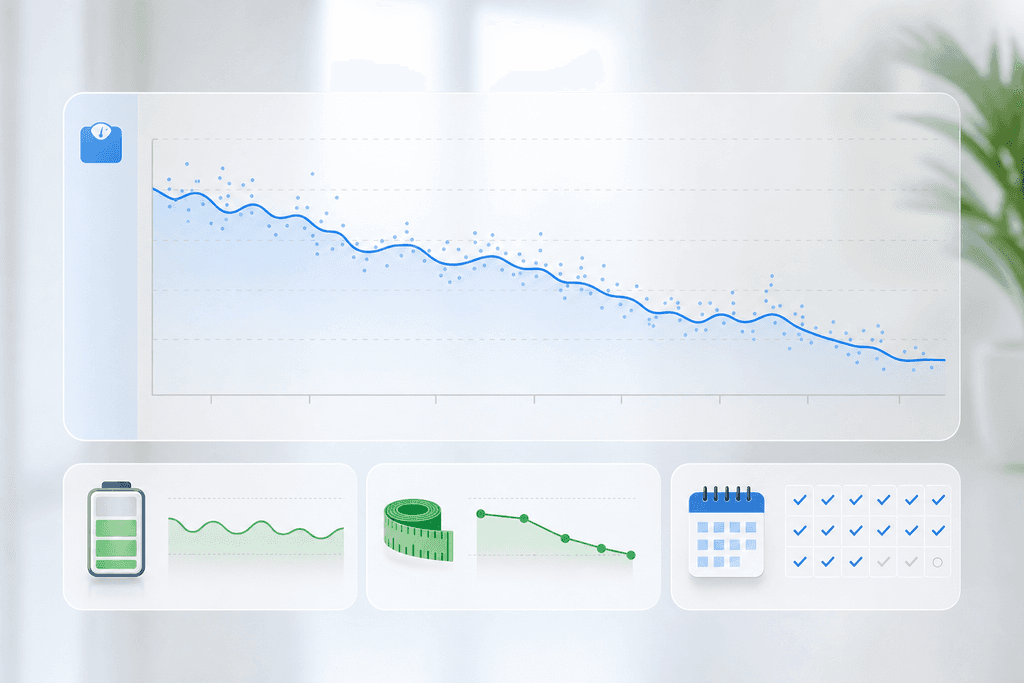
Weekly averages tell the real story. Instead of obsessing over what the scale says every morning, look at the trend over seven days. If your average weight this week is lower than last week's average, you're moving in the right direction. This approach filters out all the random noise and shows you what's actually happening with your body.
But weight isn't the only thing worth tracking. Sometimes the scale doesn't budge for weeks, but your pants fit better and you have more energy throughout the day. These non-scale victories matter just as much, if not more, than the number you see when you step on the scale.
- How your clothes fit around your waist
- Energy levels throughout the day
- Sleep quality and duration
- Strength gains in the gym
- How you feel mentally and emotionally
Streaks and consistency tracking help build habits that stick. When you see that you've logged your meals for 30 days straight, you don't want to break that streak. It's a simple psychological trick, but it works. The analytics and charts in apps like MyFoodBuddy help you spot patterns in what actually works for your body, not just what some diet guru says should work.
The key metrics you should track go beyond just the scale. Looking at what to track in your calorie app for real results can help you understand which data points actually matter for your goals. When you combine food tracking, activity data, and progress metrics, you get a complete picture of your health journey instead of just obsessing over one number.
Why Simple Tracking Beats Perfect Tracking
Most people who start tracking their food quit within two weeks. The reason isn't lack of motivation or willpower. It's because they're trying to be too perfect. When you spend five minutes logging a single meal, weighing every ingredient to the gram, and searching through endless food databases, tracking becomes a chore instead of a habit. The math is simple: perfect tracking that you abandon after 14 days won't help you reach your goals, but good-enough tracking that you stick with for six months will actually get you results.
The fitness tracking world has this backwards. Apps like MyFitnessPal and Cronometer were built around the idea that more data equals better results. But the best tracking system isn't the most accurate one. It's the one you'll actually use every single day without thinking about it.
The Real Cost of Perfect Tracking
Traditional detailed tracking comes with hidden costs that add up fast. Here's what happens when you try to log everything perfectly:
- You spend 15-20 minutes per day just entering food data
- You avoid social situations because logging restaurant meals feels impossible
- You get frustrated when the database doesn't have your exact food
- You eventually burn out and stop tracking completely
Compare that to simple tracking where you just say what you ate and move on with your day. MyFoodBuddy cuts logging time from five minutes down to 10 seconds per meal by using voice input and AI. That's the difference between tracking feeling like homework and tracking feeling like checking a text message.
Consistency Wins Every Time
| Approach | Time Per Day | Average Duration | Total Days Tracked |
|---|---|---|---|
| Perfect Tracking | 15-20 minutes | 2 weeks | 14 days |
| Simple Tracking | 1-2 minutes | 6+ months | 180+ days |
The numbers tell the whole story. You don't need to know that your chicken breast was exactly 187 grams. You need to know you ate chicken, roughly how much, and stay consistent enough to spot patterns over time. Weight loss happens from sustained calorie awareness, not from perfectly precise daily logs that you abandon after a few weeks.
Technology should make your life easier, not add another task to your to-do list. When tracking takes 10 seconds instead of 10 minutes, you're way more likely to still be doing it when my fitness goals actually start showing up in the mirror.
Your Next Steps for Fitness Tracking Success
Here's what matters most when you're starting out with tracking. Food is where you'll see the biggest changes, not the hours you spend at the gym. Most people trying to lose weight find that what they eat accounts for about 80% of their results. The trick is finding a system that doesn't turn tracking into a second job.
You need tools that work with your life, not against it. Apps like MyFitnessPal can take 5-10 minutes per meal with all the searching and measuring. MyFoodBuddy lets you just say what you ate and moves on, which is why people actually stick with it. The best tracker is the one you'll use tomorrow, not the one with the most features.
Consistency beats perfection every single time. You don't need to log every single grape or measure your coffee creamer down to the milliliter. What you need is a habit of tracking most of your meals so you can spot patterns. Miss a day? Just pick it back up the next morning.
Give any new system at least 2-3 weeks before you decide if it's working. Your body needs time to respond, and you need time to build the habit. If you're looking for a simple way to get started, focus on tracking breakfast and dinner first. Once those feel easy, add in the rest.
The questions below cover the stuff people ask us most about getting started with my fitness tracking. You'll find specific answers about what to track, how often to weigh yourself, and what to do when you hit a plateau.
Common Questions About Fitness Tracking
Starting a fitness tracking routine brings up a lot of questions, especially when you're trying to figure out what actually matters versus what's just noise. Most people overthink the process and end up quitting before they see results. The truth is that tracking doesn't have to be perfect or complicated to work. Here are the answers to the questions that come up most often when people start paying attention to their food and progress.
How accurate does my food tracking need to be?
You don't need to weigh every grain of rice or measure your coffee creamer down to the milliliter. Aim for about 80-90% accuracy, which means being honest about portions and not skipping items that have calories. The biggest mistakes happen when people forget to log cooking oils, sauces, or those handful of snacks throughout the day. Apps like MyFoodBuddy make this easier since you can just say what you ate and the AI figures out the details, so you spend less time stressing about exact measurements.
Should I track on weekends and holidays?
Yes, because what you do consistently matters more than what you do occasionally. Weekend calories count just as much as weekday calories, and most people eat 20-30% more on Saturdays and Sundays without realizing it. You don't have to be as strict, but keeping track helps you stay aware of your choices instead of going into autopilot mode. If you take breaks from tracking, you're basically flying blind for 28% of your week.
What if I eat out a lot - how do I track restaurant meals?
Restaurant meals are tricky because portions are usually bigger and there's hidden butter or oil in almost everything. Your best bet is to look for similar items in your tracking app's database or make educated guesses based on ingredients you can see. Many chain restaurants publish nutrition info online, so check there first. When you're using voice-based tracking, you can just describe what you ate and let the app estimate it, which beats not logging it at all.
How often should I weigh myself?
Daily weigh-ins give you the most data and help you see patterns instead of freaking out over normal fluctuations. Your weight can swing 2-5 pounds in a single day based on water retention, sodium intake, and digestion. The key is looking at the weekly average, not individual days. If daily feels too stressful, once a week works too, but pick the same day and time each week for consistency.
Do I really need to track exercise if I'm just trying to lose weight?
Exercise tracking is helpful but not required for weight loss since food intake matters way more than calories burned. That said, knowing your activity level helps you set realistic calorie goals and avoid undereating on active days. Most people overestimate how many calories they burn during workouts anyway. Focus on nailing your food tracking first, then add exercise data if you want a complete picture of your energy balance.
What's the easiest way to start tracking without getting overwhelmed?
Start by logging everything for three days without trying to change anything, just to see where you're at. Don't worry about hitting goals or being perfect, just build the habit of recording what you eat. Pick an app that makes logging fast, whether that's through voice input, barcode scanning, or saved meals for things you eat regularly. The easier the process, the more likely you'll stick with it past the first week when motivation fades.
Ready to start tracking smarter?
Download MyFoodBuddy and start tracking your calories by just saying what you ate. No more searching databases or guessing portions.
Get started