
3 Steps to Custom Calorie Tracking for Beginners
Master custom calorie tracking in 3 simple steps. Learn to set personalized goals, log meals effortlessly, and track progress like a pro.
Most people quit tracking their food within seven days because traditional apps turn a simple meal into a five-minute data entry project. Custom calorie tracking flips this around by letting you log what you eat in seconds using your own words, which is exactly how MyFoodBuddy works with its voice and text input. When tracking adapts to your life instead of demanding you follow rigid rules, you actually stick with it long enough to see results.
Table of Contents
What Makes Custom Calorie Tracking Different
Most people quit tracking calories within the first two weeks. The reason isn't lack of motivation or willpower. It's because traditional calorie counting apps make you work like a data entry clerk instead of someone trying to get healthier. You spend more time searching through endless food databases and weighing portions than actually enjoying your meals. Custom calorie tracking flips this whole approach on its head by letting you log food the way you naturally think and talk about it.
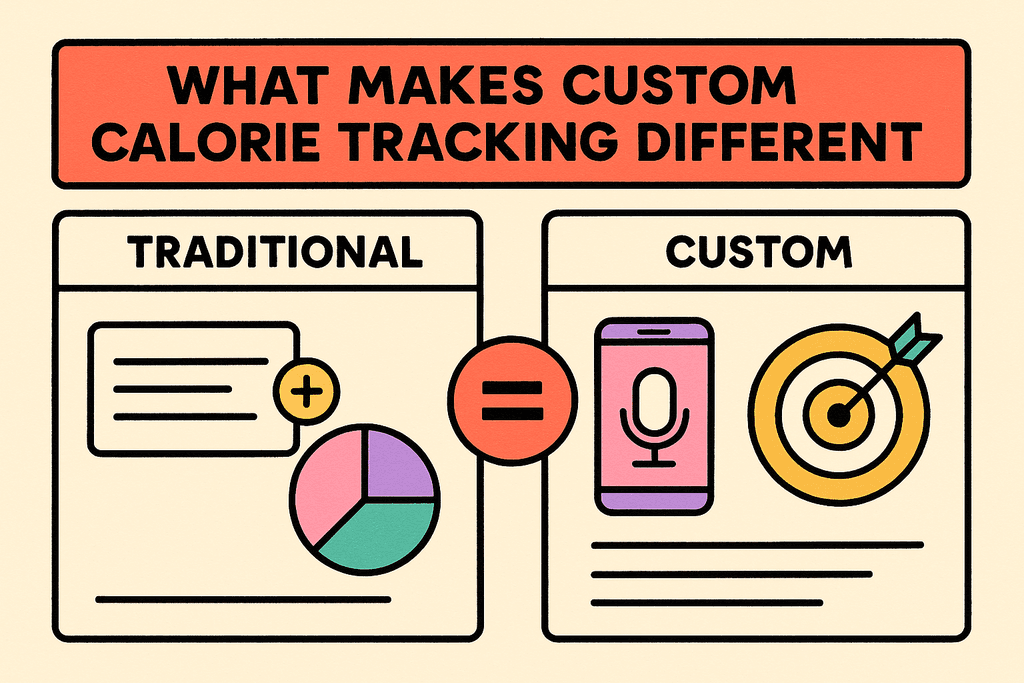
How Traditional Tracking Actually Works
When you use most calorie tracking apps, you're stuck doing everything manually. The process looks simple on the surface, but it quickly becomes a chore that eats up your time and patience.
Here's what happens every single time you eat something:
- Search through databases with thousands of similar-sounding foods
- Pick between dozens of versions of the same item from different brands
- Measure or estimate portion sizes for each ingredient
- Add each food item one by one to your daily log
- Double-check that the nutritional info matches what you actually ate
This process can take anywhere from three to ten minutes per meal. That adds up to over an hour every single day if you're tracking everything properly. No wonder people give up so fast.
The Custom Tracking Approach
Custom calorie tracking works completely differently. Instead of forcing you to adapt to how a database is organized, it adapts to how you naturally describe your meals. You simply say or type what you ate in plain English, and the technology figures out the rest.
Apps like MyFoodBuddy use this approach to cut logging time down to seconds. You don't need to know exact measurements or search through lists. Just describe your meal like you'd tell a friend about it.
The difference shows up in these key areas:
- Speed of logging drops from minutes to under 10 seconds
- No need to memorize portion sizes or carry a food scale
- Your personal eating patterns get recognized over time
- Goals adjust based on your actual body and objectives, not generic formulas
Why Personalization Beats Generic Recommendations
Generic calorie recommendations treat everyone like they're the same person. A 25-year-old athlete and a 45-year-old office worker get similar targets, even though their bodies work completely differently. Custom calorie tracking builds goals around your specific metabolism, activity level, and what you're trying to achieve.
The old way gives you a number and expects you to hit it. The custom way learns from your habits and adjusts as you go. It tracks how your body actually responds to different foods and eating patterns, not just what a textbook says should happen.
Here's how the two approaches stack up against each other:
Traditional vs Custom Calorie Tracking
Traditional Tracking:
- Manual database searches for every food item
- 3-10 minutes per meal to log everything
- Generic calorie goals based on basic formulas
- Requires measuring cups and food scales
- Same process every single day
Custom Tracking:
- Natural language input in seconds
- Under 10 seconds to log complete meals
- Personalized goals using TDEE calculations
- Estimates portions from your descriptions
- Learns your patterns and gets smarter over time
The technology behind custom tracking handles all the tedious calculation work while keeping you in full control of what gets logged. You're not giving up accuracy. You're just getting rid of the parts that make tracking feel like a second job.
Step 1: Set Your Personal Nutrition Targets
Most people start tracking calories with some random number they found online or heard from a friend. That's like trying to navigate to a new city without knowing your starting point. Your body burns calories differently than everyone else's based on your age, weight, height, activity level, and even how much muscle you have. Custom calorie tracking starts with figuring out your actual energy needs, not some generic recommendation that might be completely wrong for you.
The first thing you need is your TDEE, which stands for Total Daily Energy Expenditure. This number tells you how many calories your body burns in a typical day just living your life. It includes everything from breathing and digesting food to walking around and exercising.
- Calculate your baseline metabolic rate using factors like age, weight, and height
- Factor in your actual activity level instead of overestimating how active you really are
- Adjust for your specific goal whether that's losing fat, maintaining weight, or building muscle
- Set macro ratios that match how you actually like to eat, not some diet plan you'll hate
- Include micronutrient targets for vitamins and minerals beyond just hitting calorie numbers
MyFoodBuddy includes a TDEE calculator that does all this math for you automatically. You answer a few questions about yourself and your goals, and it sets up personalized targets that actually make sense for your body. The app tracks over 20 nutrients, so you're not just counting calories but making sure you're getting proper nutrition too.
Once you have your targets set, you can adjust them as you go. Weight loss typically requires eating 300-500 calories below your TDEE, while muscle gain needs a slight surplus. The key is starting with accurate numbers instead of guessing and wondering why nothing's working.
Step 2: Log Meals Your Way Without the Hassle
Here's where most calorie tracking apps lose people. You eat a simple breakfast, then spend ten minutes searching through databases, weighing ingredients, and manually entering every single item. By lunch, you're already tired of the whole process. Traditional apps like MyFitnessPal require multiple steps for each food item, and if you're eating something homemade or from a restaurant, good luck finding the right entry in their massive database.
Natural language logging changes everything. Instead of searching and tapping through menus, you just describe what you ate like you're texting a friend. Say "two eggs, toast with butter, and a coffee with oat milk" and the AI figures out the rest. It uses USDA data to calculate nutritional values automatically, so you're getting accurate information without doing any of the work yourself.
The time difference is huge. What used to take five to ten minutes per meal now takes under 30 seconds. You can log meals while you're still eating them or right after, which means you're way more likely to actually do it consistently.
- Use voice input when you're driving or have your hands full
- Type it out when you're in a quiet place or prefer texting
- Save your regular meals as favorites for one-tap logging next time
- Organize meals by breakfast, lunch, dinner, and snacks automatically
- Let the AI handle all the nutritional calculations in the background
MyFoodBuddy's voice and text logging works with natural language, so you don't need to format things in a special way. Just talk or type normally. The app also learns your eating patterns over time, making suggestions for meals you eat regularly. If you have the same breakfast most days, you can re-log it with a single tap instead of describing it again.
This approach works especially well for achieving balanced meals without the hassle of traditional tracking methods. The easier it is to log, the more likely you'll stick with it long enough to see real results.
Step 3: Track Progress and Adjust as You Go
Logging your food is only half the battle. The real value comes from understanding what all that data means and using it to make better decisions. Most people log religiously for a week, never look at their patterns, and then wonder why they're not seeing results. Custom calorie tracking means actually reviewing your data and adjusting your approach based on what's working and what isn't.
Start by checking your daily and weekly summaries. Look for patterns in when you eat, what types of foods you're choosing, and whether you're consistently hitting your targets. Maybe you're great at breakfast and lunch but always go over at dinner. Or perhaps you're low on protein most days even though your calories are on point.
- Review your color-coded calendar to see which days you stayed on track
- Check your streak counter to maintain motivation for consistent logging
- Monitor weight trends alongside nutrition data for the complete picture
- Read AI-powered insights that identify specific patterns in your eating habits
- Adjust your goals if you're not seeing progress after a few weeks
- Use gamification elements like achievements to stay motivated long-term
The app includes Fiona, an AI nutrition coach who analyzes your food logs and provides personalized insights. She might notice you're consistently low on certain vitamins or that you tend to overeat on weekends. These insights help you make specific changes instead of just trying harder at the same failing approach.
Weight tracking is crucial here. Your scale weight combined with your nutrition data tells you if your calorie target is actually right for your body. If you're eating at what should be a deficit but not losing weight after three weeks, your TDEE calculation might be off and you need to adjust downward slightly. If you're losing weight too fast, you might need to eat a bit more to preserve muscle mass.
The color-coded calendar makes it easy to spot consistency issues at a glance. Green days mean you hit your targets, and seeing a string of green days builds momentum. When you see too many red days in a row, you know it's time to figure out what's getting in your way and problem-solve before you completely fall off track.
For more strategies on maintaining consistency, check out our guide on how to stay consistent tracking calories. The key is making small adjustments based on real data rather than giving up when things don't work perfectly right away. Custom calorie tracking means your plan evolves with you instead of forcing you to follow some rigid system that doesn't fit your life.
Your Path to Sustainable Nutrition Tracking
Custom calorie tracking works because it removes the exact barriers that make most people quit after a week or two. When you set up your own goals, choose how you want to log your food, and let automation handle the math, tracking becomes something you can actually stick with. The three steps we covered take maybe five minutes to set up, but they save you hours every week compared to traditional methods that require searching databases and measuring every ingredient.
The difference between success and failure usually comes down to friction. Apps like MyFitnessPal require so many taps and searches that people just stop using them. MyFoodBuddy lets you say "chicken breast with rice and broccoli" and handles everything else, which is why people who struggled with other trackers find it easier to maintain their weight management goals.
Personalization matters more than perfection. Your custom setup doesn't need to track every micronutrient or hit exact macros every single day. It just needs to give you enough awareness to make better choices consistently. That awareness is what leads to actual results, not the perfect tracking system that you abandon after three days.
The real question isn't whether custom calorie tracking works. It's whether you'll find a method simple enough to use every day without thinking about it. Most people already know what they should eat, they just need a way to stay accountable that doesn't feel like a part-time job. If you're curious about other ways to make nutrition tracking easier, check out our guide on achieving balanced meals without the hassle.
Common Questions About Custom Calorie Tracking
Starting custom calorie tracking brings up a lot of questions, especially if you've tried other apps before and felt overwhelmed. The good news is that modern approaches to tracking have gotten way simpler than they used to be. Here are the answers to the most common questions beginners ask when they're just getting started with custom calorie tracking.
How accurate is voice-based meal logging compared to manual entry?
Voice-based logging is just as accurate as manual entry because it uses the same USDA nutritional database in the background. When you say "two eggs and toast with butter," the AI processes your words and matches them to verified nutritional data. The main difference is speed, not accuracy. Apps like MyFoodBuddy use AI to understand natural language, so you don't have to search through databases or create custom meals like you would with traditional trackers.
Do I need to track every single thing I eat?
You don't have to be perfect to see results from custom calorie tracking. Most people find success by tracking their main meals and larger snacks consistently. Small things like a stick of gum or a few bites of something usually won't make or break your progress. The key is building a habit of logging most of what you eat, not stressing over every tiny detail. Start with tracking just your meals for a week and see how it feels.
How long does it take to see results from calorie tracking?
Most people notice changes in their energy levels and how their clothes fit within two to three weeks of consistent tracking. Weight changes typically show up on the scale after about four weeks, though this varies based on your goals and starting point. The real benefit comes from the awareness you gain almost immediately about portion sizes and eating patterns you might not have noticed before.
What if I eat out frequently or don't cook at home?
Eating out actually works fine with custom calorie tracking, especially with voice logging. You can simply say what you ordered, like "chicken burrito bowl with rice and guacamole," and the app estimates the nutritional content based on typical restaurant portions. It won't be as precise as weighing home-cooked food, but it's close enough to keep you on track. Many chain restaurants also have their nutrition info available, which makes logging even easier.
Can I track macros and micronutrients, not just calories?
Yes, custom calorie tracking apps can monitor over 20 different nutrients including protein, carbs, fats, vitamins, and minerals. You can set personalized goals for each macro based on your diet approach, whether that's high protein, low carb, or balanced. MyFoodBuddy tracks all of these automatically when you log your meals, so you get a complete picture of your nutrition without doing any math yourself.
Is custom calorie tracking suitable for specific diets like keto or vegan?
Custom calorie tracking works with any eating style because you control what foods you log and what goals you set. If you're doing keto, you can set low carb targets and track net carbs. For vegan diets, you simply log plant-based foods and the app calculates everything the same way. The flexibility of setting your own macro goals means the tracking adapts to your diet, not the other way around.
Ready to start tracking smarter?
Download MyFoodBuddy and start tracking your calories by just saying what you ate. No more searching databases or guessing portions.
Get started