
MFP Meaning and Why Easier Apps Win for Weight Loss
Learn what MFP means in calorie tracking and discover why simpler apps help you lose weight faster. Compare features and find what works.
You've probably heard someone mention "MFP" when talking about losing weight, but here's the problem: most people who download it quit within the first month. The app they're talking about is MyFitnessPal, and while it's the most popular calorie tracker out there, it asks you to spend 15-20 minutes every day just logging what you ate. That's why newer apps like MyFoodBuddy now let you track meals in under 30 seconds using just your voice, which makes sticking to your weight loss goals way easier.
Table of Contents
- What MFP Actually Means in Calorie Tracking
- How Traditional MFP-Style Tracking Actually Works
- Why Voice and AI Tracking Changes Everything
- Features That Actually Help You Lose Weight
- Why Simplicity Beats Features for Weight Loss Success
- Finding Your Right Tracking App
- Common Questions About MFP and Calorie Tracking
What MFP Actually Means in Calorie Tracking
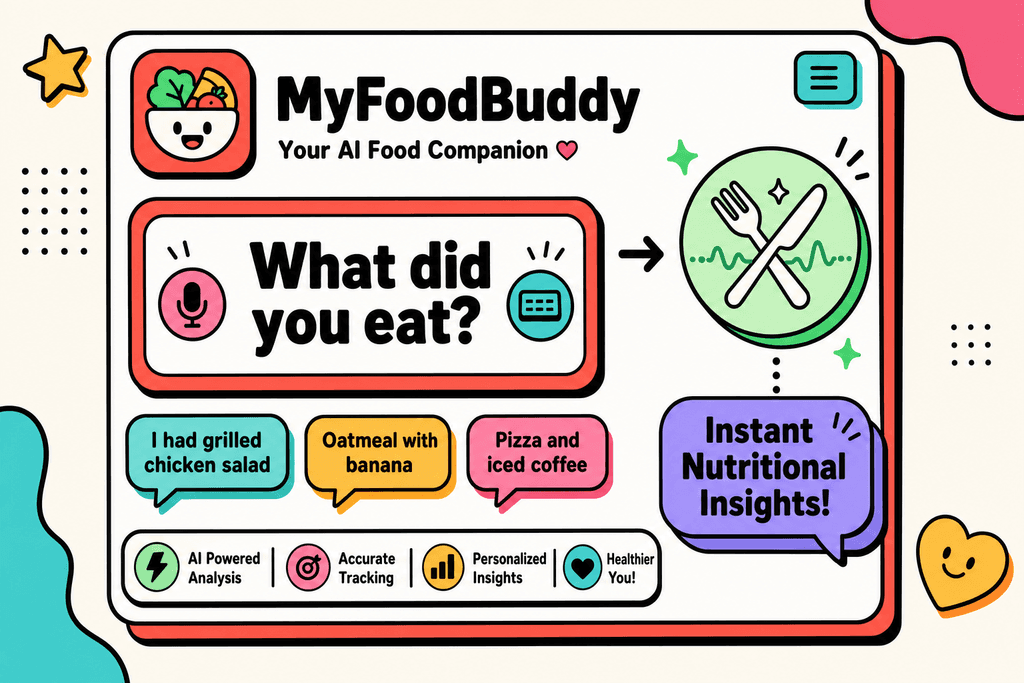
Over 200 million people have downloaded an app known simply as "MFP" to track their calories. MFP stands for MyFitnessPal, and it's been the go-to calorie tracking app since 2005. For nearly two decades, it's dominated the market with its massive food database and free tier. But here's the thing most people don't realize until they've used it for a while: MFP wasn't designed for speed or simplicity.
How MFP Became the Standard
MyFitnessPal launched when smartphones were just becoming popular. It solved a real problem by putting calorie counting in your pocket instead of requiring a notebook and calorie book. The app grew because it let users add foods to a shared database, which eventually became its biggest selling point.
Here's what made MFP the default choice for so many people:
- Largest food database with over 14 million items
- Free version with basic tracking features
- Barcode scanner for packaged foods
- Community features and recipe sharing
- Integration with fitness trackers and apps
| MFP Feature | What It Offers | The Reality |
|---|---|---|
| Food Database | 14+ million foods | Many entries are user-submitted and inaccurate |
| Logging Method | Search and select | Takes 2-5 minutes per meal |
| Portion Tracking | Detailed measurements | Requires weighing and measuring everything |
| Price | Free basic version | Premium costs $80/year |
Why People Search for MFP Alternatives
The problem with MFP isn't that it doesn't work. It's that tracking every meal takes too much time and effort. You need to search through thousands of database entries, pick the right one, measure your portions, and adjust serving sizes. A simple lunch can take five minutes to log correctly.
Most people quit calorie tracking within the first month. The main reasons are always the same:
- Too time-consuming to log every meal accurately
- Confusing database with duplicate and incorrect entries
- Requires measuring and weighing all food
- Feels like homework instead of a helpful tool
This is exactly why apps like MyFoodBuddy exist. Instead of searching through databases and measuring portions, you just say what you ate and AI figures out the rest. The whole process takes seconds instead of minutes, which means you're way more likely to stick with it long enough to see results.
What Actually Matters in Tracking Apps
After years of MFP setting the standard, we now know what features actually help people lose weight. It's not about having the biggest database or the most detailed macro breakdowns. What matters is whether you'll actually use the app every single day.
The features that make the biggest difference are:
- Speed of logging meals (under 30 seconds is ideal)
- Accuracy of nutritional data without manual input
- Consistency in daily tracking habits
- Simple interface that doesn't overwhelm users
- Personalized feedback that keeps you motivated
Understanding what MFP does well and where it falls short helps you figure out what you actually need from a calorie tracking app. For some people, the detailed control is worth the time investment. But for most of us, a faster and simpler approach works better because we'll actually stick with it.
How Traditional MFP-Style Tracking Actually Works
Most people who try to lose weight eventually download an app like MyFitnessPal (MFP). The idea sounds simple enough: just log what you eat and stay under your calorie goal. But anyone who's actually used these apps knows the reality is way more complicated. The process of logging a single meal can feel like doing homework, and that's exactly why so many people give up before they see any real results.
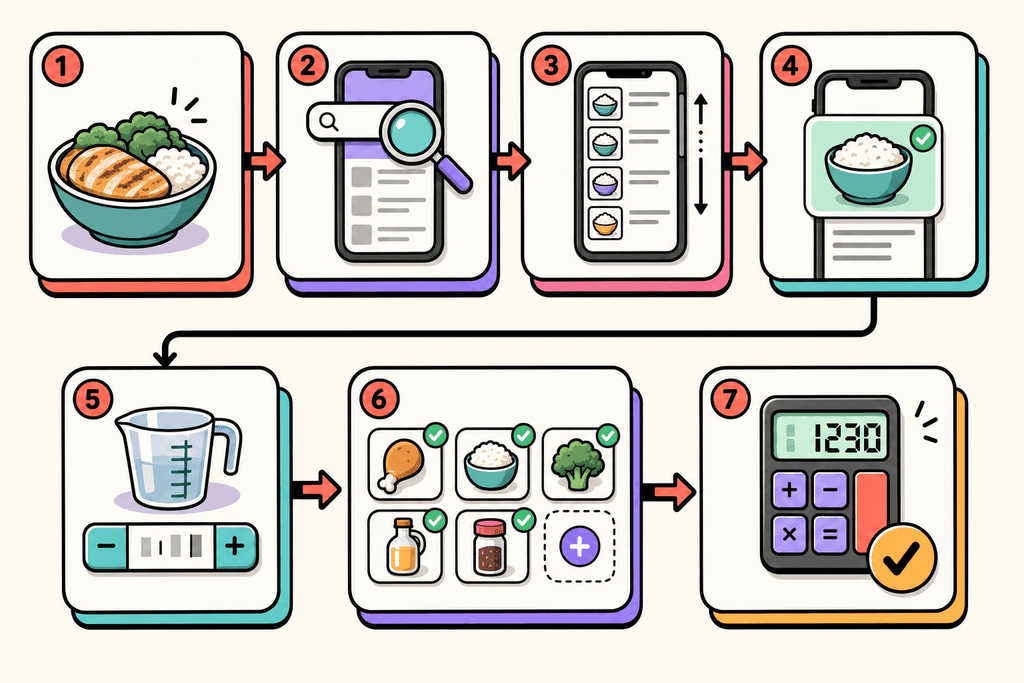
Here's what actually happens when you try to log lunch. You open the app and start searching through millions of food entries, most of which were added by other users and might not even be accurate. Did you eat a medium apple or a large apple? Was it a Granny Smith or a Honeycrisp? The database has seventeen different entries for "grilled chicken breast" with wildly different calorie counts.
- Searching through endless food databases to find the exact match for what you ate
- Measuring portions with cups and scales or making wild guesses that throw off your count
- Logging each ingredient separately when you cook at home (that stir-fry has eight different items)
- Spending 3-5 minutes per meal on data entry instead of enjoying your food
- Adding up to 15-20 minutes daily just to track what you already ate
The worst part is when you make something at home. That chicken stir-fry your family loves? You need to log the chicken, the oil you cooked it in, each vegetable, the sauce, and the rice separately. Most people quit tracking within two weeks because it feels like a part-time job.
Why Voice and AI Tracking Changes Everything
The reason traditional calorie tracking fails isn't because people lack willpower. It fails because the process takes too long and feels too complicated to stick with for months. But newer apps work completely differently, and that difference matters more than you might think. Instead of making you search and measure and calculate, they let you just talk.
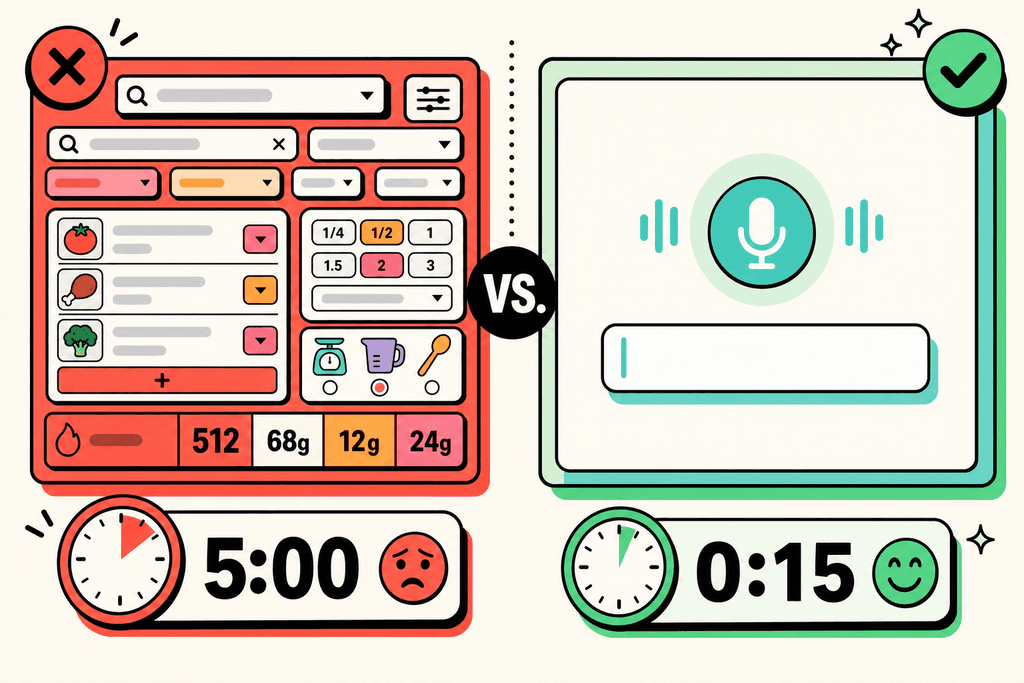
With voice-based tracking, you literally just say what you ate. "I had two eggs, toast with butter, and coffee with cream for breakfast." The AI figures out the rest. No searching through databases, no measuring cups, no math. The technology extracts nutritional data from how you naturally describe food, the same way you'd tell a friend what you ate.
| Method | Time Per Meal | Steps Required | Accuracy |
|---|---|---|---|
| Traditional MFP | 3-5 minutes | Search, select, measure, log | Depends on user effort |
| AI Voice Tracking | 10-15 seconds | Speak or type | AI-powered estimation |
MyFoodBuddy uses this approach to make tracking something you can actually stick with. You can speak or type what you ate, and the app handles the nutritional breakdown automatically. The time difference is huge: what used to take five minutes now takes fifteen seconds. That's the difference between tracking feeling like a chore and tracking feeling effortless.
The AI doesn't need you to be precise about portions either. If you say "a bowl of pasta" or "a handful of almonds," it makes reasonable estimates based on typical serving sizes. Is it perfect? No. But it's accurate enough to help you lose weight, and more importantly, it's easy enough that you'll actually do it every day.
Features That Actually Help You Lose Weight
Logging food is just the starting point. The features that actually help you lose weight are the ones that make tracking sustainable and give you useful information about your habits. A good calorie tracking app needs to do more than just count numbers. It needs to help you understand your patterns, stay motivated when progress feels slow, and make the daily habit as painless as possible.
Setting the right calorie goal matters more than perfect logging. Apps with TDEE calculators help you figure out how many calories you actually need based on your age, weight, activity level, and goals. Too aggressive and you'll be miserable and quit. Too relaxed and you won't see results. Getting this number right from the start makes everything else easier.
- TDEE calculators that set realistic targets you can actually stick to
- Saved meals and favorites for one-tap logging of foods you eat regularly
- Progress charts showing weight trends over weeks and months, not just daily fluctuations
- Streak tracking that motivates you to keep your logging habit alive
- AI coaching that spots patterns in your eating and suggests improvements
- Barcode scanning for quick logging of packaged foods
The saved meals feature is underrated. Most people eat the same breakfast five days a week and rotate through maybe ten different dinners. Being able to re-log your usual oatmeal in one tap instead of entering it from scratch every morning removes so much friction. MyFoodBuddy includes this along with barcode scanning for those nights when you're eating something from a package.
What really keeps people going long-term is seeing progress and getting insights they can act on. Charts that show your average calories over the past week or month help you see the big picture instead of obsessing over one bad day. AI coaching can notice things like "you tend to go over your goal on weekends" or "your protein intake is consistently low," which gives you specific things to work on instead of just feeling guilty about the numbers.
Why Simplicity Beats Features for Weight Loss Success
The average person who downloads MyFitnessPal or similar mfp apps quits tracking within two weeks. That's not because they lack motivation or don't care about their health. The real problem is that traditional calorie tracking feels like a part-time job. When you need to search through massive databases, weigh every ingredient, and spend five minutes logging a simple sandwich, tracking becomes a chore you'll eventually avoid. The apps people actually use consistently matter way more than the apps with the most features.
The Consistency Problem with Traditional Tracking
Research shows something surprising about weight loss tracking. Perfect accuracy doesn't predict success, but daily consistency does. You could be off by 100-200 calories per day and still lose weight steadily if you track every single day. Miss three days of tracking though, and your progress stalls even if those logged days were perfectly accurate.
- Studies show people who track daily lose 2-3x more weight than occasional trackers
- The average mfp user spends 15-20 minutes per day on detailed logging
- Apps requiring less than 2 minutes per meal see 4x better retention rates
- Simplified tracking methods maintain 80% accuracy with 90% less effort
Why Speed Creates Lasting Habits
Think about apps you use every day versus ones you downloaded and forgot about. The difference usually comes down to friction. Every extra tap, search, or decision point gives your brain a reason to quit. That's why voice-based logging changes everything for calorie tracking.
Apps like MyFoodBuddy let you say "chicken breast and rice" and move on with your life in under 10 seconds. Compare that to searching databases, selecting portion sizes, and manually entering custom foods. The time difference adds up to hours per week.
- Voice logging takes 5-10 seconds versus 2-5 minutes for manual entry
- Reduced friction means people track snacks and small meals they'd normally skip
- Quick logging captures real eating patterns instead of idealized versions
The Feature Bloat Trap
More features sound better on paper, but they often work against actual usage. When apps try to do everything, they end up making simple tasks complicated. The best tool is the one you'll actually use tomorrow, next week, and three months from now. That's why modern calorie trackers focus on removing steps instead of adding capabilities.
Finding Your Right Tracking App
Here's the thing about mfp and other detailed tracking apps. They work great if you're the type of person who enjoys spending time measuring portions and searching through food databases. Some people actually like that level of control and don't mind the extra minutes at each meal. But most people who start tracking calories end up quitting within a few weeks because it just takes too much time.
The real question isn't which app has the most features. It's which one you'll actually open every single day without feeling like it's a chore.
If you've tried tracking before and gave up, the problem probably wasn't you. It was the tool. Apps with voice input can make a huge difference because you can log your lunch in the time it takes to say "chicken sandwich and an apple" instead of tapping through multiple screens.
MyFoodBuddy takes this approach by letting you just speak or type what you ate, and the AI figures out the rest in seconds. No searching, no measuring, no database hunting.
The best tracking app is the one that fits into your actual life, not the one that requires you to change your whole routine. When logging feels effortless, you stick with it. When you stick with it, you see results.
Common Questions About MFP and Calorie Tracking
People have a lot of questions when they start looking into calorie tracking apps. Whether you're trying to figure out what MFP actually means or wondering if you really need to weigh every single grape you eat, these answers should help clear things up. The truth is, most people overthink calorie tracking before they even start, which is exactly why so many give up before seeing results.
What does MFP stand for and is it free?
MFP stands for MyFitnessPal, which is one of the oldest and most popular calorie tracking apps out there. The basic version is free, but it comes with ads and limited features. If you want things like custom macro goals or meal planning, you'll need to pay for the premium version, which runs about $80 per year. Many people start with the free version and either upgrade or look for simpler alternatives like MyFoodBuddy, which costs $39 per year and focuses on making logging actually quick.
How accurate are calorie tracking apps for weight loss?
Most calorie tracking apps are accurate enough to help you lose weight, even if they're not perfect down to the exact calorie. The real issue isn't accuracy, it's consistency. If an app is too complicated to use every day, you won't stick with it long enough for the accuracy to even matter. Apps that use USDA data and AI nutrition extraction tend to be pretty reliable, and honestly, being off by 50-100 calories here and there won't derail your progress as long as you're tracking regularly.
Do I need to track every single thing I eat?
You don't need to be perfect, but you do need to be honest. Most people find success tracking their main meals and snacks, even if they don't log every stick of gum or splash of milk in their coffee. The goal is to get a clear picture of your eating patterns, not to stress over every tiny detail. That said, those "little things" can add up faster than you think, so it's worth logging them when you can.
What's better than MFP for busy people?
If you're constantly rushing and don't have time to search through databases and measure portions, voice-based apps work way better. MyFoodBuddy lets you just say what you ate and the AI figures out the calories in seconds, which beats typing and searching any day. The whole point is to make tracking so easy that you actually do it, even on your busiest days.
How long does it take to see weight loss results with tracking?
Most people start seeing changes on the scale within 2-3 weeks of consistent tracking, though the first week might just be water weight. The real magic happens around the 4-6 week mark when you've built the habit and your body starts responding to the calorie deficit. The key word here is consistent, which is why picking an app you'll actually use matters more than picking the one with the most features.
Can I track calories without measuring everything?
Yes, and you might be surprised how well it works. Using visual estimates like "palm-sized portion of chicken" or "fist-sized serving of rice" gets you close enough, especially when combined with AI that can interpret natural language. Apps like MyFoodBuddy are built for this, letting you say "a bowl of pasta with some chicken" instead of weighing out 147 grams of penne. Perfect tracking beats inconsistent tracking every time, but consistent rough tracking beats perfect tracking that you quit after a week.
Ready to start tracking smarter?
Download MyFoodBuddy and start tracking your calories by just saying what you ate. No more searching databases or guessing portions.
Get started