
Macros To Lose Weight Calculator Guide
Learn how to use a macros to lose weight calculator for quick daily targets. Set protein, carbs, and fat goals that actually work for your body.
You've probably tried cutting calories before, only to feel hungry all the time and watch the weight creep back on within weeks. The problem isn't your willpower—it's that counting calories alone ignores what those calories are actually made of. A macros to lose weight calculator changes the game by telling you exactly how much protein, carbs, and fat to eat each day, which keeps you full while the pounds come off and actually stay off.
Table of Contents
- What Macros Actually Are and Why They Matter
- How a Macros Calculator Figures Out Your Numbers
- Setting Your Daily Macro Targets for Weight Loss
- Actually Hitting Your Macro Targets Every Day
- Why Most People Quit Tracking Macros and How to Avoid It
- Your Next Steps with Macro Tracking
- Common Questions About Macro Calculators
What Macros Actually Are and Why They Matter
Your body runs on three main types of fuel called macronutrients, or "macros" for short. These are protein, carbohydrates, and fats, and they make up almost everything you eat throughout the day. While most people focus on cutting calories to lose weight, the real secret is understanding how these three macros work together. Getting the right balance can mean the difference between feeling hungry all day and actually enjoying your weight loss journey.
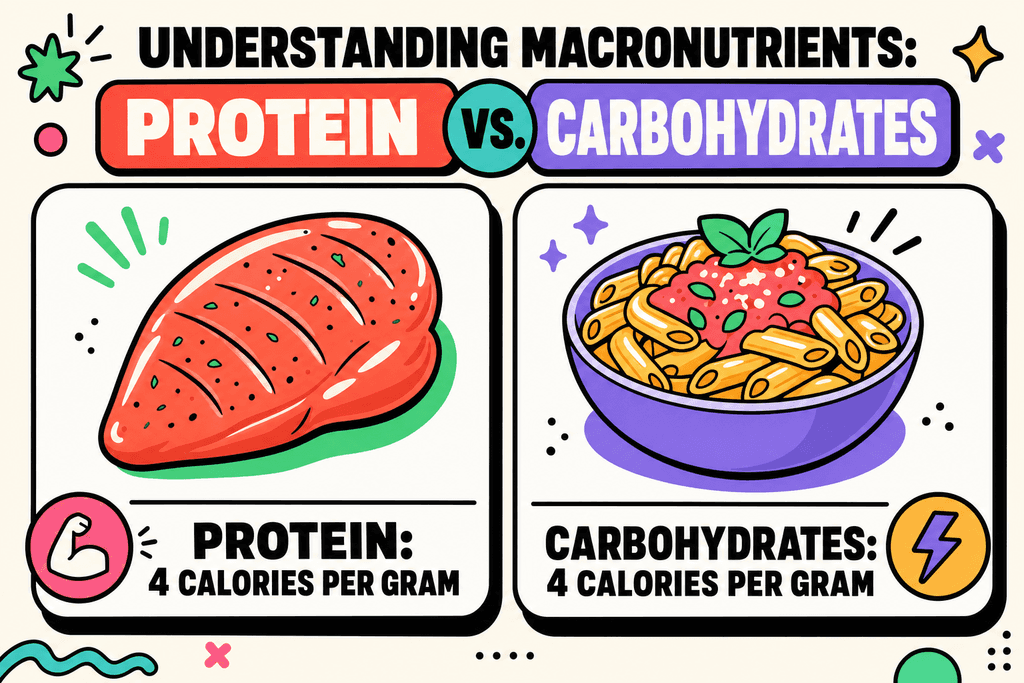
Breaking Down the Three Macros
Each macro does something different in your body, and that's why they all matter. Think of them like different types of workers in a factory, each with their own job to do.
Protein is your body's building material. It repairs muscles, keeps your skin healthy, and helps you feel full for hours after eating. You'll find it in chicken, fish, eggs, beans, and Greek yogurt. When you're trying to lose weight, protein becomes even more important because it helps you keep your muscle while burning fat.
Carbohydrates are your main energy source. They fuel your brain, power your workouts, and keep you moving throughout the day. Carbs get a bad reputation, but your body actually needs them. The key is choosing the right ones like vegetables, fruits, whole grains, and potatoes instead of candy and soda.
Fats help your hormones work properly and keep you satisfied after meals. They also help your body absorb important vitamins. Good sources include avocados, nuts, olive oil, and fatty fish like salmon. Many people are surprised to learn that eating fat doesn't automatically make you fat.
How Macros Affect Your Weight Loss
The way you split up your macros changes how you feel while losing weight. Apps like MyFitnessPal and Cronometer let you track these numbers, but tools like MyFoodBuddy make it even easier by using AI to calculate your macros from simple voice or text input about what you ate.
Here's what happens when you get your macros right:
- You stay full longer between meals, so you're not constantly thinking about food
- Your energy levels stay steady instead of crashing in the afternoon
- You lose fat while keeping your muscle, which keeps your metabolism running strong
- You can still eat foods you enjoy without feeling like you're on a strict diet
Getting enough protein is especially important. Studies show that people who eat more protein while dieting lose more fat and less muscle compared to those who just cut calories without thinking about macros.
Common Macro Ratios for Weight Loss
Different people respond better to different macro splits. Some do great with more carbs, while others feel better with higher fat. The table below shows the most popular approaches people use when trying to lose weight.
| Approach | Protein % | Carbs % | Fats % | Best For |
|---|---|---|---|---|
| Balanced | 30% | 40% | 30% | Most people starting out |
| High Protein | 40% | 30% | 30% | Muscle preservation |
| Low Carb | 30% | 20% | 50% | Blood sugar control |
| Moderate Carb | 30% | 35% | 35% | Active individuals |
| Higher Carb | 25% | 50% | 25% | Athletes and runners |
The truth is that any of these ratios can work for weight loss as long as you're eating fewer calories than you burn. The best ratio is the one you can actually stick with long-term. Some people love carbs and would never survive on a low-carb diet, while others feel amazing when they cut back on carbs and eat more fat.
Using a macros to lose weight calculator helps you figure out your personal numbers based on your weight, activity level, and goals. Once you know your targets, tracking becomes much easier, especially with apps that do the math for you automatically.
How a Macros Calculator Figures Out Your Numbers
Most people think a macros to lose weight calculator just spits out random numbers, but there's actually some solid science behind it. The calculator needs a few basic pieces of information from you to work its magic. Your weight, height, age, and sex are the starting points because they determine your baseline metabolism. But here's where it gets interesting: the calculator also needs to know how active you are throughout the day, and this is where most people get it wrong.
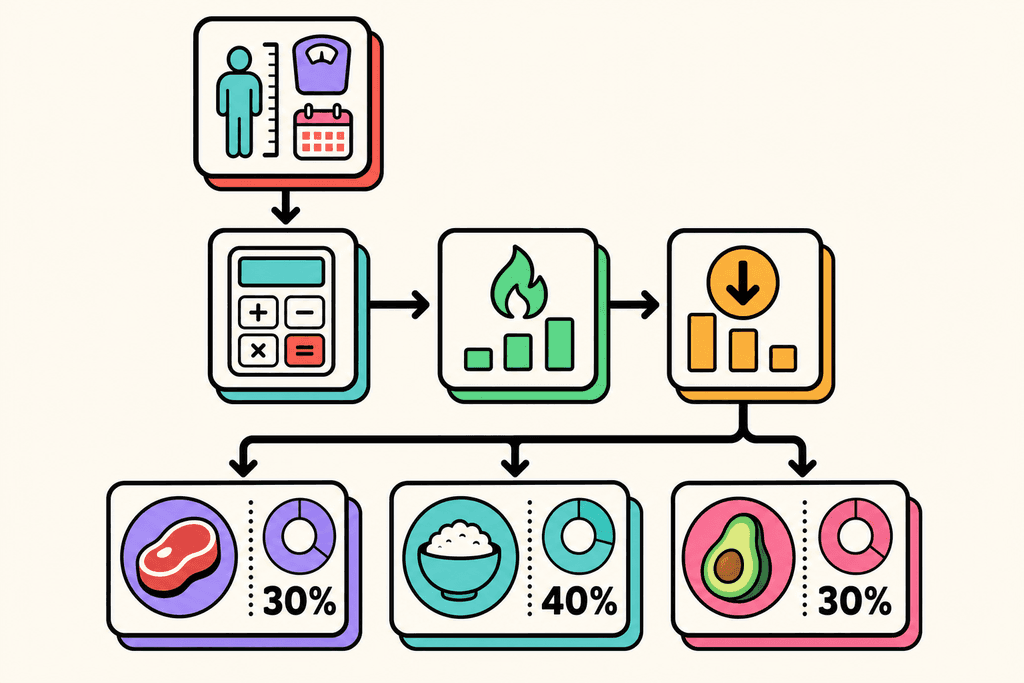
The calculator uses all this information to determine your TDEE, or Total Daily Energy Expenditure. This is basically how many calories your body burns in a typical day just living your life. Think of it as your body's daily calorie budget before you even think about losing weight.
- Sedentary (desk job, little exercise): TDEE multiplier of 1.2
- Lightly active (light exercise 1-3 days/week): TDEE multiplier of 1.375
- Moderately active (moderate exercise 3-5 days/week): TDEE multiplier of 1.55
- Very active (hard exercise 6-7 days/week): TDEE multiplier of 1.725
Your activity level matters way more than most people realize. The difference between selecting "sedentary" and "moderately active" can be 400-500 calories per day. That's the difference between losing weight and wondering why the scale won't budge.
Once the calculator knows your TDEE, it creates a calorie deficit based on your weight loss goal. A safe deficit is usually 15-25% below your TDEE, which translates to losing about 0.5 to 1 pound per week. The math is pretty straightforward: one pound of fat equals roughly 3,500 calories, so a 500-calorie daily deficit gets you one pound lost per week.
The calculator then splits those calories into macros. This is where protein, carbs, and fat come into play, and each one serves a different purpose in your weight loss journey.
Setting Your Daily Macro Targets for Weight Loss
Here's something most diet plans won't tell you upfront: protein should be your number one priority when you're trying to lose weight. Not carbs, not fat, but protein. When you're in a calorie deficit, your body needs protein to maintain muscle mass. Without enough protein, you'll lose muscle along with fat, which slows down your metabolism and makes you look softer instead of leaner.
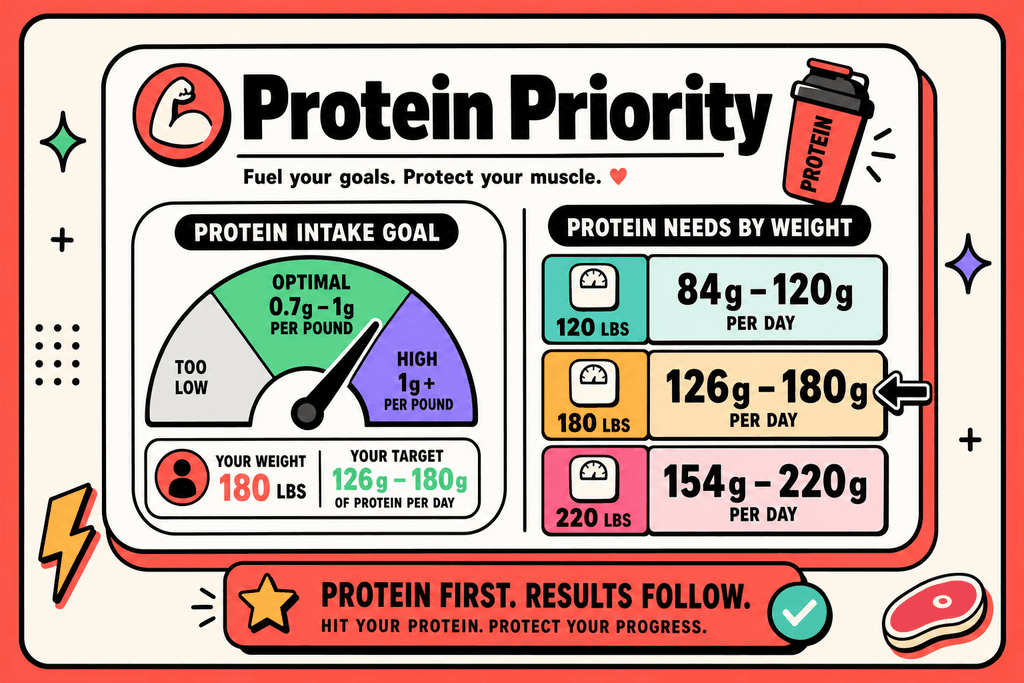
The sweet spot for protein is 0.7 to 1 gram per pound of body weight. If you weigh 180 pounds, that's 126 to 180 grams of protein daily. Yeah, it sounds like a lot, and it is. But this is what actually works for preserving muscle while dropping fat.
| Body Weight | Protein (g) | Fat (g) | Carbs (g) | Total Calories |
|---|---|---|---|---|
| 150 lbs | 120-150 | 50-60 | 120-150 | 1,500-1,700 |
| 180 lbs | 140-180 | 60-70 | 150-180 | 1,700-2,000 |
| 200 lbs | 160-200 | 65-75 | 170-200 | 1,900-2,200 |
Fat gets a bad reputation, but you need a minimum amount for hormone production and overall health. Set your fat at about 0.3 to 0.4 grams per pound of body weight. Going too low on fat can mess with your hormones, especially if you're a woman. This isn't the place to cut corners.
Carbs become your flexible macro. After you've set your protein and fat targets, whatever calories are left go to carbs. This is actually good news because it means you can adjust carbs up or down based on how hungry you are or how much energy you need for workouts.
If you're not losing weight after two weeks of hitting your macros consistently, drop your carbs by 20-30 grams and see what happens. Don't touch protein, and be careful about cutting fat too low. The scale should start moving again within another week or two.
Actually Hitting Your Macro Targets Every Day
Tracking macros used to mean carrying around a food scale, measuring everything, and spending 10 minutes per meal typing into an app. It was tedious enough that most people quit within a week. The good news is that tracking doesn't have to be that painful anymore, especially with apps that use AI to do the heavy lifting for you.
Apps like MyFoodBuddy let you just say what you ate, and the AI figures out the macros automatically. Instead of searching through databases and measuring portions, you can log "grilled chicken breast with rice and broccoli" in about five seconds. The difference between spending 30 seconds versus 5 minutes per meal adds up fast over a day.
- Plan your meals around protein first - hit your protein target, then fill in fat and carbs
- Use saved meals for foods you eat regularly - breakfast especially tends to be repetitive
- Pre-log your day in the morning - this helps you see if you need to adjust anything
- Leave a 100-200 calorie buffer - gives you wiggle room for snacks or if portions are slightly off
Meal planning becomes way easier once you know your targets. You start to learn what 40 grams of protein looks like, or how many carbs are in your usual portion of rice. Most people end up eating similar meals throughout the week anyway, so you can save your go-to meals and re-log them with one tap.
You're going to have days where you go over your targets. Maybe it's a birthday, or you just really wanted pizza. Don't try to "make up for it" by cutting calories the next day. Just get back on track with your normal targets. One high day won't ruin your progress, but the guilt spiral that makes you quit definitely will.
The key to making macro tracking stick is removing as much friction as possible. The easier it is to log your food, the more likely you are to actually do it every day. That consistency is what gets results, not perfection.
Why Most People Quit Tracking Macros and How to Avoid It
Studies show that 80% of people who start tracking macros quit within the first month, and the reason isn't what you'd expect. It's not because they lack willpower or don't care about their goals. The real problem is that traditional macro tracking takes way too much time. When you're spending 10-15 minutes per meal searching through databases, weighing food, and manually calculating numbers, it becomes a second job nobody signed up for.
The perfectionism trap makes things even worse. People think they need to hit their macros to the exact gram every single day, and when life happens and they can't, they give up completely. Missing your macro targets by 10-15 grams won't ruin your progress, but quitting will.
Traditional vs Modern Macro Tracking
| Traditional Method | Modern AI Approach |
|---|---|
| 10-15 min per meal | Under 30 seconds |
| Manual database searching | Voice or text input |
| Requires food scale | Estimates from descriptions |
| High dropout rate | Better long-term adherence |
The 80/20 rule works better than perfection when it comes to macros to lose weight calculator results. If you hit your targets 80% of the time, you'll see results. The other 20% gives you room for birthday dinners, work lunches, and actual life.
- Focus on protein targets first, then worry about carbs and fats
- Track consistently during weekdays, relax a bit on weekends
- Use estimates when eating out instead of skipping tracking entirely
- Review weekly averages, not daily perfection
Modern apps like MyFoodBuddy solve the time problem by letting you just say what you ate. No searching, no weighing, no math. This matters because the best macro tracking method is the one you'll actually stick with for months, not days.
When to Be Strict vs Flexible
- Be strict when prepping for events or breaking through plateaus
- Be flexible during holidays, vacations, and social gatherings
- Track loosely during maintenance phases
- Tighten up when actively trying to lose weight
The goal isn't to track macros forever. It's to learn portion sizes and food choices well enough that healthy eating becomes automatic. But you can't learn if you quit in week two because the process is too annoying.
Your Next Steps with Macro Tracking
Here's what matters when you're trying to lose weight. Counting calories alone tells you how much you're eating, but tracking macros tells you what you're eating. That difference is huge because your body responds differently to 200 calories of chicken versus 200 calories of cookies. A macros to lose weight calculator takes the guesswork out of figuring out how much protein, carbs, and fat you actually need each day.
The problem is that most people either skip the calculator completely and just wing it, or they use one but then struggle with the tracking part. You need both pieces to work together.
That's where the right tool makes everything easier. MyFoodBuddy lets you speak or type what you ate, and the AI figures out your macros automatically. No more spending ten minutes searching through food databases or doing math in your head. The app calculates everything from your voice input in seconds, which means you're way more likely to stick with it past the first week.
If you've been thinking about trying macro tracking but worried it'll be too complicated, the 7-day free trial gives you enough time to see if it actually fits into your life. Most people know within a few days whether a tracking method will work for them or just become another abandoned app on their phone.
You've got the calculator part figured out now. The next question is whether you'll actually use it consistently enough to see results.
Common Questions About Macro Calculators
Tracking macros can feel overwhelming at first, especially when you're trying to figure out if you're doing it right. Most people have the same questions when they start using a macros to lose weight calculator, and the answers are usually simpler than you'd think. Here are the most common concerns people have about hitting their macro targets and what actually matters for weight loss.
Do I need to hit my macros exactly every day?
No, you don't need to be perfect every single day. Getting within 5-10 grams of your target for each macro is totally fine, and some people even look at their weekly averages instead of daily numbers. The goal is consistency over time, not perfection in every meal.
What if I go over my carbs but under my calories?
If you're still under your total calorie goal, you'll likely still lose weight since calories are the main driver of weight loss. Your macro split helps with things like hunger and energy levels, but it's not as critical as staying in a calorie deficit. One off day won't ruin your progress.
How often should I recalculate my macros?
You should recalculate your macros every 10-15 pounds of weight loss or if your weight hasn't changed in 3-4 weeks. As your body gets smaller, it needs fewer calories to function, so your targets need to adjust. Most people forget this step and wonder why they hit a plateau.
Can I lose weight without tracking macros?
Yes, plenty of people lose weight without ever counting macros by eating in a calorie deficit through portion control or intuitive eating. Tracking macros just gives you more data and control over the process. If you want to make sure you're eating enough protein or understand why you're not losing weight, tracking helps you see what's actually going on.
Is tracking macros better than keto or intermittent fasting?
Tracking macros is more flexible than strict diets like keto because you can eat any foods as long as they fit your targets. Keto and intermittent fasting work for some people, but they're just different ways to create a calorie deficit. The best approach is the one you can stick with long-term, and macro tracking tends to be more sustainable since nothing is off-limits.
How long does it take to see results from tracking macros?
Most people notice changes in energy and how their clothes fit within 2-3 weeks, but visible weight loss usually takes 4-6 weeks of consistent tracking. The key is actually logging your food accurately, which is where apps like MyFoodBuddy help since you can just speak what you ate instead of spending time searching databases. The easier it is to track, the more likely you are to stick with it long enough to see real results.
Ready to start tracking smarter?
Download MyFoodBuddy and start tracking your calories by just saying what you ate. No more searching databases or guessing portions.
Get started