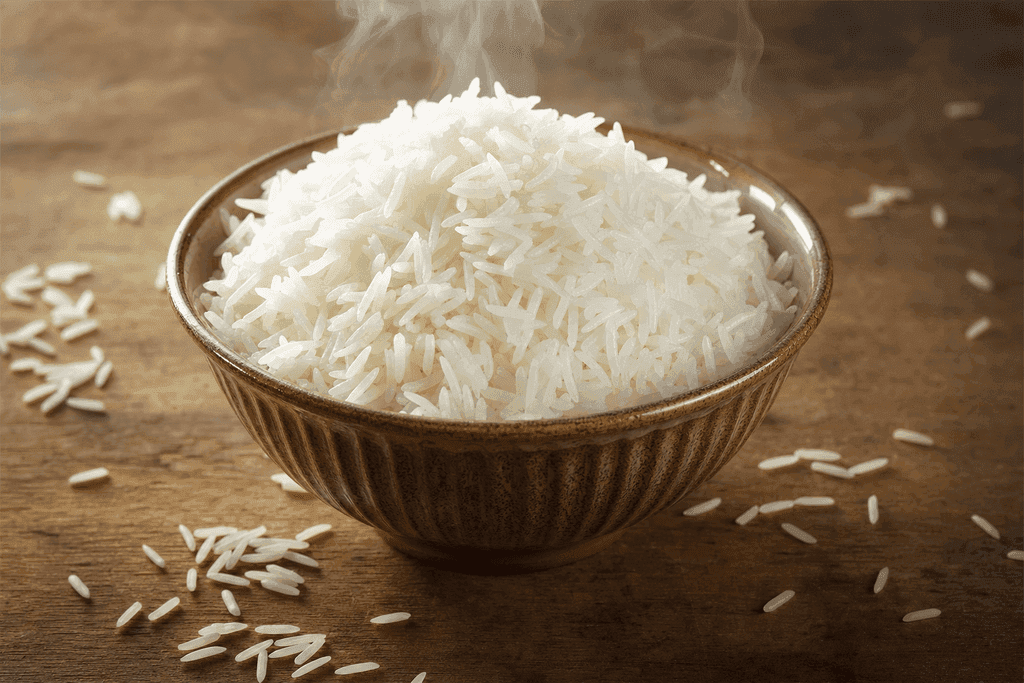
Cooked Basmati Rice Nutrition Facts Per Cup
Cooked basmati rice nutrition facts per cup: calories, carbs, protein & more. Get exact macros and log meals faster with the right tools.
A cup of cooked basmati rice runs about 210 calories, with roughly 45 grams of carbs and just under a gram of fat, making it one of the easier carbs to fit into a weight loss plan. What makes basmati stand out from regular white rice is its lower glycemic index, meaning it digests slower and won't spike your blood sugar as fast. If you're the type who eyeballs your rice scoop and hopes for the best, you're probably off on your calorie count more than you'd like, and that's exactly the kind of guesswork MyFoodBuddy takes out of the equation by letting you just say what you ate. Before we get into portion sizes and how they mess with your macros, let's break down exactly what's in that cup.
Table of Contents
Calories and Macros in One Cup of Cooked Basmati Rice
A single cup of cooked basmati rice, about 158 grams, comes in around 210 calories. That's the number you'll see most often, though it can shift slightly depending on how much water gets absorbed during cooking. Basmati tends to hold its shape better than other rice types, which actually keeps the calorie count fairly consistent from batch to batch.
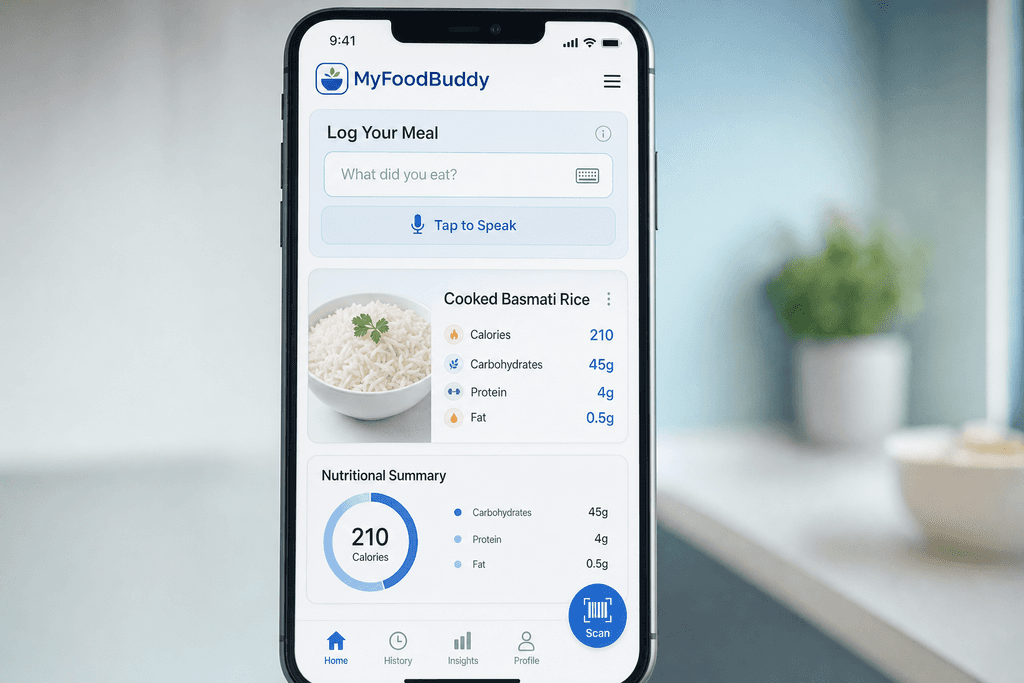
Break it down further and you get roughly 45g of carbs, 4g of protein, and 0.5g of fat per cup. That's a pretty standard carb-heavy profile, similar to what you'd expect from other white rice varieties. Here's how it stacks up against its cousins:
| Rice Type | Calories | Carbs | Protein | Fat |
|---|---|---|---|---|
| Basmati (cooked) | 210 | 45g | 4g | 0.5g |
| Jasmine (cooked) | 205 | 44g | 4.2g | 0.4g |
| Regular white (cooked) | 206 | 44.5g | 4.3g | 0.4g |
The differences are small, so if you're swapping one for the other in your meals, don't stress too much about the exact type. What matters more is how much you're actually eating, which we'll get into later.
Vitamins Minerals and Fiber Content
Basmati rice isn't going to win any awards for fiber. You're looking at about 0.6g of fiber per cup, which is pretty low compared to whole grains like brown rice or quinoa. That said, it still brings a few nutrients to the table worth mentioning.
Cooked basmati contains small amounts of folate, thiamine, and iron. These won't make or break your diet, but they add up over time, especially if rice is a regular part of your meals.
- Folate helps with cell growth and repair
- Thiamine supports how your body converts food into energy
- Iron plays a role in carrying oxygen through your blood
For anyone trying to lose weight, basmati rice is often considered a slightly better carb choice because it has a lower glycemic index than some other white rices. That means it digests a bit slower, which can help keep you fuller longer instead of spiking your blood sugar and leaving you hungry an hour later.
How Portion Size Changes the Numbers
Here's where things get tricky for a lot of people trying to lose weight. A half cup of rice is not the same as a full cup, and the calorie gap adds up fast if you're not paying attention.
| Portion | Calories | Carbs |
|---|---|---|
| 1/2 cup | 105 | 22.5g |
| 1 cup | 210 | 45g |
| 2 cups | 420 | 90g |
The biggest mistake most people make isn't picking the wrong rice, it's eyeballing their portion instead of actually measuring it. A heaping scoop at a restaurant or a generous serving at home can easily be double what you think you're eating, and that difference alone could be the reason your calorie count feels off every week.
This is exactly the kind of guesswork that trips people up when they're trying to track calories manually. With MyFoodBuddy's voice logging, you just say what you ate, like "one cup of basmati rice with chicken," and the AI handles the portion math and nutrition breakdown for you. No measuring cups, no guessing, no second-guessing whether that bowl was really "one cup."
If you're curious how AI actually gets these numbers right, this breakdown on how AI enhances the accuracy of calorie counting explains the process in plain terms. And if rice is just one part of a bigger home-cooked meal you're trying to track, simplifying calorie counting for homemade meals covers how to handle mixed dishes without losing your mind over portion sizes.
Wrap-up
So here's the deal. One cup of cooked basmati rice comes in around 210 calories and 45g carbs. That's not too bad on its own, but the second or third scoop is where things get tricky for a lot of people trying to lose weight.
Portion size is really the whole ballgame here. Eyeballing your rice instead of measuring it is probably the biggest reason your tracking numbers don't match your results, and it's the same issue that trips people up with overnight oats and milk portions too.
The good news is you don't have to whip out a scale every single meal. Tools like MyFoodBuddy let you just say what you ate and how much, and the AI handles the math, which makes staying consistent way easier than it sounds. If you're curious how that actually works behind the scenes, this piece on AI and food tracking breaks it down pretty well.
Frequently Asked Questions
Is basmati rice better than white rice for weight loss
Basmati rice has a lower glycemic index than regular white rice, so it digests slower and keeps you full longer. This can help with weight loss, but portion size still matters most. If you're logging meals to watch your intake, apps like MyFoodBuddy make it easy to track basmati rice cooked nutrition without guessing.
How many calories in half a cup of basmati rice
Half a cup of cooked basmati rice has around 100 calories. That's roughly 22 grams of carbs and 2 grams of protein. Small portion changes add up fast, which is why checking basmati rice nutrition facts cooked before you scoop matters more than people think.
Does basmati rice have more protein than other rice
Basmati rice has a bit more protein than jasmine or short-grain white rice, but the difference is small, about half a gram per cup. It's not a high-protein food on its own. Pair it with beans, chicken, or eggs if protein is your goal.
Ready to start tracking smarter?
Download MyFoodBuddy and start tracking your calories by just saying what you ate. No more searching databases or guessing portions.
Get started