Quinoa vs Rice for Fullness: Which Keeps You Satisfied?
Compare quinoa and rice nutritional value for fullness. Discover which grain keeps you satisfied longer and supports your weight goals better.
You finish a big bowl of rice and feel stuffed, but two hours later you're raiding the pantry again. The difference between quinoa and rice isn't just about calories or carbs—it's about how long they actually keep you full, and that gap is bigger than most people realize. Understanding quinoa nutritional value vs rice can completely change how you plan meals, especially if you're tired of constant hunger derailing your health goals.
Table of Contents
Breaking Down the Numbers
Most people think all grains are basically the same when it comes to keeping you full, but the numbers tell a different story. When you compare quinoa nutritional value vs rice, you'll find some pretty big differences that actually matter for your hunger levels throughout the day. The protein, fiber, and overall nutrient makeup of these grains can mean the difference between feeling satisfied for hours or raiding the snack drawer an hour after lunch. Understanding what's actually in your food helps you make better choices without having to guess or feel hungry all the time.
The Basic Nutrition Facts
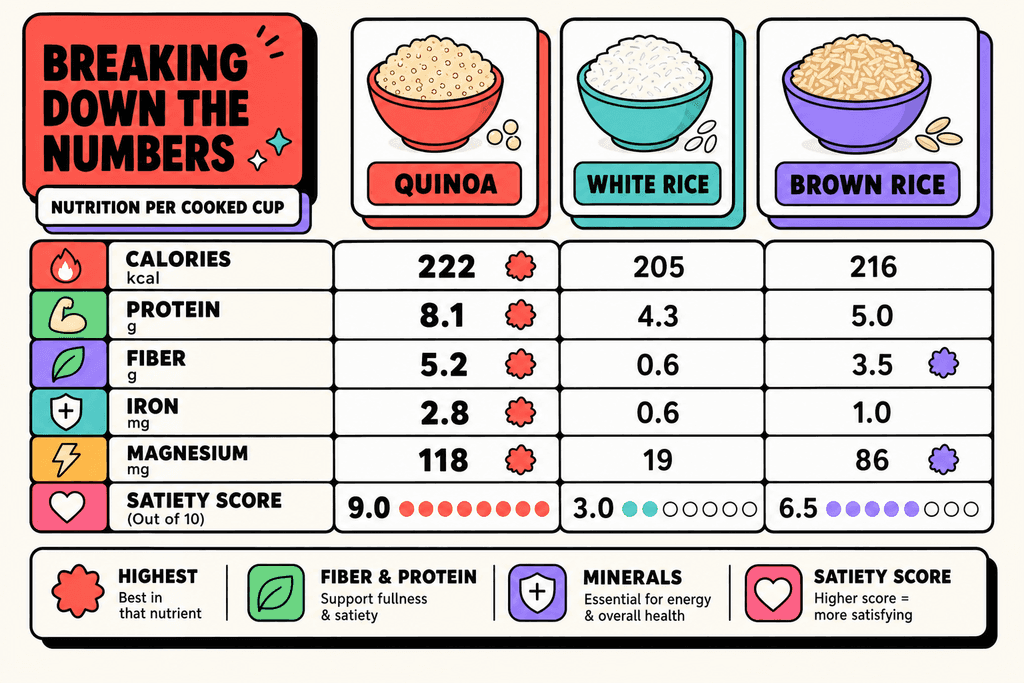
Here's what you're actually getting in one cup of cooked grain. These numbers come from USDA data, which is the same source that apps like MyFoodBuddy use to calculate your meals when you log them.
| Nutrient | Quinoa (1 cup cooked) | White Rice (1 cup cooked) | Brown Rice (1 cup cooked) |
|---|---|---|---|
| Calories | 222 | 205 | 248 |
| Protein | 8.1g | 4.2g | 5.5g |
| Fiber | 5.2g | 0.6g | 3.5g |
| Carbs | 39.4g | 44.5g | 51.7g |
| Fat | 3.6g | 0.4g | 2.0g |
The calorie counts are pretty similar across the board. But quinoa packs almost twice the protein of white rice, which is a big deal for staying full.
What Actually Keeps You Full
Not all nutrients affect your hunger the same way. Some keep you satisfied while others leave you wanting more food pretty quickly.
- Protein takes longer to digest and tells your brain you're full
- Fiber slows down digestion and keeps your blood sugar steady
- Complex carbs provide energy without the crash
- Healthy fats help you feel satisfied after eating
When you look at the fiber numbers, quinoa has almost nine times more fiber than white rice. That's a huge difference that your stomach will definitely notice.
The Micronutrient Picture
Beyond the basic macros, these grains have different vitamin and mineral profiles that matter for your overall health and energy levels.
| Micronutrient | Quinoa | White Rice | Brown Rice |
|---|---|---|---|
| Iron | 2.8mg (15% DV) | 0.2mg (1% DV) | 1.0mg (6% DV) |
| Magnesium | 118mg (30% DV) | 19mg (5% DV) | 86mg (22% DV) |
| Zinc | 2.0mg (18% DV) | 0.8mg (7% DV) | 1.2mg (11% DV) |
| B Vitamins | Higher levels | Enriched only | Moderate levels |
Quinoa wins pretty clearly on the micronutrient front. These vitamins and minerals don't directly make you feel full, but they do affect your energy and cravings throughout the day.
What This Means for Your Plate
Looking at these numbers side by side makes it easier to understand why some meals keep you going and others don't. Apps like MyFoodBuddy track all these nutrients automatically when you log your meals, so you can see patterns in what actually keeps you satisfied without doing the math yourself.
- Higher protein means your body takes longer to process the food
- More fiber means slower digestion and steadier energy
- Better micronutrients support overall health and reduce cravings
The real question isn't just about the numbers though. It's about how these differences actually feel in your daily life and whether they're worth considering when you're planning meals.
Why Protein Content Matters for Staying Full
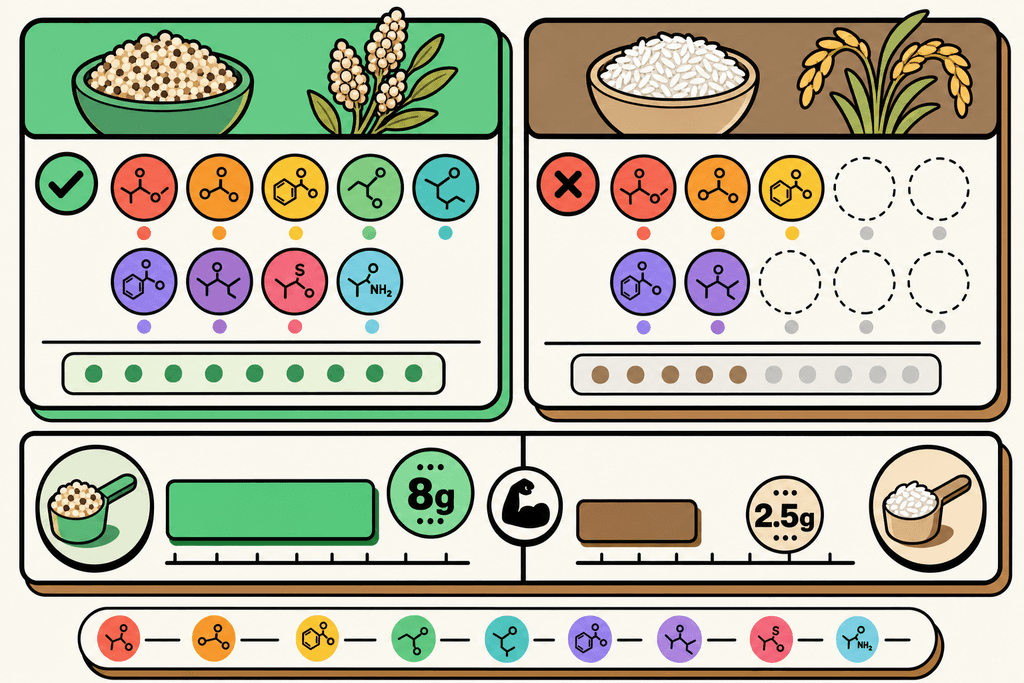
A cup of cooked quinoa packs about 8 grams of protein, while the same amount of white rice gives you only 4 grams. That might not sound like a huge difference, but your body notices it in ways that affect how long you stay satisfied after eating. The real advantage with quinoa isn't just the amount of protein, though. It's what nutritionists call a complete protein, meaning it contains all nine essential amino acids your body can't make on its own. Rice, on the other hand, is missing a few of these building blocks, which matters more than you might think when it comes to feeling full.
Why Protein Content Matters for Staying Full
When protein hits your digestive system, it triggers the release of hormones like GLP-1 and PYY. These are your body's natural appetite suppressants, and they work by sending signals to your brain that you've had enough to eat.
| Grain Type | Protein per Cup | Complete Protein |
|---|---|---|
| Quinoa | 8g | Yes |
| White Rice | 4g | No |
| Brown Rice | 5g | No |
The practical difference shows up about two to three hours after your meal. People who eat quinoa-based meals typically report feeling satisfied longer than those who eat rice-based meals with similar calorie counts. This isn't just about willpower or imagination. The higher protein content actually changes your hunger hormones, making it easier to wait until your next meal without snacking.
There's another benefit worth mentioning if you're trying to lose weight. When you cut calories, your body doesn't just burn fat. It also breaks down muscle tissue for energy, which slows your metabolism over time. Getting enough complete protein helps preserve that muscle mass, and quinoa's amino acid profile makes it particularly good at this job compared to rice.
Fiber's Role in Keeping Hunger Away
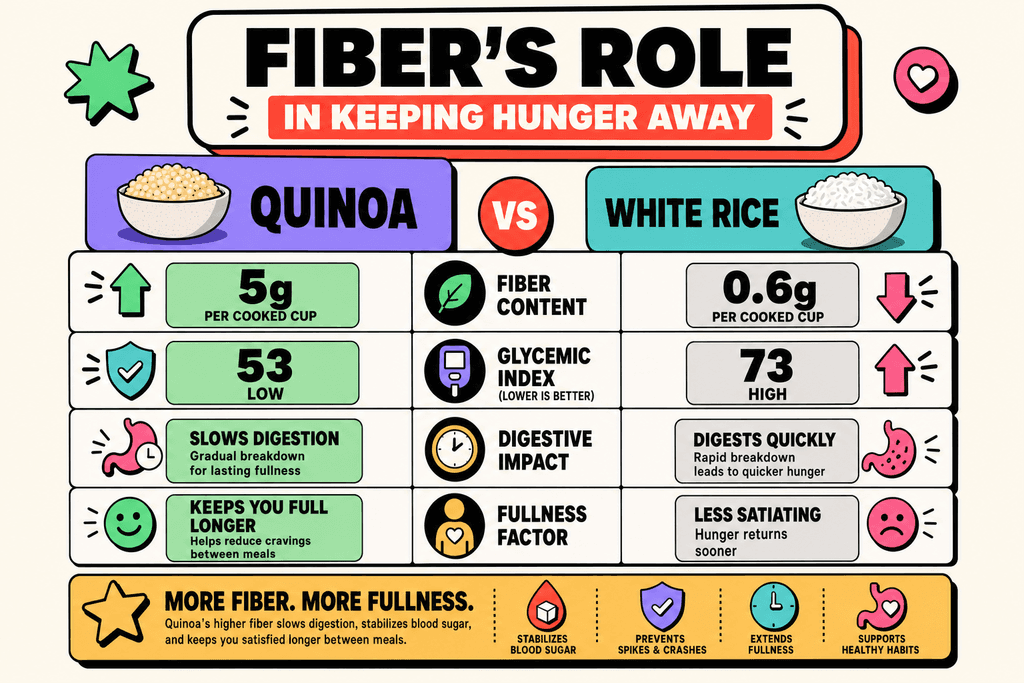
White rice contains a measly 0.6 grams of fiber per cup, while quinoa delivers about 5 grams. Brown rice falls somewhere in the middle with around 3.5 grams, but quinoa still wins this round. Fiber doesn't get absorbed by your body like other nutrients do. Instead, it moves through your digestive system mostly intact, and that's exactly what makes it so valuable for staying full. The fiber in quinoa acts like a sponge, absorbing water and expanding in your stomach, which physically takes up space and triggers stretch receptors that tell your brain you're satisfied.
Fiber's Role in Keeping Hunger Away
- Quinoa: 5g fiber per cup
- Brown rice: 3.5g fiber per cup
- White rice: 0.6g fiber per cup
But the fullness factor goes beyond just taking up room in your stomach. Fiber slows down how quickly food leaves your stomach and moves through your intestines. This means the energy from your meal gets released gradually instead of all at once. When you eat white rice, your body processes it quickly, and you might find yourself hungry again within an hour or two. Quinoa's fiber content stretches that timeline out considerably.
Your gut bacteria also play a surprising role here. These microorganisms feed on the fiber you eat, and when they break it down, they produce short-chain fatty acids. These compounds actually signal your body to produce more satiety hormones, creating a feedback loop that helps control your appetite hours after you've finished eating. If you're tracking your meals with an app like MyFoodBuddy, you'll notice patterns in how different foods affect your hunger levels throughout the day.
The Glycemic Index Factor
The glycemic index measures how quickly a food raises your blood sugar on a scale from 0 to 100. Pure glucose sits at 100, and everything else gets compared to that. Quinoa scores around 53, which puts it in the low to medium range. White rice, meanwhile, clocks in at about 73, firmly in the high category. Brown rice falls around 68, better than white but still higher than quinoa. These numbers matter because they predict what happens to your energy and hunger levels after you eat.
When you eat high-glycemic foods like white rice, your blood sugar spikes quickly. Your pancreas responds by dumping insulin into your bloodstream to bring those sugar levels back down. The problem is that this process often overshoots, leaving you with lower blood sugar than you started with. That's when the cravings hit and you find yourself rummaging through the pantry even though you ate just a couple hours ago.
| Food | Glycemic Index | Blood Sugar Impact |
|---|---|---|
| Quinoa | 53 | Gradual rise |
| Brown Rice | 68 | Moderate spike |
| White Rice | 73 | Sharp spike |
Quinoa's lower glycemic index means your blood sugar rises slowly and stays more stable. You avoid the roller coaster entirely, which translates to steady energy and fewer sudden hunger pangs. This stability is particularly important if you're managing your weight or trying to prevent type 2 diabetes. The constant blood sugar swings from high-glycemic foods can eventually lead to insulin resistance, where your cells stop responding properly to insulin signals.
Making the Right Choice for Your Goals
If weight loss is your main goal, quinoa's combination of higher protein, more fiber, and lower glycemic index gives it a clear advantage. The extended fullness means you're less likely to overeat at your next meal or reach for snacks between meals. But that doesn't mean rice is always the wrong choice. Athletes and people with very high calorie needs sometimes prefer white rice specifically because it digests quickly and doesn't sit heavy in the stomach. The faster digestion can be helpful right before or after intense workouts when you need quick energy.
- For weight loss: Quinoa's protein and fiber keep you fuller longer
- For muscle building: Both work, but quinoa provides complete protein
- For pre-workout: White rice digests faster for quick energy
- For post-workout: Quinoa helps with muscle recovery
- For budget-conscious eating: Rice costs less per serving
Cost and preparation time are practical factors you can't ignore. Rice is cheaper and cooks faster in most cases, which matters when you're feeding a family or meal prepping for the week. Quinoa requires a good rinse before cooking to remove its natural bitter coating, and it typically costs two to three times more than rice. The taste difference is also real. Some people love quinoa's slightly nutty flavor and fluffy texture, while others prefer the neutral taste and familiar comfort of rice.
The good news is you don't have to pick just one. Many people rotate between quinoa and rice based on their schedule, budget, and what else they're eating that day. When you're logging meals, whether you choose quinoa or rice, apps like MyFoodBuddy make it simple to track either option with just a quick voice note. You can say something like "one cup of quinoa with vegetables" and the nutritional breakdown happens automatically, which takes the guesswork out of staying on track with your goals.
Understanding how protein tracking influences nutritional balance can help you make better choices between these two grains. And if you're trying to sustain energy and stay full on a calorie budget, knowing the quinoa nutritional value vs rice becomes even more important for planning satisfying meals that keep you on track.
What This Means for Your Daily Eating
The nutritional differences between quinoa and rice aren't just numbers on a label. They translate into real differences in how long you'll feel full after eating. Quinoa's higher protein and fiber content means it typically keeps you satisfied for 3-4 hours, while white rice might leave you hungry again in just 2-3 hours. Brown rice falls somewhere in the middle, usually providing fullness for about 3 hours. Understanding these timing differences helps you plan meals that actually work with your schedule instead of against it.
Portion Sizes That Actually Satisfy
Here's where things get interesting for your calorie goals. You can often eat a smaller portion of quinoa and feel just as full as a larger portion of rice. A 3/4 cup serving of cooked quinoa (around 165 calories) provides similar satiety to 1 cup of white rice (about 205 calories) because of the protein and fiber working together.
- Quinoa works best at 1/2 to 3/4 cup portions for steady energy
- White rice needs 3/4 to 1 cup servings to prevent quick hunger return
- Brown rice sits in the middle at 2/3 to 1 cup for good fullness
- Smaller quinoa portions save calories while maintaining satisfaction
Hunger Timeline: Quinoa keeps most people satisfied 30-60 minutes longer than white rice when eaten in equal portions.
Building Meals for Maximum Fullness
Neither grain works best alone. The real magic happens when you pair them strategically with other foods. Adding healthy fats and more protein to either grain extends fullness even further.
- Pair rice with beans or lentils to boost protein and fiber content
- Add avocado or olive oil to slow digestion and extend satiety
- Include vegetables to add volume without many extra calories
- Top with eggs or grilled chicken for protein that really sticks
Mistakes That Kill the Fullness Factor
The biggest mistake people make is eating these grains with too many simple carbs and not enough protein or fat. A bowl of white rice with soy sauce won't keep you full, no matter how much you eat. Same goes for quinoa in a fruit salad without any protein.
- Eating grains alone without protein or healthy fats
- Choosing instant or minute versions that digest too quickly
- Not drinking enough water, which helps fiber do its job
- Guessing portion sizes instead of measuring them accurately
Tracking Tip: People who log their meals consistently discover their personal fullness patterns within 2-3 weeks of tracking.
This is where accurate tracking becomes essential. Everyone responds a bit differently to quinoa nutritional value vs rice based on their metabolism and activity level. MyFoodBuddy makes it simple to log your meals with voice or text and see patterns in how different grains affect your hunger throughout the day. You might discover that quinoa works better for lunch while rice keeps you satisfied at dinner, or vice versa.
Your Next Steps
So here's what we learned about quinoa nutritional value vs rice. Quinoa packs more protein and fiber, which means it usually keeps you full longer than white or brown rice. The protein in quinoa is complete too, giving you all nine essential amino acids your body needs. Rice digests faster and works better when you need quick energy, but you might find yourself hungry again sooner.
That said, rice isn't the bad guy here. It has its place in a healthy diet, especially if you're active or need something easy on your stomach. The real trick is figuring out which one works better for your body and your goals.
The only way to know for sure is to try both and see how you feel. Swap rice for quinoa in a few meals this week and pay attention to your hunger levels. When you track what you eat and how it affects you, patterns start to show up pretty quickly.
This is where something like MyFoodBuddy makes things easier. You can just say what you ate and it logs everything, including protein and fiber amounts. Over time, you'll see which meals keep you satisfied and which ones leave you raiding the fridge an hour later. Finding balanced meals becomes way simpler when you're not guessing about what's actually in your food.
Try both grains for a week or two and see what happens. Your body will tell you what it prefers, and tracking your meals helps you spot those patterns faster than memory alone ever could.
Common Questions About Quinoa and Rice
Choosing between quinoa and rice can feel confusing when you're trying to stay full and hit your nutrition goals. People have a lot of practical questions about cost, cooking, and whether the differences actually matter for their specific situation. Here are the answers to the most common questions that come up when deciding between these two popular grains.
Is quinoa really worth the extra cost for fullness benefits?
Quinoa typically costs 3-4 times more than white or brown rice, which adds up if you eat it daily. The extra protein and fiber do help you feel fuller longer, but you can get similar benefits by pairing rice with beans or lentils at a lower cost. If budget is tight, rice with added protein sources works just fine for satiety.
Can I mix quinoa and rice together?
Mixing quinoa and rice is actually a smart way to balance cost, taste, and nutrition. A 50-50 blend gives you more protein and fiber than rice alone while cutting the cost compared to pure quinoa. Just note that they have different cooking times, so either cook them separately and combine them, or add the quinoa about 5 minutes after the rice starts cooking.
Does the cooking method affect how full you feel?
The cooking method matters more than most people realize. Letting rice cool after cooking increases its resistant starch content, which can improve fullness and blood sugar response. Quinoa stays pretty consistent regardless of temperature, but adding healthy fats like olive oil or avocado to either grain slows digestion and extends that full feeling.
Which is better for weight loss specifically?
Quinoa has a slight edge for weight loss because its higher protein content helps preserve muscle mass while you're in a calorie deficit. That said, the total calories you eat matter way more than which grain you choose. Brown rice works perfectly fine for weight loss if you control portions and track your intake accurately.
How do I track quinoa versus rice accurately in my meals?
The quinoa nutritional value vs rice changes dramatically between dry and cooked measurements, which trips people up constantly. Apps like MyFitnessPal require you to search through dozens of entries to find the right one. With MyFoodBuddy, you can just say "one cup of cooked quinoa" or "half cup of brown rice" and the AI figures out the exact nutrition without the guesswork.
Does quinoa work for people with diabetes?
Quinoa has a lower glycemic index than white rice, making it a better choice for blood sugar management. The extra fiber and protein slow down how quickly your body converts it to glucose. Brown rice falls somewhere in the middle, while white rice causes the fastest blood sugar spike of the three options.
Ready to start tracking smarter?
Download MyFoodBuddy and start tracking your calories by just saying what you ate. No more searching databases or guessing portions.
Get started