White Rice Calories and Perfect Portion Sizes
Learn how many calories are in white rice, proper portion sizes, and easy tracking tips. Get accurate nutrition info for better meal planning.
Most people eyeball their rice portions and end up eating twice as much as they think, which can throw off their entire day of calorie tracking. A single serving of white rice looks deceptively small on a plate, and without proper measuring, you might be consuming 400 calories when you logged only 200. Understanding how many calories is white rice and getting your portions right makes the difference between hitting your nutrition goals and wondering why the scale won't budge.
Table of Contents
The Basics of White Rice Nutrition
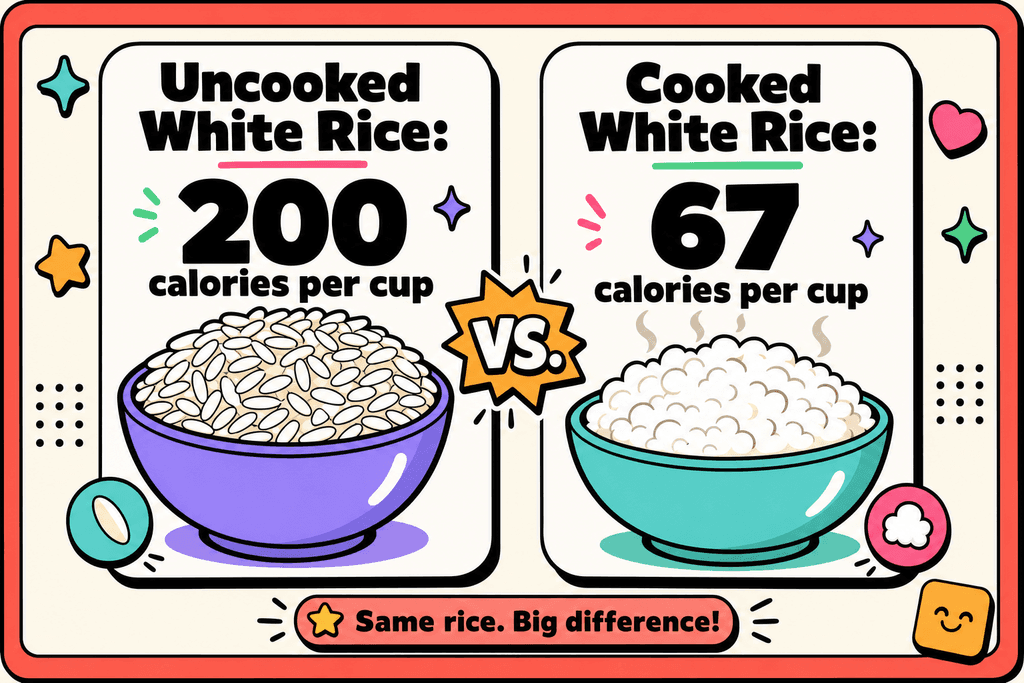
White rice feeds more than half the world's population, but most people have no idea how many calories is white rice actually packing. The confusion gets worse when you realize that a cup of uncooked rice turns into about three cups when cooked. That means the calorie count changes dramatically depending on whether you're measuring before or after cooking, and this simple mix-up trips up even experienced calorie trackers.
Why Rice Calories Confuse Everyone
The biggest problem with tracking white rice calories comes down to one thing: nobody measures it the same way. Some people scoop cooked rice into a cup, others weigh it on a scale, and many just eyeball it completely.
Here's what makes it tricky:
- Raw rice absorbs water and roughly triples in volume when cooked
- Different cooking methods add different amounts of water
- Rinsing rice before cooking removes some starch and slightly changes calories
- The type of white rice you choose affects the final calorie density
Apps like MyFitnessPal and Cronometer have dozens of entries for white rice, and half of them contradict each other. With MyFoodBuddy, you can just say "I ate one cup of white rice" and the AI figures out the most accurate calorie count based on standard cooked measurements.
Different Types, Different Numbers
Not all white rice is created equal when it comes to calories. Long-grain, short-grain, jasmine, and basmati all have slightly different nutritional profiles. The differences aren't huge, but they matter if you're tracking carefully. If you're curious about how basmati rice compares nutritionally, be sure to review our article on cooked basmati rice nutrition facts per cup.
| Rice Type | Calories (1 cup cooked) | Carbs | Protein |
|---|---|---|---|
| Long-grain white | 205 | 45g | 4.2g |
| Short-grain white | 242 | 53g | 4.4g |
| Jasmine | 205 | 45g | 4.3g |
| Basmati | 191 | 43g | 4.0g |
Short-grain rice is stickier and denser, which is why it packs more calories per cup. Basmati stays fluffier and separated, so you get fewer calories in the same volume.
What Counts as a Serving
Nutrition labels and government guidelines use different serving sizes, which adds another layer of confusion. The USDA considers a serving to be about half a cup of cooked rice, but most restaurant portions give you at least two cups.
Standard measurements you'll see:
- USDA serving size: 1/2 cup cooked (about 100 calories)
- Typical home portion: 1 cup cooked (about 200 calories)
- Restaurant portion: 1.5-2 cups cooked (300-400 calories)
- Raw measurement: 1/4 cup uncooked equals roughly 3/4 cup cooked
The gap between what we think we're eating and what we actually eat is massive. Studies show people underestimate rice portions by about 30% on average. That's an extra 60-80 calories per meal that mysteriously don't make it into traditional tracking apps where you have to manually search and log everything.
How Many Calories Are Actually in White Rice
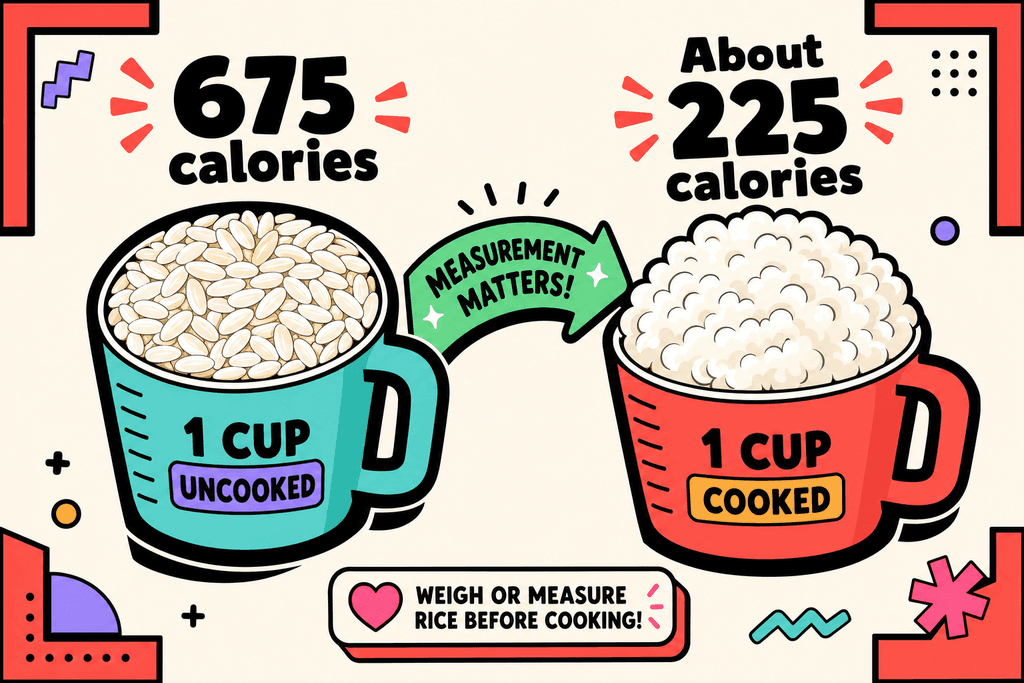
White rice is one of those foods that confuses the heck out of people when they're trying to count calories. You look at the package and see one number, then check a calorie tracking app and see something completely different. The reason for this mess is simple: rice changes dramatically when you cook it. A cup of raw white rice contains about 675 calories, but that same rice absorbs water and triples in size when cooked. So that one cup of raw rice becomes three cups of cooked rice, which means each cooked cup has roughly 200 calories.
Most people eat rice after it's cooked, which is why you need to pay attention to which measurement you're using. The standard serving size is actually half a cup of cooked rice, which comes out to about 100 calories. That's a lot smaller than what most restaurants serve you, but we'll get to that later.
Quick Calorie Reference:
- 1 cup raw white rice = 675 calories
- 1 cup cooked white rice = 200 calories
- ½ cup cooked white rice = 100 calories (standard serving)
Here's something that trips people up even more: weight measurements are way more accurate than volume measurements. A cup of rice can vary depending on how tightly you pack it, but 100 grams of cooked white rice will always be around 130 calories. Different cooking methods can slightly change the final calorie count too, since some rice absorbs more water than others.
Getting Your Rice Portions Right Every Time
The most accurate way to measure rice is with a kitchen scale. Seriously, if you're trying to track calories properly, guessing with cups and spoons will mess up your numbers. A food scale takes out all the guesswork and gives you exact measurements every single time. For cooked white rice, you're looking at about 130 calories per 100 grams, which makes the math pretty easy once you weigh it.
But let's be real. You're not always going to have a scale with you, especially when you're eating out or at a friend's house.
| Measurement Method | Accuracy Level | Best For |
|---|---|---|
| Kitchen Scale | Highest | Home cooking |
| Measuring Cup | Medium | Quick portions |
| Visual Cues | Lower | Eating out |
That's where visual guides come in handy. A proper serving of rice is about the size of a tennis ball or your closed fist. This isn't perfect, but it gets you in the ballpark when you need to eyeball portions. The problem is that restaurant portions are usually two to three times this size, which means you could be eating 400-600 calories of rice without realizing it.
- Tennis ball size = roughly ½ cup cooked rice (100 calories)
- Baseball size = roughly 1 cup cooked rice (200 calories)
- Your closed fist = approximately ½ to ¾ cup depending on hand size
If you're into meal prep, pre-portioning your rice into containers saves you from having to measure every single time. Cook a big batch, weigh out your portions while everything's still warm, and you're set for the week. This is one of those small habits that makes tracking way less annoying over time.
Tracking Rice Without the Hassle
Traditional calorie tracking apps make logging rice way more complicated than it needs to be. You open the app, search for "white rice," and suddenly you're staring at fifty different entries. Some say raw, some say cooked, some are in grams, others in cups. Then you have to figure out which database entry is actually correct, convert your measurements, and hope you picked the right one. It's no wonder people give up on tracking after a few weeks.
The confusion between raw and cooked entries is probably the biggest headache. Pick the wrong one and your calorie count could be off by hundreds of calories. If you log one cup thinking it's cooked rice but the app thinks you meant raw rice, you just accidentally added 475 extra calories to your day.
Traditional Tracking Problems:
- Multiple confusing database entries
- Raw vs cooked measurement mix-ups
- Time-consuming search and selection process
- Manual calculation requirements
This is where voice logging changes everything. Instead of searching through databases and doing mental math, you just say what you ate. With MyFoodBuddy, you can literally say "one cup of white rice" and the app figures out the rest. It knows you're talking about cooked rice because that's what people actually eat, and it calculates the calories automatically using USDA data.
Even better, you can save your rice-based meals as favorites for quick re-logging later. If you eat chicken and rice for lunch three times a week, you log it once with all the details, save it, and then just tap to add it again next time. No more searching, no more measuring, no more confusion about which database entry to use. For anyone who's struggled with apps like MyFitnessPal where you spend more time logging than eating, this approach actually makes tracking sustainable. You can learn more about what makes calorie apps actually user-friendly and how AI-powered tracking simplifies diet management.
The whole point of tracking calories is to help you reach your goals, not to become a part-time data entry clerk. When you remove the friction from logging something as common as rice, you're way more likely to stick with it long enough to see results. And if you're curious about setting realistic calorie goals or want to understand how accurate modern calorie counters really are, those are worth checking out too.
Why Rice Tracking Trips People Up
Most people who track calories make the same mistake with rice over and over again. They log a cup of rice without thinking about whether it was measured before or after cooking, and suddenly their daily calorie count is off by hundreds of calories. This happens because raw rice absorbs water and roughly triples in volume when cooked, which means the calorie density changes dramatically. A cup of uncooked white rice contains about 675 calories, while a cup of cooked white rice has only 200 calories. That's a massive difference that can completely derail your nutrition goals if you're not paying attention.
Research shows that people underestimate their rice portions by an average of 47% when eyeballing servings without measuring tools.
The Raw Versus Cooked Confusion
The biggest tracking error happens when people mix up raw and cooked measurements. Food databases list both versions, but many apps don't make it clear which one you're selecting. When you accidentally log cooked rice as raw rice, you're recording about 200-300% more calories than you actually ate.
- Raw white rice contains roughly 130 calories per ounce
- Cooked white rice contains only 35-40 calories per ounce
- One cup of raw rice becomes approximately 3 cups when cooked
- Most restaurant servings use cooked measurements but portions are oversized
Restaurant Portions Are Secretly Huge
When you order rice at a restaurant, you're probably getting way more than you think. A standard serving size is half a cup of cooked rice, but most restaurants serve 1.5 to 2 cups as a side dish. That turns a 100-calorie portion into a 300-400 calorie portion without you realizing it.
Studies found that restaurant rice portions average 2.8 times larger than USDA standard serving sizes.
The Eyeballing Problem
Even people who've been tracking calories for years struggle to estimate rice portions accurately. The fluffy texture and varying grain sizes make visual estimation unreliable. Without measuring cups or a food scale, most people consistently underestimate how much rice they're eating.
- Untrained individuals underestimate starchy food portions by 30-50%
- Rice appears less dense than it actually is due to air pockets between grains
- Different cooking methods produce different volumes from the same amount of raw rice
How Small Errors Add Up
A 100-calorie tracking error with rice might not seem like much for one meal. But if you eat rice twice a day and underestimate each portion by 100 calories, that's 200 extra calories daily. Over a week, that's 1,400 calories you didn't account for, which is nearly half a pound of potential weight gain.
| Time Period | Daily Error | Total Calorie Impact |
|---|---|---|
| One Week | 200 calories | 1,400 calories |
| One Month | 200 calories | 6,000 calories |
| Three Months | 200 calories | 18,000 calories |
This is where voice-based tracking with MyFoodBuddy makes a real difference. Instead of searching through databases trying to figure out if you should log "white rice cooked" or "white rice raw," you just say what you ate and the AI figures out the details. The app asks clarifying questions when needed, so you're not left guessing whether your portion was measured before or after cooking.
The Psychology of Underestimating Starches
There's something about starchy foods that makes our brains minimize their calorie content. People tend to think of rice as a "light" food because it doesn't feel heavy or rich like fatty foods do. This psychological bias leads to consistent underestimation when tracking how many calories is white rice contributing to your daily intake.
- Starchy foods feel less filling per calorie than protein or fat
- White rice is often seen as a "healthy" food, reducing perceived calorie content
- The neutral taste makes people forget it's calorie-dense
- Cultural associations with rice as a staple food minimize its caloric impact in people's minds
Making Rice Tracking Simple
So now you know that a cup of cooked white rice has about 200 calories, and getting your portions right doesn't need to be complicated. Whether you're using a kitchen scale, measuring cups, or just eyeballing it with your fist as a guide, the goal is finding a method that works for you and sticking with it. The truth is, most people struggle not because they don't know how many calories is white rice, but because tracking everything gets tedious and time-consuming.
That's where modern tools come in handy. Apps like MyFoodBuddy let you just say "one cup of white rice with chicken" and handle all the calculations for you, which beats spending five minutes searching through databases and entering everything manually. The AI-powered approach to calorie counting means you spend less time logging and more time actually eating.
The real secret isn't perfect measurements every single time. It's about being consistent enough that you understand your patterns and can make adjustments when needed. If you're off by 20 calories here or there, it won't derail your progress, but completely guessing your portions every day probably will.
Getting comfortable with personalized calorie goals and understanding what your actual portions look like takes some practice. But once you've got it down, rice becomes just another part of your meal plan instead of something you stress about. You might still have questions about specific situations though, like what happens when you eat rice at restaurants or how different cooking methods affect the numbers.
Common Questions About White Rice Calories
White rice shows up in so many meals that people end up with the same questions over and over. Whether you're trying to figure out portions or just want to know if your favorite food is sabotaging your goals, these answers should clear things up. Here's what most people want to know about tracking rice calories.
How many calories in a bowl of white rice?
A typical bowl of cooked white rice (about 1 cup or 158 grams) contains around 205 calories. The exact number depends on the type of rice and how it's prepared, but most white rice varieties fall in the 200-210 calorie range per cup. If you're eating at a restaurant, bowls can be much larger, sometimes holding 2-3 cups, which means you could be looking at 400-600 calories just from the rice.
Is white rice fattening?
White rice itself isn't fattening, but eating too much of anything can lead to weight gain. Rice is mostly carbohydrates with minimal fat, so it becomes a problem when portion sizes get out of control or when it's paired with high-calorie sauces and proteins. The key is tracking your total calorie intake, not avoiding specific foods. Many people in Asia eat white rice daily and maintain healthy weights because they watch their overall portions.
How much rice should I eat per meal?
Most nutrition experts recommend 1/2 to 1 cup of cooked rice per meal, depending on your calorie goals and activity level. Athletes or very active people might need more, while someone trying to lose weight might stick to 1/2 cup. A good rule of thumb is to make rice about a quarter of your plate, with vegetables taking up half and protein filling the rest.
Does rinsing rice reduce calories?
Rinsing rice removes surface starch but doesn't significantly reduce calories. You might lose a tiny amount of starch that washes away, but it's not enough to make a real difference in your calorie count. Rinsing is more about improving texture and removing excess starch for fluffier rice, not cutting calories.
What's the difference between white and brown rice calories?
Brown rice and white rice have nearly identical calorie counts, with brown rice containing about 215 calories per cup compared to white rice's 205. The real difference is in fiber and nutrients, where brown rice wins with more vitamins and about 3.5 grams of fiber per cup versus white rice's 0.6 grams. Both can fit into a healthy diet, so pick whichever you actually enjoy eating.
How do I track rice when eating out?
Tracking rice at restaurants can be tricky since portions vary wildly. Your best bet is to estimate based on visual cues (a tennis ball is roughly 1/2 cup of rice) or just log it as 1.5-2 cups to be safe. With MyFoodBuddy, you can simply say "chicken teriyaki bowl with white rice" and the app figures out the nutritional breakdown for you, which beats trying to measure rice with your eyes. Most traditional tracking apps require you to guess and manually enter each component, but voice logging makes restaurant meals way easier to track accurately.
Ready to start tracking smarter?
Download MyFoodBuddy and start tracking your calories by just saying what you ate. No more searching databases or guessing portions.
Get started