
Couscous Sides With Full Nutritional Breakdown
Discover couscous nutritional info and easy side dish recipes. Learn calories, protein, fiber content plus simple tracking tips for your diet goals.
Couscous cooks in just five minutes, but most people have no idea what they're actually eating when they add it to their plate. Whether you're trying to lose weight, build muscle, or just eat healthier, knowing the nutritional information on couscous helps you make smarter choices without guessing. This guide breaks down everything about couscous nutrition and shows you how to track it easily with tools like MyFoodBuddy, so you can enjoy delicious sides that actually fit your goals.
Table of Contents
What Exactly Is Couscous
Most people think couscous is a grain like rice or quinoa, but here's the surprise: it's actually tiny pasta made from semolina wheat flour. This means when you're tracking nutritional information on couscous, you're really looking at pasta nutrition, not grain nutrition. The little beads you see in your bowl started as wheat that was ground into flour, mixed with water, and then rolled into those tiny balls. It comes from North Africa, where people have been eating it for hundreds of years, especially in Morocco, Algeria, and Tunisia.
The Three Main Types
Not all couscous looks or tastes the same. The type you pick changes everything from cooking time to texture.
- Moroccan couscous is the smallest and most common type you'll find at grocery stores
- Israeli couscous (also called pearl couscous) is about the size of small peas and has a chewier bite
- Lebanese couscous sits right in the middle size-wise and is less common in regular stores
The size differences aren't just about looks. Moroccan couscous cooks in about 5 minutes because it's so tiny. Israeli couscous needs closer to 10 minutes since those bigger pearls take longer to soften up.
How They Compare
When you're logging meals in apps like MyFoodBuddy, knowing which type you ate matters because the nutritional information on couscous can vary slightly between types.
| Type | Size | Cooking Time | Texture |
|---|---|---|---|
| Moroccan | Tiny grains | 5 minutes | Light and fluffy |
| Israeli/Pearl | Pea-sized | 10 minutes | Chewy and firm |
| Lebanese | Medium beads | 8 minutes | Slightly chewy |
The good news is that all types work great as side dishes and pair well with vegetables, proteins, and sauces. The texture difference is really what sets them apart in recipes.
Complete Nutritional Breakdown of Couscous
Couscous packs about 176 calories into a single cup when cooked, making it a moderate-calorie side dish that works for most eating plans. This tiny pasta is actually made from semolina wheat, which explains why it has a similar nutritional profile to regular pasta but cooks way faster. The nutritional information on couscous shows it's primarily a carbohydrate source, but it also brings some protein and essential nutrients to your plate. Understanding these numbers helps you make better choices when planning your meals, especially if you're tracking what you eat. For those looking to balance their meals, understanding the nutritional value of other grains like basmati rice can also help, so be sure to check out our article on cooked basmati rice nutrition facts per cup.
The macronutrient breakdown for one cup of cooked couscous looks pretty straightforward. You're getting about 36 grams of carbohydrates, which provides most of the energy from this grain. The protein content sits at around 6 grams per cup, which isn't huge but still contributes to your daily needs. Fat content is minimal at less than 1 gram, making couscous naturally low in fat.
| Nutrient | Per 1 Cup Cooked | % Daily Value |
|---|---|---|
| Calories | 176 | 9% |
| Carbohydrates | 36g | 12% |
| Protein | 6g | 12% |
| Fat | 0.3g | 0% |
| Fiber | 2.2g | 8% |
| Selenium | 43mcg | 61% |
What really stands out about couscous is its selenium content, providing over 60% of your daily needs in just one serving. This mineral supports thyroid function and acts as an antioxidant in your body. You'll also get decent amounts of B vitamins, particularly niacin and thiamin, which help convert food into energy.
Whole wheat couscous changes the game a bit when it comes to nutrition. The fiber content jumps from 2.2 grams to about 5-6 grams per cup, which makes a real difference in how full you feel after eating. The calorie count stays roughly the same, but you're getting more nutrients overall because the bran and germ of the wheat are still intact.
- Regular couscous: 2.2g fiber per cup
- Whole wheat couscous: 5-6g fiber per cup
- Both types: Similar calorie counts around 175-180
- Whole wheat version: More B vitamins and minerals
Portion sizes matter more than most people think when it comes to couscous. A half cup of cooked couscous drops you down to about 88 calories, while two cups doubles everything to 352 calories. Apps like MyFoodBuddy make tracking these portions simple because you can just say "one cup of couscous with vegetables" and the app calculates everything for you automatically.
Easy Couscous Side Dishes That Fit Your Goals
Mediterranean couscous brings together the best of simple ingredients without adding too many calories. You're looking at your base 176 calories from the couscous, plus maybe 50-80 calories from olive oil, vegetables, and herbs. Toss in cherry tomatoes, cucumber, red onion, and fresh parsley with a squeeze of lemon juice. The vegetables add volume and nutrients without piling on calories, which is exactly what you want when building a satisfying side dish.
Lemon herb couscous keeps things light and fresh while adding tons of flavor. Mix cooked couscous with lemon zest, fresh herbs like mint and dill, and a small amount of olive oil. This version typically adds only 30-50 extra calories beyond the plain couscous, making it perfect for anyone watching their intake closely.
- Base couscous: 176 calories
- Add 1 tablespoon olive oil: +120 calories
- Add vegetables: +20-40 calories
- Add dried fruits: +60-80 calories per 2 tablespoons
- Add nuts: +50-80 calories per tablespoon
Spiced couscous with dried fruits and nuts creates a more substantial side that works great for special occasions. The dried apricots or raisins add natural sweetness and about 60-80 calories per serving, while a tablespoon of sliced almonds brings healthy fats and another 50 calories. This version pushes your total closer to 300-350 calories per serving, but the added protein and fat from nuts makes it more filling.
Simple garlic butter couscous is probably the easiest version you can make. Melt a tablespoon of butter with minced garlic, pour it over your cooked couscous, and you're done. This adds about 100 calories from the butter, bringing your total to around 276 calories per serving. The key is measuring your butter because it's easy to add way more than you think.
When you need to increase protein in any of these recipes, try stirring in some chickpeas or grilled chicken. A half cup of chickpeas adds about 135 calories and 7 grams of protein, which balances out the carb-heavy couscous. For reducing calories, cut back on oil and butter while loading up on vegetables and herbs for flavor. You can log these customized meals quickly using voice commands in tracking apps, which saves you from doing math every time you eat.
Making Couscous Work for Weight Loss or Muscle Gain
Couscous fits into calorie-controlled diets pretty easily because you can adjust portions based on your daily targets. If you're aiming for weight loss and eating around 1500 calories per day, a half cup serving at 88 calories leaves plenty of room for protein and vegetables on your plate. The mistake most people make is treating couscous as the main event instead of a supporting player. When you pair it with lean protein and fill half your plate with vegetables, you create a balanced meal that keeps you satisfied without blowing your calorie budget.
Protein pairing strategies make couscous way more effective for any goal. Since couscous only has 6 grams of protein per cup, you need to add a solid protein source to make the meal work harder for you. Grilled chicken breast, baked fish, or even a couple of eggs transform your couscous side into a complete meal that supports muscle maintenance or growth.
| Goal | Couscous Portion | Protein Addition | Total Calories |
|---|---|---|---|
| Weight Loss | 0.5 cup | 4oz chicken | 275 |
| Maintenance | 1 cup | 4oz fish | 350 |
| Muscle Gain | 1.5 cups | 6oz chicken | 525 |
Portion control gets easier when you understand how different amounts affect your daily intake. For weight loss, stick to half cup servings and bulk up your plate with non-starchy vegetables. For muscle gain, you can go up to 1.5 cups of couscous to fuel your workouts and recovery, but make sure you're still hitting your protein targets first.
The whole wheat versus regular couscous debate matters more for satiety than calories. Whole wheat couscous has more than double the fiber, which slows digestion and keeps you feeling full longer. This makes a real difference when you're trying to stick to a calorie deficit. The extra fiber also helps stabilize blood sugar, preventing those energy crashes that make you reach for snacks between meals.
- Pre-workout: Eat couscous 2-3 hours before training for sustained energy
- Post-workout: Pair with protein within 1-2 hours for recovery
- Rest days: Reduce portions slightly to match lower activity
- High activity days: Increase portions to support energy needs
Timing your couscous meals around workouts helps maximize its benefits. The carbohydrates provide quick energy for training when eaten a couple hours before, and they help replenish glycogen stores after you're done. On rest days, you might want to scale back portions slightly since you're not burning as much energy.
Using fiber content strategically keeps hunger at bay without adding calories. The 2.2 grams in regular couscous helps, but switching to whole wheat gives you 5-6 grams, which is a significant boost. Combine this with high-fiber vegetables and you've got a meal that satisfies you for hours. Tracking apps like MyFoodBuddy calculate these combinations automatically when you log your meals, so you can see exactly how your choices stack up against your goals. This takes the guesswork out of meal planning and helps you understand what actually works for your body.
The real advantage comes from tracking your intake consistently so you can see patterns over time. When you know exactly how couscous fits into your daily nutrition, you can make adjustments that actually move you toward your goals. Whether you're focused on balancing your protein intake or trying to stay satisfied on fewer calories, having accurate nutritional information makes all the difference.
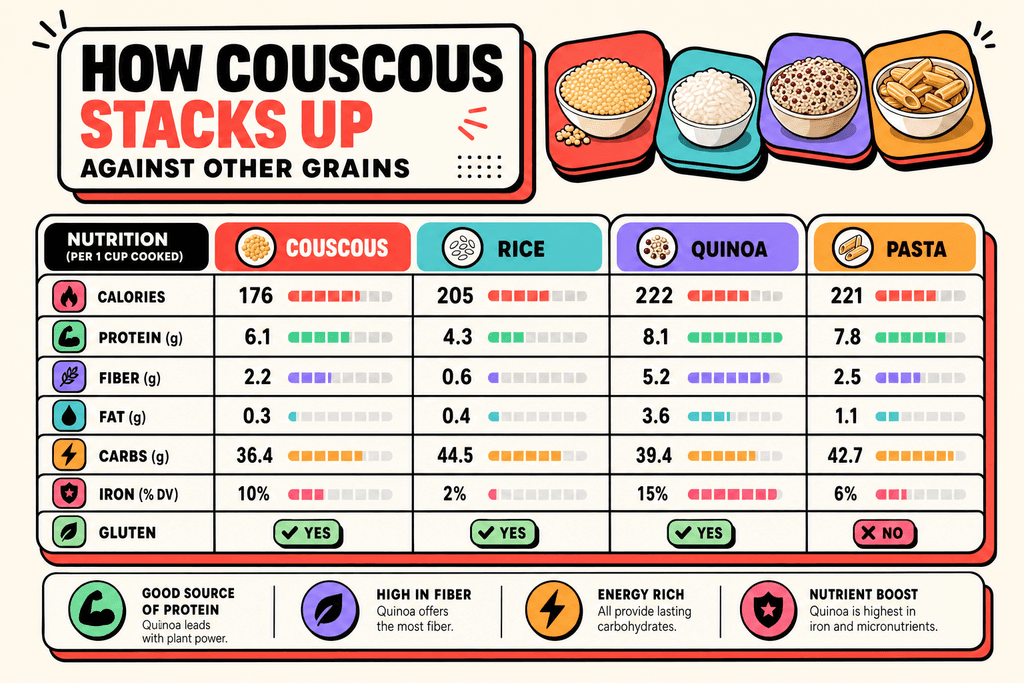
How Couscous Stacks Up Against Other Grains
When you're standing in the grocery store aisle trying to decide between couscous, rice, or quinoa, the nutritional differences might surprise you. Most people assume all grains are basically the same, but the numbers tell a different story. Understanding the nutritional information on couscous compared to other options helps you make smarter choices for your specific health goals. Whether you're trying to lose weight, build muscle, or just eat healthier, knowing these differences matters more than you might think.
The Calorie and Protein Breakdown
Couscous sits right in the middle when it comes to calories per cooked cup. At around 176 calories, it's lighter than pasta but heavier than cauliflower rice. The protein content is where things get interesting though.
| Grain (1 cup cooked) | Calories | Protein (g) | Fiber (g) | Cook Time |
|---|---|---|---|---|
| Couscous | 176 | 6 | 2.2 | 5 min |
| White Rice | 205 | 4.2 | 0.6 | 15-20 min |
| Brown Rice | 218 | 5 | 3.5 | 40-45 min |
| Quinoa | 222 | 8 | 5.2 | 15 min |
| Whole Wheat Pasta | 174 | 7.5 | 6.3 | 10-12 min |
Quinoa wins the protein battle with 8 grams per cup, making it the go-to choice for vegetarians and anyone focused on hitting higher protein targets. Couscous falls somewhere in the middle with 6 grams, beating out both types of rice but trailing behind pasta and quinoa.
Fiber Content and Digestive Health
The fiber comparison reveals why some grains keep you fuller longer than others. Whole wheat pasta leads the pack with over 6 grams of fiber per cup, while white rice barely registers at 0.6 grams. Couscous provides a modest 2.2 grams, which isn't terrible but won't keep you satisfied as long as quinoa or whole wheat options.
- Quinoa offers more than double the fiber of couscous
- Brown rice provides 60% more fiber than couscous
- Regular couscous has similar fiber to white rice
- Whole wheat couscous bumps fiber up to 5-6 grams per cup
Convenience and Cost Factors
Here's where couscous really shines. It cooks in just 5 minutes, which beats every other grain on this list. When you're tired after work and need dinner fast, that time difference matters. Brown rice takes nearly 45 minutes, and even quinoa needs 15 minutes of your attention.
- Couscous costs about $2-3 per pound on average
- White rice runs $1-2 per pound (cheapest option)
- Quinoa typically costs $4-6 per pound (most expensive)
- Whole wheat pasta falls around $2-3 per pound
Budget-conscious meal planning often means choosing rice, but couscous offers better nutrition for just slightly more money. The convenience factor also reduces the temptation to order takeout, which saves money in the long run.
When to Choose Couscous Over Alternatives
The best grain depends on your specific situation. If you're tracking macros and need quick meals, couscous makes sense. If protein is your priority, quinoa wins. For the lowest calorie option that still feels substantial, couscous beats rice.
- Choose couscous when you need something ready in under 10 minutes
- Pick quinoa when you need maximum protein and fiber
- Go with brown rice for the best fiber-to-cost ratio
- Select whole wheat pasta when you want familiar comfort food with better nutrition
Tracking all these options in apps like MyFitnessPal or Cronometer can get tedious with all the manual searching and portion measuring. MyFoodBuddy lets you just say "one cup of couscous with vegetables" and handles the nutritional breakdown automatically. Rotating between different grains keeps your diet interesting and ensures you get varied nutrients, but only if tracking them doesn't become a chore that makes you quit altogether.
Your Next Steps With Couscous
Couscous brings a lot to the table when you look at the nutritional information on couscous. It's packed with selenium for immune support, gives you steady energy from complex carbs, and works with pretty much any diet plan you're following. Whether you're trying to lose weight, build muscle, or just eat better, couscous fits right in because you can control portions easily and pair it with whatever proteins and veggies you like.
The side dish ideas we covered show just how flexible couscous can be. You can go Mediterranean with lemon and herbs, add roasted vegetables for extra nutrients, or mix in chickpeas for more protein to balance your meals. Each version changes the nutritional profile a bit, but they all stay pretty healthy.
Here's the thing about tracking couscous meals though. Most people give up on logging their food because it takes too long to search through databases and measure everything. With MyFoodBuddy, you can just say "one cup of couscous with grilled chicken and roasted peppers" and the app figures out all the numbers for you. No searching, no math, just simple meal tracking that actually sticks.
The recipes and nutritional breakdowns in this post give you everything you need to start adding couscous to your weekly rotation. Pick one or two sides that sound good and give them a try this week. Your taste buds and your nutrition goals will both be happy.
Common Questions About Couscous Nutrition
Tracking couscous can feel tricky if you're not sure what you're actually eating. These questions come up a lot when people start paying attention to the nutritional information on couscous and how it fits into their daily goals. Whether you're trying to lose weight or just want to understand what's on your plate, these answers should help clear things up.
Is couscous healthy for weight loss?
Couscous can work for weight loss if you watch your portions and pair it with protein and vegetables. A cup of cooked couscous has about 176 calories and is relatively low in fat, but it's also high in carbs and low in fiber, which means it won't keep you full as long as other grains. The key is treating it as part of a balanced meal rather than the main event.
How much protein is in couscous?
Regular couscous has about 6 grams of protein per cooked cup, which isn't terrible but also isn't impressive compared to quinoa or lentils. If you're tracking macros and need more protein, you'll want to add chicken, fish, chickpeas, or another protein source to your couscous dish. Whole wheat couscous bumps the protein up slightly to around 8 grams per cup, plus it adds more fiber.
Is couscous better than rice nutritionally?
Couscous and white rice are pretty similar in calories and carbs, but couscous has slightly more protein and cooks faster. Brown rice beats both of them for fiber and nutrients since it's a whole grain. The "better" choice really depends on what you're trying to hit for your daily nutritional information on couscous versus rice, and honestly, both can fit into a healthy diet.
Does couscous have gluten?
Yes, couscous is made from wheat, so it definitely contains gluten. If you have celiac disease or gluten sensitivity, you'll need to skip regular couscous entirely. Some brands make gluten-free versions from corn or rice, but they'll have different nutritional profiles than traditional wheat couscous.
How do you track couscous in a calorie app?
The easiest way is to just say what you ate, like "one cup of cooked couscous with olive oil and vegetables." With MyFoodBuddy, you can log it by voice or text and the app figures out the nutritional breakdown automatically using AI and USDA data. Traditional apps like MyFitnessPal make you search through databases and measure everything precisely, which takes way longer.
What's the difference between regular and whole wheat couscous?
Whole wheat couscous keeps the bran and germ from the wheat, which means more fiber, more nutrients, and a nuttier taste. Regular couscous is made from refined wheat, so it's lighter and fluffier but has less nutritional value. Whole wheat couscous has about 5-6 grams of fiber per cup compared to just 2 grams in regular couscous, which makes a real difference for staying full and hitting your daily fiber goals.
Ready to start tracking smarter?
Download MyFoodBuddy and start tracking your calories by just saying what you ate. No more searching databases or guessing portions.
Get started