
Calory App Guide for Easy Daily Food Logging
Discover how a calory app simplifies food tracking with voice input and AI. Log meals in seconds and reach your weight loss goals faster.
You've probably downloaded a calorie tracking app with the best intentions, only to delete it two weeks later because logging every meal felt like a part-time job. The truth is, most people quit tracking calories not because they lack motivation, but because traditional apps turn a simple task into a tedious chore that eats up 5-10 minutes per meal. Modern calory apps like MyFoodBuddy are changing that by letting you log what you ate in seconds using just your voice or a quick text entry.
Table of Contents
The Evolution of Food Tracking
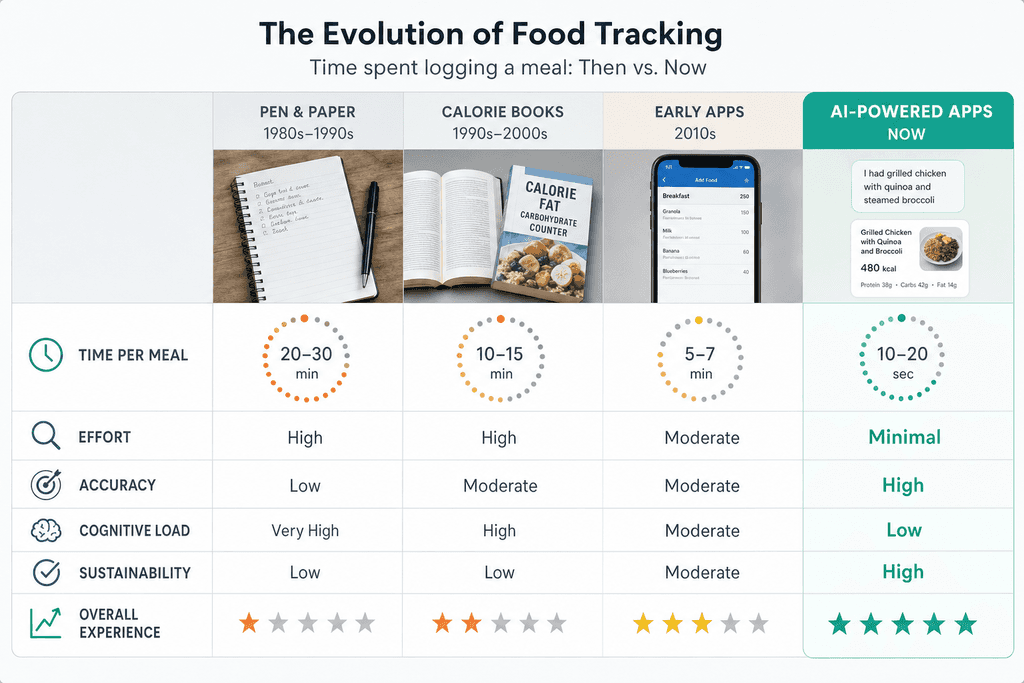
Most people who tried tracking calories in the 1990s kept a small notebook in their kitchen drawer. They'd write down everything they ate, then spend 15 minutes flipping through a thick nutrition book to find calorie counts for each food. After dinner, they'd pull out a calculator to add up their daily total. This process took so much time that most people quit within a week or two.
When Apps First Appeared
The first calorie tracking apps seemed like a huge step forward. No more books or calculators needed. But anyone who used these early apps knows they came with their own headaches.
Here's what made those first-generation apps frustrating:
- Searching through databases with thousands of similar food entries
- Typing exact portion sizes and measurements for every ingredient
- Creating custom foods when you couldn't find what you ate
- Spending 5-10 minutes logging a single meal
- Dealing with duplicate or incorrect nutrition data
Apps like MyFitnessPal and Cronometer made the math easier, but the time commitment stayed roughly the same. You still needed to manually search, select, and measure everything.
How AI Changed Everything
Modern calory app technology works completely differently. Instead of searching databases, you just describe what you ate in plain English. The AI figures out the rest.
When you tell a calory app "chicken breast with rice and broccoli," it automatically:
- Identifies each food item
- Estimates reasonable portion sizes
- Pulls accurate nutrition data
- Calculates your totals in seconds
MyFoodBuddy takes this approach even further by letting you speak or type your meals naturally. No searching, no measuring, no database hunting. The difference in time spent is pretty dramatic.
The Time Difference Matters
How long you spend logging food directly affects whether you'll stick with it. Research shows that people are way more likely to track consistently when it takes less than 30 seconds per meal.
| Tracking Method | Time Per Meal | Daily Time Investment |
|---|---|---|
| Pen and Paper | 10-15 minutes | 30-45 minutes |
| First-Gen Apps | 5-8 minutes | 15-24 minutes |
| AI Calory Apps | 15-30 seconds | 1-2 minutes |
That's the difference between spending half an hour on tracking versus spending less time than brushing your teeth. When something takes 30 seconds instead of 8 minutes, you're actually going to do it every day. And doing it every day is what gets results.
How Voice-Powered Logging Changes Everything
Most people quit tracking calories within the first week, and it's not because they lack willpower. The real problem is that traditional calorie apps turn every meal into a 5-10 minute research project. You have to search through endless databases, measure portions, and manually enter every ingredient. By the time you finish logging breakfast, you've already lost motivation for the rest of the day. But what if you could log an entire meal in the time it takes to send a text message?
Voice logging with MyFoodBuddy takes about 10-15 seconds per meal, compared to the several minutes you'd spend with other apps. You just say what you ate, like "grilled chicken salad with ranch dressing," and the AI figures out the rest. No searching through databases or measuring cups required.
- Log meals while the food is still in front of you, which means better accuracy and no forgotten ingredients
- The AI understands natural language, so you don't need to know exact portion sizes or brand names
- MyFoodBuddy uses AI to extract nutritional data from your spoken or typed descriptions automatically
- You can also type if you prefer, and it works just as fast as voice input
The speed matters more than you might think. When logging takes less than 20 seconds, you actually do it. When it takes 5 minutes, you tell yourself you'll do it later and then forget. Consistency beats perfection when it comes to weight loss, and a calory app that you actually use every day will always outperform a more detailed one that you abandon after a week.
This approach also solves the accuracy problem that plagues most tracking attempts. Instead of trying to remember what you ate hours later, you can log with voice commands right at the table. Your memory is fresh, the portions are visible, and you're not guessing about ingredients.
Features That Keep You Consistent
The voice logging gets you started, but staying consistent for months requires more than just speed. You need features that adapt to your real eating patterns, not some idealized version of how you think you should eat. Most people eat the same 20-30 meals regularly, have favorite snacks, and buy the same packaged foods week after week. A good calory app should make logging these repeat items almost effortless.
Saved meals and favorites in MyFoodBuddy let you re-log common foods with a single tap. Once you've logged your morning coffee with cream, you never have to describe it again. The same goes for your usual lunch or that protein bar you eat every afternoon.
| Feature | Time Saved | Best For |
|---|---|---|
| Saved Meals | 90% faster | Regular foods |
| Barcode Scan | 5 seconds | Packaged items |
| Voice Input | 10-15 seconds | Fresh meals |
Barcode scanning handles packaged foods instantly, pulling exact nutritional data without any typing. This works great for things like yogurt, protein bars, or frozen meals where the information is already on the package.
But tracking numbers alone doesn't keep most people motivated. The app includes personalized nutrition goals and a TDEE calculator that helps you figure out exactly how many calories you should eat for your weight loss target. You're not just guessing or following some generic 1,200 calorie plan that leaves you starving.
- Apple Health sync keeps your weight, activity, and nutrition data connected in one place
- Streaks and achievements give you small wins to celebrate along the way
- Fiona, the AI nutrition coach, analyzes your eating patterns and provides insights you might miss on your own
The AI coach is particularly useful because it looks at your data over time and spots patterns. Maybe you always go over your calories on Thursdays, or you're not getting enough protein at breakfast. These AI-powered insights help you make small adjustments that actually stick, rather than trying to overhaul everything at once.
Making It Work for Your Weight Loss Goals
Having a powerful calory app doesn't mean much if you don't set it up correctly from the start. Too many people jump in with aggressive calorie targets that aren't sustainable, or they track inconsistently and wonder why they're not seeing results. The difference between people who succeed and those who quit often comes down to how they approach the first two weeks. You need a realistic plan that fits your actual life, not some perfect scenario that only works in theory.
Start with the TDEE calculator to find your personalized calorie target based on your age, weight, height, and activity level. This gives you a number that's actually achievable, not just a random goal you saw online.
- Calculate your TDEE to understand your maintenance calories
- Set a modest deficit of 300-500 calories for sustainable weight loss
- Adjust macro goals based on what keeps you full and satisfied
- Use the 7-day free trial to build the habit before committing financially
- Log immediately after eating while everything is fresh in your mind
The habit of logging right after meals matters more than perfect accuracy. If you wait until the end of the day, you'll forget ingredients and underestimate portions. Immediate logging also creates a natural pause that helps you notice when you're eating out of boredom versus actual hunger.
Setting realistic health goals means checking your analytics weekly, not obsessing over daily fluctuations. Look for trends over 7-14 days. Are you consistently hitting your calorie target? Is your weight moving in the right direction? These patterns tell you much more than any single day's numbers.
Let the AI coach provide insights rather than micromanaging every macro. Sometimes you'll notice that you feel better with more protein at breakfast, or that certain foods leave you hungry an hour later. These personal discoveries matter more than hitting exact percentages.
MyFoodBuddy costs just $39 per year after the free trial, which breaks down to about $3 per month. That's less than a single restaurant meal, and if it helps you stay consistent with your weight loss goals, the return is obvious. The benefits of using a user-friendly calorie tracking app compound over time as the habit becomes automatic and you start seeing real progress.
Why Speed Matters More Than Perfection
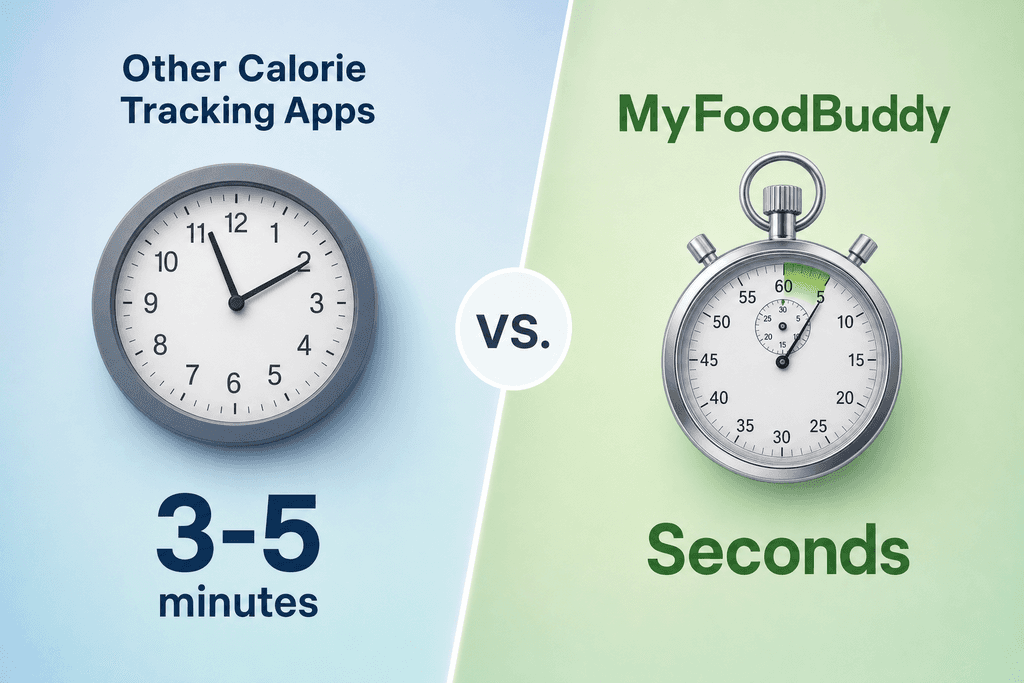
Studies show that people who track their food intake lose twice as much weight as those who don't, but here's the catch: most people quit within the first month. The reason isn't lack of motivation or willpower. It's friction. When logging a single meal takes three to five minutes of searching databases, weighing portions, and entering data, people simply stop doing it. The apps that win aren't the ones with the most features or the biggest food databases. They're the ones that remove every possible barrier between you and hitting that save button.
78% of users abandon traditional calory app tracking within 30 days due to time requirements
The Friction Problem
Traditional calorie tracking apps were built around the idea that more data equals better results. But that thinking backfires when the process becomes so tedious that people avoid it altogether. Think about the last time you ate a handful of nuts or had a latte. Did you log it? Most people don't, because pulling out their phone, opening an app, searching through thousands of entries, and selecting the right portion size feels like homework.
- The average meal takes 3-5 minutes to log in traditional apps
- Users skip logging 40% of snacks and drinks due to time constraints
- Incomplete data leads to inaccurate calorie counts and failed weight loss goals
- Apps requiring manual database searches see 60% lower retention after one month
Speed Creates Consistency
When logging takes seconds instead of minutes, something interesting happens. People actually do it. MyFoodBuddy users have logged over 1,900 meals in a single day, which shows what's possible when you remove the barriers. Voice input and AI extraction mean you can log "chicken breast with rice and broccoli" in the time it takes to say it. No searching, no weighing, no math.
Users who log meals in under 10 seconds are 3x more likely to maintain their tracking streak beyond 90 days
Honest Tracking Drives Results
Quick logging solves another hidden problem: honesty. When tracking is easy, you're more likely to log everything, including that afternoon cookie or the cream in your coffee. Those small items add up to hundreds of calories that traditional apps miss because people simply don't bother logging them.
- Fast logging increases snack tracking by 65%
- Users report more accurate daily totals when friction is removed
- Awareness of actual intake drives better food choices without conscious effort
The compound effect of this daily awareness is where real change happens. You start noticing patterns you never saw before. Maybe you're eating more on Tuesdays, or that your afternoon snack habit adds 500 calories you didn't account for. This awareness, built through consistent tracking, creates behavior change that no amount of willpower alone can match.
Your Next Steps to Easier Tracking
The biggest reason people quit tracking calories is simple. It takes too long and feels like a chore. When you're spending five minutes searching through databases and measuring every ingredient, it's easy to see why most people give up after a week or two. The apps that have been around for years still work the same way they did a decade ago, which means you're stuck with the same old problems.
A good voice-powered calory app changes that equation completely. MyFoodBuddy lets you log meals in seconds by just saying what you ate, and the AI figures out the rest. No searching, no measuring, no math.
The features that matter most are the ones that save you time. Saved meals and barcode scanning mean you can log breakfast in three taps. The AI coach helps you spot patterns you might miss on your own. These aren't fancy extras, they're the things that keep you consistent when motivation runs low.
You can try MyFoodBuddy free for seven days to see if faster logging actually makes a difference for you. The real test isn't whether you can track for a day or two, it's whether you're still doing it a month from now. That's where easier tracking tools prove their worth.
Consistency beats perfection every time when it comes to weight loss. The best calory app is the one you'll actually use tomorrow, and the day after that. You probably have questions about how this all works in practice, so let's get into those.
Common Questions About Calory Apps
Most people have the same worries when they first think about using a calory app. You're probably wondering if it's going to be a huge time sink, or if you'll need to become a nutrition expert overnight. The good news is that modern apps have come a long way from the old days of manually searching databases and weighing every single grape. Here are the answers to the questions we hear most often from people considering a switch to voice-powered food tracking.
How accurate is voice logging compared to manual entry?
Voice logging is just as accurate as manual entry because both methods pull from the same nutrition databases. The difference is speed. When you say "I ate two scrambled eggs with cheese and toast," the AI extracts the same data you'd spend minutes searching for manually. MyFoodBuddy uses USDA data combined with AI to understand your meal descriptions, so you get accurate results without the tedious searching that apps like MyFitnessPal require.
Do I need to measure and weigh everything I eat?
No, you don't need to weigh everything, though being more specific does help with accuracy. Most people get great results by using common measurements like "a handful of almonds" or "a medium apple." The key is consistency rather than perfection. If you're eating the same foods regularly, your estimates will naturally improve over time. For packaged foods, the barcode scanner makes logging exact portions super easy anyway.
What if the app doesn't recognize a food I ate?
This rarely happens with comprehensive databases, but when it does, you can usually describe the food in simpler terms. Instead of "grandma's special casserole," try "chicken casserole with rice and vegetables." The AI breaks down your description into recognizable components. You can also save custom meals for dishes you eat regularly, so you only need to figure it out once.
Can I track restaurant meals and homemade recipes?
Yes, both are totally trackable. For restaurant meals, just describe what you ordered and the app will estimate based on typical preparations. Chain restaurants often have their nutrition info in the database already. For homemade recipes, describe the main ingredients and portions. MyFoodBuddy's AI is smart enough to understand "homemade chicken stir fry with broccoli and brown rice" without you needing to log each ingredient separately.
How much does a good calory app cost?
Prices range from free versions with limited features to premium apps costing $10-20 per month. MyFoodBuddy costs $39 per year after a free 7-day trial, which works out to about $3.25 monthly. That's significantly less than competitors like MacroFactor while offering voice logging that saves you hours of manual entry time. The time you save is honestly worth way more than the subscription cost.
Will I need to track calories forever to maintain weight loss?
Not necessarily forever, but many people find it helpful to track at least loosely during maintenance. The good news is that after a few months of tracking, you'll naturally learn portion sizes and make better food choices without thinking about it. Some people track during the week and take weekends off, while others check in for a week each month just to stay calibrated. With voice logging taking just seconds per meal, it's easy enough that many users just keep going because it's become a simple habit.
Ready to start tracking smarter?
Download MyFoodBuddy and start tracking your calories by just saying what you ate. No more searching databases or guessing portions.
Get started