
Calories Plum vs Other Summer Fruits for Weight Loss
Discover how plum calories compare to watermelon, peaches, and berries. Find the best low-calorie summer fruits for your weight loss goals.
You grab a plum from the fridge thinking it's a healthy snack, but have you ever wondered how those calories plum actually stack up against the watermelon or cherries sitting right next to it? Summer fruits might all seem like smart weight loss choices, but the calorie differences between them can seriously impact whether you hit your daily targets or blow past them without realizing. Understanding which fruits give you the most satisfaction for the fewest calories makes tracking easier, and tools like MyFoodBuddy let you log that plum in seconds so you always know exactly where you stand.
Table of Contents
- The Calorie Breakdown of Popular Summer Fruits
- Plums vs Stone Fruits: Peaches, Nectarines, and Cherries
- Plums vs Berries: The Low-Calorie Champions
- Plums vs High-Water Fruits: Watermelon and Cantaloupe
- What These Calorie Differences Actually Mean for Your Weight Loss
- Making Summer Fruit Work for Your Goals
- Common Questions About Plum Calories and Summer Fruits
The Calorie Breakdown of Popular Summer Fruits
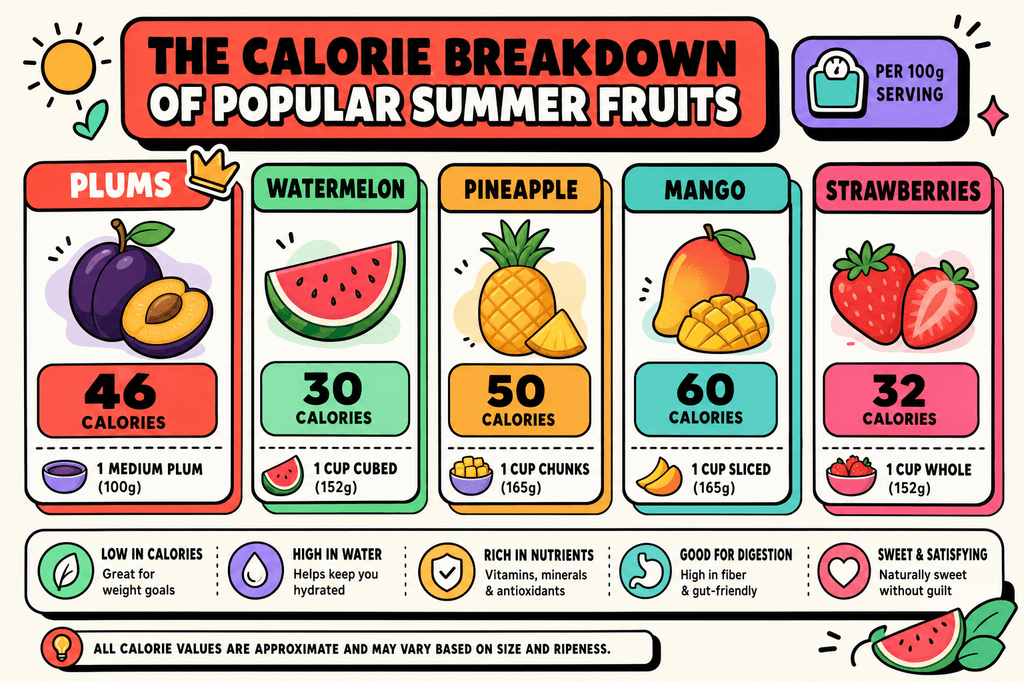
A single plum contains about 30 calories, which makes it one of the lowest-calorie fruits you can grab during summer. When you're trying to lose weight, knowing exactly what you're eating matters a lot. Most people who track their food intake using apps like MyFitnessPal or Cronometer spend way too much time searching through databases and measuring portions. With MyFoodBuddy, you can just say "I ate two plums" and the AI figures out the rest in seconds.
Understanding Serving Sizes
Before we compare calories plum to other fruits, we need to talk about serving sizes. A medium plum weighs about 66 grams, which is roughly the size of a tennis ball. Most nutrition labels use 100 grams as their standard, but nobody actually eats exactly 100 grams of fruit in real life.
Here's what counts as one serving for common summer fruits:
- One medium plum (66g)
- One cup of watermelon cubes (152g)
- One medium peach (150g)
- One cup of strawberries (152g)
- Half a medium mango (83g)
Calories Per 100 Grams
Looking at the raw numbers helps you see which fruits give you more food for fewer calories. The calories plum offers per 100 grams is just 46, which puts it in the lower range compared to most summer favorites. This matters because you can eat more volume and feel fuller without going over your daily calorie goals.
| Fruit | Calories per 100g | Water Content |
|---|---|---|
| Plum | 46 | 87% |
| Watermelon | 30 | 92% |
| Strawberries | 32 | 91% |
| Peach | 39 | 89% |
| Mango | 60 | 83% |
| Cherries | 63 | 82% |
| Grapes | 69 | 81% |
Real World Serving Comparisons
The 100-gram comparison is useful, but what about actual servings you'd eat? This is where things get interesting because portion sizes vary a lot between different fruits. A cup of watermelon weighs more than a cup of grapes, so the calorie counts change based on what you actually put in your bowl.
| Fruit | Typical Serving | Calories per Serving |
|---|---|---|
| Plum | 1 medium (66g) | 30 |
| Watermelon | 1 cup cubed (152g) | 46 |
| Strawberries | 1 cup whole (152g) | 49 |
| Peach | 1 medium (150g) | 59 |
| Mango | 1/2 medium (83g) | 50 |
| Cherries | 1 cup (154g) | 97 |
| Grapes | 1 cup (151g) | 104 |
When you look at typical servings, plums come out as one of the lowest-calorie options. You could eat three plums for the same calories as one cup of grapes. That's a big difference when you're trying to stay within your daily calorie budget without feeling hungry all the time.
Plums vs Stone Fruits: Peaches, Nectarines, and Cherries
A medium plum has about 30 calories, which makes it one of the lighter options when you're comparing stone fruits. Peaches clock in at around 60 calories per fruit, while nectarines sit at about 62 calories. The difference might not seem huge at first, but when you're trying to lose weight and tracking everything you eat, those extra 30 calories add up fast. What's interesting is that all three fruits give you similar amounts of fiber and that satisfying bite that makes you feel like you actually ate something.
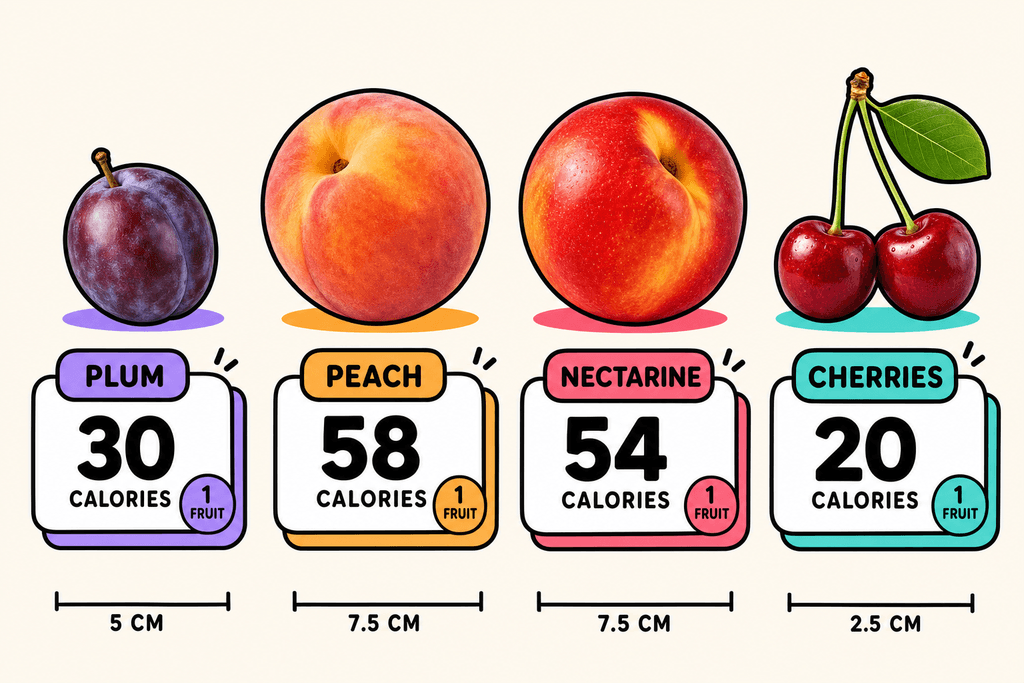
Cherries are a different story altogether. They're small, sweet, and dangerously easy to keep popping in your mouth without thinking.
- One cup of cherries has about 87 calories
- Plums provide more satisfaction per calorie because you eat them one at a time
- Peaches and nectarines work well for smoothies but add more calories than plums
- Stone fruits all contain similar fiber levels, around 2-3 grams per serving
The real advantage of plums comes down to portion control. When you grab a plum, you eat one plum and you're done. With cherries, you might eat ten before you realize what happened. If you're using something like MyFoodBuddy to track your meals, you can just say "I ate a plum" and move on with your day. The calories in plums make them perfect for mindless snacking without derailing your goals.
Plums vs Berries: The Low-Calorie Champions
Berries get all the attention in weight loss circles, and for good reason. A cup of strawberries has only 50 calories, and raspberries come in at about 64 calories per cup. Those numbers look great on paper. But here's what nobody talks about: eating a cup of berries doesn't feel the same as eating a whole piece of fruit. You need more volume to feel satisfied, and sometimes that means eating two or three cups before you feel like you've had a real snack.
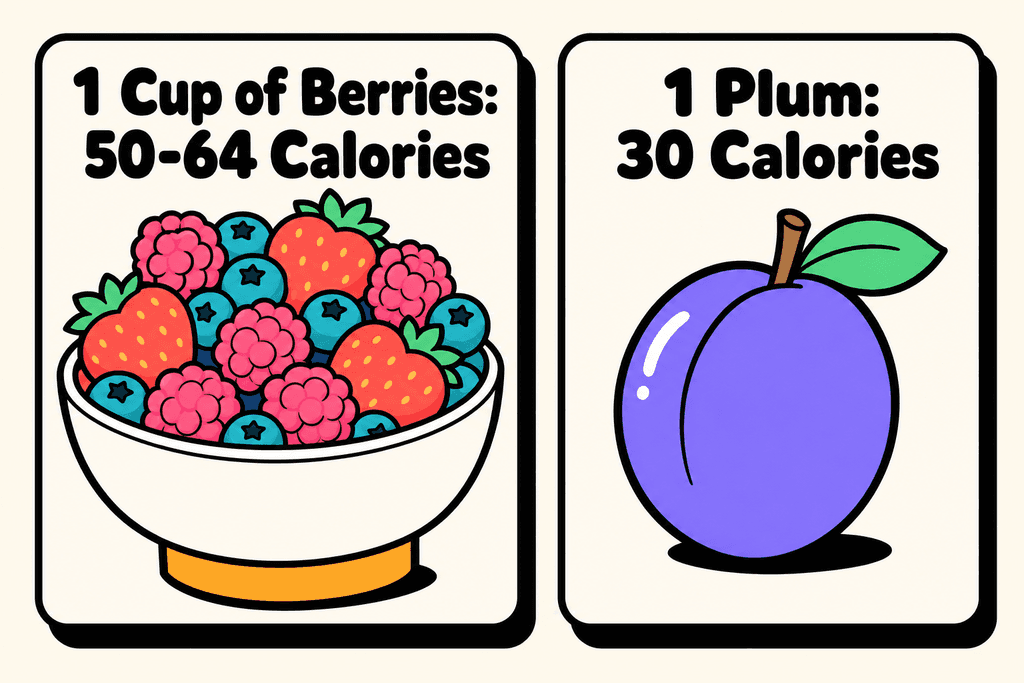
Plums hit differently. One plum gives you that complete eating experience where you bite into something substantial, work your way around the pit, and feel done when you're finished.
| Fruit | Calories per Serving | Satisfaction Level | Cost Factor |
|---|---|---|---|
| Plum (1 medium) | 30 | High | Low |
| Strawberries (1 cup) | 50 | Medium | Medium |
| Raspberries (1 cup) | 64 | Medium | High |
| Blueberries (1 cup) | 84 | Medium | High |
The cost difference matters too. Berries are expensive, especially organic ones. Plums stay affordable all summer long. When you're at home with a container of berries, it's easy to graze and lose track of how much you've eaten. A plum has natural portion control built right in. You can learn more about setting realistic calorie goals that work with your actual eating habits.
Different situations call for different fruits. Berries work great in yogurt or oatmeal where you want something mixed in. Plums are better when you need a grab-and-go snack that travels well and doesn't need refrigeration.
Plums vs High-Water Fruits: Watermelon and Cantaloupe
Watermelon shows up at every summer gathering because it's refreshing and low in calories. One cup of watermelon has only 46 calories, which sounds perfect for weight loss. Cantaloupe is similar at about 53 calories per cup. But there's a catch that most people don't think about. These fruits are mostly water, which means they don't keep you full for very long. You might eat watermelon at a BBQ and feel hungry again thirty minutes later.
Plums have less water content but more fiber, which is what actually keeps you satisfied between meals.
- Watermelon is 92% water with minimal fiber
- Plums contain more fiber per calorie than melons
- Higher fiber means better blood sugar control
- You'll stay full longer after eating a plum
The practical side of this matters when you're trying to stick to your goals. If you eat watermelon as a snack, you might end up eating something else an hour later because you're still hungry. That's where the calories in plums actually work in your favor. The 30 calories from a plum do more work keeping you satisfied than 46 calories of watermelon.
Tracking these fruits is simple when you use voice input. With MyFoodBuddy, you can just say what you ate and the app figures out the nutrition details. No need to measure cups of watermelon or weigh your cantaloupe. For more tips on quick calorie logging, especially during busy summer days, there are strategies that make tracking feel effortless.
| Fruit | Calories (per cup) | Fiber (grams) | Water Content |
|---|---|---|---|
| Watermelon | 46 | 0.6 | 92% |
| Cantaloupe | 53 | 1.4 | 90% |
| Plum (2 medium) | 60 | 2.4 | 87% |
The best approach is knowing when to choose each fruit. Watermelon works great when you need hydration on a hot day. Plums are better when you need something that will actually hold you over until your next meal. Understanding these differences helps you make smarter choices without feeling restricted. Check out more about losing weight without feeling hungry by choosing foods that work with your body instead of against it.
What These Calorie Differences Actually Mean for Your Weight Loss
A single plum might only save you 20-30 calories compared to a banana or mango, but those small choices stack up faster than most people realize. If you swap a higher-calorie fruit for a plum just once a day, you're looking at 140-210 calories saved per week. Over a month, that's 600-900 calories, which equals roughly a quarter pound of fat loss without changing anything else about your diet. The math gets even more interesting when you consider that most people eat fruit multiple times throughout the week.
Weekly Savings: Choosing plums over bananas daily saves 140-210 calories per week
Monthly Impact: That's 600-900 calories per month, equivalent to skipping 1-2 full meals
Annual Difference: Over a year, this single swap could mean 3-4 pounds of weight loss
But here's what the calories plum comparison doesn't tell you on its own. A 30-calorie plum with 1 gram of fiber will keep you satisfied longer than a 60-calorie handful of grapes with less fiber. Your body processes these fruits differently, and the fiber content plays a huge role in how full you feel between meals.
Why Fiber Matters More Than the Number
The fiber in plums slows down digestion and helps stabilize your blood sugar. This means you're less likely to reach for a snack 30 minutes after eating. When you're tracking your food intake, understanding this connection helps you make smarter choices that go beyond just picking the lowest-calorie option.
- Plums contain both soluble and insoluble fiber that promotes fullness
- Higher fiber fruits take longer to digest, reducing hunger signals
- Stable blood sugar means fewer energy crashes and cravings
- Fiber-rich choices help you naturally eat less throughout the day
Fitting Summer Fruits Into Your Daily Budget
The good news is that no summer fruit is off-limits when you're trying to lose weight. Even higher-calorie options like mangoes and cherries can fit into your plan when you track them properly. Apps like MyFoodBuddy make this easy by letting you simply say what you ate instead of manually searching databases and measuring portions.
- Pre-log your fruit servings in the morning to plan your day
- Use voice logging to quickly track fruit snacks without interrupting your routine
- Save your favorite fruit combinations for one-tap logging
- Review your weekly fruit intake to spot patterns and adjust portions
The key is staying accountable without turning tracking into a stressful chore. When logging takes 5 seconds instead of 5 minutes, you're more likely to stick with it long enough to see real results.
Making Summer Fruit Work for Your Goals
The truth is, plums are one of the smartest choices you can make when you're trying to lose weight during summer. At around 30 calories plum for a medium-sized one, you get a sweet treat that actually fills you up without wrecking your daily calorie budget. But here's what really matters: whether you pick plums, watermelon, or peaches, none of these fruits will sabotage your progress if you're keeping track of what you eat. The small calorie differences between summer fruits are way less important than just being consistent with your tracking.
Most people quit their weight loss plans because tracking feels like a chore. When you have to manually search for "calories plum" or spend five minutes logging a simple snack, it's easy to just give up. That's where quick calorie logging becomes the difference between success and another failed diet attempt.
MyFoodBuddy lets you just say what you ate and the AI figures out the rest, which means logging that plum or bowl of berries takes about three seconds instead of three minutes. You can check out what makes a calorie app actually easy to use if you're tired of complicated tracking systems. The bottom line is this: summer fruits are your friends when you're losing weight, but only if you can track them without making it feel like homework.
If you're wondering whether tracking is even necessary, we've covered different approaches to weight loss that might help you figure out what works best for your lifestyle.
Common Questions About Plum Calories and Summer Fruits
Tracking fruit intake can feel confusing when you're trying to lose weight. Most people wonder if they should even bother counting calories from something as healthy as plums, or whether dried versions are secretly sabotaging their progress. These questions come up all the time, and the answers might surprise you since fruit isn't quite the "free food" many diet plans make it out to be. Here are the most common questions about calories plum and other summer fruits that pop up when people start paying attention to what they eat.
How many plums can I eat per day while losing weight?
Most people can safely eat 2-3 medium plums per day while losing weight, which adds up to about 90-135 calories. The fiber content helps keep you full, but eating too many can still push you over your calorie goals. If you're tracking your intake, you'll want to log them just like any other food to see how they fit into your daily budget.
Are dried plums (prunes) the same calories as fresh plums?
Dried plums pack way more calories than fresh ones because the water has been removed. A single prune has about 23 calories, while a fresh plum has around 30-45 calories but is much larger and more filling. You'd need to eat about 5-6 prunes to feel as satisfied as eating one fresh plum, which means you'd consume roughly 115-138 calories instead of just 30-45.
Which summer fruit has the absolute lowest calories?
Watermelon wins the low-calorie contest at just 30 calories per 100 grams, followed closely by strawberries at 32 calories. Plums come in at 46 calories per 100 grams, which is still pretty reasonable. The high water content in these fruits means you can eat a bigger portion without going overboard on calories.
Do I really need to track fruit calories?
Yes, fruit calories count toward your daily total even though fruit is healthy. A large banana or a handful of grapes can easily add 100-150 calories to your day, and those add up fast if you're not paying attention. People who don't track fruit often wonder why they're not losing weight, but those "healthy" snacks might be the missing piece of the puzzle.
What's the easiest way to log fruit without measuring everything?
Voice logging makes tracking fruit super simple without pulling out measuring cups every time you eat. With MyFoodBuddy, you can just say "I ate two plums" and the app figures out the calories plum count automatically using AI. This beats the old method of searching through databases and guessing portion sizes, which is why most people give up on traditional tracking apps after a few weeks.
Ready to start tracking smarter?
Download MyFoodBuddy and start tracking your calories by just saying what you ate. No more searching databases or guessing portions.
Get started