
How Many Calories in a Peach and Healthy Portions
Discover peach calories, nutrition facts, and perfect portion sizes. Learn how to track peaches easily for your health goals.
A medium peach tastes like candy but contains only about 60 calories, making it one of nature's best sweet treats for anyone watching their intake. The tricky part is knowing exactly how many calories you're eating when peaches come in different sizes and forms, from fresh to canned to dried. Whether you're tracking with MyFoodBuddy or just curious about fitting peaches into your daily goals, understanding the calorie content and what counts as a healthy portion makes all the difference.
Table of Contents
Peach Nutrition Breakdown
A single medium peach contains about 58 calories, making it one of the lighter fruit options you can grab for a snack. But the calorie count changes quite a bit depending on whether you're eating a fresh peach, opening a can of peaches in syrup, or munching on dried peach slices. The size matters too, since a small peach might only have 35 calories while a large one can pack in 80 calories or more. Understanding these differences helps you track your food intake more accurately, especially if you're using an app like MyFoodBuddy where you can just say "I ate a medium peach" and it calculates everything for you.
Calories in Different Peach Sizes
Fresh peaches come in various sizes, and knowing the calorie difference between them can help you make better choices throughout your day. Here's what you need to know about portion sizes.
| Peach Size | Weight | Calories | Carbs | Fiber |
|---|---|---|---|---|
| Small | 130g | 51 | 12g | 2g |
| Medium | 150g | 58 | 14g | 2.3g |
| Large | 175g | 68 | 17g | 2.6g |
| Extra Large | 224g | 87 | 21g | 3.4g |
Fresh Versus Processed Peaches
The way peaches are prepared and stored makes a huge difference in their nutritional value. Canned peaches in heavy syrup can have more than double the calories of fresh ones because of all the added sugar. Dried peaches are even more calorie-dense since the water gets removed and the natural sugars become concentrated.
- Fresh peaches have no added sugars and keep all their natural vitamins
- Canned peaches in juice add about 20-30 extra calories per serving
- Canned peaches in syrup can add 60-100 extra calories per serving
- Dried peaches contain about 240 calories per half cup
| Peach Type | Serving Size | Calories | Sugar | Protein |
|---|---|---|---|---|
| Fresh | 1 medium | 58 | 13g | 1.4g |
| Canned in juice | 1/2 cup | 55 | 12g | 1g |
| Canned in syrup | 1/2 cup | 97 | 24g | 0.6g |
| Dried | 1/4 cup | 96 | 21g | 1.5g |
Vitamins and Minerals in Peaches
Beyond just calories, peaches deliver some pretty solid nutrition. A medium peach gives you about 10% of your daily vitamin C and contains vitamin A, which is good for your eyes and skin. They also have potassium, which helps with muscle function and keeping your blood pressure in check.
- Vitamin C supports your immune system and helps wounds heal
- Vitamin A keeps your vision sharp and skin healthy
- Potassium helps regulate fluid balance and heart function
- Small amounts of vitamin E, K, and B vitamins round out the profile
When you're tracking how many calories in a peach or any other food, apps like MyFoodBuddy pull from USDA data to give you accurate numbers without having to look everything up yourself. You just log "ate a peach" and the app handles the rest, which beats manually searching through nutrition databases every time you want a snack.
Calories in Different Peach Sizes
A medium peach sitting on your kitchen counter contains about 58 calories, which makes it one of the lowest-calorie fruits you can grab for a quick snack. The actual calorie count changes based on the size of the peach you're eating, and understanding these differences helps you track your intake more accurately. Most people don't realize that peach sizes can vary quite a bit, from tiny early-season fruits to those giant late-summer peaches that barely fit in your hand. The weight of the peach matters more than anything else when it comes to calories.
Here's what you need to know about how many calories in a peach based on size:
- Small peach (2.5 inches diameter, about 130g): 51 calories
- Medium peach (2.75 inches diameter, about 150g): 58 calories
- Large peach (3 inches diameter, about 175g): 68 calories
- Extra-large peach (about 225g): 87 calories
The preparation method changes everything though. Fresh peaches have the lowest calorie count because there's nothing added to them. Canned peaches packed in heavy syrup can have more than double the calories of fresh ones, while frozen peaches without added sugar stay pretty close to fresh.
| Peach Type | Serving Size | Calories |
|---|---|---|
| Fresh peach | 1 medium (150g) | 58 |
| Canned in water | 1 cup | 59 |
| Canned in light syrup | 1 cup | 136 |
| Canned in heavy syrup | 1 cup | 194 |
| Frozen unsweetened | 1 cup | 60 |
The added sugars in canned varieties are what drive up the calorie count so dramatically. A cup of peaches in heavy syrup contains about 30 grams of added sugar, which adds roughly 120 extra calories compared to fresh peaches. If you're watching your calorie intake, sticking with fresh or frozen peaches makes the most sense.
What Makes a Healthy Peach Portion
The standard serving size for a peach is one medium fruit, which weighs about 150 grams and fits comfortably in your palm. This portion gives you a good amount of fiber, vitamins, and natural sweetness without overdoing the sugar or calories. But the right portion for you depends on what you're trying to accomplish with your diet and when you're eating the peach. Someone trying to lose weight might approach portions differently than someone maintaining their current weight.
For weight loss goals, one medium peach makes a perfect snack between meals. It provides enough volume and fiber to keep you satisfied without adding many calories to your daily total. For maintenance or muscle gain, you might eat two peaches or pair one with protein like Greek yogurt.
Here's how to think about peach portions in different situations:
- As a snack: 1 medium peach (58 calories)
- With breakfast: 1 medium peach sliced over oatmeal or yogurt
- In a smoothie: 1-2 medium peaches depending on other ingredients
- As dessert: 1 large peach, possibly grilled or baked
You don't always need a scale to measure portions accurately. A medium peach is roughly the size of a tennis ball, while a large peach is closer to a baseball. Your closed fist is another good visual reference for a medium peach portion.
The beauty of peaches is that they're naturally portion-controlled since they come as individual fruits. Unlike foods you need to measure out, you can just grab one peach and know exactly what you're getting. This makes them easier to track than foods that require weighing or measuring cups.
Tracking Peaches Without the Hassle
Traditional calorie tracking apps make logging a simple peach more complicated than it needs to be. You have to search through databases, pick between dozens of entries for "peach," decide if yours was small or medium, and manually enter everything. Some apps have entries for "peach with skin" and "peach without skin" as if anyone actually peels their peaches before eating them. The whole process turns a 30-second snack into a 3-minute data entry task.
Most people give up on tracking fruits because it feels tedious. But fruits like peaches contain important nutrients and natural sugars that affect your daily totals, so skipping them means your tracking isn't accurate.
Voice logging changes the entire experience of tracking whole foods like peaches. Instead of tapping through menus and searching databases, you just say what you ate. MyFoodBuddy uses AI to understand natural language, so you can say "I had a peach" or "two peaches with breakfast" and it handles the rest.
The AI-powered nutrition extraction pulls data from USDA sources to calculate the calories and nutrients automatically. It knows that when you say "a peach," you probably mean a medium one unless you specify otherwise. This works especially well for whole foods because the nutritional data is standardized and reliable.
Here's what logging looks like in practice:
- You eat a peach as an afternoon snack
- You open the app and say "one peach"
- The app logs 58 calories plus fiber, vitamin C, and other nutrients
- Total time spent: about 5 seconds
This approach works for any fruit or whole food. Whether you're tracking peaches, apples, or more complex meals, the voice input makes it fast enough that you'll actually do it consistently. And consistency matters more than perfection when it comes to reaching your health goals.
If you're interested in making calorie tracking easier for all your meals, check out our guide on voice-powered calorie counting for a healthier lifestyle to see how this method works for everything you eat. You might also find our article on simplifying calorie counting for homemade meals helpful if you cook at home often.
Why Peach Calories Matter for Your Goals
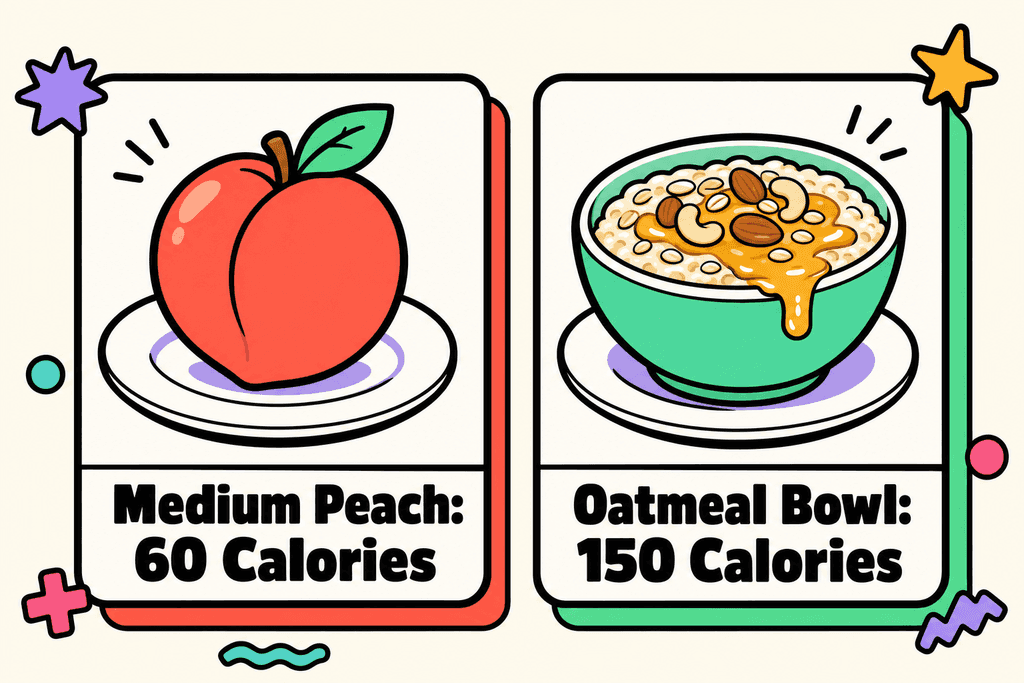
A medium peach contains about 60 calories, which might seem like a small number until you start thinking about how it fits into your daily eating plan. Whether you're trying to lose weight, maintain your current size, or build muscle, knowing how many calories in a peach can help you make smarter food choices throughout the day. The difference between hitting your goals and falling short often comes down to understanding these small details. Most people who track their food intake using apps like MyFitnessPal or Cronometer spend several minutes logging each meal, but the real value comes from understanding what those numbers mean for your specific situation.
Fitting Peaches Into Different Calorie Budgets
Your daily calorie budget determines how freely you can enjoy peaches and other fruits. Someone eating 1,200 calories per day needs to be more strategic than someone on a 2,500 calorie plan.
- On a 1,200-1,500 calorie diet, a peach takes up about 4-5% of your daily budget
- For 1,800-2,000 calorie plans, peaches become an easy snack choice at just 3% of total intake
- Athletes or those bulking on 2,500+ calories can eat multiple peaches without concern
- The fiber content helps you feel full, making peaches worth the calorie investment on any budget
When you log "one medium peach" in MyFoodBuddy, the app calculates not just the calories but also the 15 grams of natural sugar and 2 grams of fiber. This takes seconds compared to manually searching databases or weighing portions.
Natural Sugar Versus Processed Alternatives
The 13-15 grams of sugar in a peach often worries people who are watching their sugar intake. But there's a huge difference between the natural sugars in whole fruit and the added sugars in processed foods.
| Food Item | Calories | Sugar (g) | Fiber (g) |
|---|---|---|---|
| Medium Peach | 60 | 13 | 2 |
| Fruit Snack Pack | 80 | 17 | 0 |
| Granola Bar | 120 | 12 | 1 |
| Small Cookie | 140 | 14 | 0 |
Peaches come packaged with fiber, vitamins, and water that slow down sugar absorption. Your body processes this differently than a candy bar with the same sugar content. The fiber helps prevent blood sugar spikes and keeps you satisfied longer.
Timing Your Peach Consumption
When you eat a peach matters almost as much as the calories it contains. The natural sugars provide quick energy, making timing strategic for different goals.
- Pre-workout snack 30-60 minutes before exercise for easily accessible energy
- Post-workout paired with protein to replenish glycogen stores
- Morning breakfast addition to kickstart metabolism and provide sustained energy
- Afternoon snack to curb cravings and prevent overeating at dinner
Benefits and Considerations for Different Diet Plans
For Weight Loss:
- Low calorie density means you can eat a satisfying portion
- High water content (85%) helps with hydration and fullness
- Natural sweetness can replace higher-calorie desserts
- Consider limiting to 1-2 per day if following very low-carb approaches
For Muscle Gain:
- Quick carbs support workout performance and recovery
- Vitamin C aids in collagen production for joint health
- Easy to pair with protein sources like Greek yogurt or cottage cheese
- May need additional calorie-dense foods to meet higher energy needs
For Maintenance:
- Fits easily into balanced eating without special planning
- Provides variety and prevents diet boredom
- Seasonal availability encourages intuitive eating patterns
- Tracking remains important to ensure overall balance
The key to making peaches work for your goals is accurate tracking without the hassle. Instead of spending time searching through databases on traditional apps, you can simply tell MyFoodBuddy what you ate and move on with your day while still getting precise nutritional data.
Making Peaches Work for You
So now you know that a medium peach has about 60 calories, a large one around 70, and a small one just 50. That's pretty low compared to most snacks, which makes peaches a solid choice when you're watching what you eat. The best part is that you can enjoy them fresh, grilled, or even baked without adding much to your daily calorie count. Just remember that dried peaches and canned peaches in syrup pack way more calories per serving, so stick with fresh ones when you can.
The tricky part isn't knowing how many calories in a peach, it's actually remembering to track them. Most people skip logging fruits because they seem too small to matter, but those calories add up over the day. That's where something like voice-powered calorie counting comes in handy, since you can just say "one medium peach" and move on with your day.
If you're trying to hit specific goals, whether that's maintaining a 1500 calorie daily diet or just eating healthier overall, peaches fit into almost any plan. They're sweet enough to satisfy cravings but won't wreck your progress. The key is tracking them accurately without making it feel like a chore, which is something MyFoodBuddy handles by letting you log meals in seconds instead of minutes.
You've got the facts now, so adding peaches to your diet should be pretty straightforward. But you might still have some questions about portions, storage, or how they compare to other fruits.
Common Questions About Peach Calories
Peaches are pretty straightforward when it comes to nutrition, but people still have a lot of questions about them. Whether you're worried about sugar content or trying to figure out if the skin matters, these answers should clear things up. Most of the confusion comes from comparing fresh peaches to canned ones or wondering if they fit into specific diet plans. Here's what you actually need to know about eating peaches and tracking them properly.
Are peaches good for weight loss?
Yes, peaches can be a smart choice when you're trying to lose weight. A medium peach has only about 60 calories and contains fiber that helps you feel full longer. The natural sweetness can also satisfy sugar cravings without derailing your calorie goals.
Do peaches have too much sugar?
A medium peach contains around 13 grams of natural sugar, which is less than an apple or banana. The fiber in peaches slows down sugar absorption, so you won't get the same blood sugar spike you'd get from candy or soda. Natural fruit sugars come packaged with vitamins and minerals, making them a healthier option than processed sweets.
How many peaches can I eat per day?
Most people can safely eat 1-2 peaches per day as part of a balanced diet. If you're tracking calories or managing blood sugar, you'll want to account for them in your daily totals. Eating more than 2-3 might give you too much fiber at once, which can cause digestive discomfort.
Does peach skin add calories?
The skin adds almost no calories but does provide extra fiber and nutrients. Most of the antioxidants in a peach are actually in the skin, so you're better off eating it. Just wash the peach well before eating to remove any pesticide residue.
Are canned peaches as healthy as fresh?
Canned peaches in heavy syrup can have 2-3 times more calories than fresh peaches because of added sugar. If you buy canned peaches in water or juice, they're closer to fresh in terms of calories and nutrition. Always check the label since the calorie difference can be significant.
How do I track a peach in a calorie app?
With most traditional apps, you'd need to search for "peach," select the right size, and manually enter it. With MyFoodBuddy, you can just say "I ate a peach" using voice or text, and the app calculates the nutrition automatically. This saves time compared to apps that make you dig through databases and measure everything precisely.
Ready to start tracking smarter?
Download MyFoodBuddy and start tracking your calories by just saying what you ate. No more searching databases or guessing portions.
Get started