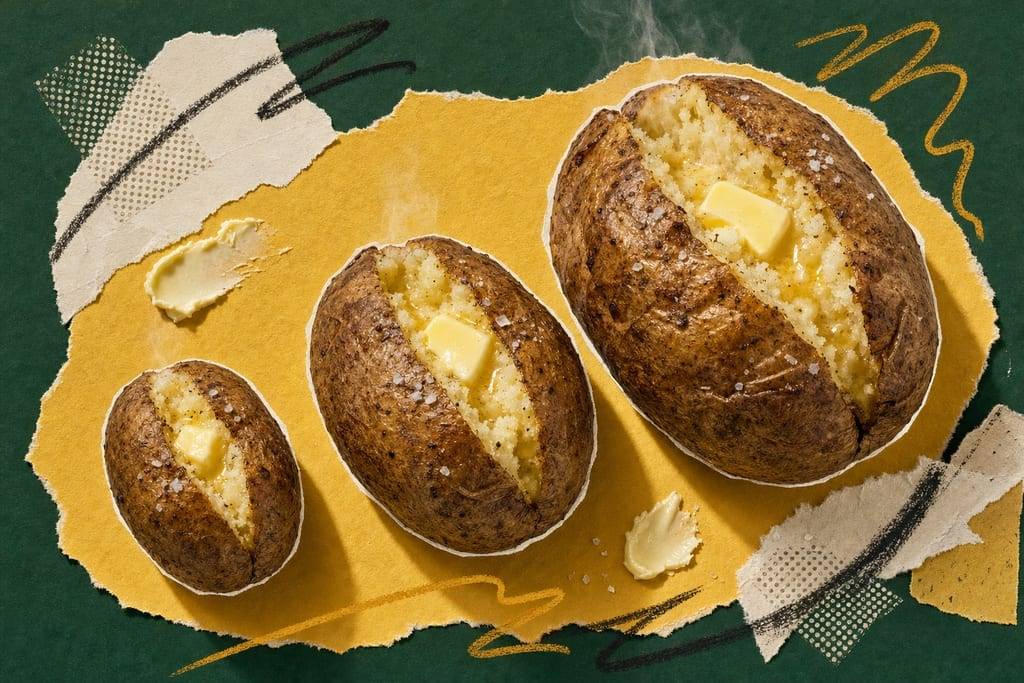
Baked Potato With Butter Calories and Macros by Size
Baked potato calories with butter: a medium potato plus 1 tbsp butter is about 263 calories. See macros by size and log yours in seconds.
If you want the baked potato calories with butter in one number, a medium 173g potato with 1 tablespoon of salted butter lands at about 263 calories. The potato on its own is roughly 161 of those, so the butter is adding around 102. That pat of butter also brings in almost all the fat, close to 12 grams, since a plain baked potato has nearly none. Swap the size of the potato or the amount of butter and that total moves fast, which is why the topping is worth logging separately from the spud.
Table of Contents
Calories and Macros in One Buttered Potato
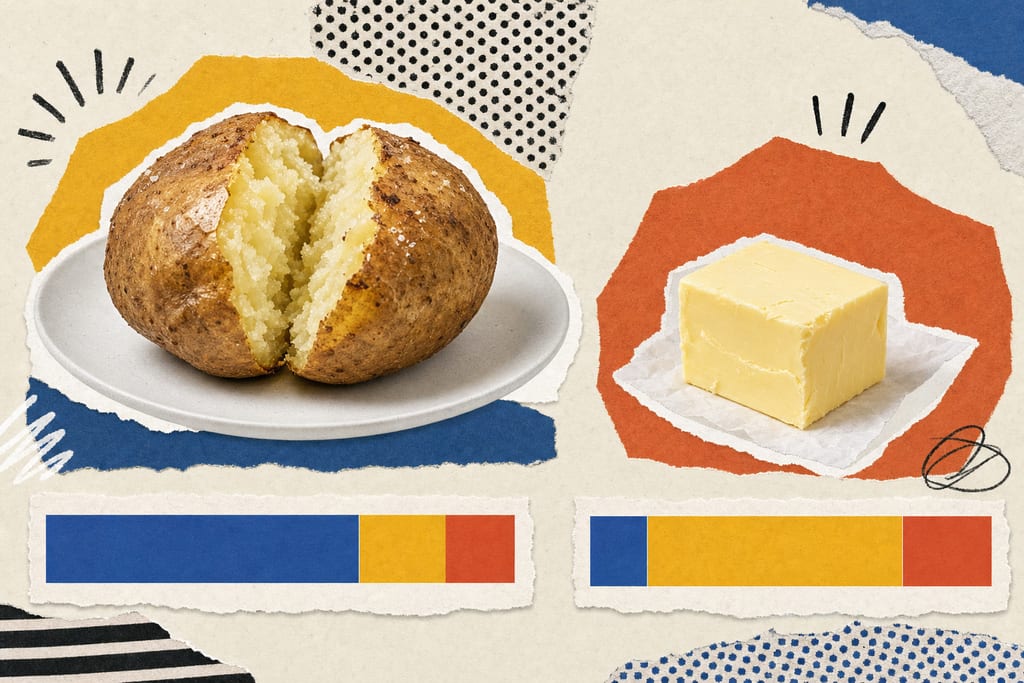
Here is where those numbers come from, split so you can adjust either half. The potato brings the carbs and fiber, the butter brings the fat, and almost nothing brings protein.
| Item | Calories | Protein | Carbs | Fiber | Fat |
|---|---|---|---|---|---|
| Medium potato, 173g | 161 | 4.3g | 36.6g | 3.8g | 0.2g |
| Salted butter, 1 tbsp | 102 | 0.1g | 0.1g | 0g | 11.5g |
| Both together | 263 | 4.4g | 36.7g | 3.8g | 11.7g |
Source: USDA FoodData Central. Nutrition checked: November 2026.
At 4.4g of protein, this is a carb and fat side dish, not a protein source. If it is the centre of your plate, pair it with chicken, tuna or cottage cheese so the meal holds you.
Potato variety, leaving the skin on or off, and a pinch of salt all shift these numbers slightly. Treat 263 as a solid working figure rather than a measurement of your exact potato.
Small, Medium and Large Potatoes Compared
Size moves the total more than most people expect. A large potato with butter is roughly 150 calories above a small one, and the butter is not the reason.
- Small, 138g: about 128 calories plain, around 230 with a tablespoon of butter
- Medium, 173g: about 161 calories plain, around 263 with butter
- Large, 299g: about 278 calories plain, around 380 with butter
- Protein rises from roughly 3.5g to 7.5g, carbs from about 29g to 63g
The butter stays flat at 102 calories per tablespoon no matter which potato it melts into. Everything that changes down that list comes from the spud itself.
Weigh your potato once on a kitchen scale and you will know which column you actually use most nights. Most supermarket russets land in the medium range, but the big baking potatoes sold loose often clear 280g.
How Much Butter Are You Really Using
Butter is the part people guess at, and the guess is usually low. A teaspoon is about 34 calories, a tablespoon about 102, and two tablespoons about 204.
Melted butter sinks into the flesh and disappears, so a potato that looks lightly dressed can hold double what you pictured.
- Measure butter with a spoon for one week to train your eye
- Count restaurant pats as you use them instead of at the end
- Log sour cream, cheese and bacon as separate items
- Save the version you eat most as a favourite meal
Those toppings change the food entirely, so do not fold them into the potato entry. With foodbuddy you can say "medium baked potato with a tablespoon of butter" out loud and the macros fill in from USDA data, the same way calorie counting for homemade meals works when nothing on your plate came with a label.
Pick Your Butter Amount Before the Potato Hits the Plate
Decide on the teaspoon or the tablespoon while the oven is still on, not after the first bite. Once you have cut the potato open and started spreading, the amount is a memory, and memories round down. Put the butter on, then log the meal before you sit down to eat it. Trying to reconstruct dinner at 11pm is how a week of careful eating turns into a week of estimates. Saying it out loud takes a few seconds, and the free 7-day trial is enough time to see if that habit sticks.
Buttered Baked Potato Questions
Does swapping butter for margarine or olive oil actually save me calories?
No, not much. Most margarines and olive oil sit close to butter per tablespoon, because all three are mostly fat. Light or whipped spreads do cut the number, since they hold more water and air per spoonful. If you want a real drop, use less of whatever fat you like best.
Why does my potato weigh less after baking than it did raw?
Water evaporates in the oven, so a baked potato can lose a chunk of its raw weight. The calories do not leave with the steam. Weigh and log the potato raw if you can, or use the cooked weight only if the database entry you picked is also for a cooked potato.
Can a buttered baked potato fit into a 1,500 calorie day?
Yes. On a 1,500 calorie target, a buttered medium potato takes under a fifth of your day and leaves plenty for protein and vegetables at the same meal. The trick is knowing your number before you eat, not after. A TDEE calculator and daily macro goals make that call easy.
Ready to start tracking smarter?
Download MyFoodBuddy and start tracking your calories by just saying what you ate. No more searching databases or guessing portions.
Get started