What Are Macros and How They Shape Your Calories
What are macros? Protein, carbs and fat each carry set calories per gram. See how they shape your daily total and the easiest way to track them.
If you've wondered what are macros, the short answer is protein, carbs and fat, the three nutrients that carry every calorie you eat. Your daily calorie number isn't a separate thing you track on the side. It's just those grams added up: protein and carbs give you 4 calories per gram, fat gives you 9, so a meal with 30g protein, 40g carbs and 15g fat lands at 415 calories.
Table of Contents
How Many Calories Each Macro Carries
Fat is the one to watch by volume. A gram of fat carries more than twice the calories of a gram of protein or carbohydrate, which is why oil, cheese and nuts add up fast in portions that look small on the plate.
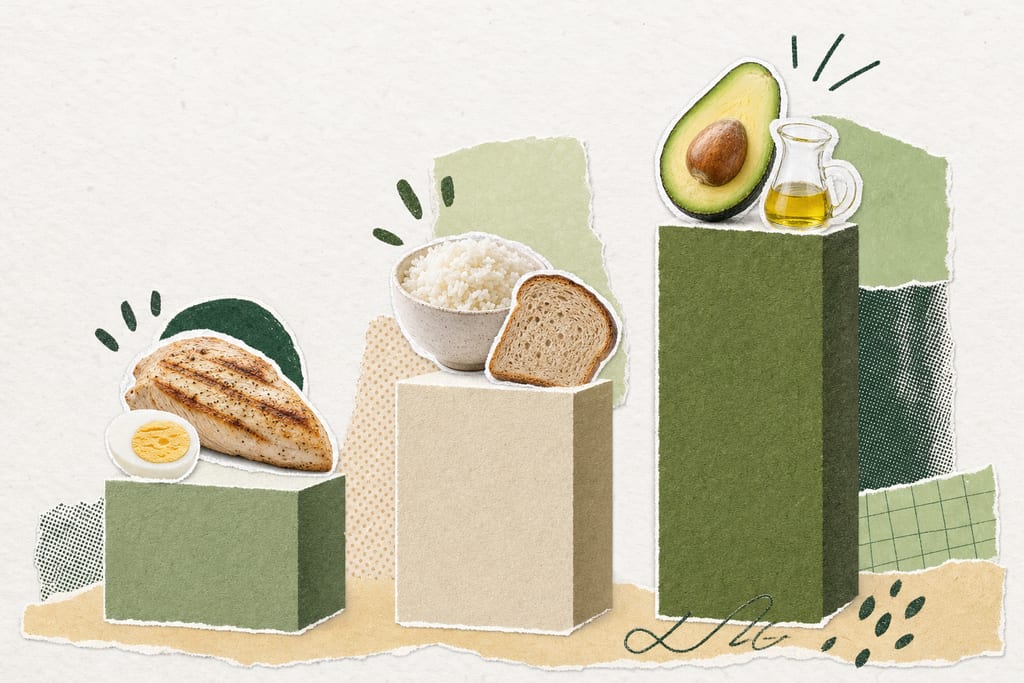
About 28 grams of almonds runs close to 164 calories, while the same weight of cooked chicken breast is closer to 46. Neither food is a problem, but one needs a measuring spoon and the other does not.
| Macro | Calories per gram | Common sources |
|---|---|---|
| Protein | 4 | Chicken breast, Greek yogurt |
| Carbohydrate | 4 | Rice, bread |
| Fat | 9 | Olive oil, almonds |
Two things sit outside that pattern. Fiber is a carb your body only partly digests, and alcohol carries about 7 calories per gram, so a drink counts even though it is not one of the three macros.
Label figures shift slightly between foods and brands, since cooking method, cut and recipe all change the grams. Values here were cross-checked against USDA FoodData Central. Nutrition checked: November 2026.
Why Your Macro Split Changes Weight Loss
Total calories decide whether the scale goes up or down. The split decides how the whole thing feels while you do it.
Two people can both eat 1,800 calories a day and have completely different weeks. The one eating 140 grams of protein tends to stay fuller between meals than the one eating 60 grams, because protein digests slower and keeps hunger quieter.
Protein also helps you hold onto muscle while eating less, so more of what you lose comes off as fat. That is the real argument for paying attention to the split instead of only the calorie total.
- Set protein first, somewhere around 25 to 30% of your calories as a starting point.
- Split the rest between carbs and fat based on the food you actually like eating.
- Keep carbs in. They fuel workouts and make most meals easier to stick with.
- Adjust after two or three weeks of data, not after one heavy dinner.
No food is banned here, and a split you can repeat beats a perfect one you abandon by Thursday. Pairing it with personalized calorie goals is what turns the numbers into something usable.
Tracking Macros Without Doing Math
Start by finding your maintenance calories, then write your targets as grams rather than percentages. Grams are what you compare against your plate at dinner, percentages are not.
The setup is the easy half. Manual entry is where most people quit, because searching a database for every ingredient in a stir fry takes a few minutes per meal and nobody keeps that up for months.
FoodBuddy handles that part by letting you say or type what you ate and pulling protein, carbs, fat and calories from AI plus USDA data in seconds, with barcode scanning and saved meals for the food you repeat. Here is what the first week looks like:
- Run a TDEE calculation to get your maintenance number.
- Enter custom macro goals in grams, protein first.
- Save your three or four most repeated meals for one-tap logging.
- Read the weekly charts, not a single day's total.
Fiona, the in-app coach, reads your logs next to activity and sleep data and flags patterns you would not spot alone. If you want help making it a habit, staying consistent with calorie tracking matters more than any single number you hit.
Set Your Protein Floor, Then Log One Normal Day
Pick a protein number tonight and treat it as a floor you hit before anything else. Then log one ordinary day, the takeaway lunch and the handful of chips included, with no cleaning it up first. Real grams on a screen settle arguments that guessing never will, and they usually point straight at one meal quietly carrying most of your fat for the day. That single honest day is the whole starting point. FoodBuddy is free for 7 days with no commitment, then $39 a year, and you can cancel anytime.
Macros and Your Daily Calories
Should I log total carbs or net carbs?
Log total carbs. US labels already count fiber inside the total carb figure, so subtracting it just gives you a smaller number to compare against your target. Net carbs only matter if you follow a keto plan with a hard carb ceiling. Treat fiber as its own number and aim higher, not lower.
What do I do on a day I blow past one of my macro targets?
Log it honestly and eat normally the next day. Skipping breakfast or adding an hour of cardio to cancel a big night tends to set up a second big night. One day over target changes very little. If the same meal pushes you over most weeks, swap one part of that meal.
Can I still hit my macros when I eat out?
Yes. Pick the protein first, so grilled chicken, steak or fish instead of anything breaded, then assume the kitchen used more oil and butter than you would at home. Ask for sauce and dressing on the side so those fat grams stay under your control. Estimate the rest and log it.
Ready to start tracking smarter?
Download MyFoodBuddy and start tracking your calories by just saying what you ate. No more searching databases or guessing portions.
Get started