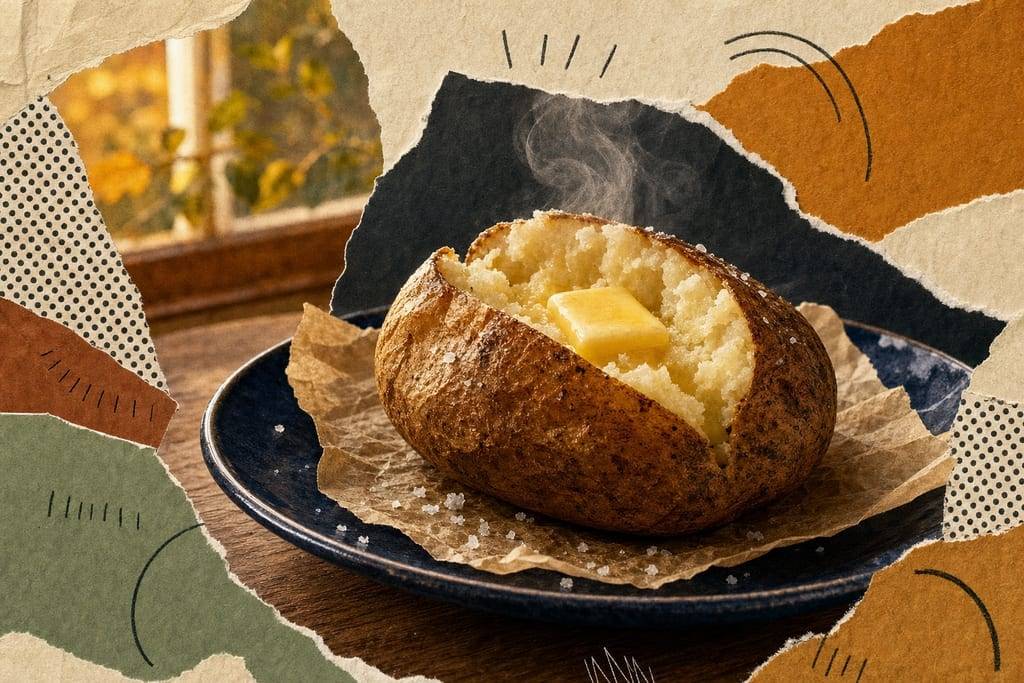
Baked Potato Carbs and Nutrition by Serving Size
A medium baked potato has about 37g carbs. See full nutrition facts by potato size, net carbs after fiber, and what toppings add.
The carbohydrates in a baked potato come to about 36.6g total for a medium one eaten with the skin, roughly 173g, which also carries 161 calories, according to USDA FoodData Central. Fiber accounts for about 3.8g of that, so net carbs land close to 32.8g. The number tracks with how much potato you eat, not how long it sat in the oven, so a big russet pushes well past those figures while a small one falls short. Nutrition checked: November 2026.
Table of Contents
Baked Potato Nutrition Facts by Potato Size
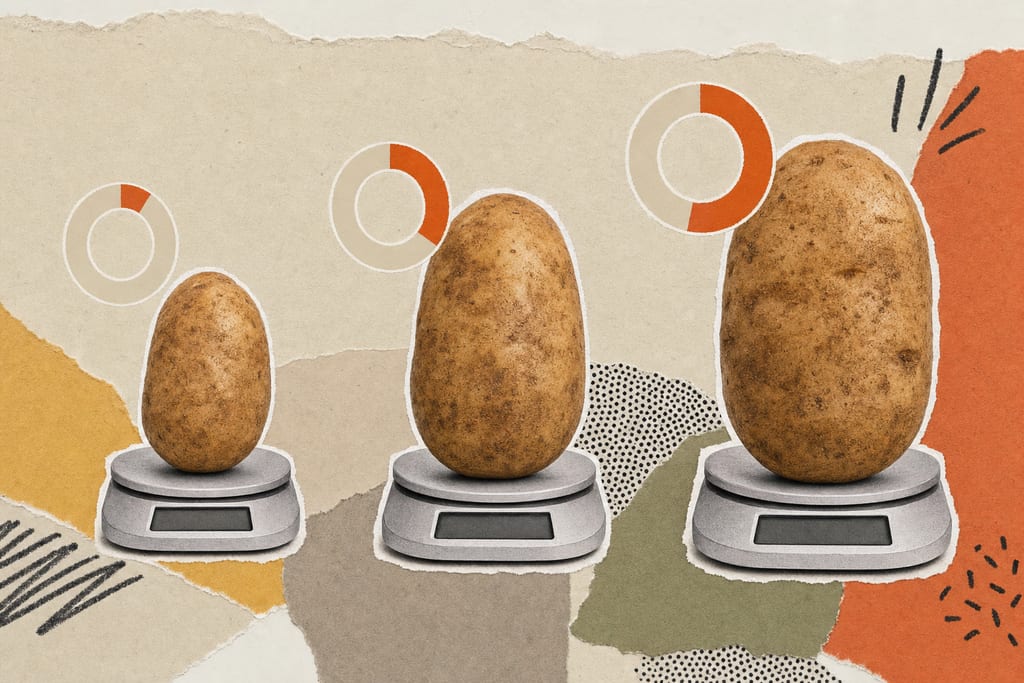
Potato size drives every number on your log. Below are USDA figures for russet potatoes baked with flesh and skin, no salt added, at the three weights grocery bins usually hold, plus a per 100g row for anything in between.
| Serving | Calories | Carbs | Fiber | Sugars | Protein | Fat | Sodium | Potassium |
|---|---|---|---|---|---|---|---|---|
| Small, 138g | 128 | 29.3g | 3.0g | 1.6g | 3.5g | 0.2g | 14mg | 738mg |
| Medium, 173g | 161 | 36.6g | 3.8g | 2.0g | 4.3g | 0.2g | 17mg | 926mg |
| Large, 299g | 278 | 63.2g | 6.6g | 3.3g | 7.5g | 0.4g | 30mg | 1600mg |
| Per 100g | 93 | 21.1g | 2.2g | 1.1g | 2.5g | 0.1g | 10mg | 535mg |
Source: USDA FoodData Central. Nutrition checked: November 2026. A plain spud runs about 17mg of sodium and 0.2g of fat in the medium size, so salt and fat come from whatever you add. Potassium is the standout at roughly 926mg in a medium potato, more than a banana.
Weigh the raw potato on a kitchen scale if you can. Guessing at size is the biggest source of error in logging potatoes, and a 299g russet carries 117 more calories than a 173g one.
Net Carbs After You Subtract the Fiber
Net carbs = total carbs minus fiber. That math moves a medium baked potato with skin from 36.6g down to about 32.8g, which is the figure low-carb plans want.
- Small 138g potato: 29.3g total, roughly 26g net
- Medium 173g potato: 36.6g total, 32.8g net
- Large 299g potato: 63.2g total, roughly 57g net
- Peeled potato: similar carbs, less fiber, so net carbs climb
Sugars sit near 2g in a medium potato because almost all the carbohydrate is starch. Only do the subtraction if your plan actually counts net carbs. Setting that up once in a personalized calorie goal saves you from redoing the math at every meal.
What Butter, Sour Cream and Cheese Add
Toppings barely move the carb count but can double the calories. Here is what common serving sizes add on top of the 161-calorie plain potato, using USDA values.
- 1 tbsp salted butter: 102 calories, 11.5g fat, 91mg sodium, 0g carbs
- 2 tbsp sour cream: 59 calories, 5.8g fat, 15mg sodium, 1.1g carbs
- 1/4 cup shredded cheddar: 114 calories, 9.4g fat, 176mg sodium, 0.9g carbs
- 1 tbsp chopped cooked bacon: 43 calories, 3.3g fat, 185mg sodium, 0.1g carbs
Pile on all four and the potato clears 470 calories with roughly 30g of fat and 470mg of sodium, while carbs rise by only about 2g. If you want the loaded version, pair it with a lean protein like grilled chicken breast and count the potato as the only starch at that meal.
Logging it is the easy part. Say "medium baked potato with a tablespoon of butter" into MyFoodBuddy and the carbs, fat and sodium land in your day in seconds, instead of hunting down four separate database entries.
Decide Your Potato Size Before You Bake
Check the carb room left in your day, then pick a small, medium or large potato to match before it goes in the oven. Set it on a kitchen scale once and note the weight, so every future log of the same spud starts from a real number instead of a guess. Then record the potato and its toppings in one entry, at the same moment, because butter added at the table is the part that never makes it into the day. A free 7-day trial comes first, then $39 a year if you join by 30 November.
Baked Potato Carb Questions
Is a baked sweet potato lower in carbs than a regular baked potato?
Barely. USDA FoodData Central puts a baked sweet potato with skin at about 20.7g of carbs per 100g, which sits just under a russet at the same weight. The gap people notice is really about size, since sweet potatoes are usually sold smaller than baking russets. Nutrition checked: November 2026.
Are steakhouse baked potatoes bigger than the USDA medium size?
Usually, yes. Restaurants buy big baking russets, so what lands on the plate is closer to the large row in the table than the medium one. The chain's own nutrition guide is the only source that settles its portion, so until you check it, log the meal as a large potato in MyFoodBuddy.
Does eating a baked potato cold or reheated change the carb count?
No. Total carbs stay the same whether you eat it hot, chilled from the fridge, or reheated the next day. Cooling cooked potato does form resistant starch, which your body digests differently, but USDA figures and food labels still count every gram of that starch as carbohydrate.
Ready to start tracking smarter?
Download MyFoodBuddy and start tracking your calories by just saying what you ate. No more searching databases or guessing portions.
Get started