
Pasta Calories in Common Bowl Sizes
Learn how many calories are in pasta by bowl size. Quick calorie counts for small, medium, and large servings to track your meals easily.
Why Pasta Portions Matter More Than You Think
A single bowl of pasta can range anywhere from 200 to over 800 calories depending on the size, and most people consistently underestimate their portions by two to three times the actual amount. The bowl you choose makes a bigger difference than you'd expect, turning what seems like a reasonable dinner into a calorie bomb without you realizing it. Understanding how many calories in pasta based on bowl size helps you track accurately without the hassle of weighing every noodle, and tools like MyFoodBuddy let you simply say what you ate instead of spending minutes searching databases.
Table of Contents
Understanding Pasta Serving Sizes
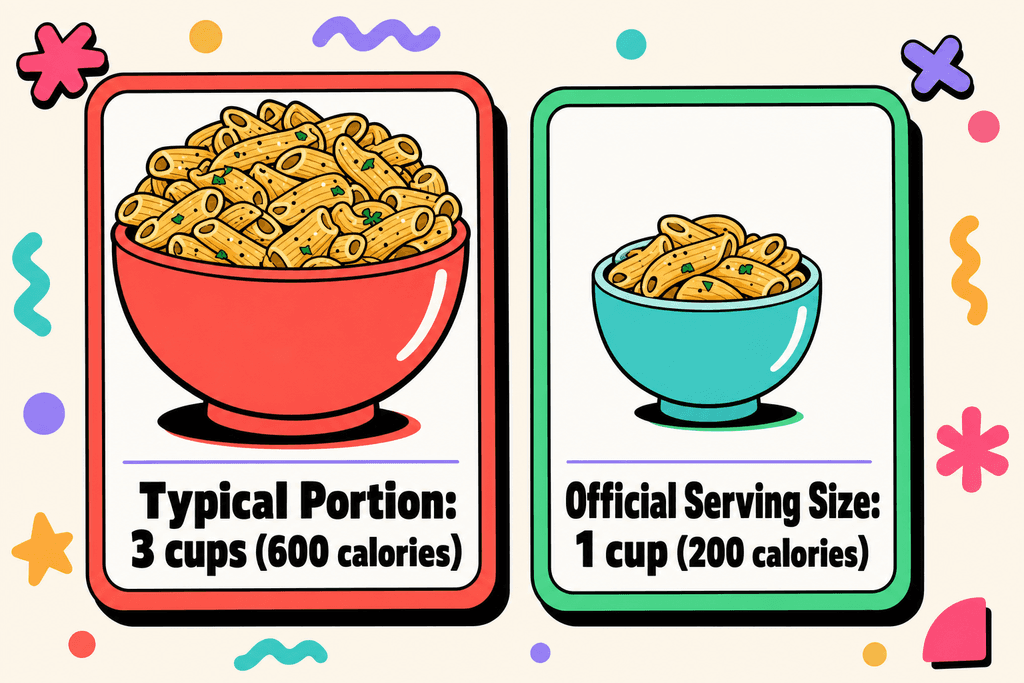
Most people eat way more pasta than they think they do. The official serving size for pasta is just 2 ounces of dry pasta, which sounds like nothing when you're hungry. That tiny amount turns into about one cup of cooked pasta and contains roughly 200 calories before you add any sauce or toppings. The problem is that most of us eyeball our portions, and our eyes are usually a lot hungrier than our actual calorie needs.
Why Portion Sizes Matter
When you go out to eat, restaurants typically serve you 3 to 4 times the recommended portion size. That means your average pasta dish at a restaurant could easily be 600 to 800 calories just from the noodles alone. Add creamy sauce, cheese, and bread on the side, and you're looking at a meal that might be your entire day's worth of calories.
At home, things aren't much better. Without measuring, most people pour out about 3 ounces of dry pasta per person, thinking it looks right. The tricky part is that different pasta shapes take up different amounts of space, so what looks like a normal portion of penne might be way more than the same visual amount of spaghetti.
Dry Versus Cooked Pasta Weight
Here's where things get confusing for anyone trying to figure out how many calories in pasta they're actually eating. Dry pasta absorbs water when you cook it, so it roughly doubles or triples in weight. This means 2 ounces of dry pasta becomes about 4 to 6 ounces of cooked pasta, depending on how long you boil it.
| Dry Pasta Amount | Cooked Pasta Amount | Approximate Calories |
|---|---|---|
| 2 oz (56g) | 1 cup (140g) | 200 calories |
| 4 oz (113g) | 2 cups (280g) | 400 calories |
| 6 oz (170g) | 3 cups (420g) | 600 calories |
| 8 oz (227g) | 4 cups (560g) | 800 calories |
Tracking apps like MyFitnessPal require you to specify whether you're logging cooked or dry pasta, which adds another step to an already tedious process. With MyFoodBuddy, you can simply say "I ate a bowl of pasta" and the AI figures out a reasonable estimate based on typical portions, saving you from having to weigh everything.
How Pasta Shapes Affect Portions
Different pasta shapes are seriously misleading when you're trying to estimate portions. A cup of small shells weighs different than a cup of rigatoni, even though they take up the same space in your bowl. Long pasta like spaghetti is especially hard to measure without a scale.
- Short pasta shapes like penne and rotini are easier to measure by volume
- Long pasta like spaghetti and fettuccine need to be weighed for accuracy
- Filled pasta like ravioli has extra calories from the stuffing
- Whole wheat and protein pasta have slightly different calorie counts than regular pasta
The shape also affects how much sauce sticks to your pasta, which can add hundreds of extra calories you might not account for. Ridged and tubular shapes hold more sauce than smooth, flat noodles, making them higher in total calories per serving.
Small Bowl Pasta Portions
Most people don't realize that a small bowl of pasta can range anywhere from 200 to 280 calories before you add anything to it. That's just the plain cooked noodles sitting there. A small bowl typically holds about 1 to 2 cups of cooked pasta, which is actually a pretty decent side dish portion. The problem is that nobody eats plain pasta, and that's where things get tricky.
When you add just a tablespoon of olive oil or butter to that small bowl, you're looking at an extra 100 to 120 calories. Suddenly your light side dish isn't so light anymore.
| Pasta Type | Small Bowl (1.5 cups) | With Butter/Oil |
|---|---|---|
| Plain Spaghetti | 240 calories | 360 calories |
| Plain Penne | 220 calories | 340 calories |
| Whole Wheat Pasta | 210 calories | 330 calories |
Small bowl portions work great for kids' meals or when you're serving pasta as a side dish alongside grilled chicken or fish. The calorie count stays manageable as long as you're mindful about what you're adding. A light marinara sauce adds about 60 to 80 calories per half cup, while a cream-based sauce can double that amount.
Medium Bowl Pasta Portions
Here's where most of us live when it comes to pasta dinners. A medium bowl holds about 2 to 3 cups of cooked pasta, which translates to roughly 400 to 560 calories for the noodles alone. This is what you'd typically serve yourself on a weeknight when pasta is the main event. The thing is, restaurant portions have trained us to think this is actually a small serving, but it's really a full meal's worth of carbs.
The sauce you choose makes a massive difference in your final calorie count. A cup of marinara sauce adds about 120 to 160 calories, which keeps things relatively reasonable. But if you go for alfredo sauce, you're adding 400 to 500 calories for that same cup. Pesto falls somewhere in the middle at around 250 to 300 calories per cup. To help you navigate these choices, refer to our article on spaghetti calories by cup, plate and sauce type.
The average medium bowl of pasta with sauce lands between 600 and 900 calories, depending on what you choose. That's before adding any protein or cheese on top.
- Medium bowl with marinara: 520-720 calories
- Medium bowl with alfredo: 800-1,060 calories
- Medium bowl with pesto: 650-860 calories
- Medium bowl with meat sauce: 680-920 calories
Adding protein changes the game too. A serving of grilled chicken adds about 140 calories, while meatballs can add 200 to 300 calories depending on size. Vegetables are your friend here since they add volume and nutrients without many calories. A cup of roasted vegetables only adds about 50 to 80 calories.
Restaurant medium portions tend to run about 30% larger than what you'd serve at home, which means you're often looking at 800 to 1,200 calories before appetizers or bread. When you're tracking what you eat, these differences matter. Apps like MyFoodBuddy make it easier to log homemade meals by just saying what you ate instead of measuring everything.
Large Bowl Pasta Portions
Walk into any Italian restaurant and you'll probably get a large bowl by default. These portions hold 3 to 4 cups or more of cooked pasta, which means you're starting at 600 to 800 calories just from the noodles. Add sauce and toppings, and you're easily hitting 1,000 to 1,500 calories for a single meal. That's more than half of what most people should eat in an entire day.
Large restaurant portions can contain as much pasta as three proper servings, but they arrive on one plate so it feels normal to finish it all.
| Restaurant Dish | Typical Portion | Calorie Range |
|---|---|---|
| Fettuccine Alfredo | 4 cups | 1,200-1,600 calories |
| Spaghetti Carbonara | 3.5 cups | 1,100-1,400 calories |
| Pasta Primavera | 3.5 cups | 800-1,100 calories |
| Lasagna (large slice) | 3 cups equivalent | 900-1,300 calories |
The good news is that large portions give you options. You can ask for a to-go box right when your meal arrives and pack half before you start eating. This strategy works better than trying to stop halfway through when the food is sitting in front of you. You get two meals for the price of one and keep your calorie intake reasonable.
When you're eating out and trying to track calories, it gets complicated fast. Modern calorie tracking tools can help estimate restaurant portions, but the reality is that chefs don't measure ingredients the same way twice. Some people find it helpful to use automatic calorie calculation where you just describe what you ate and let the app figure out the numbers.
Managing large portions comes down to planning ahead and being honest about how much you're actually eating. Whether you're dealing with fast food orders or sit-down restaurants, knowing the calorie ranges helps you make better choices without giving up the foods you enjoy.
Making Pasta Tracking Easier
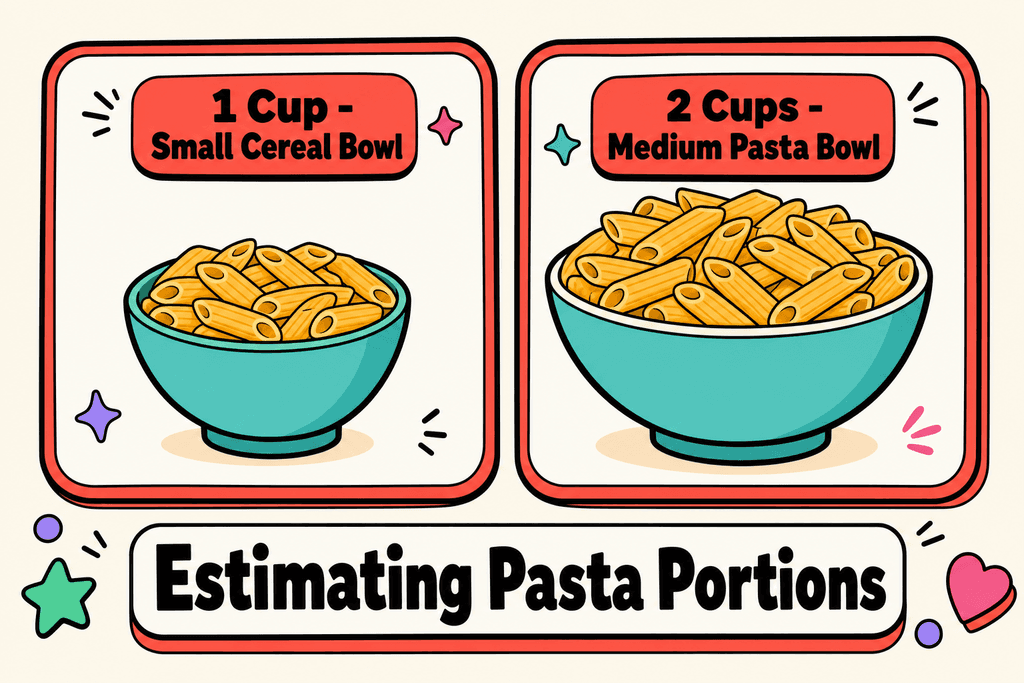
Most people eyeball their pasta portions because pulling out a food scale every time you cook dinner feels ridiculous. The truth is, you can get pretty accurate at estimating how many calories in pasta just by looking at your bowl. A small cereal bowl holds about one cup of cooked pasta, a medium pasta bowl fits around two cups, and those big dinner bowls can easily hold three cups or more. Once you know what these portions look like, you can skip the measuring tools and still track your intake with decent accuracy.
The real problem isn't estimating portions though. It's what happens next when you open a traditional calorie tracking app. You have to search through databases, pick the right pasta type, select whether it's cooked or dry, adjust the serving size, and then add your sauce as a separate entry. The whole process turns a simple meal into a five-minute data entry task.
Why Traditional Apps Make Pasta Logging Tedious
Apps like MyFitnessPal and Cronometer require multiple steps for a single pasta dish. You're clicking through screens, scrolling past dozens of similar entries, and trying to figure out if "spaghetti, cooked, enriched" is different enough from "spaghetti, cooked, unenriched" to matter for your macros.
- Searching through hundreds of pasta variations in the database
- Manually entering each ingredient separately (pasta, sauce, cheese, vegetables)
- Converting between dry weight and cooked weight measurements
- Adjusting portion sizes with confusing fraction selectors
This is exactly why most people quit tracking after a few weeks. The friction between wanting to log your food and actually doing it becomes too much.
Voice Logging Changes the Game
Voice-based tracking removes almost all of that friction. Instead of tapping through multiple screens, you just describe what you ate in normal words. MyFoodBuddy lets you say something like "two cups of spaghetti with marinara sauce and parmesan" and the AI figures out the rest, pulling nutritional data automatically.
| Method | Time Required | Steps Needed |
|---|---|---|
| Traditional App | 3-5 minutes | 8-12 taps/searches |
| Voice Logging | 10-15 seconds | 1 voice command |
The time savings add up fast. If you log three meals a day, that's the difference between spending 15 minutes versus less than one minute on tracking. Over a week, you save almost two hours just by talking instead of typing and searching.
Real World Pasta Tracking Example
Here's what logging pasta looks like with voice input. You finish dinner, open the app, and say "medium bowl of penne pasta with chicken and alfredo sauce." The app processes that, calculates the calories in pasta along with the protein from chicken and fats from the sauce, and logs everything to your daily totals. No measuring cups required, no database searches, no manual calculations.
- The AI understands portion descriptions like "medium bowl" or "small plate"
- It recognizes common pasta dishes without needing exact measurements
- Multiple ingredients get logged from a single sentence
You don't need perfect precision to see results. Consistent tracking with reasonable estimates beats perfect tracking that you abandon after two weeks. The goal is building a sustainable habit, and that only happens when the tracking process doesn't feel like homework.
Your Pasta Calorie Quick Reference
So here's what you need to remember about how many calories in pasta you're actually eating. A small bowl usually sits around 200-300 calories, a medium bowl lands between 400-600 calories, and a large bowl can easily hit 800-1000 calories or more. These numbers change based on what type of pasta you're eating, what sauce you add, and whether you throw in extras like cheese or meatballs. The bowl size matters way more than most people think, which is why eyeballing portions can throw off your tracking by hundreds of calories.
The good news is you don't need to be perfect with this stuff. Just knowing these general ranges helps you make better choices throughout your day. If you had a large pasta bowl for lunch, you'll probably want lighter meals for the rest of the day.
The real challenge isn't knowing the numbers though. It's actually tracking them without it becoming a huge pain. Traditional apps make you search through databases and measure everything, which is why most people quit after a few weeks. MyFoodBuddy lets you just say "had a medium bowl of pasta with marinara sauce" and it figures out the rest using AI and USDA data. Similar to how we handle homemade meals, the goal is making tracking so easy that you actually stick with it.
Whether you're trying to lose weight or just stay aware of what you're eating, understanding automatic calorie calculation can save you tons of time. The questions below cover some common pasta tracking situations that might help clear things up even more.
Common Questions About Pasta Calories
Tracking pasta can feel tricky because portion sizes vary so much and the calories change based on how you prepare it. These questions come up all the time when people try to figure out exactly what they're eating. Here are the answers that actually help you stay on track without overthinking every meal.
How many calories in a typical bowl of pasta?
A standard bowl of plain cooked pasta usually contains between 200 and 400 calories, depending on the size. Most restaurant bowls lean toward the higher end at around 350-400 calories for just the pasta itself. Home portions tend to be smaller, averaging around 200-250 calories if you're using about one cup of cooked pasta.
Does pasta type affect calorie count?
Different pasta shapes have nearly identical calorie counts when you measure them the same way. The real difference comes from the ingredients used to make the pasta. Whole wheat pasta has roughly the same calories as regular pasta, usually around 200 calories per cooked cup, but it does pack more fiber and nutrients.
How do I track pasta without measuring?
You can estimate pasta portions using your fist as a guide, where one fist equals about one cup of cooked pasta. With MyFoodBuddy, you can just say "a bowl of spaghetti with marinara sauce" and the app figures out the nutritional info for you. This beats spending time with measuring cups or food scales every single meal.
Are whole wheat and regular pasta calories different?
The calorie difference between whole wheat and regular pasta is minimal, usually only about 10-20 calories per serving. Both types contain around 200 calories per cooked cup. The main benefit of whole wheat is the extra fiber content, which helps you feel full longer, not necessarily fewer calories.
What's the easiest way to log pasta meals?
Voice logging makes tracking pasta meals super quick because you can describe everything in one sentence. Instead of searching through databases and adding each ingredient separately like you'd do with traditional apps, you just say what you ate. MyFoodBuddy handles the calculation part automatically, which saves you from guessing portion sizes or doing math.
How much does sauce add to pasta calories?
Sauce can double or even triple your pasta calories depending on what you choose. A half cup of marinara adds about 60-80 calories, while the same amount of creamy alfredo sauce adds 200-300 calories. Oil-based sauces like pesto fall somewhere in the middle at around 150-200 calories per serving, and that's something worth knowing when you're trying to hit specific calorie goals.
Ready to start tracking smarter?
Download MyFoodBuddy and start tracking your calories by just saying what you ate. No more searching databases or guessing portions.
Get started