
Spaghetti Calories by Cup, Plate, and Sauce Type
Spaghetti calorie counts by cup, plate size, and sauce type. Get accurate numbers to log your pasta meals without the guesswork.
A single serving of restaurant spaghetti can pack in more calories than three regular plates of the homemade stuff, and most people have no idea until the number stares back at them. That gap between "looks like a normal dinner" and "actually a huge calorie bomb" is exactly why so many folks trying to lose weight get stuck guessing instead of tracking. This guide breaks down spaghetti calorie counts by cup, plate, and sauce so you know what you're really eating, and if typing out every ingredient sounds exhausting, apps like MyFoodBuddy let you just say what's on your plate and get the numbers back in seconds.
Table of Contents
Spaghetti Calories by Cup and Plate Size
A single cup of cooked spaghetti, about 140 grams, comes in at roughly 220 calories. That sounds small until you realize almost nobody eats just one cup at dinner.
Most home plates hold 2 to 3 cups of pasta, which puts you at 440 to 660 calories before any sauce even touches the noodles. Restaurant portions make that look tiny.
- 1 cup: 220 calories
- 2 cups: 440 calories
- Restaurant plate (3-4 cups): 660-880 calories
Restaurants often serve 2x a normal home portion, sometimes without you noticing since it's all piled on one plate. That's before the bread basket or the parmesan shaker shows up.
| Serving | Amount | Calories |
|---|---|---|
| 1 cup | 140g | 220 |
| 2 cups | 280g | 440 |
| Full plate | 420-560g | 660-880 |
Calories by Sauce Type
The noodles are only half the story. What you pour on top can double your calorie count without you even realizing it.
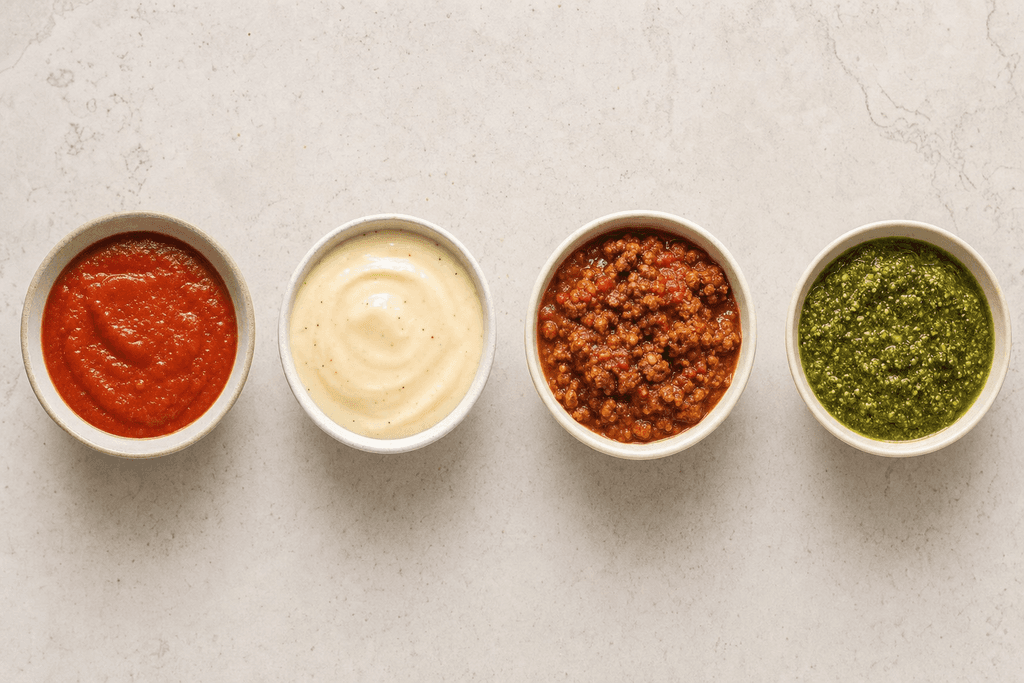
Marinara is the lightest option, adding about 70 to 90 calories per half cup since it's mostly tomatoes. Alfredo is a different animal entirely, packing in 300 or more calories per half cup thanks to heavy cream and butter.
- Marinara: 70-90 calories per half cup
- Meat sauce: 150-200 calories per half cup
- Pesto: 200-250 calories per half cup
- Alfredo: 300+ calories per half cup
Meat sauce and pesto sit in the middle, and the exact number depends a lot on how much oil or fat went into making them. This is where things get tricky for anyone trying to eyeball their totals, since sauce rarely gets measured the way a scale would measure it.
Why Logging Spaghetti Calories Is Tricky
Here's a mistake a lot of people make: they look up calories for dry pasta but then measure their plate after it's cooked. Cooked pasta weighs more because it soaks up water, so the numbers don't match and totals get thrown off fast.
Sauce and cheese are the other blind spot. Nobody's measuring a half cup of alfredo with a measuring cup at the dinner table, so most people are guessing.
Pros and cons of tracking spaghetti manually versus using AI logging:
- Manual estimation: Fast but often wrong, especially with mixed dishes like pasta
- AI-assisted logging: Takes a few seconds and accounts for sauce, cheese, and portion automatically
This is the exact problem mixed dishes create for apps like myfitnesspal.com or cronometer.com, where you're stuck searching through generic database entries and hoping they match what's actually on your plate. With MyFoodBuddy, you just say what you ate, like "two cups of spaghetti with meat sauce and parmesan," and the AI handles the breakdown using USDA data behind the scenes.
If you want to see how this works for other homemade dishes, check out simplifying calorie counting for homemade meals. And if you're curious how accurate these AI tools really are compared to old-school tracking, this breakdown on the accuracy of modern calorie counters is worth a look before your next spaghetti night.
Wrap-up
So here's the deal. A plain cup of spaghetti is about 220 calories, which isn't scary at all. The real story is the sauce sitting on top, since that choice can double or even triple what you're actually eating.
Tracking this stuff by hand gets old fast, especially when you're trying to lose weight and every cup and spoonful matters. That's where just talking or typing into foodbuddy.my comes in handy, since it does the math on your pasta night without you pulling out a food scale.
If you want more on making home meals easier to track, check out this guide on simplifying calorie counting for homemade meals. And if you're curious how accurate these tracking tools really are these days, this piece on the accuracy of modern calorie counters is worth a look.
How many calories are in a full plate of spaghetti with sauce
A regular plate, about 2 cups of cooked spaghetti with marinara sauce, runs around 400 to 500 calories. Add meatballs or sausage and you're looking at 600 to 800 calories. The sauce type and portion size make the biggest difference here.
What's the difference between dry and cooked pasta calories
Dry pasta has more calories per cup since it hasn't absorbed water yet. A cup of dry spaghetti has about 200 calories, but once cooked, that same pasta expands into roughly 2 cups, dropping to about 220 calories total spread across double the volume.
What are some lower-calorie spaghetti sauce options
Marinara and other tomato-based sauces are your best bet, sitting around 70 to 100 calories per cup. Skip the alfredo and heavy cream sauces, which can double or triple that number. Logging your exact sauce with MyFoodBuddy just takes a few seconds by voice.
Ready to start tracking smarter?
Download MyFoodBuddy and start tracking your calories by just saying what you ate. No more searching databases or guessing portions.
Get started