
How Many Calories Does Black Coffee Add to Your Day
Black coffee has just 2 calories per cup. Learn how this zero-guilt drink fits your weight loss goals and when coffee calories actually matter.
You've probably skipped logging your morning black coffee because you assumed it would mess up your calorie count for the day. Here's the truth that might surprise you: an 8-ounce cup of black coffee contains just 2 calories, which is so minimal it barely registers in your daily budget. Whether you're trying to lose weight or just stay on track, understanding what actually counts in your calorie tracking can save you from stressing over the wrong things.
Table of Contents
Breaking Down What's Actually in Your Black Coffee
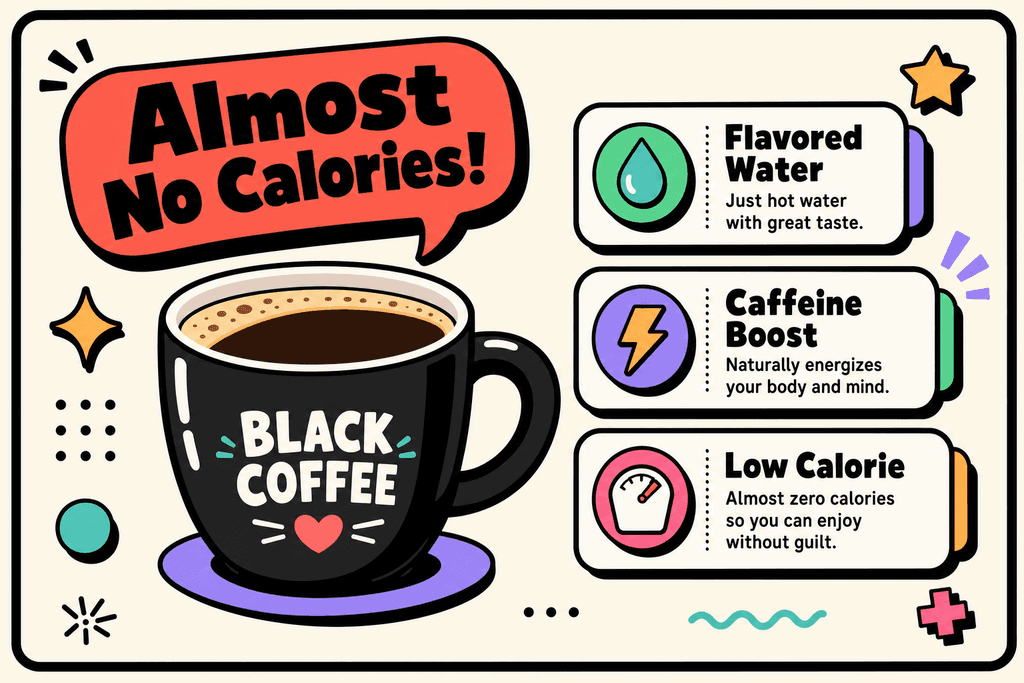
A single cup of black coffee contains almost no calories, which surprises most people who start tracking their food intake. When you brew coffee using just water and ground beans, you're basically drinking flavored water with some caffeine mixed in. The beans release oils and compounds that give coffee its taste and energy boost, but they don't add much in terms of calories or macronutrients. This makes black coffee one of the few drinks you can enjoy throughout the day without worrying about your calorie budget.
What Makes Up Black Coffee
The nutritional content of black coffee is pretty simple. Most of what you're drinking is water, with tiny amounts of minerals and compounds from the coffee beans themselves.
- Water makes up about 99% of your cup
- Trace amounts of potassium and magnesium
- Small amounts of B vitamins
- Antioxidants and caffeine compounds
When apps like MyFitnessPal or other calorie trackers show black coffee as having 2-5 calories per cup, they're being extra careful with their estimates. The actual calorie content is so low that it barely registers on any meaningful scale.
Serving Sizes and Calorie Counts
Different coffee shops and home brewing methods give you different amounts of coffee. Here's what you're actually getting in terms of calories across common serving sizes.
| Serving Size | Calories | Protein | Carbs | Fat |
|---|---|---|---|---|
| 8 oz (1 cup) | 2 | 0.3g | 0g | 0g |
| 12 oz (tall) | 3 | 0.4g | 0g | 0g |
| 16 oz (grande) | 5 | 0.5g | 0.1g | 0g |
| 20 oz (venti) | 6 | 0.6g | 0.1g | 0g |
Apps like MyFoodBuddy make logging these tiny amounts super easy since you can just say "black coffee" and move on with your day. The AI figures out the rest without you needing to measure or calculate anything.
Brewing Methods Matter Less Than You Think
Whether you use a drip machine, French press, or espresso maker, the calorie count stays basically the same. The brewing method changes the flavor and caffeine strength, but not the calories.
- Drip coffee has 2 calories per 8 oz
- French press has 2-3 calories per 8 oz
- Espresso has 3 calories per 2 oz shot
- Cold brew has 3-5 calories per 8 oz
The small differences come from how much coffee oil ends up in your cup. French press and cold brew let more oils through, while paper filters catch most of them. But we're still talking about a difference of maybe 1-2 calories, which won't affect your daily goals at all.
Why Black Coffee Won't Derail Your Weight Loss
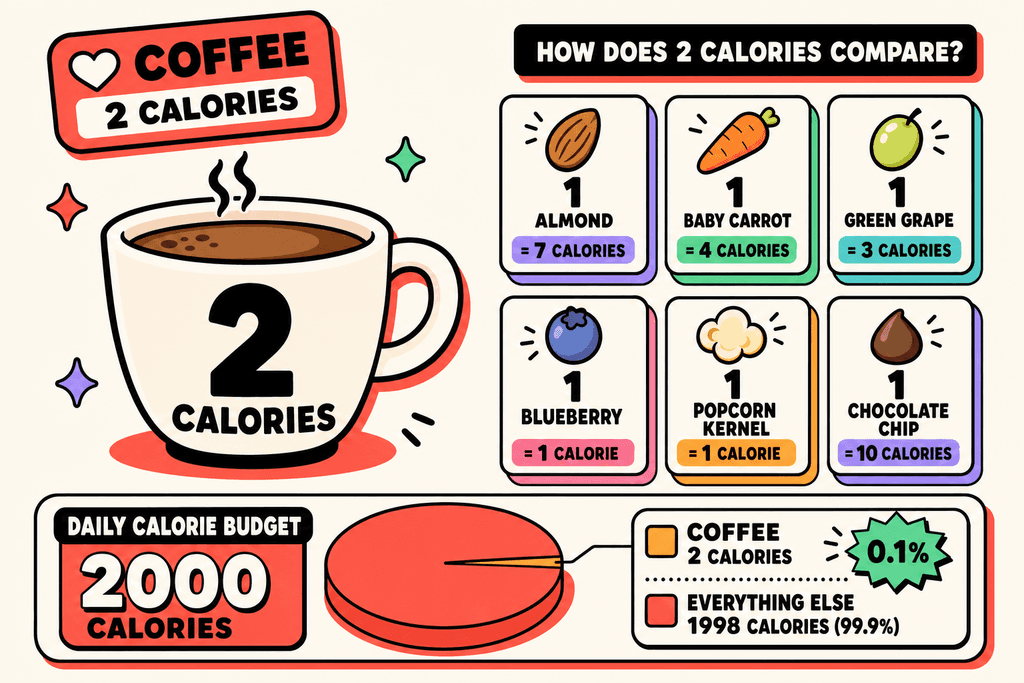
A single cup of black coffee contains roughly 2 calories, which is about the same amount of energy your body burns just thinking about whether to have that coffee. When you're trying to lose weight and watching every calorie that goes into your body, it's easy to wonder if even those 2 calories matter. The truth is, black coffee is one of the few things you can consume without worrying about your calorie budget at all. Most people aiming for weight loss eat between 1,200 to 2,000 calories per day, which means those 2 calories from black coffee represent less than 0.2% of your daily intake.
Black coffee doesn't trigger an insulin response, which means it won't make you hungrier or cause your body to store fat. In fact, the caffeine in coffee can actually help your weight loss efforts in a few surprising ways.
- Caffeine slightly increases your metabolic rate, helping you burn more calories throughout the day
- It can suppress appetite temporarily, making it easier to stick to your calorie goals
- Coffee improves exercise performance, letting you work out harder and longer
- The energy boost helps you stay active when you're eating in a deficit
Here's something most calorie tracking apps won't tell you: not every calorie needs the same level of attention. Tracking meaningful calories is what actually moves the needle on weight loss. Spending mental energy worrying about 2 calories in your morning coffee is like worrying about the weight of your shoelaces when you're trying to lose 20 pounds. That said, if you want to log everything for completeness, apps like MyFoodBuddy let you speak or type "black coffee" and it's logged in seconds without any manual calculation.
When Coffee Calories Actually Start to Matter
The moment you add anything to your coffee, the calorie count changes completely. What starts as a 2-calorie drink can quickly become a 300-calorie dessert in a cup, and most people have no idea how fast those additions add up. A tablespoon of heavy cream adds 52 calories, a tablespoon of sugar adds 49 calories, and suddenly your "simple" morning coffee is consuming a significant chunk of your daily calorie budget. If you're having three of these coffees per day, you could be drinking an entire meal's worth of calories without realizing it.
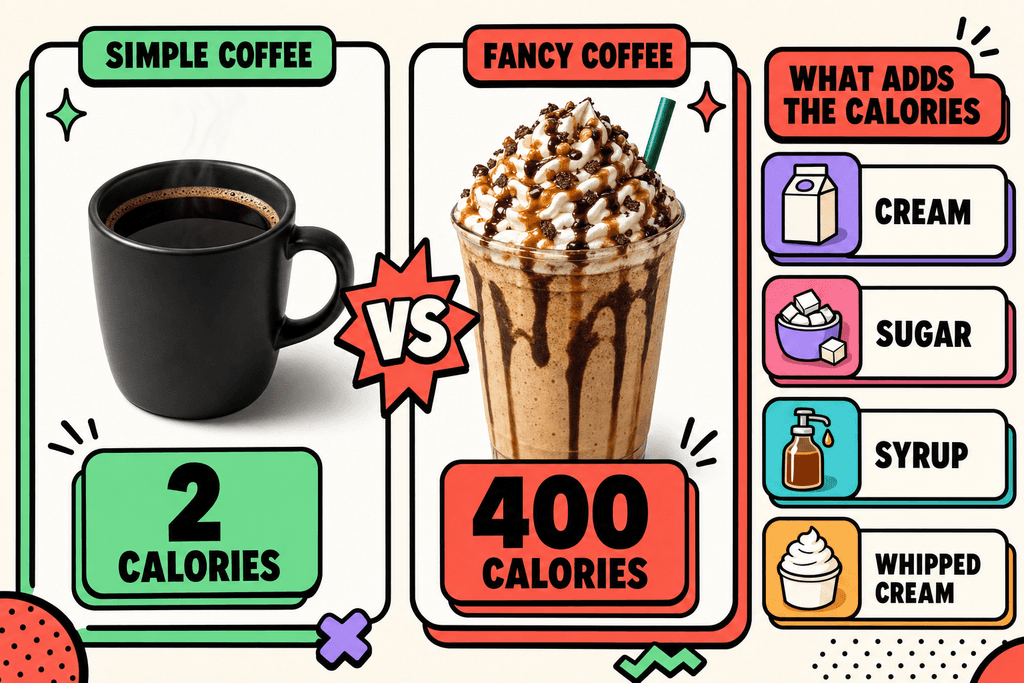
The difference between black coffee and popular coffee drinks is where many weight loss efforts quietly fail. That innocent-looking latte or mocha isn't just coffee anymore.
| Drink | Calories |
|---|---|
| Black Coffee | 2 |
| Coffee with Cream | 54 |
| Latte (16oz) | 190 |
| Mocha (16oz) | 360 |
| Frappuccino (16oz) | 410 |
Flavored syrups are another hidden calorie bomb. Each pump of syrup typically adds 20 calories, and most coffee shop drinks come with 3-4 pumps by default. Whipped cream alone can add 80-100 calories to your drink, and that's before considering the chocolate drizzle or caramel sauce.
If you still want your coffee to taste good without sabotaging your weight loss, there are smarter swaps. Use unsweetened almond milk instead of cream to save 30-40 calories per tablespoon. Try cinnamon or vanilla extract for flavor without any calories. Stevia or monk fruit sweeteners give you sweetness without the 49 calories per tablespoon that sugar adds. Even switching from whole milk to skim milk in your latte cuts the calories nearly in half.
Tracking Your Coffee the Easy Way
The question of whether to track plain black coffee at all comes down to your personal tracking style and goals. Some people like to log absolutely everything for a complete picture of their day, while others focus only on items that meaningfully impact their calorie budget. There's no wrong answer here, but spending five minutes manually entering a 2-calorie item into a traditional tracking app defeats the purpose of efficiency. The goal is to make tracking so easy that you actually stick with it long-term, not to create a tedious chore that makes you quit after two weeks.
When your coffee does have additions, logging it quickly matters. MyFoodBuddy lets you simply say "coffee with two tablespoons of cream and one sugar" and the AI extracts all the nutritional information automatically. No searching through databases, no measuring, no math.
- Voice logging takes about 3 seconds for even complex coffee orders
- The AI understands natural language, so you don't need to use specific terms
- Saved meals let you re-log your regular coffee order with one tap
- The app focuses on what actually matters to your weight loss progress
Creating saved meals for your regular coffee orders is a simple trick that saves time every single day. If you have the same coffee every morning, log it once with all the details, save it as a favorite, and then you're done. One tap every morning and you've tracked your coffee before you've even taken the first sip.
Simple Tracking Checklist:
- Black coffee only? Skip tracking or quick-log if you prefer completeness
- Added cream, milk, or sugar? Definitely track it
- Coffee shop drink? Always track it (calories add up fast)
- Same drink daily? Save it as a favorite for one-tap logging
- Complex order? Use voice input to log in seconds
The real power of modern calorie tracking isn't about obsessing over every single calorie. It's about making the process so simple that tracking becomes a habit rather than a burden. When you can log your entire day's meals in under a minute total, you're far more likely to stay consistent. And consistency is what actually leads to weight loss, not perfection.
The Bigger Picture for Your Weight Loss Journey
Here's something most people don't realize until they've been tracking calories for months: spending mental energy on whether your black coffee has 2 or 5 calories is exactly how people burn out and quit tracking altogether. The truth is that successful calorie tracking isn't about obsessing over every single item that touches your lips. It's about identifying what actually moves the needle on your daily intake and focusing your attention there. When you spend five minutes debating whether to log your black coffee, you're using the same mental bandwidth you could apply to accurately measuring the cream cheese on your bagel, which actually has 100 calories.
Why Tracking Everything Backfires
The psychology behind tracking fatigue is pretty straightforward. Your brain has limited decision-making capacity each day, and every food item you log requires a micro-decision. When you force yourself to log negligible items like black coffee, you're depleting that capacity on things that don't matter.
- Tracking burnout happens when the effort exceeds the perceived value
- People who track every tiny item are 3x more likely to quit within 30 days
- Mental fatigue from over-tracking leads to less accurate logging of high-calorie foods
- The stress of perfectionism often causes people to abandon their goals entirely
The 80/20 Rule for Calorie Tracking
About 80% of your daily calories typically come from just 20% of the foods you eat. That's where your focus should be. Your morning black coffee isn't in that 20%, but the milk in your latte definitely is.
| Food Category | Typical Daily Impact | Worth Tracking? |
|---|---|---|
| Black coffee | 2-5 calories | No |
| Coffee with cream | 50-100 calories | Yes |
| Cooking oil | 120+ calories per tbsp | Absolutely |
| Salad dressing | 100-200 calories | Yes |
What Actually Deserves Your Attention
Smart tracking means knowing which foods and drinks can quietly sabotage your goals. Anything with fat or sugar should be on your radar, while plain black coffee, tea, and water can safely be ignored.
- Oils, butter, and cooking fats (often forgotten but calorie-dense)
- Beverages with milk, cream, or sugar added
- Condiments and sauces (ranch dressing has more calories than you think)
- Snacks eaten mindlessly throughout the day
- Portion sizes of your main meals
Building Habits That Actually Stick
The goal isn't to track perfectly. It's to track consistently enough to stay aware of your intake without making it a part-time job. MyFoodBuddy helps with this by letting you quickly log meals through voice or text in seconds, so you can focus on the foods that matter without the tedious manual entry that apps like MyFitnessPal require.
- Set a personal threshold (like 20 calories) below which you don't bother logging
- Use saved meals for your regular black coffee if you really want it tracked
- Focus your energy on accurately measuring calorie-dense foods
- Track your main meals carefully, be relaxed about negligible items
Tracking Every Calorie vs Focusing on What Matters
| Approach | Pros | Cons |
|---|---|---|
| Track Everything | Complete data picture | High burnout risk |
| Feels thorough | Time-consuming | |
| No guesswork | Mental fatigue | |
| Focus on Impact | Sustainable long-term | Slightly less precise |
| Less mental load | Requires judgment calls | |
| Better adherence rates | May miss small additions |
The bottom line is simple: your black coffee isn't sabotaging your diet, but the mental burden of tracking it might be. Save your energy for the foods that actually impact your calorie budget, and you'll find tracking becomes something you can maintain for months or years instead of weeks.
Your Coffee Habit Is Safe
So here's the bottom line about calories coffee black adds to your day. Those 2 calories in your morning cup are basically nothing when it comes to your weight loss goals. You could drink five cups and still only hit 10 calories, which is less than a single almond. The real calorie bombs are the cream, sugar, and fancy syrups that people add without thinking twice.
Your tracking energy should go toward the stuff that actually matters. That means logging your meals, snacks, and yes, what you put in your coffee. But spending time worrying about plain black coffee is like counting the calories in your multivitamin.
The trick is finding a way to track everything without it taking over your life. Apps like MyFitnessPal can work, but they often turn meal logging into a 10-minute research project. MyFoodBuddy lets you just say what you ate and moves on, which means you're more likely to actually stick with it when life gets busy.
Keep drinking your black coffee without guilt. Focus on tracking the meals and additions that move the needle on your weight loss. The easier your tracking system is, the more likely you'll use it every single day, and that consistency is what gets results.
Common Questions About Coffee and Calories
Black coffee sits in this weird gray area where people aren't sure if they should track it or ignore it completely. The truth is, most people overthink the whole coffee and calorie thing, which leads to a bunch of questions that deserve straight answers. Whether you're trying to lose weight or just want to understand what you're putting in your body, these questions come up all the time. Let's clear up the confusion so you can get back to enjoying your morning cup without second-guessing yourself.
Should I log black coffee in my calorie tracker?
Honestly, you don't need to stress about logging plain black coffee since it only has about 2 calories per cup. Most calorie tracking apps, including MyFoodBuddy, won't make a noticeable difference in your daily totals if you skip it. That said, if you're the type who likes complete accuracy or you drink 5+ cups a day, go ahead and log it with a quick voice command like "had a cup of black coffee" and the app will handle the rest.
Does black coffee break a fast?
No, black coffee won't break your fast because those 2 calories are too small to trigger an insulin response or stop fat burning. Most fasting experts agree that black coffee is perfectly fine during fasting windows and might even help by reducing hunger. Just make sure you're not adding cream, sugar, or any other extras that would actually add meaningful calories.
How many cups of black coffee can I drink while losing weight?
From a calorie perspective, you could drink 10 cups of black coffee and only add 20 calories to your day, which is basically nothing. The real limit comes from caffeine, not calories. Most health experts suggest keeping it under 400mg of caffeine per day, which is about 4 cups of regular brewed coffee. Your weight loss results won't be affected by the coffee itself, but too much caffeine can mess with your sleep, which actually does impact weight loss.
What's the lowest calorie way to make coffee taste better?
Cinnamon is your best friend here because it adds zero calories and gives your coffee a sweet, warm flavor without any sugar. Other good options include a splash of unsweetened almond milk (about 4 calories per tablespoon) or a tiny bit of vanilla extract. If you need sweetness, try a zero-calorie sweetener like stevia or monk fruit, though some people find these affect the taste more than they'd like.
Do different types of coffee beans have different calories?
Nope, whether you're drinking a light roast, dark roast, arabica, or robusta, the calorie count stays basically the same at around 2 calories per cup. The roasting process and bean type affect flavor, caffeine content, and acidity, but they don't change the calories in any meaningful way. This means you can pick whatever coffee tastes best to you without worrying about the calorie difference.
Will coffee affect my weight loss results?
Black coffee itself won't hurt your weight loss and might actually help a little by slightly boosting your metabolism and reducing appetite. The problem comes when people add cream, sugar, or turn their coffee into a 400-calorie dessert drink without realizing it. The key is tracking what goes into your coffee, not the coffee itself. Apps like MyFoodBuddy make this easy since you can just say "coffee with two tablespoons of cream and one sugar" and it calculates everything for you in seconds.
Ready to start tracking smarter?
Download MyFoodBuddy and start tracking your calories by just saying what you ate. No more searching databases or guessing portions.
Get started