
Black Coffee Calories With Oat Milk
Black coffee has 2 calories, but oat milk adds 15-30 per ounce. Learn exact calorie counts and track your coffee easily with smart tools.
That innocent splash of oat milk you add to your morning black coffee can quietly add anywhere from 15 to 120 calories to your day, turning a nearly zero-calorie drink into something that actually counts toward your daily intake. Most people don't realize that black coffee has just 2 calories, but the moment you pour in that creamy oat milk, the numbers start climbing fast. Understanding exactly how many calories are in your coffee matters more than you think, especially if you're trying to stay on track with your goals.
Table of Contents
- Breaking Down Coffee and Oat Milk Nutrition
- How Oat Milk Changes Your Coffee's Calorie Count
- Why Oat Milk Calories Matter for Your Goals
- Tracking Your Coffee Without the Hassle
- Making Smart Coffee Choices That Fit Your Lifestyle
- Your Coffee, Your Way, Tracked Easily
- Common Questions About Coffee and Oat Milk Calories
Breaking Down Coffee and Oat Milk Nutrition
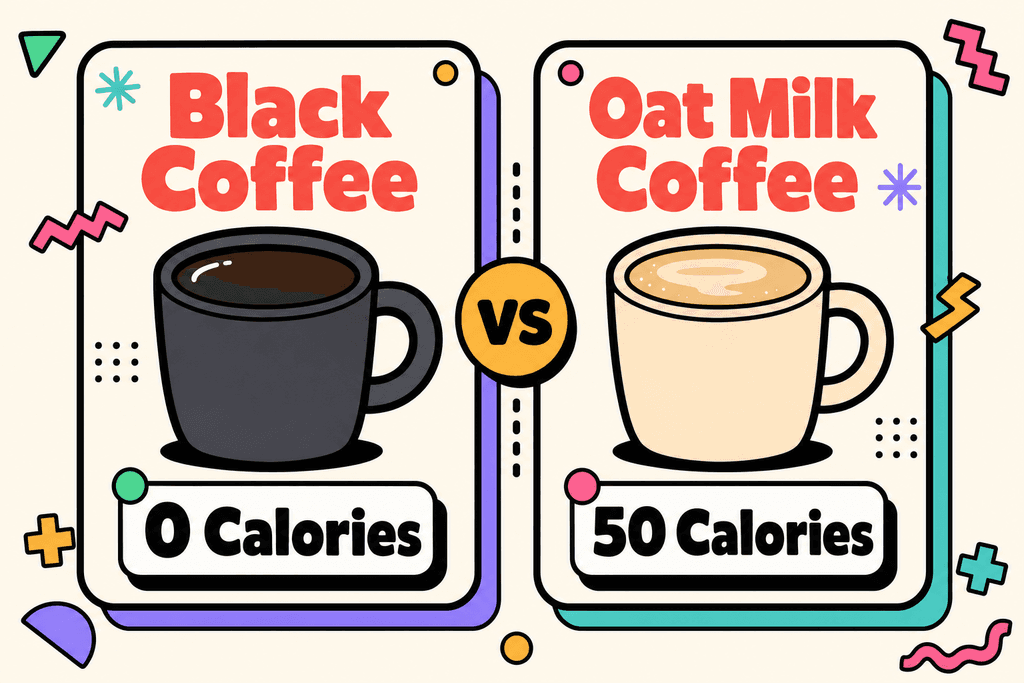
Black coffee by itself has almost zero calories, which surprises a lot of people who think their morning cup might be sabotaging their diet. The real calorie count starts climbing when you add milk, cream, or sweeteners to your drink. Oat milk has become super popular lately as a dairy alternative, but it actually has more calories than regular milk in most cases. Understanding what you're really drinking matters if you're trying to track your nutrition accurately. Apps like MyFoodBuddy make this easier by letting you just say "black coffee with oat milk" and getting the full nutritional breakdown without doing math.
What Black Coffee Actually Contains
Plain black coffee is basically calorie-free, which makes it perfect for anyone watching their intake. An 8-ounce cup of regular brewed coffee has about 2 calories and almost no protein, carbs, or fat worth mentioning.
Here's what makes black coffee so diet-friendly:
- Contains zero sugar naturally
- Has no fat or cholesterol
- Provides small amounts of potassium and magnesium
- Includes antioxidants that don't show up on nutrition labels
Oat Milk Nutrition by the Numbers
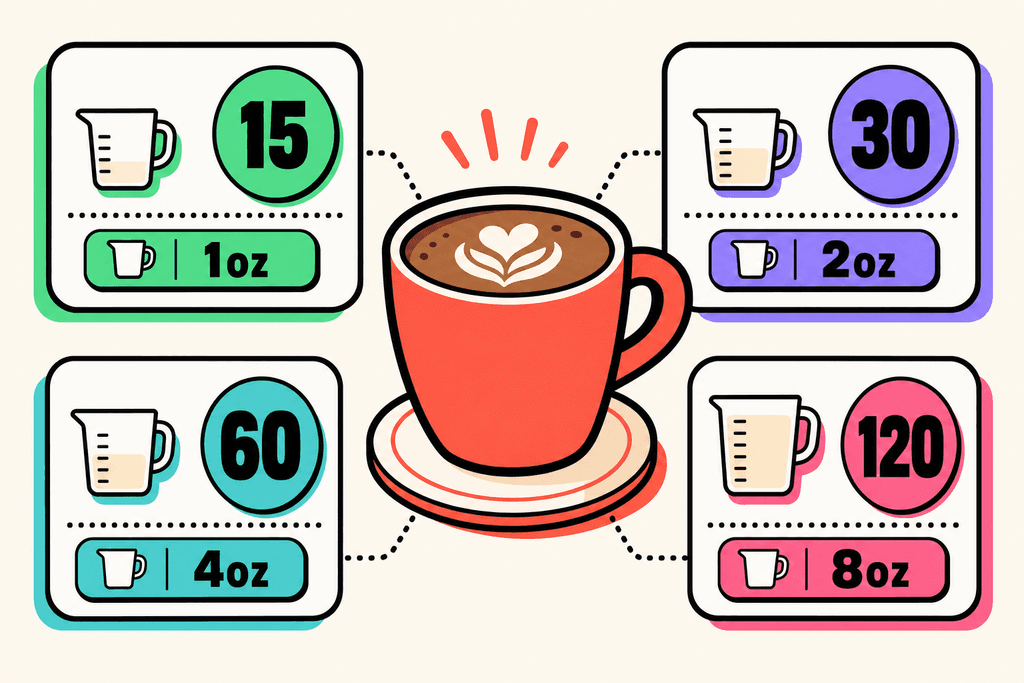
Oat milk packs more calories than you might expect, especially compared to black coffee. A typical serving adds between 30 to 120 calories depending on how much you pour. Most coffee shops use about 2 ounces for a small coffee and up to 8 ounces for a latte.
| Item | Serving Size | Calories | Protein (g) | Carbs (g) | Fat (g) |
|---|---|---|---|---|---|
| Black Coffee | 8 oz | 2 | 0.3 | 0 | 0 |
| Oat Milk | 1 oz | 15 | 0.4 | 2.4 | 0.6 |
| Oat Milk | 2 oz (splash) | 30 | 0.8 | 4.8 | 1.2 |
| Oat Milk | 4 oz (half cup) | 60 | 1.6 | 9.6 | 2.4 |
| Oat Milk | 8 oz (full cup) | 120 | 3.2 | 19.2 | 4.8 |
How Oat Milk Stacks Up Against Other Options
Oat milk sits somewhere in the middle when you compare it to other popular milk alternatives. Almond milk usually has fewer calories at around 30-40 per cup, while whole dairy milk has about 150 calories per cup. Soy milk comes in around 80-100 calories, making it closer to oat milk.
The main differences between milk alternatives:
- Almond milk has the fewest calories but almost no protein
- Soy milk offers the most protein at 7 grams per cup
- Oat milk has more carbs than any other alternative
- Coconut milk has the highest fat content
Tracking these differences used to mean searching through databases on apps like MyFitnessPal or Cronometer and manually entering each ingredient. With voice-based tracking, you can just say what you drank and move on with your day. The calories in your black coffee with oat milk might seem small, but they add up when you're having two or three cups daily.
How Oat Milk Changes Your Coffee's Calorie Count
Black coffee has zero calories, which makes it perfect for anyone watching their weight. But the moment you add oat milk, those numbers start climbing. The amount you pour in makes a bigger difference than most people realize, and understanding these numbers can help you make better choices throughout your day.
How Oat Milk Changes Your Coffee's Calorie Count
A small splash of oat milk, about 1 ounce, adds roughly 15 to 20 calories to your cup. That's not much, and for most people, it won't derail any goals. But here's where it gets interesting.
- A splash (1 oz) adds about 15-20 calories
- A standard serving (2-3 oz) adds 30-45 calories
- A latte-style coffee (6-8 oz) adds 90-120 calories
- Brand differences can affect calorie counts by 10-20%
When you order a latte or make one at home with 6 to 8 ounces of oat milk, you're looking at 90 to 120 calories per drink. That's about the same as eating a small banana. Different brands of oat milk can vary by 10 to 20 percent in their calorie content too, depending on how much sugar and oil they add during processing.
The type of oat milk matters more than you'd think. Barista blends tend to have more calories because they're formulated to foam better, which usually means more fat. Regular oat milk sits somewhere in the middle, while light versions can cut the calories by about a third.
Why Oat Milk Calories Matter for Your Goals
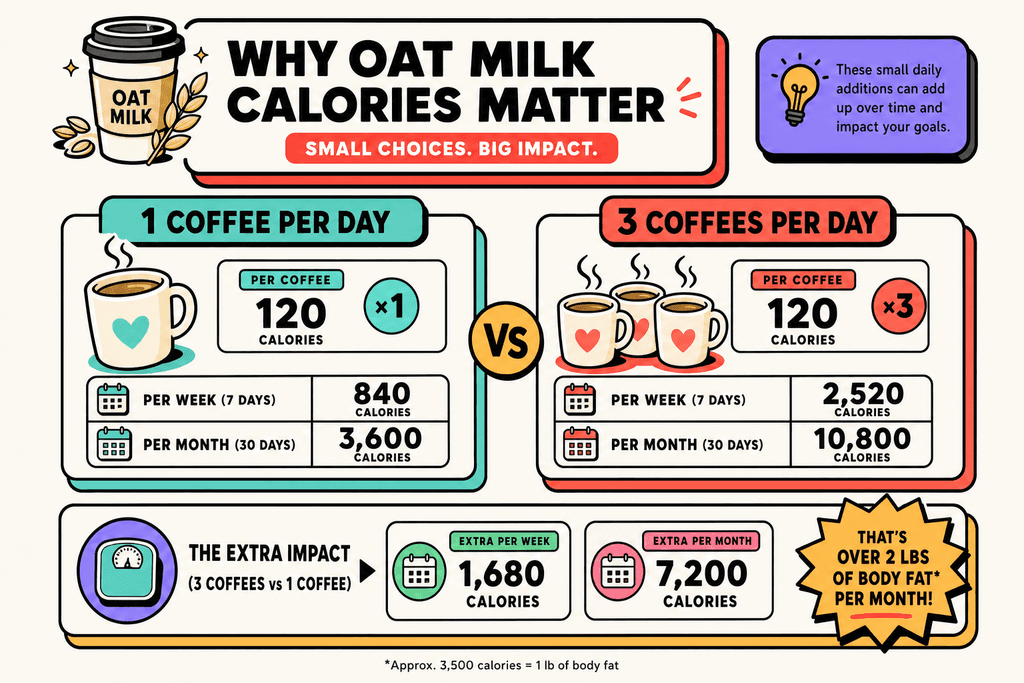
One coffee with oat milk seems harmless enough. But most coffee drinkers don't stop at one cup. If you're having two or three coffees throughout the day, those calories add up faster than you'd expect. A person drinking three lattes with oat milk could be consuming an extra 270 to 360 calories daily without even thinking about it.
Why Oat Milk Calories Matter for Your Goals
Over a week, that's between 1,890 and 2,520 calories just from coffee. Over a month, we're talking about 8,100 to 10,800 calories. To put that in perspective, one pound of body weight equals about 3,500 calories, so untracked coffee drinks could mean gaining two to three pounds per month if you're not accounting for them.
| Daily Coffee Intake | Daily Calories | Weekly Calories | Monthly Calories |
|---|---|---|---|
| 1 latte (6 oz oat milk) | 90-120 | 630-840 | 2,700-3,600 |
| 3 lattes (6 oz oat milk) | 270-360 | 1,890-2,520 | 8,100-10,800 |
The good news is that oat milk isn't just empty calories. It contains some protein and fiber, which can help you feel fuller and provide actual nutritional value. Most oat milks have about 2 to 3 grams of protein and 2 grams of fiber per cup, plus they're often fortified with calcium and vitamin D.
The problem isn't really the oat milk itself. It's that people forget to track it. When you're trying to lose weight or maintain your current weight, these hidden calories can be the difference between success and wondering why the scale won't budge. If you're interested in managing your weight while still enjoying your favorite drinks, check out our guide on how to lose weight without missing out on your favorite coffee.
Tracking Your Coffee Without the Hassle
Traditional calorie tracking apps make logging a simple coffee drink feel like doing homework. You have to search for "coffee," then search for "oat milk," then figure out how many ounces you used, then add both items separately. If you're doing this multiple times a day, it gets old fast. This is exactly why so many people give up on tracking after a few weeks, even when they know it would help them reach their goals.
Voice logging changes everything. Instead of tapping through multiple screens, you can just say "black coffee with oat milk" and let the app figure out the rest. MyFoodBuddy uses AI to understand what you're saying and automatically calculates the calories based on standard serving sizes.
- Traditional apps require multiple steps to log coffee drinks
- Voice logging allows natural language input like "black coffee with oat milk"
- AI-powered apps calculate calories automatically without manual searching
- Saving favorite coffee orders makes daily tracking take seconds
The real time-saver comes when you save your regular coffee order as a favorite. If you get the same drink every morning, you can re-log it with one tap instead of entering everything from scratch. This turns a two-minute task into a five-second one, which makes it way more likely you'll actually stick with tracking long-term.
For people who grab coffee at shops regularly, voice technology makes calorie counting at coffee shops much more practical. You can log your order while you're still in line or right after you get your drink, without fumbling through menus and databases. The same approach works for other common foods too, like when you're counting calories in overnight oats with milk or tracking any other regular meals.
The bottom line is simple. Your coffee calories matter, but tracking them doesn't have to be complicated. Whether you're having one cup or five, knowing what's actually going into your body helps you make better decisions without giving up the things you enjoy.
Making Smart Coffee Choices That Fit Your Lifestyle
The difference between a 20-calorie black coffee and a 120-calorie oat milk latte might seem small, but these choices add up over time. Most people don't realize that their daily coffee habit could be adding anywhere from 140 to 700 extra calories per week, depending on how much oat milk they pour in. The good news is that you don't have to choose between enjoying your coffee and hitting your nutrition goals. Understanding how different amounts of oat milk affect your calorie budget helps you make choices that actually work for your lifestyle instead of against it.
Adjusting Oat Milk Portions for Your Calorie Budget
The amount of oat milk you add to your coffee should match your daily calorie targets, not some arbitrary standard. A tablespoon here or there makes a real difference when you're tracking consistently.
- Tight calorie budget (1,200-1,500 calories): Stick to 1-2 tablespoons of oat milk for 10-20 calories
- Moderate budget (1,500-2,000 calories): Use 3-4 tablespoons for 30-40 calories without guilt
- Higher budget (2,000+ calories): A full quarter cup at 30-40 calories is totally reasonable
- Multiple cups per day: Cut each serving in half to keep your total coffee calories under control
Apps like MyFoodBuddy make tracking these small amounts easy since you can just say "coffee with two tablespoons of oat milk" instead of measuring and calculating everything manually. The voice logging feature means you're more likely to actually track it, which is half the battle.
When Oat Milk Calories Are Worth It
Not all calories coffee black drinkers avoid are created equal. Oat milk brings more to the table than just taste, and sometimes those extra calories actually support your goals better than skipping them would.
| Situation | Worth the Calories? | Why |
|---|---|---|
| Morning coffee only | Yes | Adds staying power |
| Pre-workout drink | Yes | Provides quick carbs |
| Third cup of the day | Maybe not | Calories add up fast |
| Replacing a snack | Definitely | More satisfying than black |
Comparing Oat Milk to Other Alternatives
Oat milk sits in the middle of the calorie spectrum for coffee additions. It's not the lowest option, but it's far from the highest either.
- Almond milk comes in at about 2-3 calories per tablespoon, making it the lowest-calorie choice
- Oat milk averages 10 calories per tablespoon with a creamier texture that many prefer
- Whole milk hits 9 calories per tablespoon but includes more protein and fat
- Heavy cream tops the chart at 50 calories per tablespoon for those doing keto
The best choice depends on what else you're eating that day and what your body actually needs. Someone cutting calories might choose almond milk, while someone trying to gain weight could go with whole milk or cream without any issues.
Building Sustainable Coffee Habits
The coffee routine that works long-term is the one you'll actually stick with. Forcing yourself to drink calories coffee black when you hate it usually backfires within a few weeks.
- Start with your preferred amount of oat milk and gradually reduce it if needed, rather than going cold turkey
- Save your "fancy" coffee with extra oat milk for days when you need the mental boost
- Track your coffee consistently so you can see patterns in how it affects your hunger and energy
- Don't stress about 10-20 extra calories if it means you'll enjoy your morning more
The real secret is making tracking so easy that you never skip it. When logging your coffee takes five seconds instead of five minutes, you're way more likely to keep doing it every single day.
Your Coffee, Your Way, Tracked Easily
So here's what you need to remember about calories coffee black with oat milk. Plain black coffee has almost zero calories, maybe 2 or 3 at most. But once you start adding oat milk, those numbers climb fast. A cup with a splash might be 20 calories, while a full oat milk latte can hit 150 or more. The difference between a small pour and a generous splash can mean an extra 50 calories you didn't account for.
The tricky part is knowing exactly how much oat milk you're using. Most people just eyeball it, which makes tracking a guessing game. When you're trying to manage your weight without giving up your favorite coffee, those small miscalculations add up over time.
That's where simple tracking makes a real difference. Instead of pulling out measuring cups or searching through databases like you would with traditional apps, you can just say what you had. MyFoodBuddy lets you log "black coffee with two tablespoons of oat milk" using your voice, and it handles the math for you. No searching, no guessing, no five-minute logging sessions.
Whether you're into plant-based eating or just prefer oat milk's taste, knowing your numbers helps you make better choices. The same goes for tracking overnight oats or any other meal throughout your day.
The bottom line is this: your morning coffee doesn't have to derail your goals, but only if you actually know what's in it. And tracking shouldn't take longer than making the coffee itself.
Common Questions About Coffee and Oat Milk Calories
Tracking your morning coffee might seem simple, but questions about calories and measurements come up all the time. Whether you're trying to lose weight or just want to understand what you're drinking, these answers will help you make better choices. Here's what most people want to know about their coffee with oat milk.
How many calories in black coffee with 2 oz oat milk?
Black coffee itself has almost zero calories, so all the calories come from the oat milk you add. Two ounces of oat milk typically contains around 30 to 40 calories, depending on the brand. Some barista-style oat milks have slightly more because they're formulated to foam better, while unsweetened versions might have a bit less.
Does oat milk have more calories than regular milk?
Oat milk and regular milk are pretty similar in calories, but it depends on which type you're comparing. Whole milk has about 37 calories per 2 oz, while 2% milk has around 30 calories. Most oat milks fall in that same range at 30 to 40 calories per 2 oz, so there's not a huge difference. The main thing to watch is that some sweetened oat milks can have extra sugar that bumps up the calorie count.
Can I drink coffee with oat milk while losing weight?
Yes, you can definitely drink coffee with oat milk while losing weight. The key is tracking those calories and making sure they fit into your daily goals. A splash of oat milk adds minimal calories compared to sugary coffee drinks or heavy creamers. The problem most people run into is not tracking these small additions, which can add up over multiple cups throughout the day.
How do I track coffee accurately without measuring?
This is where most calorie tracking apps make things harder than they need to be. Instead of pulling out measuring cups every morning, you can use voice logging to estimate your portions naturally. With MyFoodBuddy, you just say something like "black coffee with a splash of oat milk" and the app figures out the calories for you based on typical portions. It's way faster than searching through databases or creating custom meals in apps like MyFitnessPal.
What's the healthiest way to add oat milk to coffee?
Choose unsweetened oat milk to avoid extra sugar and calories you don't need. Look for brands with minimal ingredients and no added oils if you want the cleanest option. Start with less than you think you need because you can always add more, but you can't take it back once it's in your cup. Most people find that 1 to 2 ounces is enough to get the creamy texture without overdoing the calories.
Ready to start tracking smarter?
Download MyFoodBuddy and start tracking your calories by just saying what you ate. No more searching databases or guessing portions.
Get started