Fried Rice Calories and Macros by Serving Size
Calories in fried rice by serving size, plus protein, carbs and fat for a half cup, a full cup and a takeout pint. Log your portion in seconds.
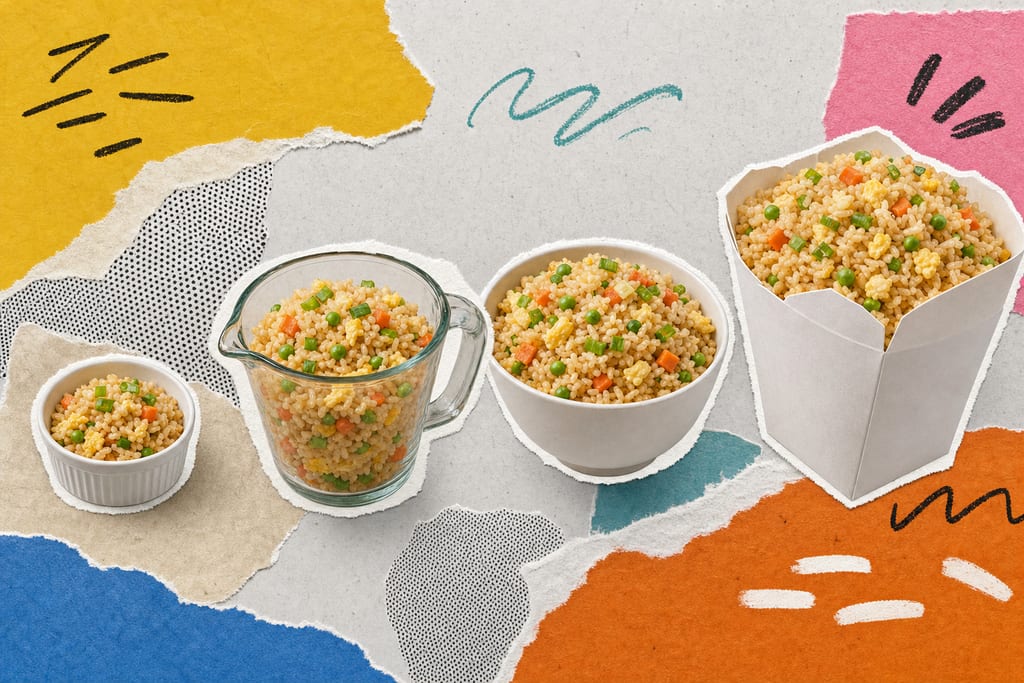
One cup of plain fried rice has about 238 calories, so the calories in fried rice land higher than most people guess for a side dish. That cup carries roughly 45 grams of carbs, 4 grams of fat and only about 5 grams of protein, which is why it fills a plate without filling you up for long. The catch is portion size: a standard takeout pint holds close to two cups, putting a single container near 475 calories before you touch the orange chicken next to it.
Table of Contents
Fried Rice Calories From a Side Scoop to a Pint
Portion size moves these numbers more than the recipe does, so start by matching the figure to what is actually on your plate. The values below come from the USDA FoodData Central entry for fried rice, scaled by weight to the servings people really eat.
| Portion | Calories | Protein | Carbs | Fat |
|---|---|---|---|---|
| 100 g | 120 | 2.5 g | 23 g | 2 g |
| 1/2 cup | 119 | 2.5 g | 22 g | 2 g |
| 1 cup | 238 | 5 g | 45 g | 4 g |
| Restaurant side, about 1.5 cups | 357 | 7.5 g | 68 g | 6 g |
| Takeout pint, about 2 cups | 475 | 10 g | 90 g | 8 g |
Nutrition checked: November 2026, against the USDA FoodData Central entry for fried rice.
Kitchens use their own recipes, their own oil pours and their own add-ins, so treat these as a solid starting point rather than a permanent label. The one-cup row is worth memorizing, since that is the serving most people end up logging.
Chicken, Shrimp or Pork Changes the Macro Split
Swapping the protein barely touches the carb column, because the rice base stays the same cup for cup. Protein and fat are what move, and the add-in decides how far.
Shrimp and chicken versions usually land leaner per cup than pork or sausage, since the meat itself brings less fat into the wok. Egg-only and vegetable versions sit at the bottom for protein, which matters if you are trying to hit a daily gram target. Before you log any of them, check these:
- Which protein is in it, and whether it was cooked separately or fried in with the rice
- Whether it is a house special or combination, which stacks two proteins and doubles the add-in calories
- How much of the bowl is actually meat versus rice, egg and peas
- Whether your entry matches that exact preparation, cup for cup, not just "fried rice"
If protein is the number you are chasing, the add-in matters far more than the rice. The same logic applies to anything you order, which is why tracking calories and protein efficiently beats eyeballing a single line on a menu.
The Oil Is Where Your Deficit Disappears
One tablespoon of cooking oil adds roughly 120 calories, and a restaurant wok uses a heavier pour than most home pans. That single difference means the same cup can land very differently depending on who cooked it.
Guessing the portion costs you just as much. Without a measuring cup, a closed fist or a cupped handful of rice is close to one cup, so count fists on the plate before you log.
- Log the second scoop you went back for, not the serving listed on the menu
- Count fists of rice, then note the protein separately if it came on top
- Add the oil if you cooked it yourself and poured more than a tablespoon
Speed is what keeps this habit alive, and with FoodBuddy you can just say "one and a half cups of chicken fried rice" and get the calories and macros pulled from USDA data, no searching or math. Repeat orders get saved too, so the same Friday takeout takes one tap the next time around. The AI food calorie counters handle the lookup so you can log the meal in seconds.
Decide Your Scoop Before the Container Opens
Pick your number before you lift the lid: one cup or two. Scoop that onto a plate, close the box, and put it back in the fridge. Then log it while the plate is still in front of you, not after the dishes are done, because that is when the guess creeps in and the day stops adding up. A free 7-day trial is enough time to see whether logging dinner in a few seconds actually sticks for you, and it is $39 a year after that, cancel whenever.
Fried Rice Questions Worth Asking
Does cauliflower fried rice actually save me enough calories to bother?
Yes, the swap is large enough to matter. Cauliflower carries a fraction of the carbs that cooked white rice does, so the bulk of what is left on your plate comes from the oil, egg and protein. If you hate the texture, try half rice and half cauliflower instead of going all in.
How do I count hibachi fried rice when the chef cooks it right in front of me?
Count the butter and oil you watched go on, then count fists of rice on your plate. Hibachi cooks use a generous pour, so log it on the heavier side. Saying what you ate out loud into FoodBuddy right at the table beats trying to rebuild the meal in your head an hour later.
Should I worry about the sodium in fried rice if I only care about calories?
Sodium will not add body fat, but it does hold water, and that can show up on the scale the next morning. Takeout fried rice is salty from soy sauce, so a higher reading after eating it may reflect water rather than fat gain. Weigh yourself across a week instead of reacting to one reading.
Ready to start tracking smarter?
Download MyFoodBuddy and start tracking your calories by just saying what you ate. No more searching databases or guessing portions.
Get started