Do Eggs Have Carbs The Carb Count Per Egg Explained
Do eggs have carbs? A large egg has under 1g of carbs. See the full macro breakdown and why eggs fit low-carb diets.
Do eggs have carbs? Barely any, a large egg has about 0.6 grams, which is close enough to zero that you don't need to count it. Most of what's in an egg is protein and fat, with the yolk carrying the fat and most of the flavor, and the white carrying the bulk of the protein. That's why eggs show up so often in low carb meal plans and weight loss diets, since you get real nutrition without eating into your daily carb budget. If you're logging meals and trying to hit a number each day, eggs are one of the few foods you can eat without doing any math first.
Table of Contents
The Exact Carb Count Per Egg Size
Egg size changes the carb count only slightly, and the shift is too small to matter for anyone watching their daily carbs. A small egg sits a bit under the large egg's number, while a jumbo pushes just over it. None of these differences will move the needle on a carb budget, no matter which size is sitting in your carton.
| Egg Size | Approx. Carbs |
|---|---|
| Small | 0.4g |
| Medium | 0.5g |
| Large | 0.6g |
| Extra-Large | 0.65g |
| Jumbo | 0.7g |
If you buy jumbo eggs because they're cheaper per ounce at the store, you're not taking on any real carb penalty. The gap between a small egg and a jumbo egg is about a quarter of a gram, which is less carbs than you'd get from a single breath mint. Pick eggs based on price or how hungry you are, not based on which size has fewer carbs.
Where The Carbs In An Egg Actually Come From
Almost all of the tiny carb amount in an egg sits in the white, not the yolk. The white carries small traces of natural sugar left over from the hen's metabolism, while the yolk has zero carbs and instead holds the fat, cholesterol, and most of the vitamins and minerals. That split matters if you're separating whites and yolks for a recipe or a bodybuilding-style diet.
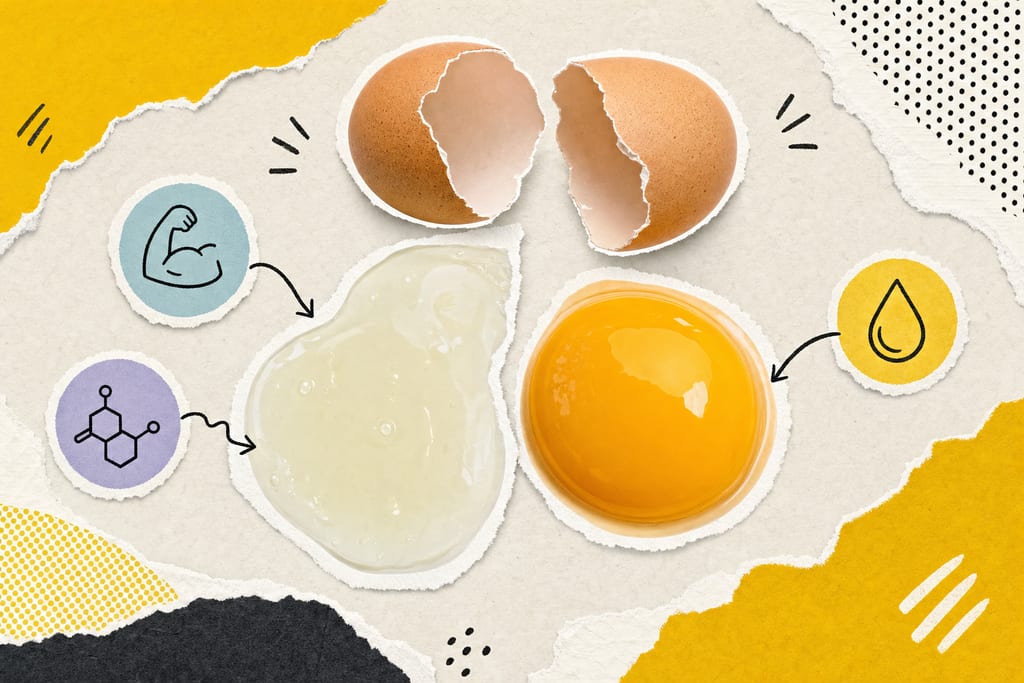
- Egg white: trace carbs, most of the protein
- Egg yolk: zero carbs, all of the fat, most of the micronutrients
- Whole large egg: about 0.6g carbs, 6g protein, 5g fat
- Egg white only: protein without the fat or flavor
So if you're trying to cut fat while keeping protein high, egg whites alone get you there with even less carb content than a whole egg, though the drop is barely measurable. Most people are better off eating the whole egg anyway, since the yolk is where the nutrition is.
Why Eggs Fit Low Carb And Weight Loss Diets
Eggs work for keto, low-carb, and standard weight loss plans because their carb count stays close to zero no matter how many you eat in one sitting. Three eggs cooked plain add up to less than 2 grams of carbs, which barely registers against a daily limit of 20 to 50 grams on most low-carb plans. The real carb math shows up once you start adding sides.
- Two eggs plus toast: toast adds 15-25g carbs, eggs add about 1g
- Two eggs plus hash browns: hash browns alone can run 15-20g carbs
- Two eggs plus avocado: avocado adds fiber-heavy carbs, still low-carb friendly
- Two eggs plain: carb count stays under 1.5g total
The habit worth building isn't counting the eggs, it's logging the whole plate, since that's where a low-carb breakfast quietly turns into a high-carb one. Apps built around voice-powered calorie counting for breakfast make that faster, since you can say "two eggs and hash browns" and get the full picture instead of guessing at the sides.
Track The Plate, Not Just The Eggs
The eggs were never the problem. The butter in the pan, the cheese on top, the juice next to the plate, those add up fast and most people don't write them down. Instead of guessing at each item, say the whole meal out loud or type it into MyFoodBuddy and let it break down the carbs, protein, and calories in one shot. Skipping that step is how a low-carb breakfast turns into a high-carb one without you ever noticing.
Egg Carb Questions People Still Ask
Do scrambled or fried eggs have more carbs than boiled eggs?
No, the cooking method itself adds nothing. A boiled, fried, or scrambled egg all carry the same tiny carb amount from the egg itself. What changes the number is what you cook it in or add to the pan, like milk in scrambled eggs or a floured coating in a fried egg sandwich, and those additions are what you need to track, not the egg.
Can eating too many eggs still mess up a low-carb diet if I add cheese or milk?
Yes, if you stop counting those extras. A splash of milk in scrambled eggs or a handful of shredded cheese can add several grams of carbs per serving, and that adds up fast if you're having eggs daily. Logging the whole dish with something like MyFoodBuddy catches those additions instead of letting them slide by unnoticed.
Are egg substitutes or liquid egg whites different in carbs than whole eggs?
Most liquid egg whites and egg substitutes sit close to zero carbs, similar to a regular egg white, since they're made mostly from the same protein. Check the label on the carton you buy, since some blends add thickeners or flavoring that bump the carb count up by a gram or two per serving.
Ready to start tracking smarter?
Download MyFoodBuddy and start tracking your calories by just saying what you ate. No more searching databases or guessing portions.
Get started