
Calorie Deficit Diet Plan Templates That Work
Compare calorie deficit diet plan templates to find what fits your lifestyle. Learn how to choose and stick to a plan that helps you lose weight.
You've probably tried tracking calories before and gave up within a week because it felt like a part-time job. The truth is, most people abandon their calorie deficit diet plan not because they lack discipline, but because they chose a tracking method that didn't fit their actual life. The template you pick for logging your meals matters way more than the specific foods you eat, and finding the right one could be the difference between finally losing that weight or quitting by next Tuesday.
Table of Contents
- What Makes a Calorie Deficit Diet Plan Work
- The Manual Spreadsheet Template
- The Traditional Calorie Counting App Template
- The Voice-First Quick-Log Template
- The Meal Plan Template Approach
- Which Template Actually Helps You Stick With It
- Finding Your Perfect Calorie Deficit Template
- Common Questions About Calorie Deficit Templates
What Makes a Calorie Deficit Diet Plan Work
Your body burns a certain number of calories every single day just to keep you alive and moving around. When you eat fewer calories than your body burns, you create what's called a calorie deficit. This forces your body to use stored fat for energy, which is how you lose weight. It sounds simple, but the tricky part is actually knowing how many calories you're eating and how many you're burning.
Most people who want to lose weight aim for about a 500-calorie daily deficit. This usually leads to losing around one pound per week, which doctors say is a healthy pace. Some folks go for smaller deficits if they want to lose weight more slowly, while others push for bigger deficits to see faster results.
Why Tracking Accuracy Matters
Here's where things get real. You can have the perfect calorie deficit diet plan on paper, but if you're not tracking your food accurately, you might not actually be in a deficit at all. Studies show that most people underestimate how much they eat by 20-50%, which completely wipes out a modest deficit.
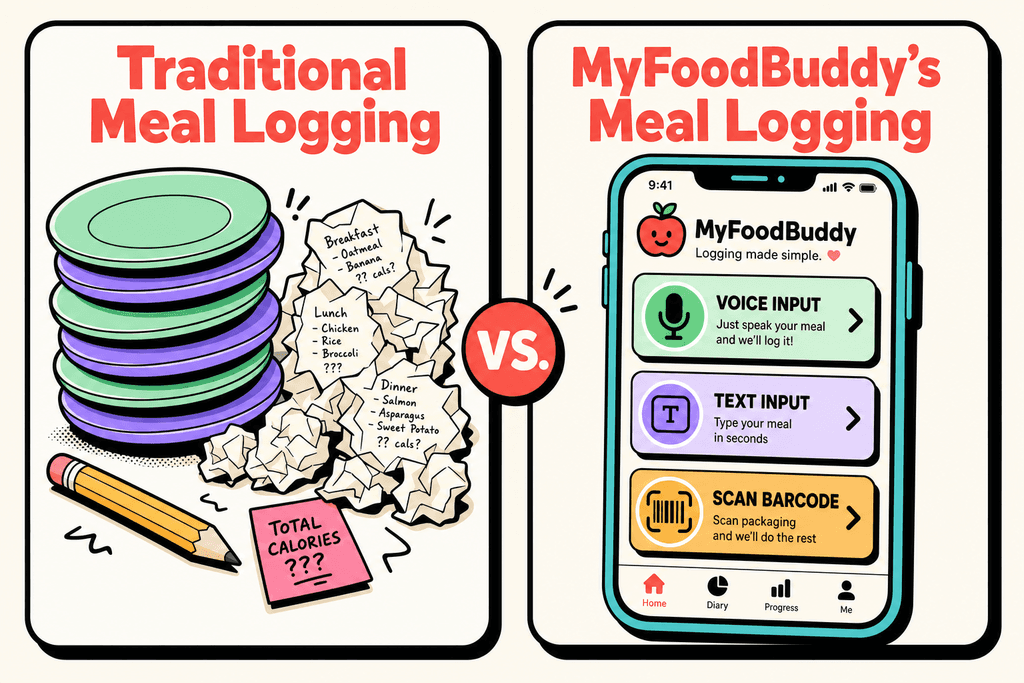
The method you use to track your calories makes a huge difference. Traditional apps like MyFitnessPal require you to search through databases, measure portions, and manually enter everything. This takes time and effort, which is why so many people quit after a few weeks. The easier your tracking method is, the more likely you are to stick with it long enough to see results.
Different Deficit Sizes Explained
Not all calorie deficits are created equal. The size of your deficit affects how fast you lose weight and how sustainable your plan will be. Here's a simple breakdown of what to expect with different deficit sizes.
| Daily Deficit | Weekly Weight Loss | Difficulty Level | Best For |
|---|---|---|---|
| 250 calories | 0.5 pounds | Easy | Slow, sustainable loss |
| 500 calories | 1 pound | Moderate | Most people |
| 750 calories | 1.5 pounds | Hard | Faster results |
| 1000 calories | 2 pounds | Very Hard | Short-term only |
Time Commitment and Precision
Different calorie deficit diet plan templates require different amounts of time and effort. Some people are happy to spend 10-15 minutes per day weighing food and logging every ingredient. Others need something faster or they just won't do it at all.
Voice-based tracking apps like MyFoodBuddy let you log meals in seconds by just saying what you ate. The AI figures out the calories for you, which means you can stay in your deficit without the hassle of traditional tracking. When tracking takes less than 30 seconds per meal, you're way more likely to actually do it every single day.
The best calorie deficit diet plan is the one you'll actually follow. It doesn't matter if a template is perfectly optimized if you give up after two weeks because it's too much work.
The Manual Spreadsheet Template
Most people who start tracking calories begin with a simple notebook or spreadsheet. You write down everything you eat, look up the calorie counts online, and add them up at the end of the day. It's the most basic approach to creating a calorie deficit diet plan, and honestly, it can work if you're willing to put in the time. The problem is that looking up every single food takes forever, and you need to be pretty good at estimating portion sizes or you'll end up way off track. Some people love this method because it feels more hands-on and they like seeing everything written out in front of them.
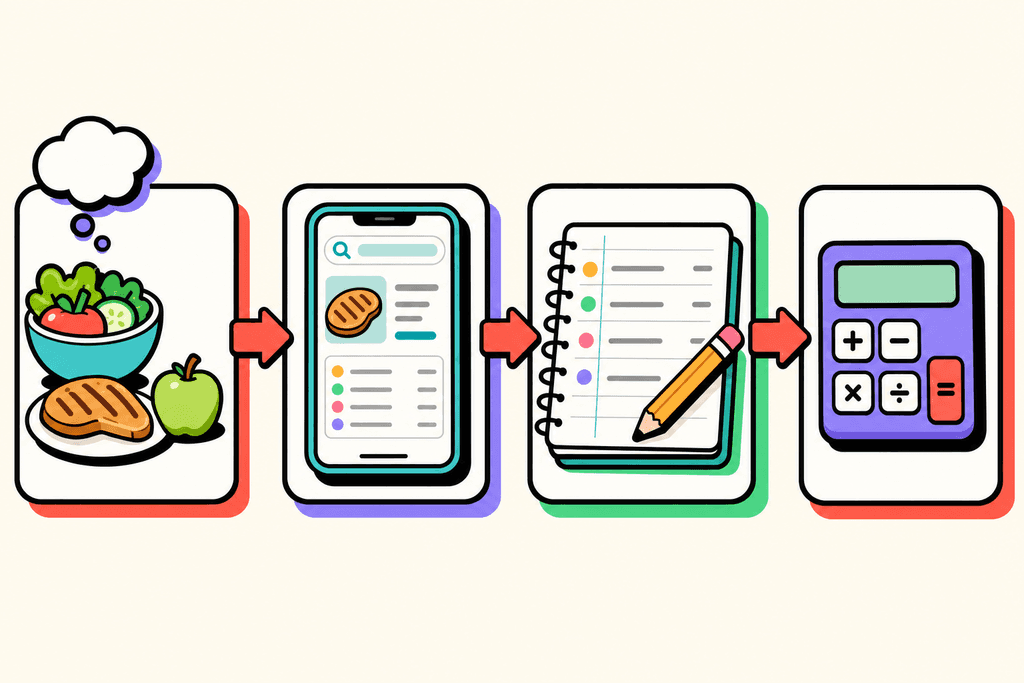
The manual approach works best for people who eat the same meals over and over. If you have oatmeal every morning and chicken with rice for dinner most nights, you only need to look up those calories once. But most of us don't eat that way, which is where things get messy.
- Time commitment: Expect to spend 10-15 minutes per day logging meals accurately
- Accuracy issues: Easy to underestimate portions without a food scale
- Cost: Free, but your time isn't
- Error rate: High chance of calculation mistakes when doing math manually
The biggest issue with spreadsheets is that they require you to be your own nutrition database. You're constantly googling "how many calories in a medium apple" or trying to figure out if your chicken breast was 4 ounces or 6 ounces. After a few weeks, most people get tired of this and stop tracking altogether.
| Pros | Cons |
|---|---|
| Completely free | Very time-consuming |
| Full control | Prone to errors |
| Works offline | No portion guidance |
| Simple to understand | Requires constant lookups |
The Traditional Calorie Counting App Template
Apps like MyFitnessPal made calorie tracking way easier than spreadsheets by giving you a searchable database of foods. Instead of googling every item, you just search within the app and select your portion size. This approach is more accurate than manual tracking and saves you from doing math, but it still takes a decent chunk of time. You're looking at about 5-10 minutes per meal to search for foods, pick the right option from dozens of similar entries, and adjust the serving sizes to match what you actually ate. The database approach sounds great until you search for "grilled chicken" and get 47 different options with wildly different calorie counts.
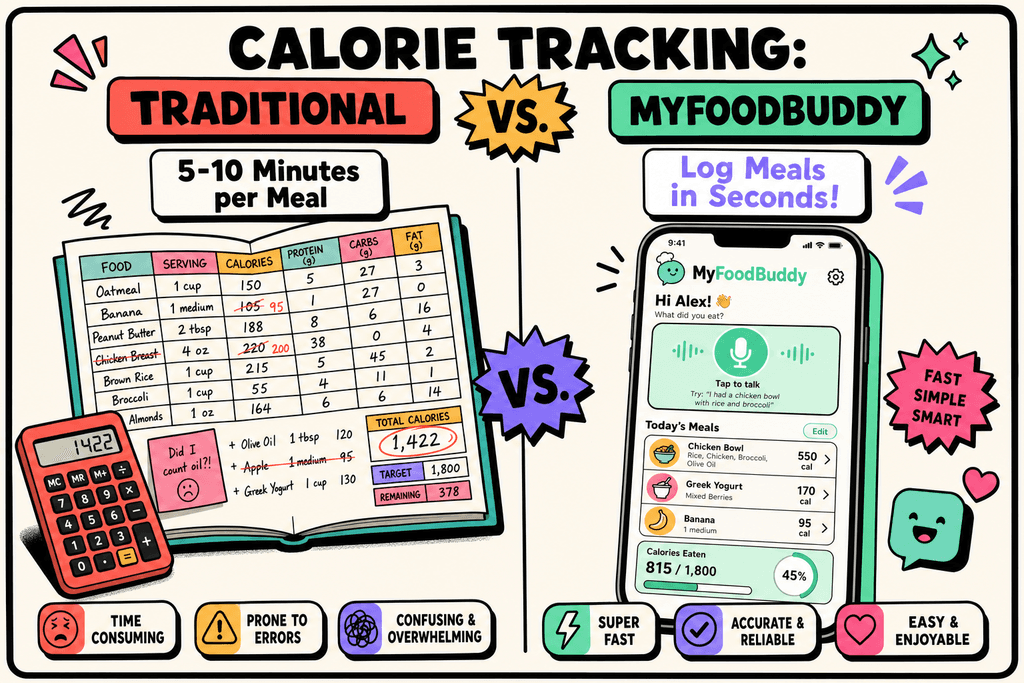
The real challenge is that you need to be specific about everything. Did you have a small banana or a large one? Was that tablespoon of peanut butter level or heaping? These apps work, but they require you to either estimate portions or weigh everything on a food scale.
Research shows that about 80% of people who download calorie tracking apps stop using them within two weeks. The main reason is that the process feels tedious after the initial motivation wears off. You're standing in your kitchen trying to log dinner while it's getting cold, scrolling through endless database entries, and second-guessing your portion sizes.
- Database searches often return confusing duplicate entries
- Requires estimating or weighing portions for accuracy
- Takes 5-10 minutes per meal on average
- More accurate than manual tracking but still feels like work
- Most users quit within a few weeks due to tracking fatigue
The traditional app template works better than spreadsheets, but it still puts a lot of friction between you and your calorie deficit diet plan. If you want to learn more about setting realistic calorie goals, that foundation matters just as much as the tracking method you choose.
The Voice-First Quick-Log Template
Here's where things get interesting. Newer apps use AI to let you just say what you ate and automatically calculate the calories. Instead of searching databases and adjusting serving sizes, you simply speak or type something like "chicken breast with rice and broccoli" and the app figures out the rest. This cuts logging time from 5-10 minutes down to under 30 seconds per meal, which is the difference between tracking feeling like a chore and tracking feeling effortless. Apps like MyFoodBuddy use this approach to remove all the friction that makes people quit traditional tracking.
The speed matters more than you might think. When tracking takes 30 seconds instead of 10 minutes, you're way more likely to actually do it every day. That consistency is what makes a calorie deficit diet plan actually work.
| Method | Time Per Meal | Accuracy |
|---|---|---|
| Manual spreadsheet | 10-15 minutes | Low to medium |
| Traditional app | 5-10 minutes | Medium to high |
| Voice-first AI | Under 30 seconds | High |
The best part is that these apps still use USDA nutrition databases, so you're getting accurate information. You're just not wasting time searching through it manually. This template works especially well for people who've tried tracking before but found it too time-consuming to stick with long-term. You can check out how voice-powered trackers help maintain a calorie deficit for more details on why this approach works so well.
- Logging speed: Under 30 seconds per meal
- AI extraction: Automatically calculates calories from natural language
- Accuracy: Uses USDA databases for reliable nutrition data
- Habit formation: Speed makes daily tracking actually sustainable
- Best for: People who quit traditional apps due to time commitment
The Meal Plan Template Approach
Some people skip the daily tracking hassle by eating the same meals every week. You plan out your entire week on Sunday, calculate the calories once, and then just eat those same foods repeatedly. Once you've logged your standard meals, tracking becomes automatic because you're just repeating the same entries. This approach removes all the decision-making and makes it super easy to stay in a calorie deficit because you know exactly what you're eating every day. It works great for people who don't mind eating similar foods regularly and value simplicity over variety.
The downside is that life doesn't always cooperate with rigid meal plans. What happens when you go out to dinner with friends or someone brings donuts to work? The template breaks down pretty quickly when you deviate from the plan.
- Plan all meals for the week and eat the same things repeatedly
- Tracking becomes automatic after initial setup
- Removes decision fatigue about what to eat
- Can feel restrictive and boring over time
- Difficult to maintain during social events or dining out
The meal plan template works best as a short-term strategy or for people with very structured lifestyles. If you're someone who thrives on routine and doesn't mind eating the same breakfast every day, this could be your answer. But most people find it too limiting after a few weeks. For a more flexible approach, tailoring your diet with custom calorie tracking lets you adjust your plan based on what's actually happening in your life.
| Benefits | Limitations |
|---|---|
| No daily tracking needed | Very restrictive |
| Removes decisions | Hard to maintain socially |
| Easy to follow | Can get boring quickly |
| Predictable results | Inflexible for real life |
The truth is that the best calorie deficit diet plan template is the one you'll actually stick with. Whether that's voice logging that takes 30 seconds, traditional apps that give you more control, or meal planning that removes decisions entirely depends on your lifestyle and preferences. The key is finding something that doesn't feel like a second job.
Which Template Actually Helps You Stick With It
The harsh truth about calorie deficit diet plans is that most people quit within the first month, and it has nothing to do with willpower. Research shows that the amount of time you spend tracking each meal is the single biggest factor in whether you'll still be doing it three months from now. When people spend more than five minutes logging a single meal, they start looking for excuses to skip days, and those skipped days turn into abandoned goals faster than you'd think.
The friction factor determines everything. Apps like MyFitnessPal require you to search through databases, adjust portion sizes, and manually calculate everything. That's why dropout rates spike after the first two weeks when the novelty wears off and the tedious work remains.
Key Retention Statistics:
- Users who log meals in under 2 minutes are 3x more likely to still be tracking after 90 days
- Voice-based logging shows 67% higher retention rates compared to manual database searches
- Templates requiring more than 3 steps per meal see 80% user dropout within 30 days
What Makes People Quit Versus Keep Going
The templates that fail share common traits. They demand perfection, require multiple steps, and force you to change your entire routine around the tracking process. The ones that work do the opposite.
- Quick-log methods that accept natural language instead of database searches
- Voice input options that let you log while cooking or eating
- Flexible tracking that doesn't punish you for estimating portions
- One-tap re-logging for meals you eat regularly
MyFoodBuddy takes this approach by letting you simply say what you ate and handling the rest automatically. No searching, no calculating, no five-minute logging sessions that make you dread your next meal.
Flexibility Beats Perfection Every Time
The best calorie deficit diet plan is the one you'll actually follow tomorrow. Not the most accurate one, not the most detailed one, but the one that fits into your life without making you feel like tracking calories is a part-time job.
| Template Type | Avg. Time Per Meal | 3-Month Retention |
|---|---|---|
| Manual database search | 4-6 minutes | 23% |
| Barcode scanning | 2-3 minutes | 41% |
| Voice or text input | Under 1 minute | 68% |
The template that works isn't about finding the perfect macro split or the most scientifically optimized meal timing. It's about removing every possible barrier between you and consistent tracking. When logging becomes as easy as sending a text message, you stop finding reasons not to do it.
Finding Your Perfect Calorie Deficit Template
The truth is, the best calorie deficit diet plan is the one you'll actually stick with for months, not days. You can have the most scientifically perfect template in the world, but if logging your meals feels like homework, you'll quit before you see results. Most people who've tried tracking before didn't fail because they lacked willpower. They failed because the method was too slow and annoying to keep up with real life.
Think about how many times you've skipped logging a meal because you were in a rush or didn't want to spend five minutes searching through a database. That's where most calorie deficit plans fall apart. Voice-based tracking removes most of the friction that causes people to give up, turning a tedious task into something that takes seconds.
Before you commit to any calorie deficit diet plan, try it for seven days to see if it actually fits your routine. Can you log meals while driving to work or cooking dinner. Does it feel natural or forced. MyFoodBuddy's voice-first approach makes logging take seconds instead of minutes, which is why people actually keep using it months later.
The templates we covered all work, but only if you can track them consistently. Setting personalized calorie goals matters less than finding a tracking method that doesn't make you want to quit. Start simple, track honestly, and adjust your approach based on what actually happens, not what should happen on paper.
Common Questions About Calorie Deficit Templates
Picking the right calorie deficit diet plan can feel overwhelming when you're staring at a bunch of different templates and tracking methods. Most people have the same questions when they're trying to figure out which approach will actually stick. Here are the answers to what everyone wants to know before committing to a tracking system.
How accurate do I need to be with calorie counting?
You don't need to be perfect, but you should aim for about 80-90% accuracy to see real results. Being off by 50-100 calories here and there won't ruin your progress, but consistently underestimating portions can stall your calorie deficit. The key is being honest and consistent rather than obsessively precise with every single gram.
Can I switch between different templates or should I stick with one?
Sticking with one template for at least 3-4 weeks gives you better data to work with. Your body needs time to respond to any calorie deficit diet plan, and switching too often makes it hard to know what's actually working. That said, if a template clearly isn't fitting your lifestyle after a couple weeks, it's better to switch than to quit entirely.
Do I need to track every single day or can I take breaks?
Tracking at least 5-6 days per week gives you enough data to stay on track with your calorie deficit. Many people take weekends off or use a more relaxed approach on certain days, which can work fine as long as you're not going way over your calories. The apps that make tracking super quick, like MyFoodBuddy where you can just speak what you ate, make it easier to stay consistent without feeling like it's a chore.
What if I eat out a lot - which template works best?
Flexible templates that don't require exact measurements work better when you eat out frequently. Voice-based tracking is especially helpful here because you can quickly log "grilled chicken sandwich with fries" without needing to scan barcodes or search through massive databases. Apps with AI nutrition extraction can estimate restaurant meals pretty accurately based on typical portion sizes.
How long does it take to see results with a calorie deficit?
Most people notice changes on the scale within 1-2 weeks, but visible body changes usually take 4-6 weeks. Your results depend on how consistent you are with your deficit and how much weight you need to lose overall. Tracking helps you stay accountable during those first few weeks when results aren't obvious yet.
Is voice tracking as accurate as manual entry?
Voice tracking can be just as accurate when the AI is trained on good nutrition data. The main difference is speed, not accuracy. While traditional apps might take 2-3 minutes to log a meal by searching and selecting items, voice tracking gets it done in seconds. The easier it is to log meals, the more likely you are to actually do it every day, which matters more than shaving off 10 calories of precision.
Ready to start tracking smarter?
Download MyFoodBuddy and start tracking your calories by just saying what you ate. No more searching databases or guessing portions.
Get started