
Calorie Deficit Diet Plan Mistakes Stalling Your Progress
Discover common calorie deficit mistakes sabotaging your weight loss. Learn how to fix tracking errors and break through plateaus fast.
You've been eating salads for lunch and skipping dessert, but the scale won't budge. The frustrating truth is that most people underestimate their daily calorie intake by 20-50%, which means your carefully planned calorie deficit diet plan might not actually exist. While apps like MyFitnessPal and Cronometer require tedious manual entry that leads to these tracking errors, tools like MyFoodBuddy let you simply speak what you ate and handle the calculations automatically, but even the best tracking tool won't help if you're making these common mistakes.
Table of Contents
Understanding Calorie Deficits
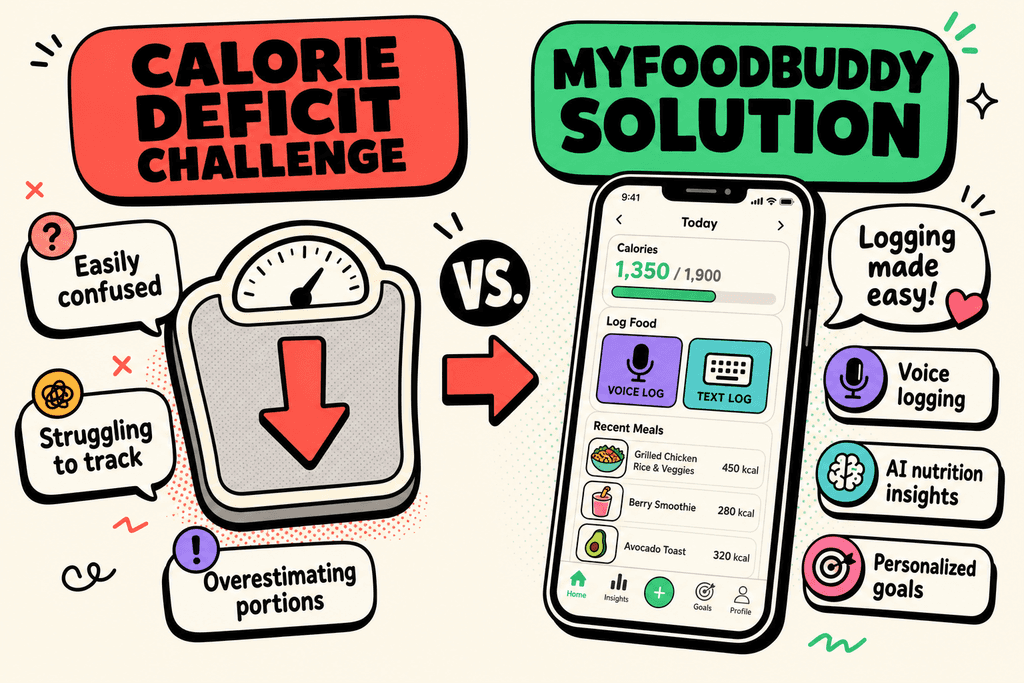
Your body burns a certain number of calories every day just to keep you alive and moving around. When you eat fewer calories than your body burns, you create what's called a calorie deficit. This forces your body to tap into stored fat for energy, which is how weight loss happens. It sounds simple, but the reality is that most people mess up the execution without even knowing it.
The Basic Math Behind Weight Loss
The old rule says that 3,500 calories equals about one pound of body fat. So if you want to lose one pound per week, you need to create a deficit of 500 calories per day. Want to lose two pounds? That's a 1,000 calorie daily deficit. Here's where things get tricky though.
Most calorie tracking apps require you to manually search for foods, measure portions, and add up everything yourself. Even small errors in tracking can completely throw off your deficit, especially if you're aiming for slower, sustainable weight loss where the margins are tight.
| Daily Calorie Deficit | Expected Weekly Weight Loss | Tracking Accuracy Needed |
|---|---|---|
| 250 calories | 0.5 pounds | Very High |
| 500 calories | 1 pound | High |
| 750 calories | 1.5 pounds | Moderate |
| 1,000 calories | 2 pounds | Moderate |
Why Tracking Accuracy Matters More Than You Think
Let's say you're trying to maintain a 500 calorie deficit to lose one pound per week. If you underestimate your food intake by just 200 calories per day, you've suddenly cut your expected weight loss by almost half. Do this consistently, and you might wonder why your calorie deficit diet plan isn't working at all.
The problem gets worse when you consider how easy it is to make mistakes. A tablespoon of peanut butter that's actually a heaping tablespoon? That's an extra 100 calories you didn't account for. Eyeballing your pasta portion? You're probably off by 150-200 calories. These errors add up fast.
This is exactly why apps like MyFoodBuddy use AI to calculate nutritional values from simple voice or text input. Instead of spending five minutes searching through databases and measuring everything, you just say what you ate and the app handles the math. When tracking takes less effort, you're more likely to do it accurately and consistently, which is what actually makes a calorie deficit diet plan work.
The Hidden Challenge of Consistency
Here's something most people don't realize until they've tried tracking for a few weeks. The biggest factor in successful weight loss isn't finding the perfect calorie deficit diet plan. It's actually sticking with your tracking long enough to see results.
Research shows that people who track their food consistently lose more weight than those who track sporadically, even if the sporadic trackers are more accurate when they do log. The reason is simple: you can't manage what you don't measure. When tracking feels like a chore that takes several minutes per meal, most people eventually give up.
Eyeballing Portions Instead of Measuring
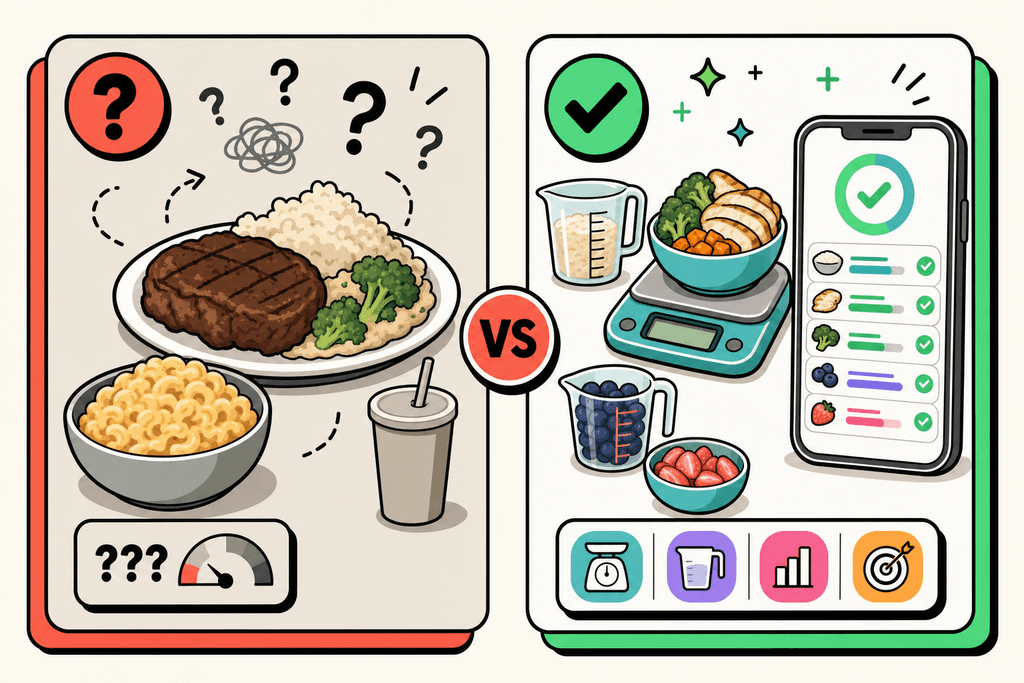
Most people think they're pretty good at guessing how much food is on their plate. The truth is, research shows we underestimate our portions by 25-50% on average, which means your calorie deficit diet plan might not actually be a deficit at all. When you're trying to lose weight and the scale won't budge, this is often the hidden culprit. The problem gets worse with certain foods that pack a serious caloric punch in small amounts. A tablespoon of peanut butter you eyeballed might actually be three tablespoons, turning your 100-calorie snack into a 300-calorie mistake.
Eyeballing Portions Instead of Measuring
High-calorie foods are the worst offenders when it comes to portion errors. Oils, nuts, cheese, and nut butters are so calorie-dense that even small measurement mistakes add up fast. That drizzle of olive oil you think is one tablespoon could easily be three, adding an extra 200 calories you never accounted for.
- Cooking oils and butter (120 calories per tablespoon)
- Nuts and seeds (160-200 calories per small handful)
- Cheese (100+ calories per ounce)
- Nut butters (90-100 calories per tablespoon)
- Salad dressings (50-100 calories per tablespoon)
The cumulative effect of these daily errors can completely eliminate your deficit. If you're off by just 200 calories per day from portion mistakes, that's 1,400 calories per week, which is nearly half a pound of fat loss you're missing out on. Over a month, those small errors could mean the difference between losing four pounds or staying exactly where you started.
Modern tracking apps have made portion logging much easier than the old days of carrying around a food scale everywhere. With voice-powered tools, you can simply say what you ate and let the app handle the calculations, making it more likely you'll actually measure things properly instead of guessing.
Forgetting to Track Small Bites and Extras
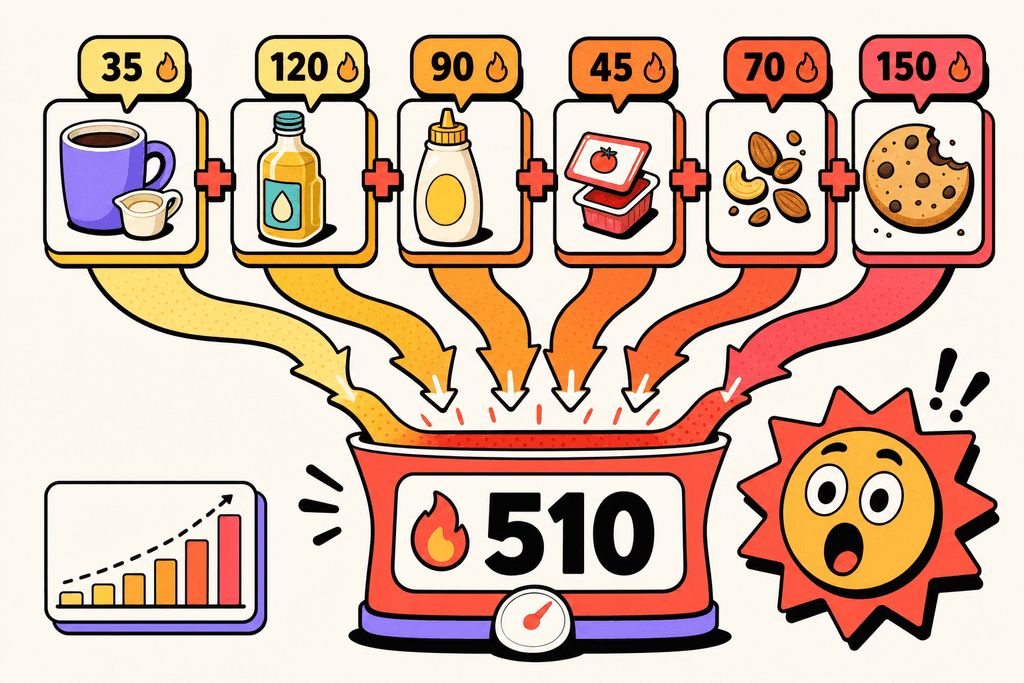
The handful of chips you grabbed while making dinner doesn't count, right? Wrong. Those small, untracked items throughout the day can easily add up to 300-500 hidden calories that completely sabotage your deficit. Most people are diligent about logging their main meals but conveniently forget about everything else that goes into their mouth. The coffee creamer, the cooking spray, the ketchup on your burger, the piece of candy from your coworker's desk. None of these seem significant on their own, but together they tell a very different story about your actual calorie intake.
Forgetting to Track Small Bites and Extras
Coffee additions are one of the sneakiest sources of untracked calories. That "splash" of cream and teaspoon of sugar in your morning coffee might actually be 100 calories, and if you have three cups a day, you've just added 300 calories you never wrote down.
Common Forgotten Items You Should Track
- Coffee creamer, milk, and sweeteners
- Cooking oils and butter used in meal prep
- Condiments like ketchup, mayo, and salad dressing
- Bites while cooking or tasting food
- Finishing your kids' leftover meals
- Mints, gum, and small candies
- Alcohol and mixers
Weekend tracking tends to be less accurate than weekdays because routines go out the window. You're eating out more, grazing at social events, and generally being less structured about meals. The 'BLTs' problem (bites, licks, and tastes) becomes especially bad on weekends. That sample at the grocery store, the fries you stole from your partner's plate, the spoonful of ice cream straight from the container.
Voice logging makes it much easier to capture everything in real-time without the friction of typing everything out. When you can just say "one tablespoon of olive oil for cooking" while you're actually cooking, you're way more likely to track it than if you have to remember it later and manually search through a database. Voice-powered calorie trackers remove the excuse of "it's too much work to log small things."
Setting Unrealistic Deficit Targets
Eating 1,200 calories a day sounds like a fast track to weight loss, but for most people it's actually a fast track to failure. When you slash your calories too aggressively, your body doesn't just sit there and let you burn fat at maximum speed. It fights back by slowing down your metabolism, ramping up hunger hormones, and making you feel miserable enough that you eventually give up. The math might say that a bigger deficit equals faster results, but biology doesn't work that way. Your body is designed to protect you from starvation, and it can't tell the difference between a diet and an actual famine.
Metabolic adaptation is real and it happens faster with extreme deficits. When you cut calories too hard, your body reduces energy expenditure by lowering your metabolic rate, making you move less throughout the day, and even reducing body heat production. What started as a 1,000 calorie deficit might only be a 500 calorie deficit after a few weeks because your metabolism has slowed down so much.
| Deficit Type | Weekly Loss | Muscle Loss Risk | Sustainability |
|---|---|---|---|
| Aggressive (1000+ cal) | 2+ lbs | High | Low |
| Moderate (500-750 cal) | 1-1.5 lbs | Low | High |
Aggressive deficits also increase muscle loss alongside fat loss, which is the opposite of what you want. Muscle is metabolically active tissue that helps you burn more calories at rest. Losing muscle makes it harder to keep weight off long-term. The sweet spot for most people is a moderate deficit that allows for steady progress without triggering these negative adaptations.
Using a TDEE calculator to set appropriate targets based on your actual activity level is way smarter than picking an arbitrary number like 1,200 calories. Setting realistic calorie goals means you can actually stick to your plan for months instead of crashing and burning after two weeks.
Inconsistent Tracking Habits
Tracking your food Monday through Friday and then going completely off the rails on weekends is like taking three steps forward and two steps back every single week. The weekend tracking gap is one of the biggest reasons people can't figure out why they're not losing weight despite "eating well most of the time." If you're in a 500 calorie deficit for five days (2,500 total deficit) but then eat 1,000 extra calories on Saturday and Sunday (2,000 calorie surplus), your weekly deficit is only 500 calories. That's barely enough to lose a tenth of a pound. You're working hard all week for almost nothing because two days of untracked eating erased most of your progress.
People tend to only track their "good" days, which creates a completely false picture of their actual intake. When you conveniently forget to log the day you had pizza and beer, you're only lying to yourself. The calories still count whether you write them down or not.
Tracking fatigue is real and it's why so many diet plans get abandoned after a few weeks. Traditional calorie counting apps require so much manual work that people just burn out. Searching through databases, weighing everything, creating custom recipes, it all adds up to a lot of friction that makes you want to quit. The easier tracking becomes, the more likely you are to stick with it long-term.
- Studies show people who track consistently lose 2-3x more weight
- Weekend tracking gaps can eliminate 60-80% of weekly deficits
- Apps with voice logging see 40% higher tracking consistency
The importance of tracking consistently extends beyond just the weight loss phase. Even during maintenance, keeping tabs on your intake helps you catch small weight creeps before they become big problems. Staying consistent with tracking is easier when you have tools that reduce the time and effort required.
MyFoodBuddy makes daily tracking sustainable by letting you log meals in seconds using voice or text instead of spending minutes searching and selecting from databases. When tracking takes less effort than deciding what to watch on Netflix, you're way more likely to actually do it every single day, which is what separates people who succeed from people who stay stuck.
Why Traditional Tracking Methods Fail
The average person spends 15-20 minutes per day logging meals in traditional calorie tracking apps, and that's exactly why most people quit within the first month. When you're trying to stick to a calorie deficit diet plan, the last thing you need is an app that feels like a part-time job. The problem isn't your willpower or commitment. The problem is that most tracking apps were designed for nutritionists and bodybuilders, not regular people trying to lose a few pounds. Every meal becomes a research project where you're scrolling through endless database entries, trying to figure out if "chicken breast grilled" has more calories than "grilled chicken breast" or whether your homemade sandwich matches any of the 47 similar options.
The Friction Problem
Think about what happens when you want to log a simple breakfast. You open the app, search for eggs, scroll through dozens of options, pick one, enter the quantity, then repeat for toast, butter, and coffee. By the time you're done, your coffee is cold and you're already annoyed. This friction creates a psychological barrier that gets higher every single day.
- Manual entry requires 8-12 taps per food item on average
- Database searches often return 50+ similar items with no clear winner
- Building custom meals requires saving and organizing multiple entries
- The process interrupts your actual eating experience
How Complexity Kills Consistency
Apps like MyFitnessPal and Cronometer work great if you eat the same meals every day or have time to pre-plan everything. But real life doesn't work that way. You grab lunch with coworkers, eat at restaurants without nutrition labels, or throw together whatever's in the fridge. Traditional apps force you to either spend 10 minutes estimating and searching, or skip logging altogether.
| Method | Time Per Meal | Steps Required | Consistency Rate |
|---|---|---|---|
| Traditional Manual Entry | 5-7 minutes | 15-20 taps | 23% after 30 days |
| Barcode Scanning | 3-4 minutes | 8-12 taps | 31% after 30 days |
| AI Voice Logging | 10-15 seconds | 1 tap | 68% after 30 days |
When tracking takes effort, it becomes optional. And when it's optional, your calorie deficit diet plan falls apart because you're only logging the "easy" meals while conveniently forgetting the snacks and drinks that actually derail your progress.
The Modern Solution
Voice and AI technology removes the friction entirely. Instead of tapping through menus, you just say what you ate. MyFoodBuddy uses AI to understand natural language, so "two eggs, toast with butter, and coffee with oat milk" gets logged in seconds, not minutes. The app handles all the database searching and calculation work in the background while you move on with your day.
- Natural language processing understands how real people describe food
- AI matches your description to accurate USDA nutrition data automatically
- Voice input works while driving, cooking, or doing anything else
- Reduced logging time means higher consistency rates
The difference between success and failure in a calorie deficit diet plan often comes down to whether tracking feels easy or hard. When the barrier drops from minutes to seconds, suddenly maintaining consistency becomes realistic instead of aspirational.
Making Your Calorie Deficit Work
Getting your calorie deficit diet plan right comes down to avoiding four big mistakes. Not tracking accurately, setting unrealistic goals, ignoring your actual activity level, and giving up when you don't see instant results. These are the things that trip up most people, and honestly, they're easier to fix than you might think.
The truth is, you don't need to be perfect. You just need to be consistent enough that your body actually responds to what you're doing. Missing a day of tracking or having a meal that goes over your target doesn't ruin everything. What ruins progress is when tracking becomes so annoying that you stop doing it altogether.
That's where the right tools make a real difference. Apps like MyFoodBuddy let you log meals by just saying what you ate, which takes seconds instead of minutes of searching through databases. When tracking is that simple, staying consistent becomes way more realistic. The AI handles the math, you just focus on eating well.
If you're feeling stuck right now, start with one thing. Maybe it's setting more realistic calorie goals or finally tracking your weekend meals honestly. Small changes add up faster than you'd expect, especially when you're not fighting against your tracking app every single day.
The questions below cover some of the most common things people wonder about when their calorie deficit diet plan isn't working like they hoped.
Common Questions About Calorie Deficit Diets
When you're trying to lose weight with a calorie deficit diet plan, questions pop up all the time. Some of them can make or break your progress if you don't get the right answers. We've gathered the most common concerns people have when tracking their food and staying in a deficit, along with straightforward answers that actually help.
How accurate does my calorie tracking need to be?
You don't need to be perfect, but you do need to be consistent. Most people can see results with tracking that's about 80-90% accurate, which means getting portion sizes roughly right and logging everything you eat. The bigger issue is when people skip logging things like cooking oils, condiments, or weekend meals, which can add hundreds of hidden calories. Apps like MyFoodBuddy make this easier by letting you quickly log meals through voice or text instead of spending time searching databases and measuring every ingredient.
What should I do if I hit a weight loss plateau?
Plateaus happen to everyone, and they're usually a sign that your body has adapted to your current calorie deficit diet plan. First, double-check your tracking accuracy since portion creep is real. If your tracking is solid, you might need to slightly reduce calories or increase activity, but don't slash calories dramatically. Sometimes taking a week at maintenance calories can actually help reset your metabolism and break through the plateau.
Is it okay to take breaks from tracking?
Yes, and sometimes it's necessary for your mental health. Taking planned diet breaks where you eat at maintenance calories for a week or two can actually improve long-term results by reducing stress and preventing metabolic adaptation. The key word is "planned" though. Random breaks where you stop tracking and overeat won't help, but intentional maintenance periods are different from giving up.
How long should I stay in a calorie deficit?
Most experts recommend staying in a deficit for 8-12 weeks before taking a break at maintenance calories. Staying in a deficit too long can mess with your hormones, slow your metabolism, and make you miserable. A better approach is cycling between deficit phases and maintenance phases, which helps you lose fat while keeping your sanity and your metabolism healthy.
Can I lose weight without tracking calories?
Technically yes, but it's much harder and less reliable. Some people can lose weight through intuitive eating or simple food rules, but most people underestimate how much they eat by 20-50%. Tracking gives you real data instead of guesses, which is why it works better for most people. The good news is that tracking doesn't have to be complicated or time-consuming anymore, especially with tools that use AI to calculate nutrition from simple voice commands.
Ready to start tracking smarter?
Download MyFoodBuddy and start tracking your calories by just saying what you ate. No more searching databases or guessing portions.
Get started