Set Personalized Calorie Goals For Faster Results
Learn how personalized calorie goals accelerate weight loss. Discover TDEE calculation, macro tracking, and goal-setting strategies that work.
You've probably tried sticking to the standard 2,000 calorie diet at some point, only to find the scale barely budging or your energy levels crashing. The truth is, generic calorie targets ignore everything that makes you unique, from your metabolism to how much you move each day. When you set personalized calorie goals that actually match your body and objectives, you stop spinning your wheels and start seeing real progress.
Table of Contents
The Science Behind Calorie Personalization
Your body burns calories every single second, even when you're sleeping or watching TV. This constant energy burn is different for everyone, which is why your friend can eat pizza every day and stay thin while you gain weight just looking at a donut. Understanding how many calories your body actually needs is the first step to reaching your health goals faster.
What is TDEE and Why Does It Matter
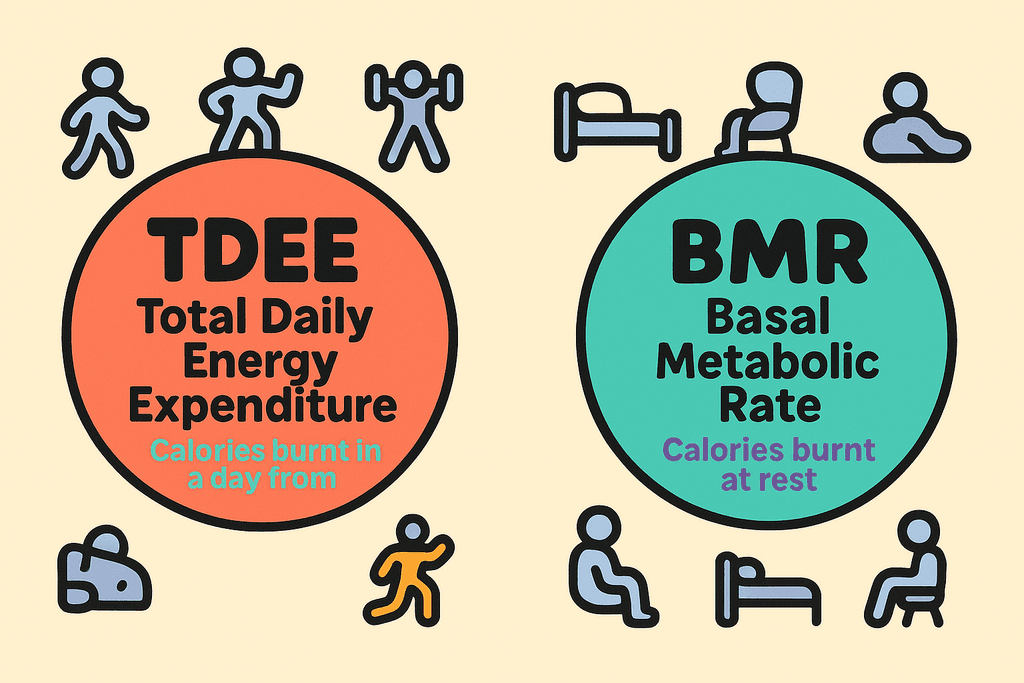
TDEE stands for Total Daily Energy Expenditure, which is just a fancy way of saying how many calories your body burns in a full day. This number includes everything from breathing and digesting food to walking your dog and hitting the gym. Your TDEE is like your body's personal fuel gauge, and it changes based on what you do each day.
Most calorie tracking apps give everyone the same generic targets, like 2,000 calories per day. But that's like saying everyone should wear size medium shoes. MyFoodBuddy uses a TDEE calculator to figure out your actual needs, so you're not guessing or following someone else's plan.
BMR Versus TDEE
Before we talk about TDEE, you need to know about BMR, or Basal Metabolic Rate. Your BMR is the minimum number of calories your body needs just to stay alive if you laid in bed all day doing absolutely nothing. Think of it as your body's idle mode.
Here's how they're different:
- BMR only counts calories for basic functions like breathing, blood circulation, and cell production
- TDEE includes your BMR plus all the calories you burn from moving around and exercising
- BMR stays pretty steady unless your body composition changes
- TDEE changes daily based on how active you are
What Affects Your Calorie Needs
Your body is unique, and so are your calorie needs. Several factors determine how many calories you burn each day, and ignoring these differences is why generic diet plans fail for most people.
The main factors that affect your personalized calorie goals include:
- Age - your metabolism naturally slows down as you get older
- Gender - men typically burn more calories than women due to higher muscle mass
- Current weight - heavier bodies need more energy to function
- Height - taller people generally have higher calorie needs
- Activity level - someone who works construction burns way more than someone at a desk job
This is why two people can eat the exact same meals and get completely different results. A 25-year-old male construction worker needs way more calories than a 45-year-old woman who works from home, even if they weigh the same.
Calorie Needs by Body Type and Activity
To show you just how different calorie needs can be, here's a comparison of daily calorie requirements for different people. These numbers assume a goal of maintaining current weight.
| Profile | Age | Weight | Activity Level | Daily Calories |
|---|---|---|---|---|
| Woman | 30 | 140 lbs | Sedentary | 1,800 |
| Woman | 30 | 140 lbs | Very Active | 2,400 |
| Man | 30 | 180 lbs | Sedentary | 2,200 |
| Man | 30 | 180 lbs | Very Active | 3,000 |
| Woman | 50 | 160 lbs | Moderate | 1,900 |
| Man | 50 | 200 lbs | Moderate | 2,500 |
As you can see, the difference between the lowest and highest calorie needs is over 1,200 calories per day. That's like adding or removing an entire extra meal. Following a one-size-fits-all approach means you're either eating too much or starving yourself without knowing it.
Calculate Your Personal TDEE Accurately
Most people who fail at dieting start with the wrong calorie target. They pick a random number they saw online or copy what worked for someone else. Your body burns calories at a completely different rate than anyone else's, which is why calculating your Total Daily Energy Expenditure (TDEE) is the first real step toward results. TDEE tells you exactly how many calories your body uses each day just to keep you alive and moving around. Once you know this number, everything else becomes easier.
Calculate Your Personal TDEE Accurately
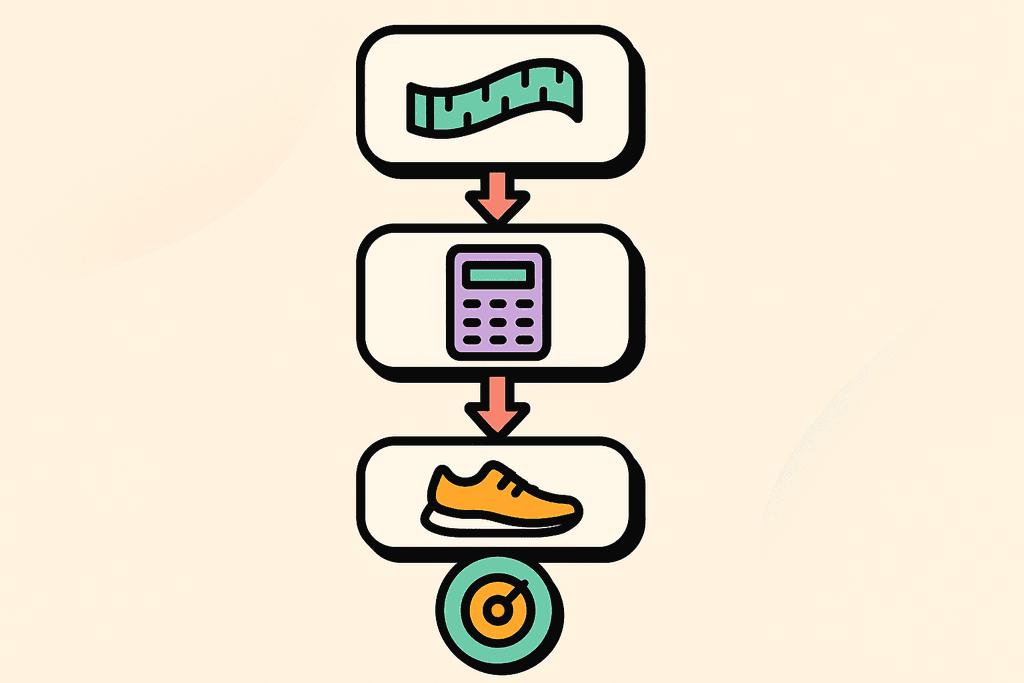
The Mifflin-St Jeor equation is the most accurate formula for calculating your baseline metabolic rate. It factors in your weight, height, age, and biological sex to determine how many calories you'd burn if you stayed in bed all day. Then you multiply that number by an activity level multiplier to account for your actual lifestyle.
TDEE Calculation Checklist
- Calculate your Basal Metabolic Rate (BMR) using the Mifflin-St Jeor equation
- Honestly assess your activity level (sedentary, lightly active, moderately active, very active, or extremely active)
- Multiply your BMR by the appropriate activity multiplier (ranging from 1.2 to 1.9)
- Track your weight for two weeks while eating at this calorie level
- Adjust based on actual results, not just the formula
The biggest mistake people make is overestimating their activity level. Someone who works a desk job and goes to the gym three times a week is usually "lightly active" at best, not "moderately active." This single error can throw off your calorie target by 300-500 calories per day, which explains why the scale won't budge even when you think you're doing everything right.
MyFoodBuddy's TDEE calculator handles all these calculations automatically. You just enter your basic stats and activity level, and it gives you a personalized starting point. But here's what most apps won't tell you: your TDEE changes as your body changes. When you lose weight, your body needs fewer calories to function. When you gain muscle, it needs more.
You should recalculate your TDEE every time you lose or gain about 10 pounds, or every 8-12 weeks if your weight stays stable. Your metabolism also shifts with age, stress levels, and changes in activity patterns. The number you started with six months ago might be completely wrong for you today.
Set Goals Based on Your Objectives
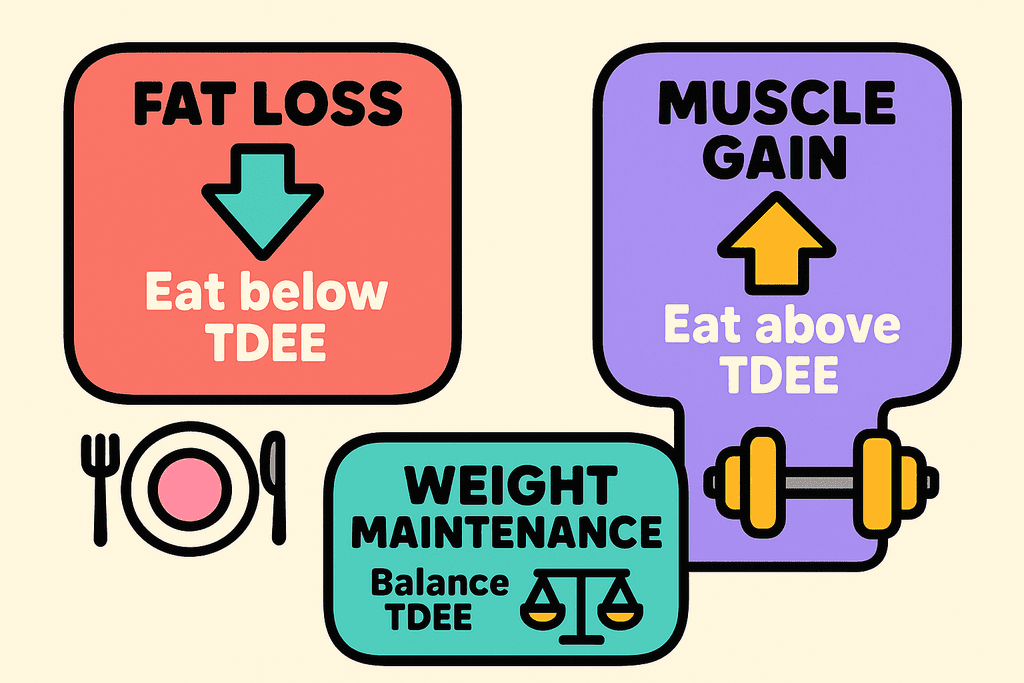
Knowing your TDEE is pointless if you don't know what to do with it. Your calorie target needs to match what you're actually trying to accomplish. Someone trying to lose fat needs a different approach than someone building muscle, and both are completely different from someone who just wants to maintain their current weight. The gap between your TDEE and your daily calorie intake determines whether you lose, gain, or stay the same.
Set Goals Based on Your Objectives
For weight loss, you need to eat below your TDEE to create a calorie deficit. But not all deficits are created equal. A deficit of 500 calories per day theoretically leads to losing one pound per week, but this old rule doesn't work the same for everyone. Someone with 100 pounds to lose can handle a larger deficit than someone trying to lose their last 10 pounds.
| Goal | Calorie Adjustment | Expected Rate |
|---|---|---|
| Aggressive Fat Loss | -750 calories | 1.5 lbs/week |
| Moderate Fat Loss | -500 calories | 1 lb/week |
| Slow Fat Loss | -250 calories | 0.5 lbs/week |
| Maintenance | 0 calories | No change |
| Lean Muscle Gain | +250 calories | 0.5 lbs/week |
| Faster Muscle Gain | +500 calories | 1 lb/week |
Building muscle requires eating above your TDEE, but eating too much just makes you fat. A surplus of 250-500 calories per day gives your body enough extra energy to build new tissue without packing on unnecessary fat. Most people trying to bulk make the mistake of eating way too much because they think more food equals more muscle. It doesn't work that way.
Maintenance calories are for people doing body recomposition, which means losing fat and building muscle at the same time. This only works well for beginners or people returning after a long break. You eat at your TDEE while lifting weights and getting enough protein. Progress is slower but you avoid the bulk-cut cycle entirely.
When you hit a plateau, your first instinct might be to cut calories even more or add more cardio. Sometimes the opposite works better. Taking a diet break at maintenance calories for 1-2 weeks can reset your metabolism and hormones, making fat loss easier when you return to a deficit. MyFoodBuddy lets you automatically set targets for your specific goal, whether that's weight loss, muscle gain, or maintenance, and you can adjust them as your progress changes.
Customize Your Macronutrient Targets
Two people can eat the same number of calories and get completely different results based on where those calories come from. Your body processes protein, carbs, and fats in totally different ways. Protein builds and repairs tissue, carbs fuel your workouts and brain, and fats regulate hormones and keep you feeling full. Getting your macro ratios right makes the difference between losing muscle along with fat or keeping your strength while you lean out.
Protein is the most important macro for almost everyone. If you're trying to lose weight, high protein intake prevents muscle loss during a calorie deficit. If you're building muscle, you need even more to support growth. Most research points to 0.7-1 gram of protein per pound of body weight as the sweet spot for people who exercise regularly.
- For fat loss: 30-40% of calories from protein
- For muscle gain: 25-35% of calories from protein
- For maintenance: 20-30% of calories from protein
Carbs get a bad reputation, but they're your body's preferred fuel source for intense exercise. If you do a lot of cardio or lift heavy weights, you need carbs to perform well and recover properly. Carb cycling means eating more carbs on training days and fewer on rest days, which can help with fat loss while maintaining performance. Some people feel better on lower carbs, others need more. There's no universal answer.
Fat intake matters more than most people realize. Going too low on fats can mess with your hormones, especially testosterone and estrogen. You need at least 0.3-0.4 grams per pound of body weight just for basic health. Fats also keep you feeling satisfied between meals, which makes sticking to your calorie target much easier.
MyFoodBuddy lets you set custom macro goals beyond just tracking calories. You can adjust your protein, carb, and fat targets based on what works for your body and your goals. The app tracks over 20 nutrients including vitamins and minerals, so you're not just hitting your macros but also making sure you're getting the micronutrients your body needs to function properly.
The truth is that personalized calorie goals are crucial for weight loss because everyone's body responds differently to different approaches. What works for your friend might not work for you. Setting realistic calorie goals based on your actual TDEE and adjusting your macros to match your lifestyle gives you the best chance of getting results that actually last. When you combine accurate tracking with smart calorie tracking, you stop guessing and start making real progress.
Why Personalization Beats Generic Plans
Studies show that people following personalized calorie goals stick with their plans 64% longer than those using generic diet templates. The difference isn't just about willpower or motivation. When your calorie targets actually match your body's needs, your lifestyle, and your real goals, tracking stops feeling like a chore you're forcing yourself to do. It becomes something that makes sense for your day-to-day life, which is why personalized calorie goals lead to better long-term results than cookie-cutter approaches.
The Adherence Problem with Generic Plans
Generic diet plans fail most people within the first month. Research from nutrition journals reveals that one-size-fits-all calorie recommendations ignore critical factors like your activity level, metabolism, and even sleep patterns.
- Generic plans often set calories too low, triggering hunger and cravings that derail progress
- They don't account for your actual daily routine or food preferences
- Most influencer meal plans are designed for their body and lifestyle, not yours
- Without customization, you're more likely to give up when results don't match expectations
Apps like MyFitnessPal and Cronometer offer calorie tracking, but many still rely on you to figure out your own targets. That's where the guesswork begins and mistakes happen.
How Customization Prevents Plateaus
Your metabolism adapts to whatever you throw at it. When you follow the same generic 1,200 or 2,000 calorie plan for months, your body adjusts and weight loss stalls. Personalized calorie goals that adjust based on your progress prevent this metabolic adaptation.
| Approach | Adaptation Time | Plateau Risk |
|---|---|---|
| Generic Plan | 4-6 weeks | High |
| Personalized Goals | 12+ weeks | Low |
MyFoodBuddy uses a TDEE calculator to set targets that match your specific needs, then adjusts as you progress. This keeps your body responding instead of adapting and shutting down.
The Psychology of Goals That Fit
When your calorie targets feel achievable and match your lifestyle, something interesting happens. You stop viewing tracking as punishment and start seeing it as useful information. The mental shift matters more than most people realize.
- Personalized goals reduce decision fatigue because you know exactly what to aim for
- You're less likely to binge when targets aren't unrealistically restrictive
- Seeing progress from goals designed for you builds confidence and momentum
This is why tracking becomes easier when targets match your actual needs. You're not fighting against arbitrary numbers someone else decided for you. You're working with data that reflects your real life, which makes the whole process feel less like a battle and more like a tool you control.
Your Path to Faster Results Starts Now
Setting personalized calorie goals isn't just about picking a random number and hoping for the best. The difference between guessing and actually calculating your needs can mean months of wasted effort or steady progress toward your goals. When you understand your TDEE, adjust based on whether you want to lose or gain weight, and customize your macros to fit your lifestyle, you're working with your body instead of against it.
The three key elements we covered are pretty straightforward. First, calculate your actual calorie needs using a proper TDEE formula. Second, adjust that number based on your specific goal, whether that's losing weight or building muscle. Third, customize your macros so you're not just hitting a calorie target but actually fueling your body the right way.
Here's the thing most people miss. Technology has made personalized calorie goals accessible to everyone, not just people with personal nutritionists. Apps like MyFoodBuddy include built-in TDEE calculators that automatically set your targets based on your goals, and you can adjust your macro goals as you learn what works for your body. You don't need to spend hours with spreadsheets or hire an expensive coach to get started.
The biggest mistake you can make is starting with a guess. Whether you're trying to enhance your weight loss or achieve your fitness goals, proper calculation gives you a real baseline to work from. From there, you can track, adjust, and actually see what's working instead of wondering why nothing's changing.
You probably have some questions about how to actually implement all of this in your daily routine. Let's address some of the most common ones.
Common Questions About Personalized Calorie Goals
Setting personalized calorie goals can feel confusing at first, especially when you're trying to figure out if you're doing it right. Most people have the same questions when they start tracking their food and trying to hit specific targets. Here are the answers to the most common questions about calculating and adjusting your calorie goals for better results.
How often should I recalculate my TDEE?
You should recalculate your TDEE every 10-15 pounds of weight loss or gain, or roughly every 4-6 weeks if your weight is changing. Your body's calorie needs change as your weight changes, so what worked at the start might not work later. If you're maintaining your weight, you only need to recalculate if your activity level changes significantly.
What if I'm not losing weight at my calculated deficit?
TDEE calculators give you a starting point, but they're not perfect for everyone. If you've been consistent for 2-3 weeks and haven't seen any change, try reducing your daily calories by 100-200 and track for another two weeks. The most common issue is actually underestimating portion sizes, so double-check that you're logging everything accurately before making changes.
Can I eat the same calories every day or should they vary?
Eating the same calories every day is totally fine and actually makes tracking easier for most people. Some people prefer calorie cycling where they eat more on workout days and less on rest days, but it's not necessary for results. What matters most is your average intake over the week, not daily perfection.
How accurate are TDEE calculators?
TDEE calculators are usually within 10-15% of your actual needs, which means they're a good starting point but not exact. They use averages based on population data, so your personal metabolism might be slightly higher or lower. MyFoodBuddy includes a TDEE calculator that helps you set initial targets, then you can adjust based on your real-world results over time.
Should I eat back exercise calories?
It depends on how you calculated your TDEE. If you included your exercise in your activity level, don't eat back those calories because they're already counted. If you set your activity level as sedentary, you can eat back about 50% of your exercise calories since fitness trackers tend to overestimate calorie burn.
What's the minimum calorie intake that's safe?
Most health experts recommend not going below 1,200 calories per day for women and 1,500 for men without medical supervision. Eating too little can slow your metabolism, cause muscle loss, and make it harder to get enough nutrients. A moderate deficit of 300-500 calories below your TDEE is usually the sweet spot for sustainable fat loss while keeping your energy up.
Ready to start tracking smarter?
Download MyFoodBuddy and start tracking your calories by just saying what you ate. No more searching databases or guessing portions.
Get started