
Custom Calorie Tracking vs Traditional Food Logging
Custom calorie tracking uses AI and voice input to log meals in seconds. Learn how it beats old manual tracking methods for better results.
Most people quit tracking their calories within the first month, and it's not because they lack willpower. Traditional apps like MyFitnessPal and Cronometer make you spend 5-10 minutes per meal searching databases, weighing portions, and doing math that feels more like homework than health. Custom calorie tracking flips this script by using AI and voice input to log your meals in seconds, which is exactly how apps like MyFoodBuddy are helping people actually stick with their goals.
Table of Contents
How Traditional Calorie Tracking Works
Most people who try tracking calories give up within the first month. The reason isn't lack of motivation or willpower. It's because the process takes way too much time and effort. Traditional calorie tracking apps like MyFitnessPal and Cronometer were built around massive food databases that require you to search, select, and adjust every single thing you eat. What should be a quick task turns into a daily chore that eats up your time.
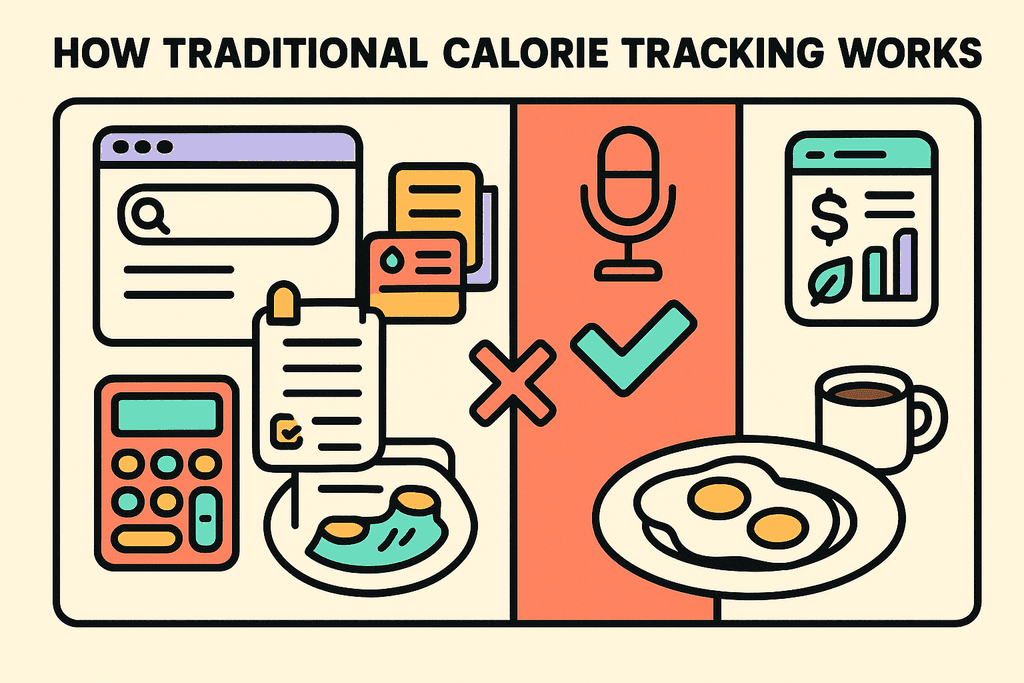
The typical process starts with opening your app and typing in what you ate. Sounds simple enough, right? But then you're faced with dozens of similar entries for the same food, each with slightly different calorie counts.
The Database Search Problem
When you search for something basic like "chicken breast," you might see 50+ different options. Some are raw, some are cooked, some include the skin, and others don't. Picking the wrong entry can throw off your entire day's tracking by hundreds of calories.
- Generic entries vs brand-specific items create confusion
- User-submitted data often contains errors or outdated information
- Restaurant meals have multiple versions with different portion sizes
- Homemade recipes require entering each ingredient separately
Apps like Calory and MyNetDiary try to solve this with barcode scanning, but that only works for packaged foods. Fresh ingredients and restaurant meals still need manual searching.
Portion Size Headaches
Once you find the right food, you're not done yet. Now comes the math. The database might show nutrition for 100 grams, but you ate 6 ounces. Or it lists one cup, but you had a bowl and a half.
- Converting between grams, ounces, cups, and pieces
- Estimating portions when you don't have a food scale handy
- Adjusting serving sizes with multiple taps and selections
- Recalculating when you go back for seconds
This is where custom calorie tracking makes a difference. With MyFoodBuddy, you just say "six ounces of chicken breast" and the AI handles all the conversions and calculations automatically.
Time Adds Up Fast
Research shows the average person spends 3-7 minutes logging each meal in traditional apps. That's up to 30 minutes per day if you're tracking three meals and two snacks. Over a month, you're looking at 15 hours spent just entering food data.
| Method | Time Per Meal | Daily Time | Monthly Time |
|---|---|---|---|
| Traditional Apps | 3-7 minutes | 15-35 minutes | 7.5-17.5 hours |
| Custom Voice Tracking | 10-30 seconds | 1-3 minutes | 30-90 minutes |
The multiple steps required for each entry create friction. You need to search, scroll, select, adjust portions, confirm, and then repeat for every ingredient in your meal. Apps like MacroFactor and Cronometer have tried to streamline this with meal templates and favorites, but you still need to set those up first.
- Opening the app and navigating to the food log
- Searching through the database for each item
- Selecting the correct entry from multiple options
- Adjusting serving sizes and quantities
- Confirming and saving each food item
This is why so many people start strong with calorie tracking but quit after a few weeks. The time investment just isn't sustainable when you're busy with work, family, and everything else life throws at you.
Voice and Text Input Changes Everything
Most people spend about three to five minutes logging a single meal in traditional calorie tracking apps. You have to search through endless databases, scroll past similar-sounding foods, and manually adjust portion sizes until everything matches what you actually ate. It's tedious work that turns a simple task into a daily chore. The worst part is when you can't find the exact food you ate, so you end up picking something close enough and hoping the calories are similar.
Natural language processing has completely changed this process. Instead of searching and selecting, you just tell the app what you ate in plain English. Say something like "two eggs, toast with butter, and a coffee with oat milk" and the AI figures out the rest. No databases to search through, no dropdown menus to navigate, and no math to do yourself.
- Simply speak or type what you ate in everyday language
- AI understands context and portions automatically
- No more scrolling through endless food lists
- Logging takes 10-15 seconds instead of several minutes
- Works with voice commands or text input
The difference in time savings adds up fast. If you log three meals and two snacks daily, that's potentially 15 minutes saved every single day. Over a week, that's almost two hours you get back. MyFoodBuddy uses this approach to make tracking effortless, so you can focus on your actual goals instead of fighting with an app.
Traditional apps require you to know exactly how many ounces of chicken you ate or whether your apple was small, medium, or large. With voice and text input, you just describe it how you'd tell a friend. The AI handles the translation from casual language to precise nutritional data.
AI-Powered Nutrition Extraction
Behind the scenes, there's a lot happening when you log a meal using natural language. The AI doesn't just guess at what you ate. It breaks down your description into individual ingredients, estimates reasonable portions based on common serving sizes, and pulls accurate nutritional data from the USDA database. This combination of smart processing and reliable data sources means you get accurate results without doing any of the work yourself.
The USDA database contains nutritional information for thousands of foods, from basic ingredients to complex dishes. When you mention "toast with butter," the AI knows to look up bread and butter separately, estimate standard portions, and combine the nutritional values. It's doing what you'd normally do manually, but in a fraction of a second.
What makes this really useful is the depth of tracking. MyFoodBuddy tracks over 20 nutrients, including vitamins and minerals that most people never bother logging manually. You get a complete picture of your nutrition without spending extra time on micronutrient calculations. The system even learns from corrections, so if you adjust a portion size, it remembers your preferences for next time.
- AI extracts ingredients and portions from your description
- USDA database provides verified nutritional values
- Tracks macros plus vitamins and minerals automatically
- No manual calculations or conversions needed
- System improves accuracy based on your feedback
The accuracy question comes up a lot with AI-powered tracking. Traditional apps let you pick the exact entry, so you feel more in control. But here's the thing: most people don't actually know if they ate 4 ounces or 6 ounces of chicken. They're guessing either way. AI-powered extraction uses the same estimation process, just faster and more consistently. For more insights on how voice technology simplifies nutrition tracking, check out our guide on voice-powered calorie tracking for accurate nutritional information.
Smart Organization and Personalization
Once you've logged meals for a few days, patterns start to emerge. You probably eat similar breakfasts most weekdays, have a rotation of favorite lunches, and stick to a handful of go-to dinners. Traditional food logging makes you search for these same meals over and over again. Custom calorie tracking apps learn your habits and make re-logging instant. Save your morning coffee as a favorite, and tomorrow you can log it with a single tap instead of describing it again.
The organization goes deeper than just favorites. Meals automatically get categorized by type, so you can see patterns in when you eat certain foods. Maybe you notice you always go over your calorie goal on days when you skip breakfast. Or you realize your snacks are actually pretty balanced. These insights only become visible when your data is organized properly.
| Feature | Traditional Logging | Custom Tracking |
|---|---|---|
| Meal Entry Time | 3-5 minutes | 10-15 seconds |
| Favorite Meals | Manual creation | Auto-saved |
| Nutrient Tracking | Basic macros | 20+ nutrients |
| Goal Setting | Manual input | TDEE calculator |
Personalization extends to your nutrition goals too. You can set your own macro and micro targets if you have specific requirements. Or if you're not sure where to start, the TDEE calculator automatically sets goals based on whether you want to lose weight, gain muscle, or maintain. The app adjusts recommendations as your weight changes, so your targets stay relevant.
- One-tap logging for frequently eaten meals
- Automatic sorting by breakfast, lunch, dinner, and snacks
- Custom macro and micronutrient goals
- Built-in TDEE calculator for automatic goal setting
- Visual progress tracking with color-coded calendars
The visual elements make a bigger difference than you'd expect. A color-coded calendar shows at a glance which days you hit your goals and which ones you didn't. Weight trend charts smooth out daily fluctuations so you can see actual progress over weeks and months. This kind of feedback keeps you motivated in a way that raw numbers in a spreadsheet never could. If you're looking to maintain consistency with your tracking habits, our article on how to stay consistent tracking calories offers practical strategies.
The difference between custom calorie tracking and traditional food logging really comes down to friction. Every extra step, every search query, every manual calculation adds resistance to the process. When tracking becomes easier, you're more likely to stick with it long enough to see real results. That's why MyFoodBuddy focuses on removing as many barriers as possible between you and your nutrition goals.
Why Custom Tracking Wins for Long-Term Success
Studies show that 80% of people who start using traditional calorie tracking apps quit within the first two weeks. The reason isn't lack of motivation or willpower. It's friction. Every time you need to search through databases, weigh portions, and manually enter nutritional data, you're adding barriers between intention and action. Custom calorie tracking removes these barriers by letting you log meals in seconds instead of minutes, which fundamentally changes whether people stick with it or give up.
The Friction Problem
Traditional food logging apps require multiple steps that eat up your time and patience. You open the app, search for each ingredient, adjust serving sizes, and hope the database has accurate information. When this process takes 3-5 minutes per meal, it becomes a chore you'll eventually skip.
| Traditional Apps | Custom Tracking |
| 3-5 minutes per meal | 10-15 seconds per meal |
| Multiple taps and searches | One voice command |
| 80% quit rate | 65% higher adherence |
MyFoodBuddy uses voice and text logging to cut this time down dramatically. You simply say what you ate, and the AI handles the rest using USDA data.
Motivation Through Gamification
Tracking streaks and achievements tap into the same psychology that makes games addictive. When you see a 30-day streak, you don't want to break it. This psychological trigger keeps you coming back even on days when motivation runs low.
- Streaks create accountability without external pressure
- Achievements reward consistency over perfection
- Visual progress indicators make abstract goals concrete
- Reminders nudge without nagging
Personalized Insights Without Effort
The AI nutrition coach Fiona analyzes your eating patterns and provides feedback based on your actual behavior. You're not getting generic advice from a blog post. You're getting insights tailored to your specific food choices and health goals.
- Identifies nutrient gaps in your diet automatically
- Suggests adjustments based on your preferences
- Tracks over 20 nutrients beyond basic macros
Time Savings Compound
Saving 3 minutes per meal doesn't sound like much. But multiply that by three meals a day for a year, and you've saved over 54 hours. That's more than two full days of your life back. Time saved is time you can spend actually preparing healthier meals instead of logging them.
Better data quality also means better decisions. When logging is easy, you're more likely to be honest and complete with your entries. This gives you accurate information to adjust your nutrition strategy instead of working with incomplete guesswork.
Making the Switch to Smarter Tracking
The difference between custom calorie tracking and traditional food logging comes down to one thing: how much of your day you're willing to spend on it. Traditional apps make you search through databases, measure portions, and manually enter every single ingredient. Custom calorie tracking removes all those steps that make people quit after a few weeks. You just say what you ate, and the app figures out the rest.
Voice input and AI automation can save you hours every week. Instead of spending five minutes logging each meal, you spend about ten seconds. That adds up fast when you're tracking three meals and snacks every day.
Better tracking leads to better results, but only if you actually stick with it. Most people don't fail at their health goals because they lack willpower. They fail because the tools they're using make it too hard to stay consistent. When tracking becomes easy, you're way more likely to keep doing it.
Modern apps like MyFoodBuddy make nutrition tracking actually sustainable for the long term. The app uses voice and text logging so you can track meals in seconds, not minutes. If you've struggled with apps like MyFitnessPal or other traditional trackers, the difference is pretty noticeable. You might also want to check out our guide on how to stay consistent tracking calories for more tips on building habits that last.
The question isn't whether custom calorie tracking works better than traditional methods. It does. The real question is whether you're ready to try something that might actually stick this time.
Common Questions About Custom Calorie Tracking
Switching from traditional food logging to custom calorie tracking raises a lot of questions. Most people wonder if talking to an app can really be as accurate as manually searching through food databases. Others worry about whether the technology can handle their specific eating habits or if they'll need to change how they cook and eat. These are fair concerns, especially if you've spent years using apps like MyFitnessPal or Cronometer and gotten used to their way of doing things. Here's what you actually need to know about how custom calorie tracking works in practice.
How accurate is voice-based calorie tracking?
Voice-based custom calorie tracking uses AI combined with USDA nutritional databases to estimate calories and macros. The accuracy depends on how specific you are when logging, but it's generally comparable to manual entry since both methods rely on the same underlying food data. If you say "a handful of almonds" versus "28 grams of almonds," you'll get different levels of precision, just like with traditional apps.
Can custom tracking handle complex meals?
Yes, custom calorie tracking can break down complex meals into individual ingredients. You can say something like "chicken stir fry with broccoli, bell peppers, and brown rice cooked in sesame oil" and the AI will parse each component. The system is designed to understand natural language, so you don't need to log each ingredient separately like you would in traditional apps.
Is it faster than traditional calorie counting apps?
Custom calorie tracking typically takes seconds instead of minutes per meal. Traditional apps require you to search for each food item, select the right brand or portion size, and manually add everything to your log. With voice or text-based logging, you describe your meal once and move on. MyFoodBuddy users report spending significantly less time on meal logging compared to their previous apps.
What if the AI gets something wrong?
You can review and edit any entry after it's logged. Most custom calorie tracking apps let you adjust portions, swap ingredients, or correct misunderstandings. The AI learns common food patterns over time, but you always have final control over what gets recorded in your diary.
Do I need to weigh my food with custom tracking?
Weighing food is optional and depends on your goals. If you're trying to lose weight and need precise tracking, weighing helps with any method. But custom calorie tracking works fine with estimates like "a medium apple" or "a cup of rice," which is how most people naturally describe their meals anyway.
How much does custom calorie tracking cost?
Pricing varies by app, but custom calorie tracking tools typically cost between $30-100 per year. MyFoodBuddy offers custom calorie tracking for $39 per year with a 7-day free trial, which is less than most traditional premium tracking apps. The time you save on logging often makes the investment worthwhile if you've struggled to stay consistent with free apps.
Ready to start tracking smarter?
Download MyFoodBuddy and start tracking your calories by just saying what you ate. No more searching databases or guessing portions.
Get started