
How Many Ounces Chicken Breast Fits Your Macros
Learn how many ounces of chicken breast you need to hit your protein goals. Simple portion guide for weight loss, muscle gain, and maintenance.
You eyeball a piece of grilled chicken at dinner and guess it's around four ounces, but it's actually seven, and just like that you've blown past your protein target by lunch the next day. Most people tracking macros struggle with chicken breast portions because a couple extra ounces here and there adds up fast, throwing off your entire day without you realizing it. Whether you're trying to build muscle, lose fat, or just hit your numbers consistently, knowing how many ounces chicken breast you actually need makes the difference between guessing and getting results.
Table of Contents
The Nutrition Breakdown of Chicken Breast
A single ounce of cooked chicken breast packs about 7 grams of protein and only 46 calories, which explains why it shows up in almost every meal prep container at the gym. When you're trying to hit your macros, knowing exactly how many ounces chicken breast you need makes the difference between guessing and actually reaching your goals. The math gets tricky when you're hungry and just want to eat, but getting it right matters if you're serious about tracking.
Basic Chicken Breast Numbers
Raw chicken breast weighs more than cooked chicken breast because it loses water during cooking. This trips up a lot of people who track their food, especially when apps like MyFitnessPal require you to specify whether your entry is raw or cooked.
| Portion Size | Calories | Protein (g) | Fat (g) | Carbs (g) |
|---|---|---|---|---|
| 3 oz cooked | 138 | 26 | 3 | 0 |
| 4 oz cooked | 184 | 35 | 4 | 0 |
| 6 oz cooked | 276 | 52 | 6 | 0 |
| 8 oz cooked | 368 | 70 | 8 | 0 |
These numbers are for plain, skinless chicken breast with no added oils or seasonings. The moment you add butter, oil, or bread your chicken, those numbers change completely.
How Cooking Changes the Numbers
Grilling, baking, and air frying keep the calorie count close to the baseline numbers above. But other cooking methods tell a different story.
- Pan-frying with a tablespoon of olive oil adds about 120 calories and 14 grams of fat
- Deep frying with breading can triple the calorie count
- Rotisserie chicken from the store often has added oils and seasonings that bump up the fat content
- Grilled chicken at restaurants might be brushed with butter or oil you don't see
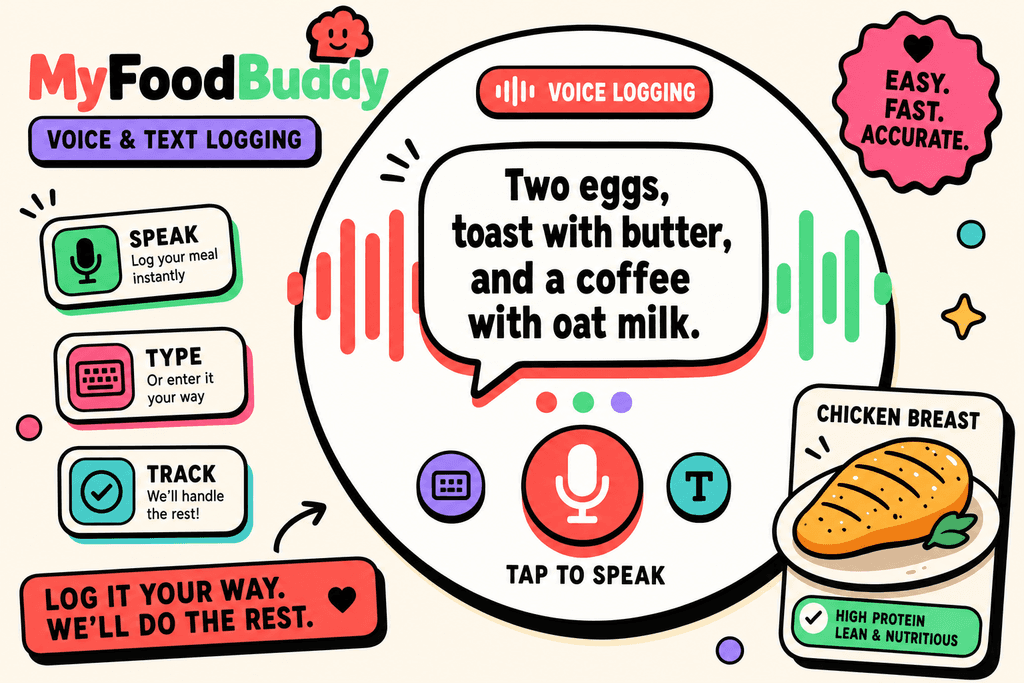
Apps like MyFitnessPal and Cronometer try to account for these differences with separate entries, but you end up scrolling through dozens of options trying to find the right one. With MyFoodBuddy, you can just say "grilled chicken breast, 6 ounces" and the AI figures out the rest using USDA data.
Why Chicken Breast Works for Macro Tracking
Chicken breast became the default protein for people tracking macros for good reasons. It delivers more protein per calorie than almost any other common food.
- Zero carbs means it fits into any macro split
- Low fat content leaves room for other foods you actually want to eat
- Consistent nutrition values make the math easier
- Available everywhere from grocery stores to fast food
The problem isn't whether chicken breast fits your macros. It's figuring out how many ounces chicken breast you actually need without pulling out a calculator every time you eat. Most people either overestimate and waste protein on one meal, or underestimate and scramble to hit their targets later.
Matching Chicken Portions to Your Goals
A single chicken breast can weigh anywhere from 3 to 12 ounces, which means the difference between hitting your macros perfectly or completely missing the mark. The amount of chicken breast that fits your macros depends entirely on what you're trying to accomplish with your body. Whether you're trying to shed fat, pack on muscle, or just maintain where you're at, the portion size changes quite a bit. Most people grab whatever chicken breast looks good at the store without thinking about how many ounces chicken breast they actually need for their specific goals.
When you're cutting weight, your body needs enough protein to preserve muscle while you're in a calorie deficit. For weight loss, you'll typically want 3-5 ounces of chicken breast per meal, which gives you about 25-40 grams of protein without loading up on too many calories. This keeps you satisfied and helps maintain that hard-earned muscle while the fat comes off.
| Goal | Portion Size | Protein Content | Calories |
|---|---|---|---|
| Cutting | 3-5 oz | 25-40g | 140-230 |
| Maintenance | 4-6 oz | 32-48g | 185-275 |
| Bulking | 6-8 oz | 48-64g | 275-370 |
If you're bulking and trying to build muscle, you need more protein and more calories overall. Muscle gain typically requires 6-8 ounces of chicken breast per meal, delivering around 48-64 grams of protein. That extra protein gives your muscles the building blocks they need to grow, especially when you're training hard and eating in a caloric surplus.
For maintenance, you're right in the middle at 4-6 ounces per meal. This amount keeps your body composition stable without pushing you into a surplus or deficit. The real trick is adjusting these portions based on your total daily protein needs, which we'll get into later.
Quick Ways to Measure Without a Scale
Not everyone carries a food scale around in their pocket, and honestly, that would be pretty weird. But you still need to know roughly how many ounces chicken breast you're eating when you're at a restaurant or meal prepping without your scale. The good news is your hand is actually a pretty decent measuring tool that you always have with you. Learning to eyeball portions takes some practice, but once you get it down, tracking becomes way easier.
The palm method is the simplest way to estimate chicken portions on the go. Your palm (not including fingers) is roughly equivalent to 3-4 ounces of cooked chicken breast. If you have larger hands, you're probably looking at closer to 4-5 ounces, and smaller hands might be closer to 3 ounces.
- 3 ounces = a deck of playing cards
- 4 ounces = the palm of your hand
- 6 ounces = two decks of cards stacked
- 8 ounces = about the size of a smartphone
These visual references work surprisingly well once you've weighed chicken a few times to calibrate your eye. After a couple weeks of weighing your portions and then comparing them to these objects, you'll start to develop an intuitive sense of portion sizes. Some people can get within half an ounce just by looking.
That said, precision matters most when you're in a serious cut or trying to hit very specific macro targets. When you're maintaining or bulking with more flexible calorie ranges, being off by an ounce or two won't derail your progress. But if you're two weeks out from a competition or trying to break through a plateau, you'll want to weigh everything.
Making Chicken Fit Your Daily Macros
Knowing how many ounces chicken breast to eat per meal only matters if you know your total daily protein target first. Most people just guess at this number or follow some random advice they saw online, but there's actually a pretty simple formula based on your body weight and goals. Once you nail down that daily number, you can work backwards to figure out how much chicken you need at each meal. The math isn't complicated, but it does require knowing where you're starting from.
For muscle gain, you'll want to aim for 0.8-1 gram of protein per pound of body weight. So if you weigh 180 pounds and you're bulking, you're looking at 144-180 grams of protein per day. For weight loss, you can get away with slightly less at 0.6-0.8 grams per pound, though staying on the higher end helps preserve muscle mass during your cut.
Let's say you're a 150-pound person trying to lose weight. You'd want around 90-120 grams of protein daily. If you split that across three meals, you need about 30-40 grams per meal, which translates to roughly 4-5 ounces of chicken breast each time.
- Breakfast: 4 oz chicken breast (32g protein)
- Lunch: 5 oz chicken breast (40g protein)
- Dinner: 4 oz chicken breast (32g protein)
- Snacks: Other protein sources (16g protein)
But here's the thing - you don't want to eat only chicken all day. Balancing chicken with other protein sources like eggs, Greek yogurt, fish, and protein powder keeps your diet interesting and gives you a wider range of nutrients. Maybe you have eggs for breakfast, chicken for lunch, and fish for dinner.
This is where tracking gets tedious if you're doing it the old-fashioned way with spreadsheets or apps that make you search through databases. MyFoodBuddy lets you just say what you ate - like "5 ounces of grilled chicken breast" - and it calculates everything automatically using USDA data. No searching, no manual entry, just quick logging that actually fits into your life. If you're curious about tracking other chicken options, check out our breakdown of voice-powered calorie counting for chicken lovers or compare it to how many calories fried chicken really has.
The bottom line is that figuring out how many ounces chicken breast fits your macros isn't some mysterious calculation. You just need to know your daily protein target, divide it across your meals, and adjust based on what else you're eating that day.
Why Most People Get Chicken Portions Wrong
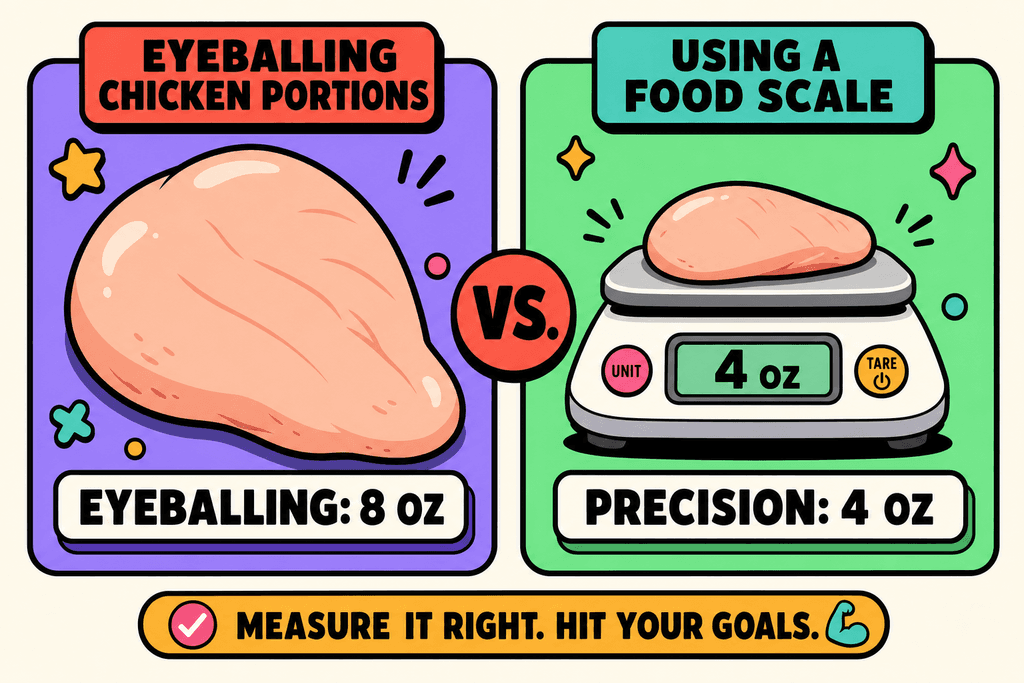
Most people eyeball their chicken portions and end up way off target. The problem isn't just about being a few calories over or under. When you're trying to hit specific protein goals or stay within your calorie budget, getting your chicken breast portions wrong can completely derail your progress. The math seems simple enough, but there are several hidden factors that trip people up every single time they cook or order chicken.
The Raw Versus Cooked Weight Problem
Here's where things get messy. A chicken breast loses about 25% of its weight during cooking as water evaporates. That means your 8-ounce raw chicken breast becomes roughly 6 ounces when cooked. Most nutrition labels show values for raw chicken, but most people weigh their food after cooking. This single mistake can throw off your entire day's macros.
- Raw chicken breast contains more water weight
- Cooked chicken is more calorie-dense per ounce
- Database entries often mix raw and cooked values
- Different cooking methods affect final weight differently
Restaurant Portions Are Wildly Oversized
Walk into any restaurant and order a chicken dish. That "grilled chicken breast" on your plate is probably 10-12 ounces cooked, sometimes even more. For reference, a standard serving is closer to 3-4 ounces cooked. When you're tracking how many ounces chicken breast you actually need, restaurant meals become a guessing game you'll usually lose.
| Location | Typical Portion | Recommended Serving |
|---|---|---|
| Chain Restaurant | 10-12 oz cooked | 3-4 oz cooked |
| Home Cooking | 6-8 oz cooked | 3-4 oz cooked |
| Meal Prep | 5-6 oz cooked | 3-4 oz cooked |
Manual Estimation Versus Smart Tracking
The old way of tracking chicken portions involves weighing, calculating, and manually entering data into apps like MyFitnessPal or Cronometer. You need to know if your entry is for raw or cooked chicken, search through dozens of database entries, and hope you picked the right one. MyFoodBuddy takes a different approach by letting you simply say "6 ounces of grilled chicken breast" and the AI figures out the rest based on USDA data.
Manual Portion Estimation
- Requires food scale and multiple steps
- Easy to confuse raw and cooked weights
- Time-consuming database searches
- Inconsistent entries across apps
App-Based Tracking
- Quick voice or text input
- AI handles raw versus cooked calculations
- Consistent USDA-based nutrition data
- Saves common meals for relogging
The real issue isn't that people are bad at estimating portions. It's that the entire process has too many variables and too many chances for error. When you're underestimating your chicken portions by even 2-3 ounces per meal, you could be missing out on 40-60 grams of protein per day. That's the difference between hitting your muscle-building goals and spinning your wheels.
Getting Your Chicken Portions Right
Figuring out how many ounces chicken breast you need really comes down to your personal macro goals. Most people do well with 4 to 6 ounces per meal, but someone trying to build muscle might need more while someone cutting calories might need less. The good news is that once you know your numbers, chicken breast becomes one of the easiest proteins to work with since it's so consistent in its nutritional profile.
The hard part isn't knowing what to eat. It's actually tracking it without wanting to quit after three days. Traditional apps make you search through databases, weigh everything, and spend way too much time on something that should be simple. MyFoodBuddy lets you just say what you ate and handles the math for you, which means you can track your caloric and protein intake efficiently without the usual headache.
Whether you're meal prepping chicken for the week or trying to figure out if that McChicken fits your daily budget, the key is having a system that doesn't feel like a second job. Your chicken portions matter, but so does actually sticking with tracking long enough to see results.
The questions below cover some of the most common things people wonder about when they're trying to nail down their chicken portions and make tracking work for their lifestyle.
Common Questions About Chicken Breast Portions
Tracking chicken breast portions can feel confusing at first, especially when you're trying to hit specific macro goals. Most people have the same questions when they start weighing their food, and the answers aren't always as straightforward as you'd think. Here are the most common questions about chicken breast serving sizes and how to track them accurately.
How many ounces is a typical chicken breast from the store?
A standard chicken breast from the grocery store usually weighs between 6 to 10 ounces raw. The size varies quite a bit depending on where you shop and whether you're buying organic or conventional chicken. Some larger breasts can even reach 12 ounces, which is why weighing your portions matters if you're serious about tracking macros.
Should I weigh chicken raw or cooked?
You should weigh chicken raw whenever possible because that's how most nutrition databases list their values. Chicken loses about 25% of its weight during cooking due to water loss, but the protein and calories stay the same. If you only have cooked chicken, just make sure you're using cooked chicken values in your tracking app, and with MyFoodBuddy, you can simply say "4 ounces of cooked chicken breast" and the AI figures out the rest.
How much protein is in 4 ounces of chicken breast?
Four ounces of raw chicken breast contains approximately 26 grams of protein and around 120 calories. This makes it one of the most efficient protein sources for hitting your macros without adding too many calories. The exact amount can vary slightly based on the chicken's fat content, but it's pretty consistent across most brands.
Can I eat too much chicken breast?
While chicken breast is healthy, eating only chicken breast for all your protein needs isn't ideal for variety or micronutrient balance. Most nutrition experts recommend varying your protein sources to get different amino acid profiles and nutrients. That said, if chicken breast fits your macros and you enjoy it, there's no specific upper limit as long as you're getting other nutrients from vegetables, carbs, and healthy fats.
What if I don't have a food scale?
A food scale is the most accurate way to track portions, but you can estimate using visual cues if needed. A 3-ounce portion of cooked chicken is about the size of a deck of cards or the palm of your hand. Four ounces raw is roughly the size of a smartphone. These estimates aren't perfect, but they're better than guessing completely, and apps like MyFoodBuddy make it easy to log estimates quickly by just saying what you ate.
How does tracking chicken in MyFoodBuddy compare to other apps?
Traditional apps like MyFitnessPal require you to search through databases, select the right entry, and manually input the weight. MyFoodBuddy lets you simply say "ate 6 ounces of grilled chicken breast" and the AI logs everything automatically using USDA data. This saves time and reduces the friction that makes people quit tracking after a few weeks.
Ready to start tracking smarter?
Download MyFoodBuddy and start tracking your calories by just saying what you ate. No more searching databases or guessing portions.
Get started