
Blue Moon Nutrition Facts: Calories, Carbs & Alcohol
Blue Moon nutrition facts: 171 calories, 14g carbs, 5.4% ABV per 12oz. Learn how this Belgian-style wheat ale fits your weight loss goals.
You just finished a Blue Moon at happy hour and wondered if it derailed your calorie deficit for the day. That single beer packed 171 calories, and if you're serious about losing weight, those numbers matter more than you think. Understanding the blue moon nutritional content helps you make smarter choices without giving up the drinks you enjoy, and tracking them takes just seconds with tools like MyFoodBuddy.
Table of Contents
Blue Moon at a Glance
Blue Moon Belgian White has been a popular choice at bars and restaurants since 1995, known for its signature orange slice garnish and cloudy appearance. This Belgian-style wheat ale stands out from regular beers because of how it's made, which directly affects its blue moon nutritional content. The brewing process uses wheat instead of just barley, plus it includes oats and a special blend of spices like coriander and orange peel. These ingredients give Blue Moon its unique taste and also change up the nutritional numbers compared to your typical lager or IPA.
Understanding what's actually in your beer matters more than most people think. A standard 12-ounce serving of Blue Moon contains about 171 calories, which is slightly higher than light beers but pretty average for craft-style brews. The carb count sits at around 14 grams per bottle, and the alcohol by volume (ABV) comes in at 5.4%. If you're tracking your daily intake with apps like MyFitnessPal or using FoodBuddy to log your meals, these numbers make a real difference in your daily totals.
Complete Nutritional Breakdown
Here's exactly what you're getting in each 12-ounce serving of Blue Moon Belgian White:
| Nutrient | Amount per 12 oz |
|---|---|
| Calories | 171 |
| Carbohydrates | 14g |
| Protein | 1.6g |
| Fat | 0g |
| Alcohol by Volume | 5.4% |
| Sugar | 0g |
Why Wheat Ales Are Different
Belgian-style wheat ales like Blue Moon pack different nutritional profiles than standard beers for a few key reasons. The wheat and oats used in brewing create more complex carbohydrates, and the unfiltered nature of the beer means some of those grains stay in the final product. This is why wheat beers often look cloudy and have a fuller body.
The calorie count in beer comes from two main sources:
- Alcohol content (about 60-70% of total calories)
- Residual carbohydrates from grains (the remaining 30-40%)
- Proteins from wheat and barley (minimal contribution)
Most of those 171 calories come directly from the alcohol itself, not the carbs like many people assume. When you're logging drinks in FoodBuddy, the app automatically breaks down these numbers so you can see how that beer fits into your daily goals. The wheat content does add slightly more carbs compared to a light lager, but it's the 5.4% ABV that really drives up the calorie count.
Serving Size Matters
The numbers above are for a standard 12-ounce bottle or can. But Blue Moon also comes in different serving sizes that change the nutritional math:
- Draft pint (16 oz) contains about 228 calories and 18.7g carbs
- Tall boy can (16 oz) has the same 228 calories
- Restaurant pour (varies) could be anywhere from 12-20 ounces
Many restaurants serve beer in 16 or 20-ounce glasses, which means you could be drinking significantly more calories than you think. A 20-ounce pour contains roughly 285 calories, nearly the same as a small meal. This is where quick logging tools become super helpful - FoodBuddy lets you just say "I had a Blue Moon" and the AI figures out the nutritional details, making it way easier than manually calculating serving sizes in apps like Cronometer or MyNetDiary.
Breaking Down Blue Moon's Calorie Content
A single 12-ounce Blue Moon contains about 171 calories, which might not sound like much until you realize that's roughly the same as eating a small bagel. The tricky part is that most people don't stop at one beer, and those calories add up faster than you'd think. Understanding where these calories come from can help you make smarter choices when you're trying to lose weight but still want to enjoy a cold one with friends. The blue moon nutritional content breaks down into two main sources: alcohol and carbohydrates, each contributing to your daily calorie intake in different ways.
Alcohol itself packs 7 calories per gram, which is almost as calorie-dense as pure fat at 9 calories per gram. That's significantly more than protein or carbs, which only have 4 calories per gram. In Blue Moon, the alcohol content accounts for roughly 60% of the total calories, while the remaining 40% comes from carbohydrates left over from the brewing process.
- One Blue Moon equals about 8-9% of a 2,000 calorie daily budget
- Two beers can take up nearly 20% of your daily calories
- Three beers equals the calorie content of a full meal
- The calories come with zero protein or beneficial nutrients
The real problem with beer calories is how easy they are to forget. When you're tracking your food intake, you might carefully log your breakfast, lunch, and dinner, but those drinks at happy hour often slip through the cracks. Liquid calories don't trigger the same fullness signals as solid food, so your brain doesn't register them the same way it would a sandwich or salad.
This is where tracking becomes essential. Apps like MyFoodBuddy let you quickly log your drinks by just saying "I had two Blue Moons" instead of manually searching databases and calculating servings. The faster you can track, the more likely you'll actually do it consistently.
Carbs in Blue Moon and Your Weight Loss
Each Blue Moon contains approximately 14 grams of carbohydrates, which comes from the malted barley and wheat used in brewing. These aren't the same as the carbs you'd get from eating a slice of bread or a bowl of rice, though they affect your body similarly. Beer carbs are mostly simple sugars that your body absorbs quickly, causing a faster spike in blood sugar compared to complex carbohydrates from whole grains. For anyone watching their carb intake, those 14 grams per beer can make a significant dent in your daily allowance.
If you're following a low-carb or keto diet, beer becomes particularly challenging. Most keto plans limit you to 20-50 grams of carbs per day, meaning just one Blue Moon could use up a third to half of your entire daily carb budget. That doesn't leave much room for vegetables, nuts, or other nutrient-dense foods you actually need.
| Drink | Carbs (g) | Calories |
|---|---|---|
| Blue Moon (12 oz) | 14 | 171 |
| Bud Light (12 oz) | 6.6 | 110 |
| Michelob Ultra (12 oz) | 2.6 | 95 |
| Regular Coke (12 oz) | 39 | 140 |
The social aspect makes this even trickier. When you're out with friends or at a barbecue, saying no to every drink can feel isolating. The key is planning ahead and deciding how many carbs you can afford to spend on alcohol versus food that will actually keep you full and satisfied.
Quick tracking makes this manageable. Instead of pulling out your phone and spending five minutes searching for the right entry in a traditional calorie app, you can simply tell MyFoodBuddy what you drank and move on with your conversation. The app handles the math while you handle the socializing. For more detailed strategies on managing alcohol while losing weight, check out our guide on balancing booze and weight loss.
Alcohol Content and Your Metabolism
Blue Moon sits at 5.4% alcohol by volume, which is slightly higher than your average light beer but lower than many craft IPAs. That percentage might seem like just a number on the label, but it has real implications for your weight loss efforts. When alcohol enters your system, your body treats it like a toxin and prioritizes metabolizing it above everything else, including burning fat for energy. This means that while your liver is busy processing that Blue Moon, fat burning essentially stops until the alcohol is cleared from your system.
Your body can only process about one standard drink per hour, so that 5.4% ABV beer takes roughly 60-90 minutes to metabolize completely. During that time, any food you eat is more likely to be stored as fat rather than burned for energy because your metabolism is focused elsewhere.
- Alcohol temporarily halts fat oxidation by up to 73%
- Your liver prioritizes alcohol metabolism over all other nutrients
- Fat burning doesn't resume until alcohol is fully processed
- The effect compounds with each additional drink
There's another sneaky way alcohol sabotages weight loss: it messes with your hunger signals. Drinking lowers your inhibitions and increases appetite, which is why late-night pizza or bar food sounds so appealing after a few beers. You're not just dealing with the calories from the alcohol itself, but also the extra food you're likely to eat while drinking and the poor choices you might make the next morning when you're tired or hungover.
This doesn't mean you have to give up beer entirely to lose weight. It just means you need to be strategic about it. Track your drinks just as carefully as you track your meals, and account for those calories in your daily budget. Voice-powered tracking through apps like MyFoodBuddy makes this easier because you can log drinks in seconds without interrupting your evening. Learn more about tracking alcoholic beverages with voice technology to see how simple it can be.
The bottom line is that awareness beats restriction. When you know exactly how Blue Moon fits into your daily calorie and carb targets, you can make informed decisions about when it's worth it and when it's not. Some nights, that beer with friends is absolutely worth the calories. Other times, you might realize you'd rather save those 171 calories for something more satisfying. The choice becomes yours instead of something that just happens to you.
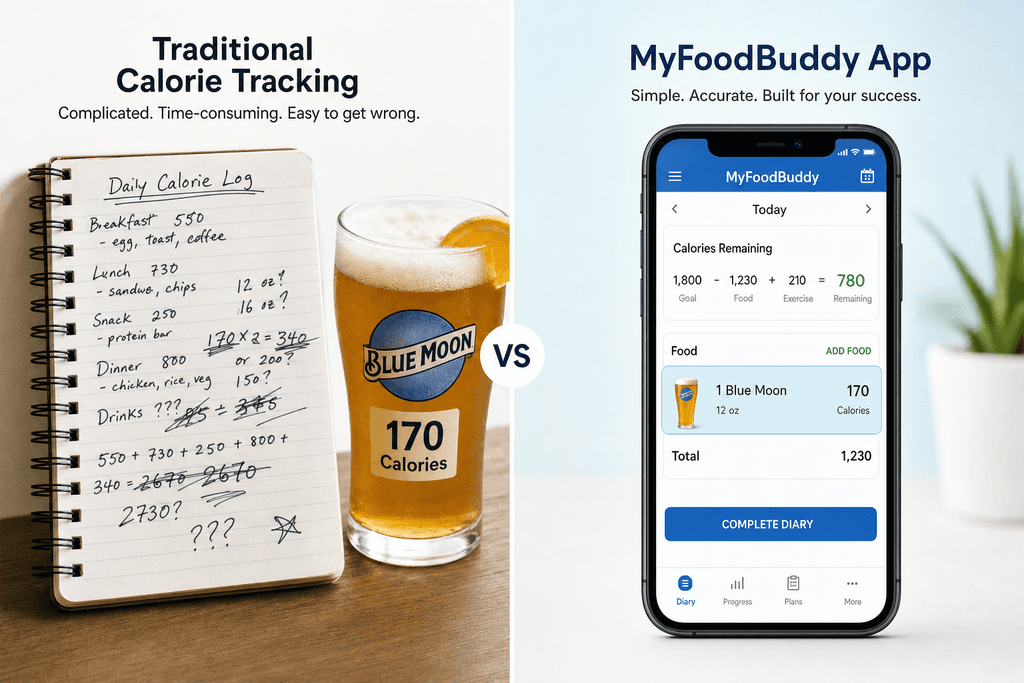
Making Blue Moon Work with Your Goals
The biggest mistake people make when trying to lose weight isn't drinking beer itself. It's pretending those calories don't exist or guessing at the numbers. A single Blue Moon contains around 170 calories, and when you're out with friends, those numbers add up faster than you think. The difference between someone who successfully loses weight while still enjoying drinks and someone who doesn't often comes down to one thing: accurate tracking. Most people underestimate their alcohol intake by 30-40%, which can completely derail a week's worth of careful eating.
Budgeting Your Calories for Social Events
Think of your daily calorie budget like a bank account. If you know you're going out Friday night, you can make small adjustments throughout the day to "save up" for those drinks. This doesn't mean skipping meals, which usually backfires.
- Eat a protein-rich lunch to stay full and avoid drunk snacking later
- Save 300-500 calories by choosing lighter options at breakfast and lunch
- Plan your drink limit before you go out (2-3 beers is a reasonable target)
- Log your drinks in real-time instead of trying to remember later
The voice input feature in MyFoodBuddy makes this super easy. You can just say "Blue Moon beer" while you're ordering and it's logged in seconds. No need to pull out your phone and type while your friends are talking.
Smart Drinking Strategies That Actually Work
Alternating between alcoholic drinks and water isn't just about staying hydrated. It's a simple math trick that cuts your total calorie intake in half without feeling like you're missing out.
- Start with water when you first arrive to avoid drinking too fast
- Have one glass of water between each Blue Moon
- Order a tall glass of water with every beer automatically
- Set a pace of one beer per hour maximum
Blue Moon Versus Other Drink Options
| Drink Type | Calories | Carbs | Pros | Cons |
|---|---|---|---|---|
| Blue Moon | 170 | 14g | Satisfying, flavorful | Higher carbs |
| Light Beer | 100 | 5g | Lower calories | Less satisfying |
| Vodka Soda | 97 | 0g | Lowest carbs | Easier to overconsume |
| IPA | 200+ | 15g | Very flavorful | Highest calories |
The key isn't always choosing the lowest calorie option. Sometimes having one really good Blue Moon that you enjoy is better than three light beers you don't really want. Quality over quantity matters when you're tracking the blue moon nutritional content accurately.
Your Blue Moon Game Plan
So there you have it. A regular 12 oz Blue Moon has 171 calories and 14 grams of carbs, which isn't terrible but can add up fast if you're not paying attention. The blue moon nutritional content is pretty similar to most craft beers, but knowing the exact numbers makes all the difference when you're trying to lose weight. Most people think they have to give up beer completely, but that's not really true.
The real trick is tracking what you drink. When you know exactly what's going into your body, you can plan around it. Maybe you skip the fries at dinner or go for a longer walk that day. You can absolutely drink alcohol and still lose fat if you're smart about it.
The problem is that most tracking apps make logging drinks a pain. You have to search through databases, guess at serving sizes, and spend way too much time on something that should be simple. That's where tools like MyFoodBuddy come in handy, since you can just say "I had a Blue Moon" and it logs everything for you in seconds.
Here's what matters most:
- Blue Moon has 171 calories per 12 oz bottle
- It contains 14g of carbs that count toward your daily total
- Tracking makes the difference between guessing and knowing
- You don't have to quit drinking to lose weight
The easier it is to track, the more likely you'll actually do it. And when you track consistently, you start seeing patterns in what works and what doesn't. If you want to learn more about tracking alcoholic beverages without the hassle, there are better ways than the old-school method of typing everything manually.
Blue Moon Nutrition Questions Answered
Tracking your favorite beers doesn't have to be complicated, but you probably have some questions about how Blue Moon fits into your daily nutrition goals. Whether you're counting calories for weight loss or just trying to stay aware of what you're drinking, understanding the blue moon nutritional content helps you make better choices. Here are the most common questions people ask about Blue Moon's nutrition facts and how to track them without making it a huge hassle.
How many calories are in a Blue Moon?
A standard 12 oz bottle of Blue Moon Belgian White contains 171 calories. If you're drinking a pint (16 oz), you're looking at about 228 calories. Draft pours at restaurants are often 20 oz, which bumps it up to around 285 calories per glass.
Is Blue Moon keto-friendly?
Blue Moon isn't great for keto since it has about 14 grams of carbs per 12 oz serving. Most keto diets limit you to 20-50 grams of carbs per day total, so one Blue Moon takes up a big chunk of that. If you're strict keto, you'll want to skip it or save it for a rare treat.
How do I track Blue Moon in my calorie app?
Most calorie tracking apps require you to search through databases and manually select serving sizes, which gets annoying fast. With MyFoodBuddy, you can just say "I had a Blue Moon" and the AI figures out the blue moon nutritional content automatically. It's way faster than scrolling through endless beer options in traditional apps like MyFitnessPal or Cronometer.
Does the orange slice add calories?
The orange slice garnish adds about 4-5 calories, which is pretty minimal. If you squeeze it into your beer and drop it in, you might get a few more calories from the juice, but we're talking maybe 8-10 calories total. It's not enough to worry about unless you're being extremely precise with your tracking.
How does Blue Moon compare to light beer?
Blue Moon has significantly more calories than light beers. A Michelob Ultra has 95 calories per 12 oz, while Miller Lite has 96 calories. Blue Moon has almost double the calories of most light beers, so if you're trying to cut calories but still want a beer, switching to a light option saves you about 75 calories per drink.
How many Blue Moons can I drink on a weight loss plan?
It depends on your daily calorie budget. If you're eating 1,500 calories a day to lose weight, one Blue Moon takes up about 11% of your total calories. Two beers would be nearly a third of your daily intake, leaving less room for actual food. Most people find that limiting alcohol to 1-2 drinks per week works better for consistent weight loss, since alcohol calories add up quickly without making you feel full.
Ready to start tracking smarter?
Download MyFoodBuddy and start tracking your calories by just saying what you ate. No more searching databases or guessing portions.
Get started